Industrial Warehouse Lighting Design and Retrofit
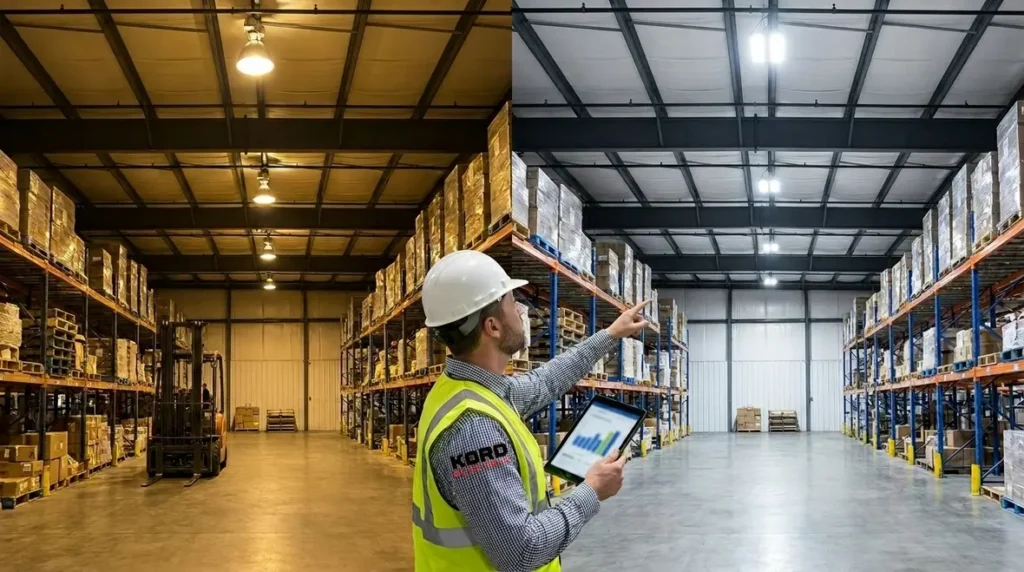
Industrial warehouse lighting requirements shape how safely people move, how fast goods flow, and how accurately quality teams spot defects. When a facility lights poorly, it does not just look “dull,” it works against operations. In warehouses, docks, and distribution areas, we design for glare control, visibility at work height, and dependable performance across long shifts. At Kord Electric, our approach stays practical: we plan the layout, we choose fixtures that match the task, and we make sure the system performs when the real world tests it. Our technicians and expert service staff explain every step in plain terms, so decision makers feel confident, not confused. And yes, we promise your lighting plan will be less dramatic than the plot of a daytime soap, even if the old fixtures tried their best.
How we start an industrial warehouse lighting design
We begin with the job as it truly exists, not as the drawings hope it will be. First, our team gathers details about ceiling height, racking layouts, aisle widths, and the surfaces that reflect light. Then we review tasks: picking, packing, loading, maintenance work, and any inspections that need color and contrast. After that, we check how power is distributed, where controls can land, and what maintenance access looks like.
Next, we map the lighting zones. For example, an overhead aisle and a dock bay do not share the same needs. Even when a warehouse uses the same floor plan every day, zones often differ in motion, safety risk, and visual detail. Consequently, we treat each area with its own target performance and aiming strategy.
Finally, we confirm environmental conditions. Dust levels, humidity, and temperature change how long fixtures will last and how optics should be protected. Our technicians then explain why each factor matters, using clear examples from similar commercial and industrial facilities. In other words, the “why” stays attached to the “what.”
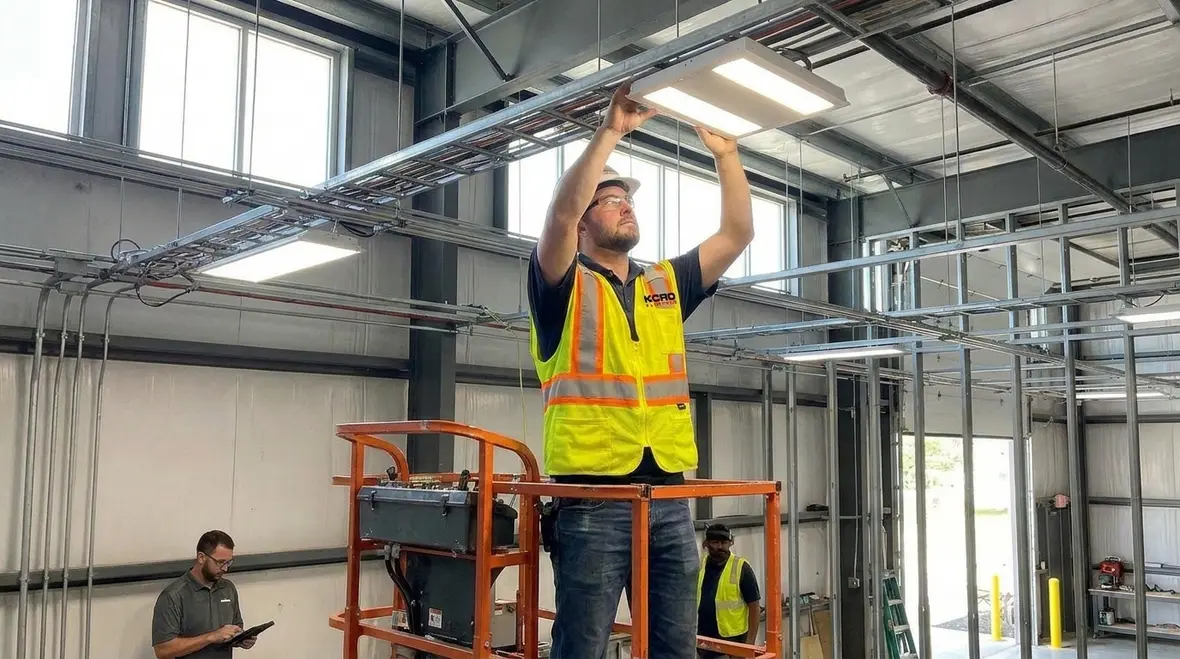
Ceiling height, beam angle, and layout patterns
If you want stable illumination, we align optics with real geometry. Ceiling height drives mounting height, spacing, and fixture selection. Meanwhile, beam angle determines how light reaches aisles and how much spills into adjacent racking lines. When designers ignore this, they end up chasing complaints like “we see shadows” or “the aisles look uneven,” which is usually the lighting equivalent of blaming the weather for a leaky roof.
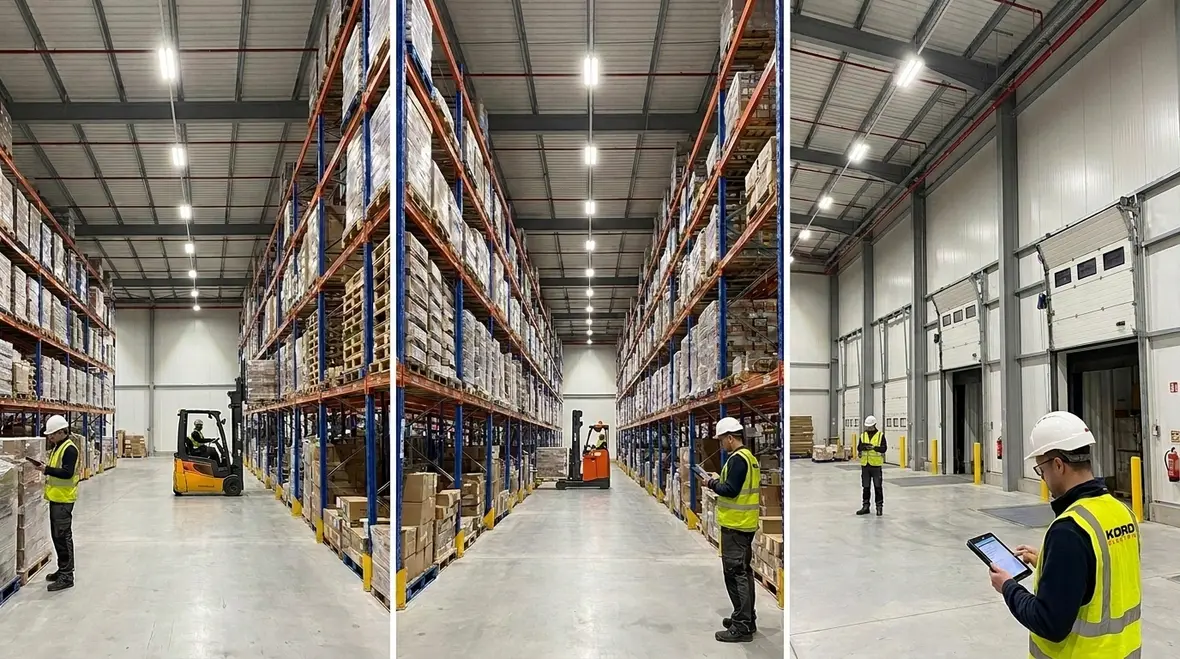
We also plan for racking obstruction. Tall racks can block light, especially if fixtures mount too high or use the wrong distribution pattern. Therefore, we choose layouts that account for the way light travels and the way materials reflect it. Typically, we aim to deliver uniformity, not just high average brightness.
In addition, we consider task distance. For picking and packing, workers often look along shelf faces and across product surfaces. So we adjust aiming and spacing to reduce harsh dark zones where attention matters. Our expert service staff walks clients through these choices and shows what changes when mounting heights or row spacing shift.

Glare control and safety for docks, lanes, and walkways
Warehouses can feel like they operate on autopilot, until someone has to see clearly at speed. Industrial lighting requirements must protect eyesight and support safe movement. Glare control plays a big role because high mounted fixtures can still create bright spots that strain drivers and pedestrians.
We manage glare with optics, mounting strategy, and placement. For instance, high-bay fixtures with proper shielding reduce direct view of the light source. Then, we balance light levels across lanes so drivers do not encounter sudden bright and dark bands. This approach helps prevent momentary visual overload, especially during shift changes and low ambient conditions.
Also, docks often involve mixed lighting from exterior areas, doors, and loading equipment. We handle that contrast carefully. We target adequate visibility at the floor plane, plus the surfaces workers inspect at waist to eye height. If you have ever tried to find a box in a dim corner while holding a clipboard, you already understand why we treat glare and contrast as operational issues, not “style preferences.”
Fixture types and controls that fit warehouse realities
Choosing fixtures is not just about brightness. We match fixture technology to how the space works day to day. In warehouses, lights must handle long operating hours, steady output, and maintenance cycles that do not disrupt logistics.
We also choose controls that reduce waste without removing safety. For many commercial and industrial facilities, lighting controls can use occupancy sensing for low traffic areas and scheduling for predictable shifts. Furthermore, daylight harvesting can help in spaces with large openings, but we plan it carefully so it does not flicker or drift in a way that irritates operators.
Where motion changes constantly, we avoid overly aggressive control settings. We keep transition behavior smooth. That means our engineers look at traffic patterns and adjust control zones so lights respond like a professional assistant, not like an overexcited intern.
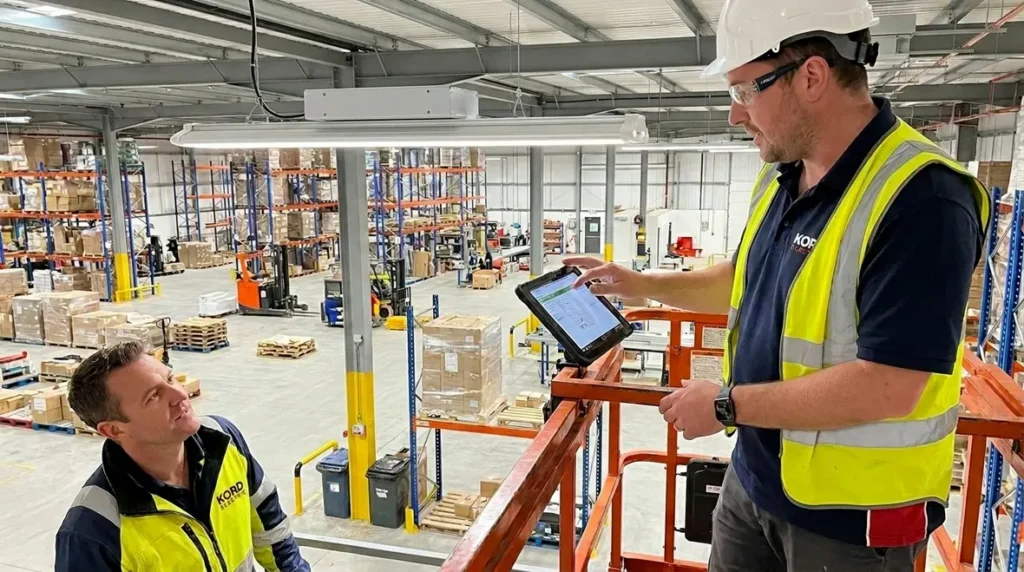
In our retrofit planning, we evaluate how existing wiring and mounting locations support the new design. We also confirm that controls communicate correctly with the selected drivers and dimming methods. When clients rely on us, they get a plan that respects power limits and operational uptime.
LED retrofit planning and what our blog guide covers
Many facilities move from older fixtures to LED to improve energy use and reduce maintenance calls. For that path, we lean on proven retrofit thinking. Our commercial and industrial clients often ask what matters most during a retrofit plan, and our team explains the process in clear steps.
If you read our Commercial LED Lighting Retrofit Guide, you will see the emphasis we place on compatibility, layout review, and performance targets. We do not treat a retrofit like a simple swap. Instead, we treat it like a new system design that happens to use parts of the existing structure.
First, we verify mounting points and check structural limits. Then we confirm optics and spacing to maintain uniformity where workers and drivers operate. Next, we review electrical capacity and ensure the drivers align with dimming and control strategy. After that, we plan for the real schedule: when lights go out, how long it takes, and how we keep operations moving.
Importantly, we help clients avoid the “pretty brochure problem,” where brightness looks good in one corner but fails to cover racking zones. Consequently, our technicians and expert service staff review the proposed layout and explain why specific changes help the facility run safer and more efficiently.
For facilities that want to connect lighting upgrades with broader savings, our Warehouse Energy Saving Retrofits ROI Guide shows how industrial warehouse lighting requirements, control strategies, and LED upgrades combine into real-world payback instead of guesswork.
Measurement, verification, and keeping performance consistent
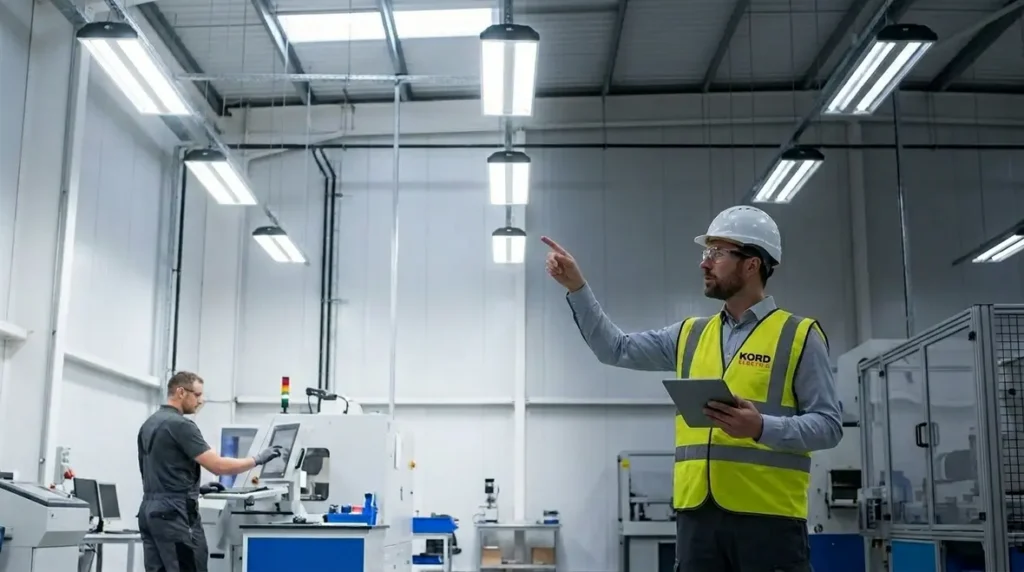
Lighting design should not end at installation. We verify performance because warehouses are not static; they change tasks, inventory height, and traffic flow. To keep industrial warehouse lighting requirements on track, we confirm both illumination and uniformity after commissioning.
We test key areas such as primary aisles, pick zones, loading docks, and pedestrian pathways. We also check that glare risk remains controlled and that light distribution avoids sharp hot spots. Then we compare results to the design targets and adjust where necessary.
Additionally, we plan for long term consistency. Dust accumulation can reduce output over time, and heat can affect performance in enclosed fixtures. So we select fixtures with the right seals and maintenance approach for the environment. In the real world, the better question is not “Will it be bright today?” but “Will it stay reliable at month nine?” We answer that with selection, protection, and a maintenance mindset.
And because we serve commercial and industrial facilities and major property buildings, we treat verification like a system, not a one time event. Our service team helps clients understand what to monitor and how to keep results aligned with operational needs.
For teams that want lighting performance tied directly into a bigger reliability plan, Kord Electric’s commercial and industrial electrical maintenance plans connect industrial warehouse lighting requirements, preventive testing, and long term system health.
FAQ for warehouse lighting design and retrofit
Final thoughts and next step with Kord Electric
When we design warehouse lighting, we treat it like an operational tool, not a decoration. If your aisles feel uneven, if docks glare too much, or if maintenance calls keep pulling teams away from work, Kord Electric can help you fix it with a practical plan. Our technicians and expert service staff explain the choices in plain language and verify performance after install. Reach out to us to schedule a site review and build a lighting design that fits your commercial and industrial facility.
If your facility operates in Southern California and you are comparing partners, our Los Angeles County electrical services overview explains how Kord Electric supports warehouses, distribution centers, and industrial sites with lighting, controls, and broader electrical upgrades under one roof.
For large distribution campuses and industrial warehouses that want lighting upgrades coordinated with broader electrical infrastructure changes, Kord Electric can align your retrofit or new design with panel capacity, power quality, and long term maintenance from the very beginning. That way, industrial warehouse lighting requirements, energy savings, and uptime all point in the same direction instead of fighting each other.
When you are ready to connect your next lighting project with a full commercial service team, we are here to help you plan the work, phase the schedule, and keep your operations moving while the improvements go in overhead.