Integrating Smart Lighting Controls in Manufacturing
At Kord Electric, we help commercial and industrial facilities run their lighting like a well tuned machine. In this guide, we focus on integrating smart lighting controls in manufacturing facilities, using manufacturing lighting control systems that reduce wasted power, support safer spaces, and help managers track performance. Smart controls do not just turn lights on and off. Instead, they adjust output by time, daylight, occupancy, and task zones so the plant stays bright where work happens and calmer where it does not. And yes, the savings can be real. Even so, we still remind teams that the goal is comfort and control first. Money comes right behind, like the last customer in line at a coffee shop.
What smart lighting controls change inside a plant
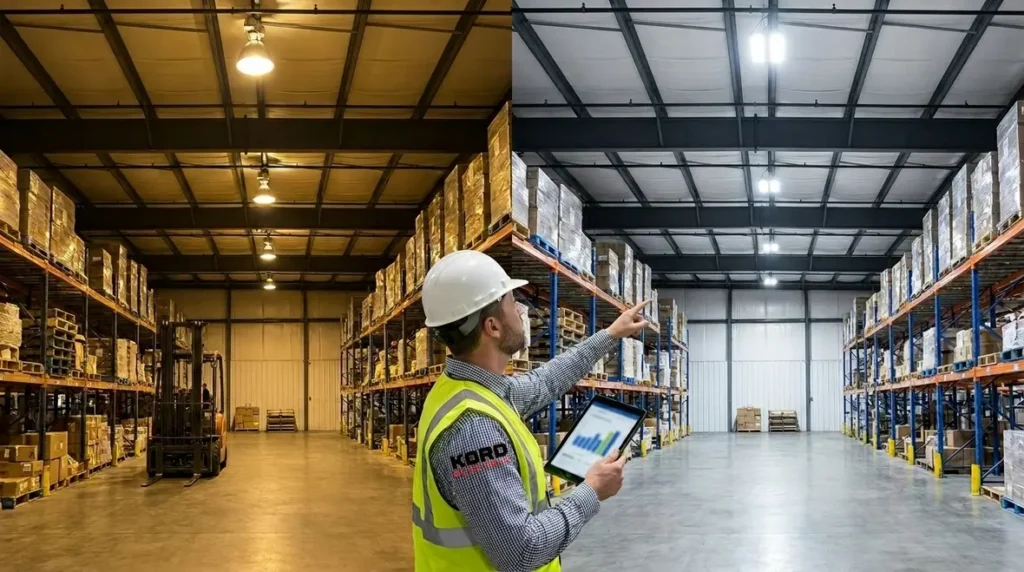
When a facility adds smart lighting, the change starts with how decisions get made. Traditional controls depend on fixed schedules or simple switches. Meanwhile, manufacturing lighting control systems use sensors and logic to respond to real conditions. For example, they can dim fixtures near skylights during the day, and brighten zones when crews arrive for a shift change.
Additionally, smart systems help create task oriented light. We see this most in areas like packaging, inspection, and maintenance. Because these spaces often need stable brightness for detail work, controls can maintain target light levels and avoid the “blink and you miss it” patterns caused by poor timing. Then, when a line slows down or a room sits empty, the lights can scale down without leaving staff in the dark.
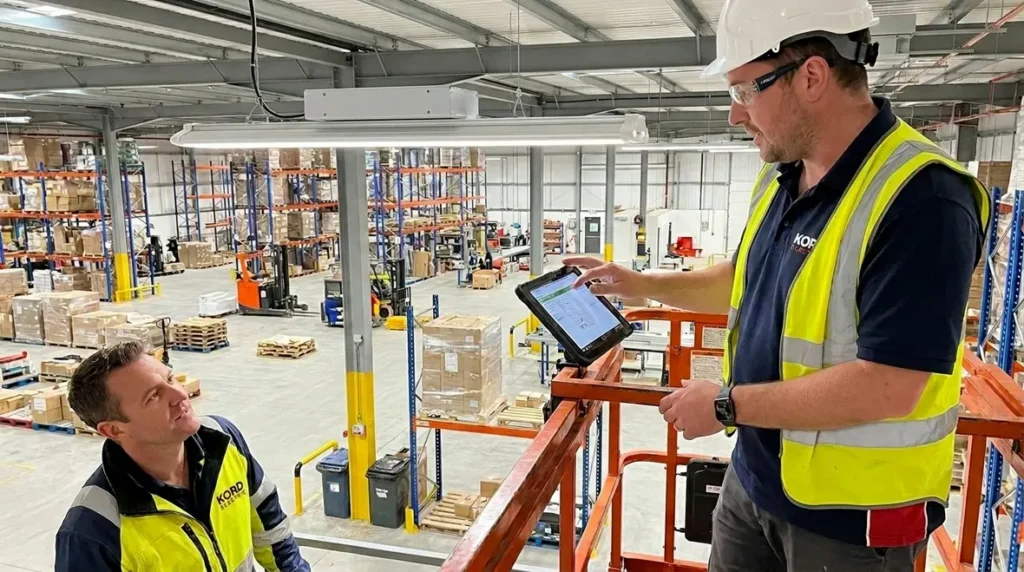
Finally, a plant gains visibility. Instead of guessing why one area uses more energy than another, our expert service staff can explain what the control data shows and why. In short, the system stops being a mystery and becomes a tool.
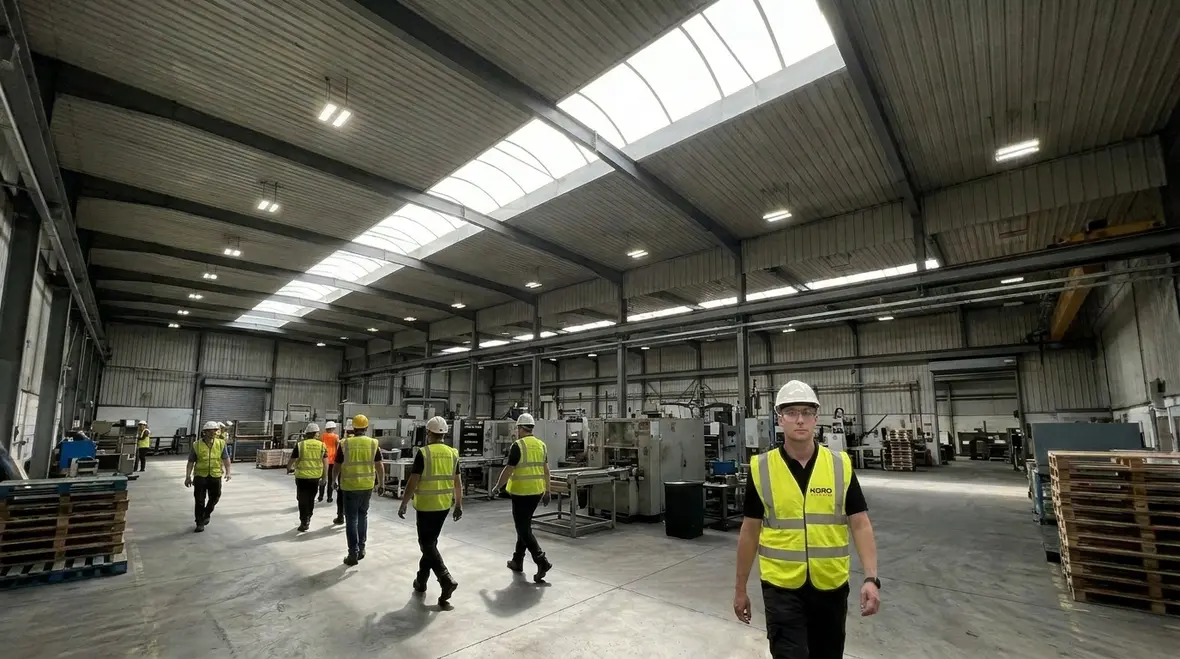
How we plan controls around real production workflows
We do not design lighting rules in a vacuum. So we start by mapping the production path and the moments when people and equipment move. Then, we build zones that match how the facility actually runs. A warehouse style schedule will not fit a welding bay, and an occupancy rule will not work the same way in a loading dock.
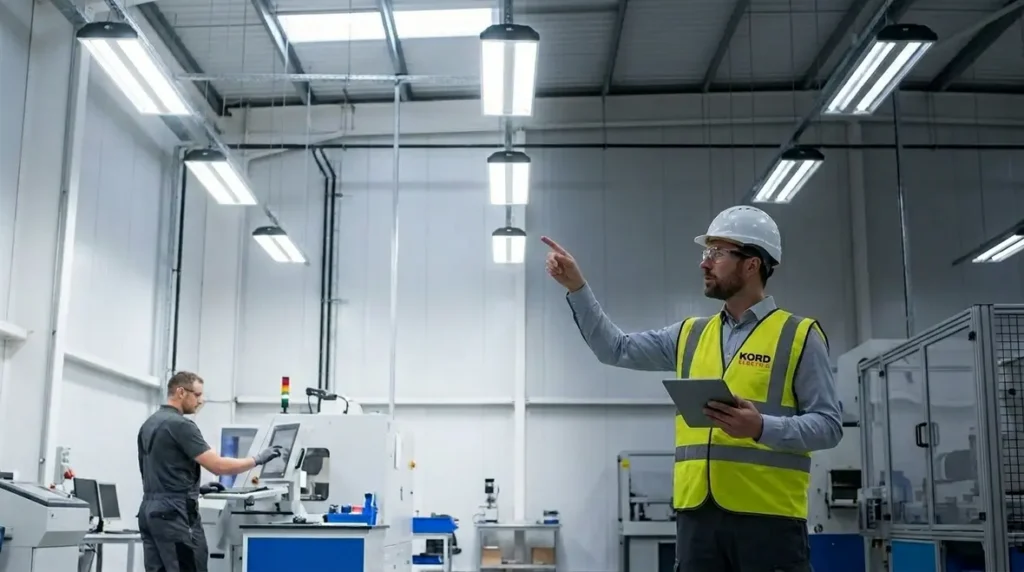
Moreover, smart controls must handle the harsh reality of industrial environments. Dust, vibration, and temperature shifts can affect sensor performance if the system is not set up right. Our technicians account for placement height, mounting surfaces, and lens angles. As a result, controls stay reliable across seasons and equipment changes.
Next, we align control logic with safety and compliance expectations. Lighting levels should not drop during critical operations. Thus, we use staged dimming, minimum setpoints, and override options so staff can respond during unusual events. And when someone asks if the system will “take control away,” our team explains clearly how override and manual scenes work, because no one wants a robot union in the control room.
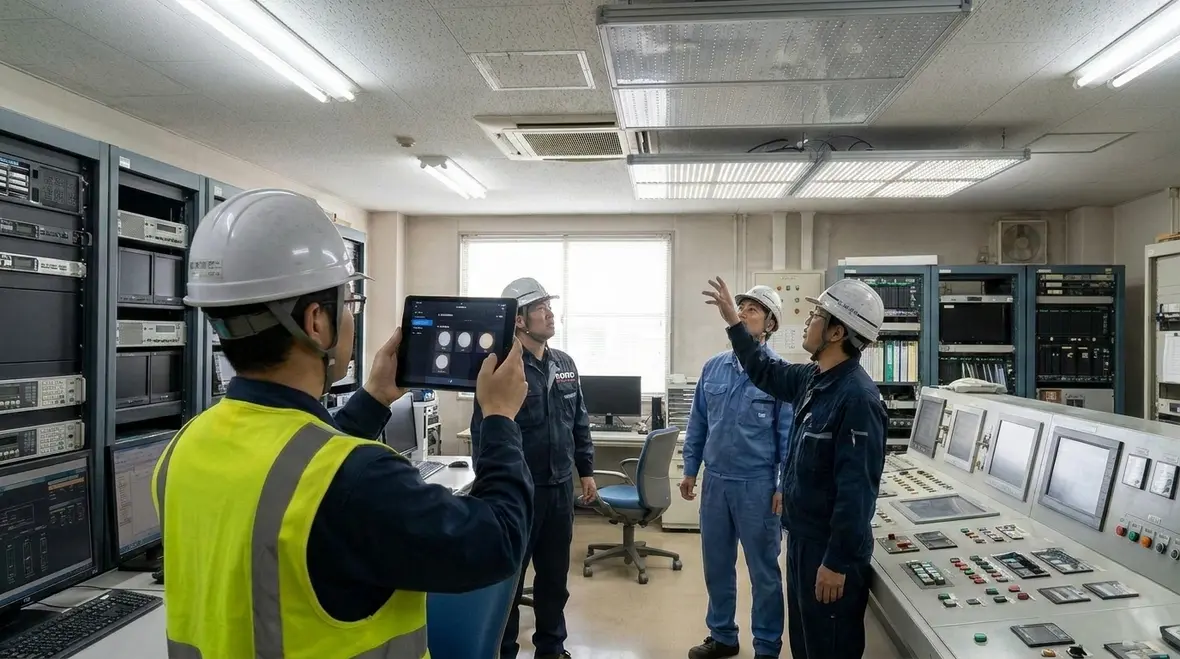
Designing zones that match how people actually work
In many facilities, the biggest mistake is treating every square foot the same. We sit down with operations leaders, maintenance teams, and safety managers to understand where people spend time, which machines dictate rhythm, and how shifts overlap. From there, we group fixtures into zones that line up with how the plant truly behaves, not how it looked on an old blueprint.
For example, a fabrication area may need full light from first shift through late cleanup, while adjacent storage aisles only need high levels when pickers enter. By separating those zones, the lighting system can scale back where activity drops off, without turning productive spaces into dim afterthoughts.
Respecting safety, compliance, and inspection requirements
Smart controls also need to play nicely with safety codes and inspection expectations. Production floors, exit paths, and inspection stations have minimum light levels that cannot be compromised, even when nobody is trying to squeeze extra kilowatts out of the budget. We set guardrails in the control logic so light levels never fall below safe thresholds in critical zones.
Our team also coordinates lighting control design with broader code guidance and installation practices described in resources like Kord Electric’s commercial lighting upgrade cost guide and lighting installation code compliance guide. This keeps smarter controls aligned with Title 24 style requirements, emergency egress expectations, and the realities of industrial inspections, instead of treating controls as an isolated gadget bolted on at the end.
Where sensors and dimming deliver the most value
Many facilities see the fastest payoff when they install controls where light waste is easiest to spot. Yet the best results come from pairing the right sensors with the right fixtures and the right dimming strategy. Below, we list the areas we commonly target first in commercial and industrial upgrades.
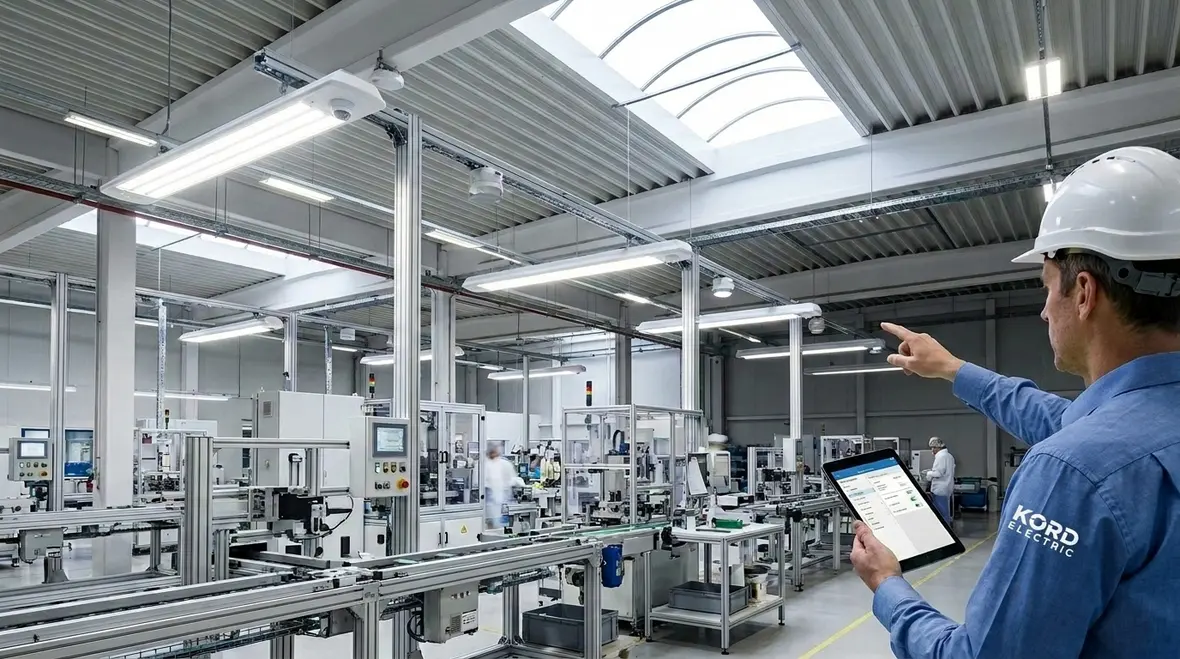
- Daylight zones: We use photosensors to dim near windows and skylights while keeping indoor levels steady for workers.
- Occupancy zones: We set motion and vacancy timing to match shift behavior in offices, break rooms, and smaller work areas.
- Task areas: We maintain consistent output for inspection stations and detailed work so quality does not suffer.
- Equipment driven spaces: We tune schedules around machine run times and predictable downtime.
At the same time, dimming must support lamp and driver compatibility. Therefore, we verify control settings against the fixture types already in place, and we recommend adjustments when the current equipment does not respond well. Our technicians walk through these options in plain language, then we document the final settings for your team.
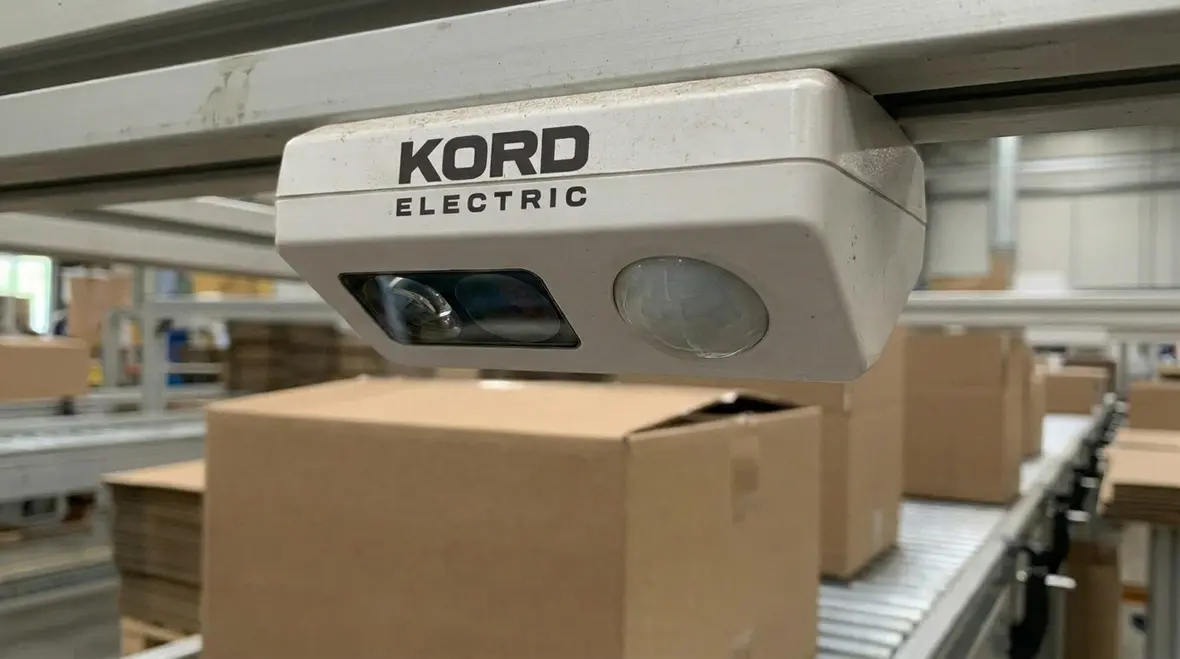
Targeting the “low hanging fruit” for fast savings
We often start in areas where lights stay on “just in case” someone walks through. Break rooms glowing at midnight, sparsely used storage pockets, and perimeter corridors that never see a full crew can all benefit from smart occupancy controls. By combining vacancy sensors with tuned timeouts, we pull back waste while keeping hallways and common areas ready the moment someone steps inside.
Daylight zones offer another quick win. With modern photosensors and manufacturing lighting control systems, it is possible to take full advantage of skylights and clerestory windows without creating glare or uneven shadows. The controls gently trim output from luminaires closest to daylight while maintaining stable brightness across the rest of the floor, so operators are not working in a patchwork of bright and dim.
Modeling upgrade costs and payback in industrial settings
Smart lighting can reduce energy use, yet managers still need a clear cost view. Our company supports that planning with practical thinking on upgrade cost and payback, especially for commercial and industrial buildings that need to keep production moving.
In the Kord Electric commercial lighting upgrade cost guide, we explain how different factors affect total project cost, such as scope, fixture mix, controls complexity, and labor timing. That same logic fits manufacturing facilities, with one extra reality: you cannot shut down a line just because it is convenient for an electrician. So we plan installation phases to reduce downtime.
To estimate payback, we typically review baseline usage, expected control behavior, and site schedules. Then we build an outcome model that reflects real operations, not a fantasy “office hours” scenario. After that, our team helps others understand what will change once the new manufacturing lighting control systems get commissioned. Commissioning matters, because the system only performs as well as its settings.
Connecting controls, code requirements, and long term savings
For many industrial plants, controls upgrades overlap with broader efforts to meet evolving energy codes and Title 24 style requirements. We align the cost model with those realities, tying control sequences, sensor layouts, and dimming behavior back to compliance expectations. That way, when you look at payback, you are not just seeing kilowatt hours saved, but also avoided rework and smoother inspections.
When facilities operate across multiple states or campuses, we help standardize assumptions so your leadership team can compare one plant’s investment against another’s. The same framework used for a distribution center or office retrofit can be tailored for manufacturing environments without turning every project into a new science experiment.
Commissioning, tuning, and training for long term results
Many projects fail quietly at the final stage. People install the controls, then nobody tunes them, and the plant never sees the full benefit. We treat commissioning as a core step, not an afterthought.
First, our technicians verify that sensors report accurate data, and that zone maps match the floor plan. Next, we test schedules and daylight response. Then, we confirm that manual overrides work the way your staff expects. In addition, we check that emergency procedures and critical tasks keep safe light levels.
After the testing, we train the people who will actually use the system. This matters because a smart building only stays smart when teams can operate it. Our expert service staff explains the logic behind scenes, setpoints, and timing. For example, they show how to adjust local lighting behavior when a process changes, without turning the whole factory into a science experiment. If someone says the controls “feel wrong,” we do not shrug. We investigate and tune.
Keeping controls effective as production changes
Manufacturing rarely stands still. Lines get retooled, new equipment moves in, and shift patterns evolve. We design manufacturing lighting control systems so they can adapt with those changes. That might mean adding new scenes for weekend maintenance, revising occupancy behavior when a formerly quiet bay becomes a busy cell, or shifting daylight dimming curves when a plant adds new skylights.
We also encourage periodic control reviews as part of broader electrical maintenance plans. When you review panel capacity, motor control centers, and emergency systems, it is the ideal time to verify that lighting controls are still aligned with production, not frozen in last year’s schedule.
FAQ: Smart lighting controls for factories
Smarter plant lighting that teams actually trust
Smart controls should feel calm, not complicated. When a system balances daylight, task needs, and occupancy, the plant runs smoother and energy waste drops. Meanwhile, our approach keeps the work aligned with production. We plan zones around real workflows, commission carefully, and train staff so others can adjust settings when the line changes.
So if you want to upgrade lighting for a manufacturing facility, we will help you map options, estimate costs, and set up manufacturing lighting control systems that perform. Call Kord Electric and let our technicians guide the process from planning to commissioning, with less downtime and better control from the start.
For plants that are planning deeper changes to their electrical infrastructure alongside a controls upgrade, Kord Electric can connect lighting work with broader services such as commercial electrical maintenance, rewiring support, or recessed lighting and high bay installation. Aligning these projects keeps downtime lower and ensures that your new lighting controls sit on a solid, future ready electrical foundation.
If you are weighing a full lighting upgrade that includes smart controls, take a look at how costs behave in the Commercial Lighting Upgrade Cost Guide, then connect that insight with a dedicated installation service so your manufacturing floor moves from fluorescent guesswork to responsive, data driven lighting.
When you are ready to take the next step, Kord Electric’s lighting installation services team can help you scope fixtures, controls, and commissioning in one integrated plan so your plant gets better lighting, tighter control, and fewer surprises when work begins.
To explore how our installation crews support manufacturing, warehouse, and large commercial environments, visit our related service pages such as recessed lighting installation for commercial and industrial facilities, or contact us directly to discuss a tailored smart control plan for your site.