
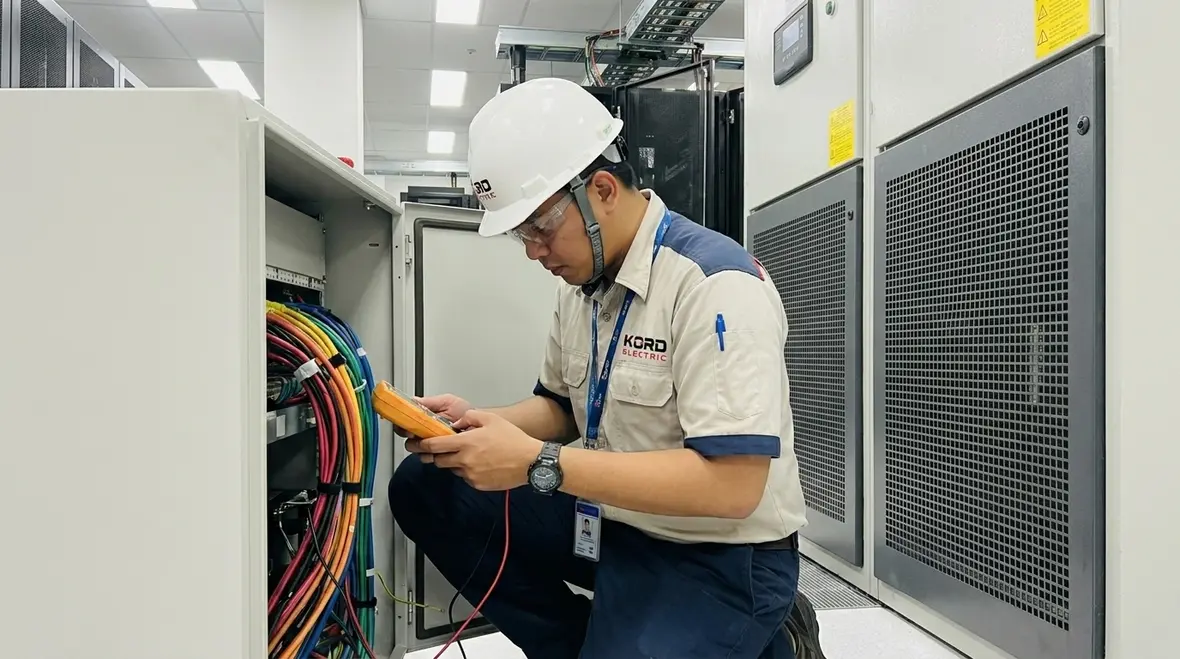
Data Center Cooling Efficiency and Electrical Upgrades
Data center cooling efficiency lives or dies on electrical infrastructure. When the power system, switchgear, cabling, controls, and monitoring work together, cooling systems do not waste energy and do not chase their own tails. In this article, Kord Electric explains how electrical upgrades for commercial and industrial facilities can strengthen cooling performance, stabilize temperatures, and support higher uptime. We rely on our own expert service staff and technicians, and we make sure the “why” is clear, not just the “what.” After all, even the best mechanical team cannot outsmart electrical problems forever. And no, we are not saying cooling is like a TV show where the plot magically fixes itself. We are saying the wiring and control signals matter.
What electrical upgrades improve data center cooling efficiency
Cooling systems pull steady power, but they also react to changing heat loads, airflow limits, and control settings. Therefore, electrical infrastructure upgrades often improve data center cooling efficiency by reducing instability and cutting avoidable losses. We typically start with the power path from utility to critical loads, because that is where voltage quality, harmonic distortion, and distribution losses can quietly drive higher energy use.
For example, when our technicians verify load balancing across phases, chillers and pumps do not fight each other. Likewise, when we address oversizing and mismatched feeders, motors draw closer to their intended operating point. As a result, cooling plants deliver more consistent performance, and controls can run the way they were designed to run.
Additionally, we see many facilities where the cooling control system depends on signals that ride alongside noisy power. When electrical noise levels stay high, controls misread, valves hunt, and fans surge. Then the mechanical system works harder than it should. So, we upgrade grounding, separation, and control wiring practices, and we help the cooling system “hear” itself clearly.
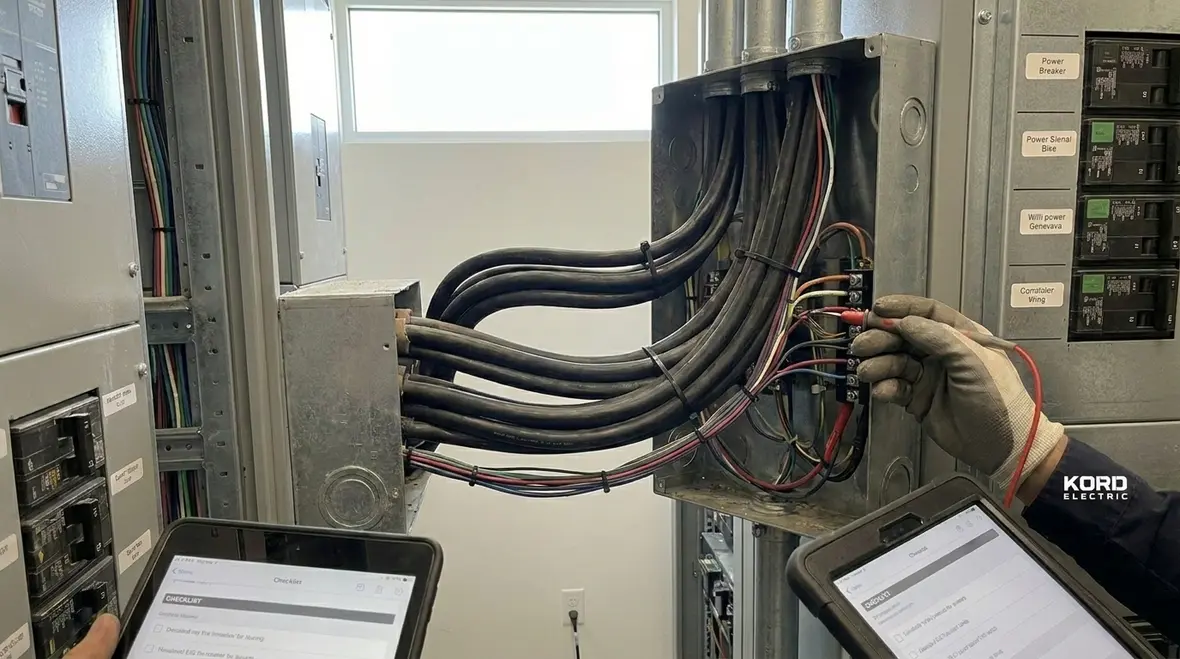
Upgrading data center electrical distribution for reliability often runs in parallel with cooling improvements, because both depend on stable voltage, balanced loading, and clean power paths from utility through switchgear to mechanical equipment.
Cooling loads and how power distribution affects real performance
In commercial and industrial environments, cooling capacity changes across the day. In many data center designs, heat load shifts with rack utilization, server firmware behavior, and tenant activity. Meanwhile, power distribution has its own dynamics: voltage drop, current imbalance, harmonic currents, and component aging. If you want a smooth cooling response, you need a distribution system that behaves smoothly too.
At Kord Electric, our expert service staff often runs a practical audit that includes distribution layout, feeder ratings, and how the cooling equipment ties into the overall electrical architecture. Then we compare that to the cooling plant sequence: pumps, chillers, air handlers, and airflow control devices. This approach matters because cooling energy does not only depend on equipment size. It depends on whether distribution conditions keep that equipment in its efficient operating zone.
Also, we pay close attention to transfer schemes and protection settings. When a protection device trips too eagerly, or when selectivity is unclear, you can get downtime or cycling. And cycling, in plain terms, wastes energy. So we coordinate protective devices with the cooling load behavior, then we tune settings with the goal of reliable, stable operation.
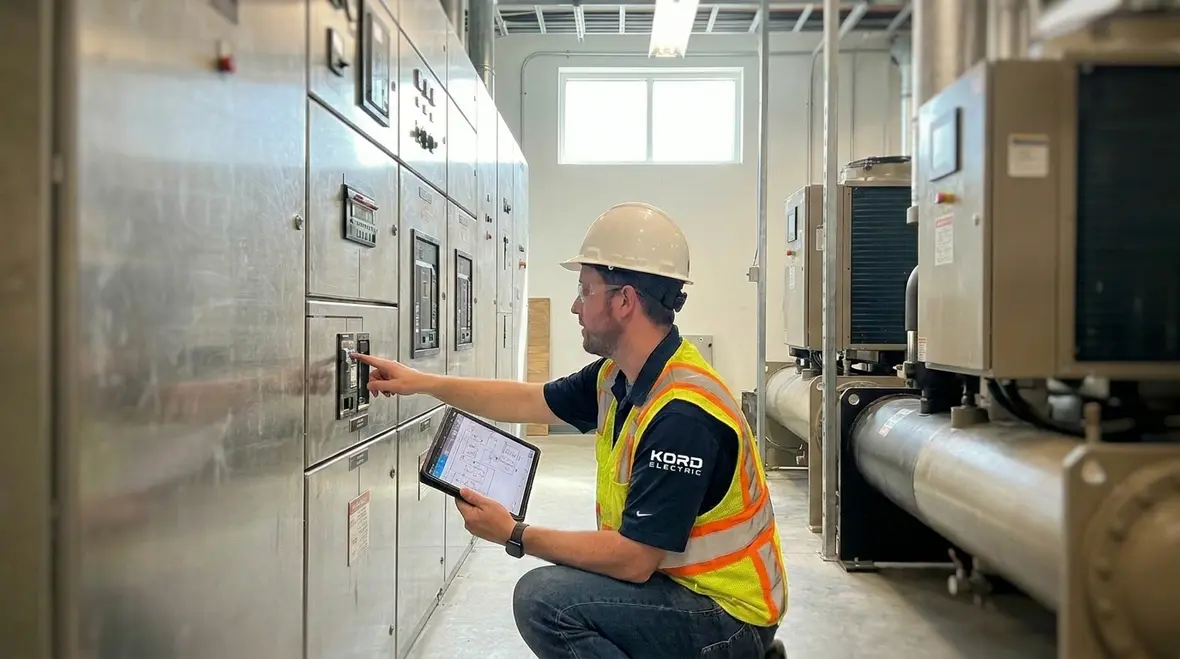
For operators who want to connect these concepts to day-to-day practice, Kord Electric’s data center electrical maintenance checklist shows how upstream electrical issues surface during inspections and how to catch them before they disturb cooling performance.
Panelboards, switchgear, and service reliability for long run uptime
Cooling systems are mission critical for major property buildings and enterprise data halls. Therefore, we focus first on the panels and switchgear that serve them. If these components run hot, age fast, or show uneven loading, cooling efficiency slides. You get slower response, more maintenance calls, and a higher risk of nuisance alarms.
When our technicians inspect distribution gear, they look for more than surface issues. We check connection quality, thermal condition, breaker condition, and busbar health. Then we evaluate whether the gear matches the actual cooling equipment list and load profiles. If the facility has grown, or if tenants added heat without updating the electrical plan, the gear often carries a mismatch.
Next, we confirm that service reliability supports cooling uptime. For instance, we verify that redundant paths and changeover logic keep the cooling system running through events like maintenance or upstream disturbances. Meanwhile, we ensure metering supports fast troubleshooting. In many projects, better metering means fewer “mystery trips,” and that means less time wasted while temperatures climb.
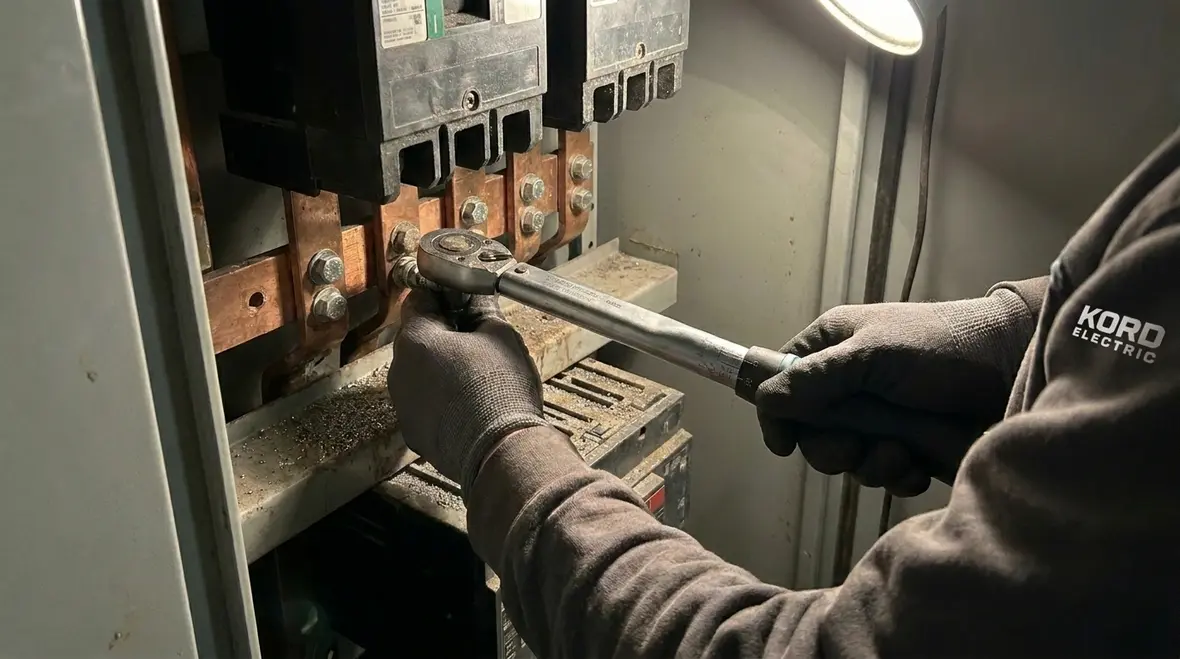
These same principles show up in broader work on data center electrical requirements for uptime, where cooling, IT loads, and life safety systems all depend on resilient switchgear and coordinated service paths.
Controls, metering, and feedback loops that keep temperatures steady
Even strong mechanical design cannot deliver consistent results if the controls lose accurate feedback. So, we help clients improve cooling control systems by upgrading the electrical side of the feedback loop. That includes power quality for controller electronics, proper grounding for sensing circuits, and stable auxiliary power for pumps, dampers, and fan controllers.
Also, we set up metering that tells the truth. When facility teams track real power draw, cooling energy can be optimized instead of guessed. Then operators can adjust setpoints based on measured load, not old assumptions. This matters in large commercial spaces where energy baselines change over time due to occupancy patterns and equipment upgrades.
And yes, sometimes the issue is “simple,” like a control circuit wired with poor separation from power conductors. However, simple problems can cause very loud consequences. Our expert service staff explains what we find in a way operators can act on quickly. We do not hide behind jargon. We translate the electrical behavior into clear actions.
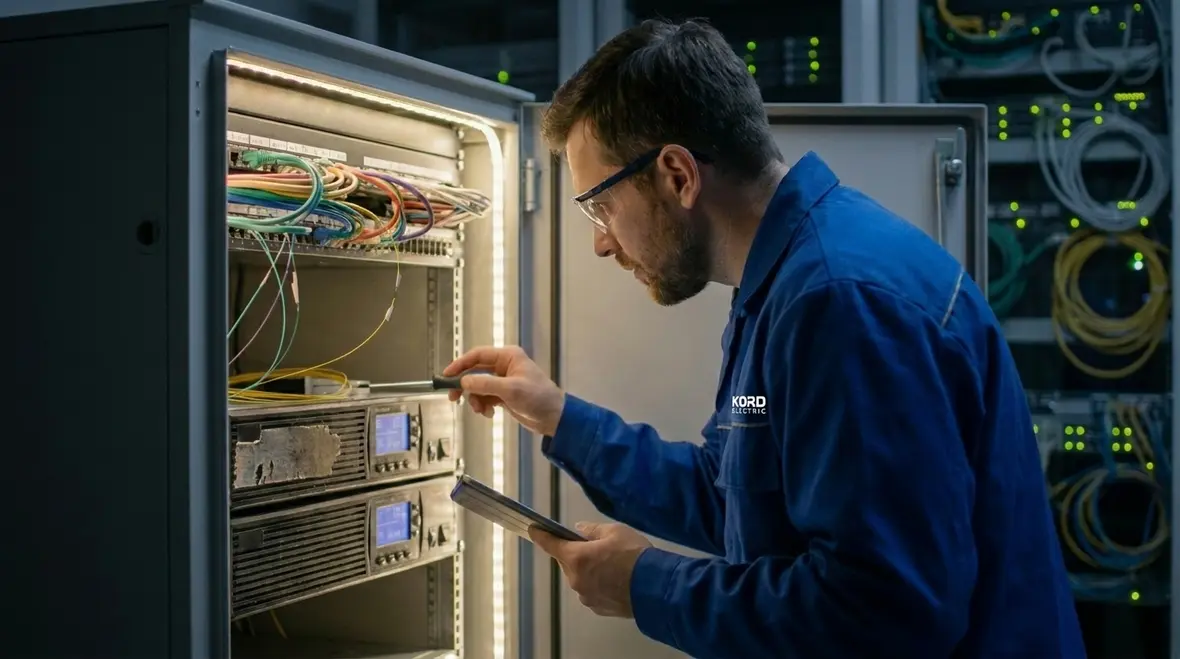
Over time, better feedback and metering help teams tune both cooling and power paths, turning data center cooling efficiency into a measured, repeatable outcome instead of a trial-and-error exercise.
Power quality upgrades that reduce harmonics and voltage issues
Harmonics and voltage instability can increase losses across motors, drives, and control power supplies. In cooling systems, those electrical effects may appear as extra current draw, unstable fan speed control, or inefficient pump operation. Therefore, improving power quality supports data center cooling efficiency by keeping equipment within stable electrical conditions.
In the real world, we often see switching power supplies, variable frequency drives, and modern cooling controllers contributing to harmonic distortion. Consequently, we measure current and voltage waveforms, then we decide what mitigation fits the facility. That might involve harmonic assessment, better distribution design, or equipment choices that reduce distortion impact. In some cases, we coordinate grounding and bonding upgrades to support control signal integrity.
As voltage drop climbs, motor torque and control behavior can shift slightly. Over hours, those shifts add up. So, our technicians verify conductor sizing, routing, and terminations. And when we correct weak points, cooling systems respond more predictably. Predictable control means less “thrash,” and less thrash means better energy use.
These same power quality themes show up in Kord Electric’s broader work on data center electrical infrastructure essentials, where harmonics, thermal effects, and grounding all shape how efficiently cooling plants can do their job.
From design to commissioning: how we install for efficiency not headaches
Electrical upgrades only matter if the installation matches the plan, and the plan matches the cooling reality. That is why Kord Electric treats commissioning as a core part of the work, not a last minute checkbox. We coordinate electrical scope with the cooling equipment and controls so the entire chain performs as intended.
We also follow a clean, logical workflow. First, we confirm the cooling equipment list and operating sequence. Then we review the one line diagrams, the panel schedules, and the control interface points. After that, we install and test, and we verify that protective devices coordinate correctly with expected operating conditions.
Finally, we document and train. Our expert service staff walks operators through what changed, why it matters, and how to spot early signs of trouble. This step reduces call backs and helps the facility team keep momentum. If you want a cooling plant that does not behave like it is haunted, you need clear documentation and real training.
Commissioning and testing for cooling-related upgrades often align with broader reliability work across the facility, whether the project focuses on major data hall expansions or targeted service upgrades.
Electrical upgrades for modern buildings: what we apply to data centers
When we help major property buildings and industrial facilities, we often reuse lessons from our work on commercial electrical systems for modern buildings. The key idea stays consistent: electrical systems should support efficient operation, not just meet code on paper. Therefore, we align distribution planning, control integration, and reliability goals so mechanical teams can deliver the intended cooling performance.
In practical terms, this means we look at load paths, not just device lists. We plan for future growth, because data centers rarely stay the same. And we prioritize serviceability so maintenance does not become a full production event. Then we validate performance with tests that reflect real operation, not just bench checks.
If you are planning broader modernization across your facility, Kord Electric’s article on commercial electrical systems for modern buildings connects long-term electrical planning with day-to-day reliability, including the cooling infrastructure that protects your IT loads.
FAQ: data center cooling efficiency and electrical systems
Ready to strengthen cooling with the right electrical foundation
Cooling systems should run steady, not stumble through electrical problems. Kord Electric helps commercial and industrial facilities upgrade distribution, power quality, controls, and service reliability so data center cooling efficiency improves in real operation. Our technicians and expert service staff explain each step in plain terms, then we commission and document the results so your team can maintain performance. If you are planning expansions, retrofits, or reliability upgrades, contact Kord Electric today. Let us build the electrical base that keeps cooling calm.
Many facilities pair cooling-focused projects with broader electrical preventive maintenance services, so future inspections, testing, and load changes support the same reliability goals that keep temperatures stable day after day.


