Lighting Automation ROI Strategy for Commercial Facilities
ROI Lighting Automation Upgrades: A Kord Electric Approach
At Kord Electric, we start by using our lighting automation ROI strategy the way a good electrician checks a circuit: carefully, on purpose, and with proof. First, we estimate the energy your facility uses now, then we project what smart controls can save in real time and over the long run. Next, we factor in labor, controls setup, and commissioning so the upgrade does not turn into a “works on paper” fantasy. Finally, we run the payback math and stress test it against how your building actually operates.
To keep things honest, we do this with our expert service staff and field technicians who explain each step in plain language. Yes, even when the numbers get as intense as a superhero origin story, we keep it calm. Others may sell shiny controls; we sell measured outcomes.
How our team measures energy savings before anyone signs off
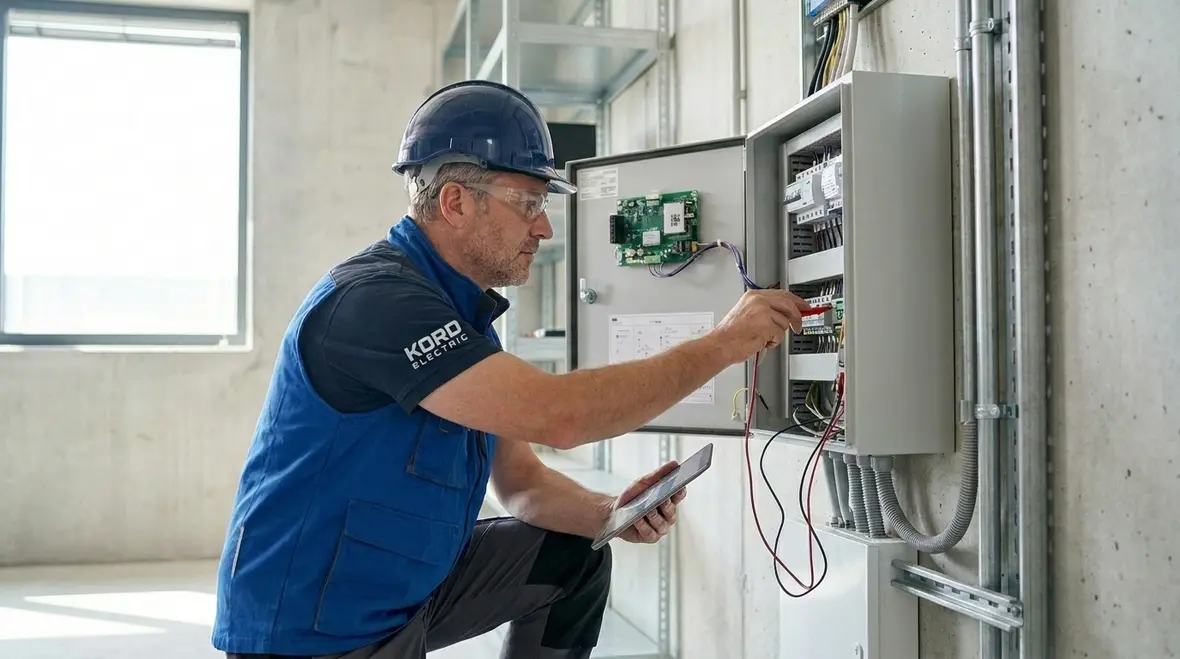
Commercial and industrial sites rarely behave like a textbook. Therefore, we collect real operating patterns before we touch a control panel. We review your schedules, zones, occupancy habits, and lighting hours. Then we map those details to the control logic you need, such as dimming targets, daylight response, and after hours settings.
Next, our technicians confirm what is installed today. For example, we verify fixture types, existing dimming capability, switching strategy, and control wiring paths. Then we estimate baseline energy use by area and operating mode. Only after that do we estimate how much each lighting zone can reduce load when spaces are vacant or when daylight reduces demand.
In other words, we avoid guessing. We use measurements and verified assumptions so your lighting automation ROI strategy stays rooted in reality, not in hope. Because hope is not a line item on a utility bill.
Calculating ROI with real facility costs and real usage
ROI for smart lighting automation upgrades is not just energy savings. It is a whole set of costs and benefits, and we treat it that way for commercial and industrial facilities and major property buildings.
Here is the structure we use, explained clearly for owners and facility managers.
Initial costs: materials, controls, wiring interfaces, commissioning, and labor for installation
Ongoing costs: service time, any required software support, and maintenance of components
Energy savings: reduced wattage through dimming, reduced run time through better scheduling, and reduced waste from smarter zoning
Operations savings: less manual troubleshooting, fewer site calls due to better fault detection, and fewer changes required when tenant schedules shift
Risk adjustments: we consider how your building will use the spaces over the next few years
Then we compute payback and ROI with numbers you can defend. When clients ask how fast the system pays for itself, we do not dodge. We calculate payback as net cost divided by annual net savings. When they ask ROI, we quantify annual return relative to the investment. And when they ask about uncertainty, we show best case, expected case, and conservative case so decision makers can choose with confidence.
What benefits actually move the needle beyond kWh
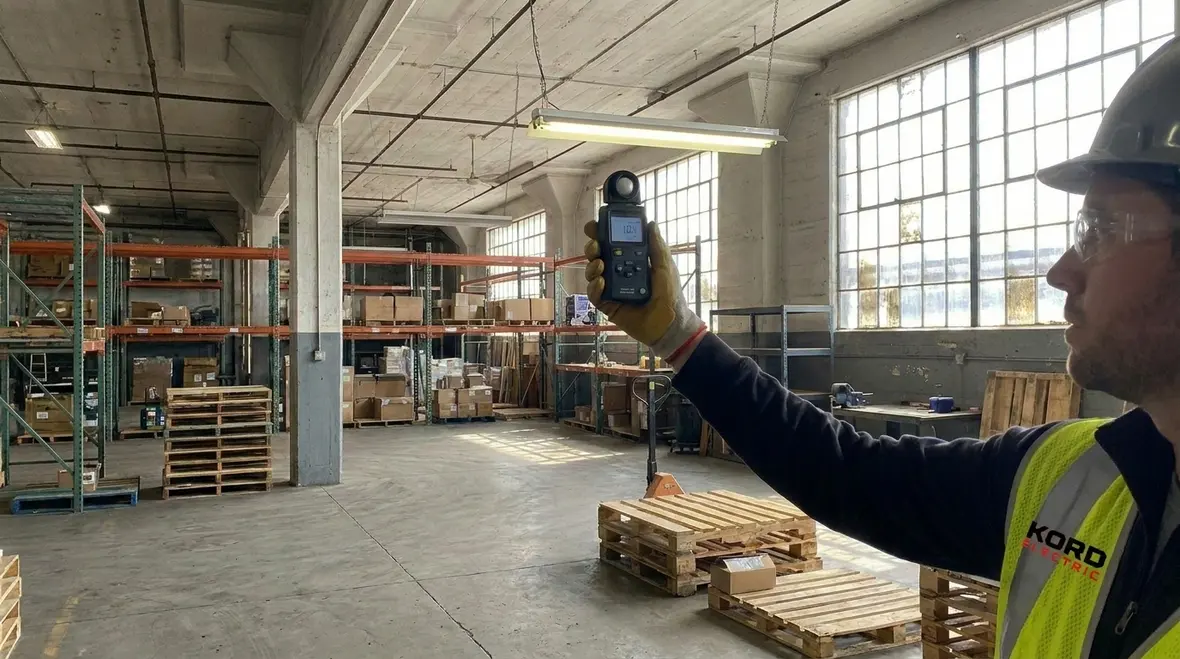
Energy savings matter. However, a smart system can also reduce costs that rarely get counted in quick spreadsheets. Therefore, we help the team consider these benefits when they plan their lighting automation ROI strategy.
Lower maintenance burden: With better monitoring and fault reporting, fewer fixtures fail in silence. Technicians can address issues faster, which reduces downtime and repeat labor.
Fewer re-lamp and re-visit events: Automated control logic can reduce wear by managing when fixtures operate and how they dim. That does not mean “never maintain,” but it can reduce how often you pay for the same issue.
Better occupant experience: Spaces feel more stable when lighting adapts to occupancy and daylight. When people stay comfortable, they do not request constant overrides. And when overrides drop, your maintenance team breathes easier. That is not a metaphor, it is an actual calendar effect.
Better compliance readiness: Smart controls can help maintain consistent operation and reduce out of spec conditions. For regulated environments, documentation and control logs help support your internal processes.
Our expert service staff explains these impacts in practical terms during site walk-throughs. We translate tech features into business outcomes, so the decision stays grounded.
Case planning: zoning, controls, and commissioning that prevent “surprises”

Upgrades fail when the design fits the brochure but not the building. So we structure the plan around how your facility works. First, we break lighting into zones that match how people use space, not just how ceilings look. Then we set control thresholds that match your normal day, including seasonal daylight patterns and typical occupancy schedules.
Next, we coordinate with your electrical systems and panels. We confirm available power, verify device compatibility, and plan the wiring interfaces so installation does not sprawl into rework. Then we plan commissioning. Commissioning is where “smart” becomes dependable. We test behavior during day, night, and transitional conditions, and we check that dimming curves perform as expected.
If your team has ever heard a system “works” until it hits a real shift schedule, you already know why commissioning matters. We treat commissioning like final inspection on a critical job. It deserves attention, not vibes.
Integrating safety and compliance with smart upgrades

Lighting controls often connect into broader facility electrical systems. That means safety and compliance must come along for the ride. For example, when facilities in California handle commercial plug-in equipment, they must follow GFCI requirements. If a project touches areas covered by those rules, it can affect how receptacles and power feeds support equipment in the space.
In fact, Kord Electric has covered California commercial compliance guidance for GFCI outlets in our blog guide, including key points on where GFCI protection is required and how facilities should approach compliant installations. You can review it here: GFCI Outlet California Commercial Compliance Guide.
Now, smart lighting automation upgrades are about controls, not plug rules. Still, the project can share spaces, feeds, and installation paths. So we plan the job with a compliance mindset, and our technicians explain the impact of each electrical decision before it becomes an issue.
That approach protects your budget, reduces delays, and keeps the upgrade process calm, even when the schedule is tight. Because nobody wants a post install “wait, we need to change something” moment.
Using your ROI model to choose the right upgrade level
Not every building needs the same level of automation on day one. Therefore, we help owners choose an upgrade scope that matches risk tolerance and expected usage changes.
Common options include:
Lighting zone control: improve scheduling and switching across key areas
Dimming with daylight response: reduce energy waste near windows and in mixed lighting conditions
Central monitoring and reporting: support facilities staff with actionable fault and performance insights
Integration readiness: plan for future updates so you do not rebuild the system later
Then we tie each scope level to the lighting automation ROI strategy. We estimate the incremental cost and incremental savings. If the added automation increases payback time, we adjust the plan. If the added controls reduce maintenance calls or stabilize operations, we include that value. And if your facility has tenant schedule changes, we model them so the return is realistic.
Our expert service staff also helps decision makers understand what happens after installation. For instance, they explain how control settings affect savings and how user behavior can influence comfort and energy use. In short, we do not just sell systems. We help you operate them.
Frequently Asked Questions
FAQ (short answers for featured snippets)
What is lighting automation ROI strategy? A step-by-step method to estimate costs, predict energy and operations savings, and calculate payback based on your building’s actual use.
How do you estimate energy savings? We map your schedules and zones to control functions like dimming and daylight response, then compute projected reductions.
Does Kord Electric handle commissioning? Yes. Our technicians test system behavior and adjust settings so the upgrade performs as designed.
Where do projects fail in ROI calculations? They often fail when companies guess usage or skip commissioning. We avoid both.
Connect lighting automation ROI to broader electrical planning
Smart lighting automation rarely lives alone. It ties into panels, distribution paths, and the same infrastructure that supports critical loads. For facilities planning larger upgrades, pairing a disciplined lighting automation ROI strategy with structured electrical maintenance and future projects—like commercial solar integration or targeted rewiring—can turn a single upgrade into a broader reliability plan.
For example, facilities exploring deeper modernization often review Kord Electric’s guides on topics such as rewiring cost for commercial electrical systems and hidden electrical risks in commercial buildings. Those projects can be aligned with lighting automation so downtime, labor, and commissioning steps are coordinated instead of repeated.
When lighting automation is integrated with preventive maintenance, data center distribution design, or commercial kitchen electrical upgrades, the result is not just better lighting. It is a more resilient electrical backbone that supports production, tenants, and long term energy strategies across the property.
Related commercial electrical services that support ROI-driven upgrades
As you build a lighting automation ROI roadmap, it often helps to align the project with complementary services that keep your system stable over time. Kord Electric’s electrical preventive maintenance programs, for example, are designed to protect panels, switchgear, and distribution equipment so the savings you capture from lighting automation are not undermined by avoidable failures elsewhere in the system.
For facilities planning broader efficiency work, services such as recessed lighting installation and EV charger installation can be sequenced alongside lighting automation. That way, your investment in smarter controls becomes part of a coordinated, sitewide strategy instead of a one-off project.
Request a ROI walk-through with Kord Electric
If you want a lighting upgrade that pays back on time, do not rely on guesswork. Kord Electric builds a lighting automation ROI strategy using your site data, then we show expected savings, costs, and a realistic payback range. Our technicians explain each assumption in plain terms, and our expert service staff keeps the plan steady from design through commissioning. Contact us to schedule an on site review for your commercial or industrial facility, and let us help you upgrade with confidence.
To extend the impact of your project, you can also connect your lighting automation plans with a structured electrical preventive maintenance program. Together, they help protect your investment, stabilize operations, and keep your facility ready for future upgrades.
When you are ready to move from “interesting idea” to a measurable, defensible plan, the next step is simple: walk the site, gather the data, and let our team build the lighting automation ROI strategy that matches your real world facility.