Medical Building Fire Safety Requirements California
California’s medical building fire safety rules require clear planning, smart detection, and fast action when something goes wrong. For medical facilities, the medical building fire safety requirements california are not a “nice to have” checklist. They drive how systems are designed, installed, tested, and maintained, including life safety features that protect patients, staff, and visitors. Kord Electric builds and services fire protection for commercial and industrial facilities and major property buildings, so our work stays focused where the stakes are highest. And yes, we have heard the jokes about smoke detectors “just trying to help,” but in healthcare, help has to arrive on time, every time.
Because rules can feel dense, Kord Electric uses a calm, practical approach. We explain what the requirements demand, why each piece matters, and how our technicians verify performance step by step. That way, others can make decisions with confidence, not guesswork.
Medical Fire Safety Rules in California, and what they mean for real buildings
When people read about medical building fire safety requirements california, the language often sounds like it was designed for a code book, not for a real facility with stressed staff, busy hallways, and patients who cannot just head for the stairs. The reality on the ground looks different. Systems have to work in a place where alarms compete with monitors, doors might be held open for care, and equipment never seems to stop buzzing.
That is why Kord Electric centers our work on how these facilities actually function. We look at daily traffic, shift patterns, and the reality that during an alarm, nobody has time to debate what the horn pattern means. Fire safety systems have to cut through the noise, point people in the right direction, and give responders what they need to act without delay. The code language might feel abstract, but our job is to translate it into wiring, devices, and documented tests that hold up during the loudest five minutes a building can face.
Start with code basics for healthcare properties
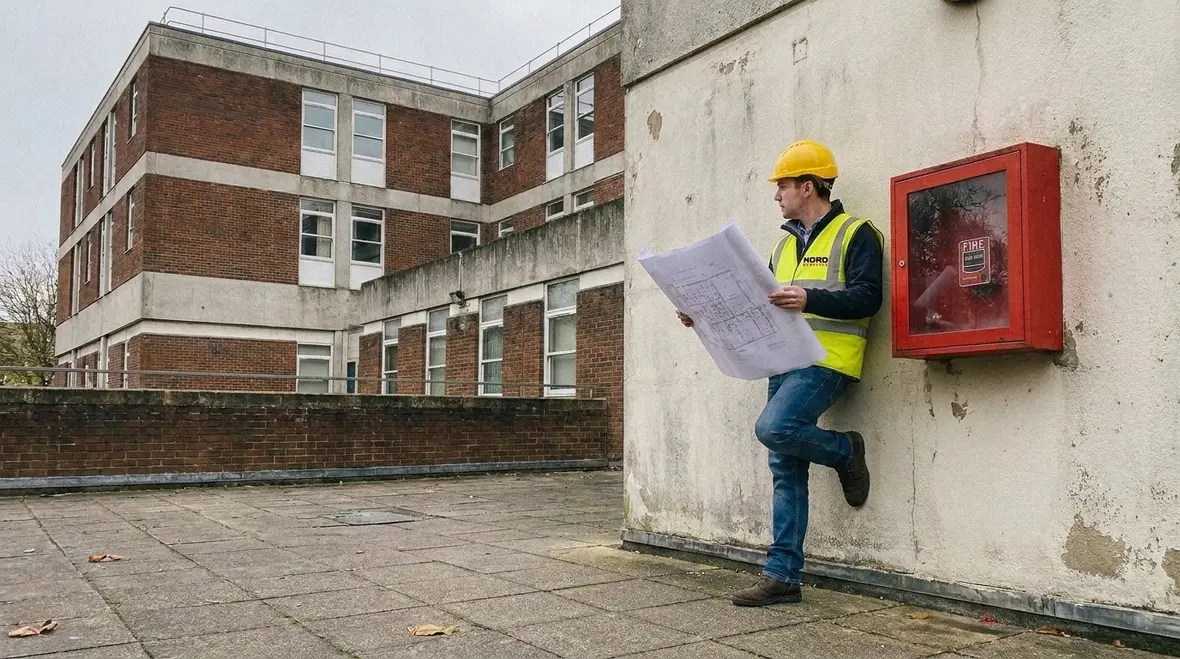
Most medical buildings in California fall under layered requirements that connect building design, fire alarm systems, suppression where needed, and ongoing maintenance. In plain terms, the goal stays consistent: detect hazards early, alert people quickly, guide evacuation, and limit fire spread long enough for safe response.
To meet medical building fire safety requirements california, the building team typically coordinates life safety features with local adoption of recognized standards and the California Building Code approach. In practice, this means fire alarm and life safety systems must match the occupancy risk and the building layout. Then, the building must prove it works through inspections, testing, and documentation.
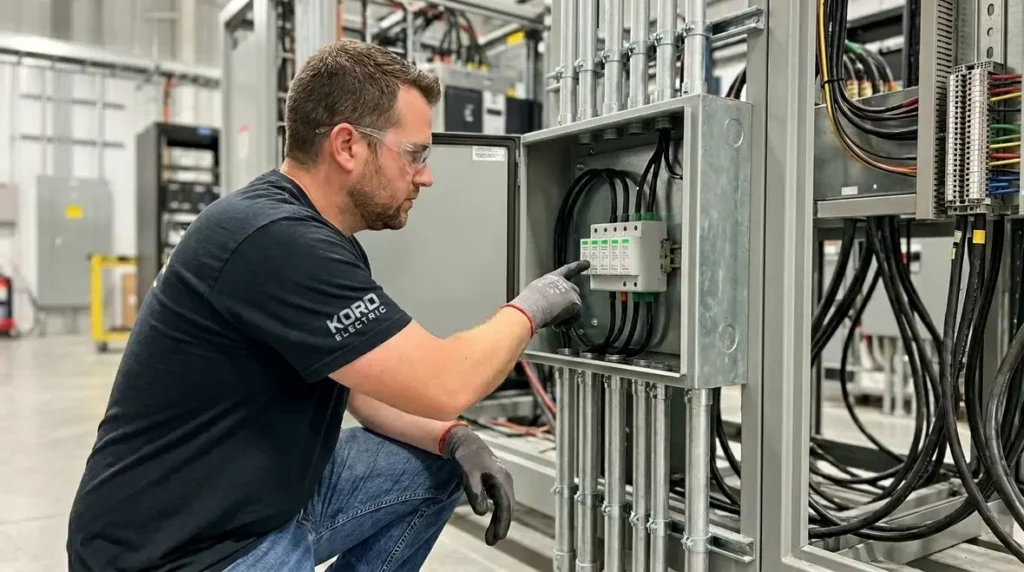
At Kord Electric, our technicians do not just “check the box.” First, they review the building’s intended use and how people move through it. Next, they look at how the alarm system interacts with door controls, smoke control concepts when applicable, and notification appliances. Finally, they connect these details to maintenance so the system stays reliable after the ribbon cutting, not only during it.
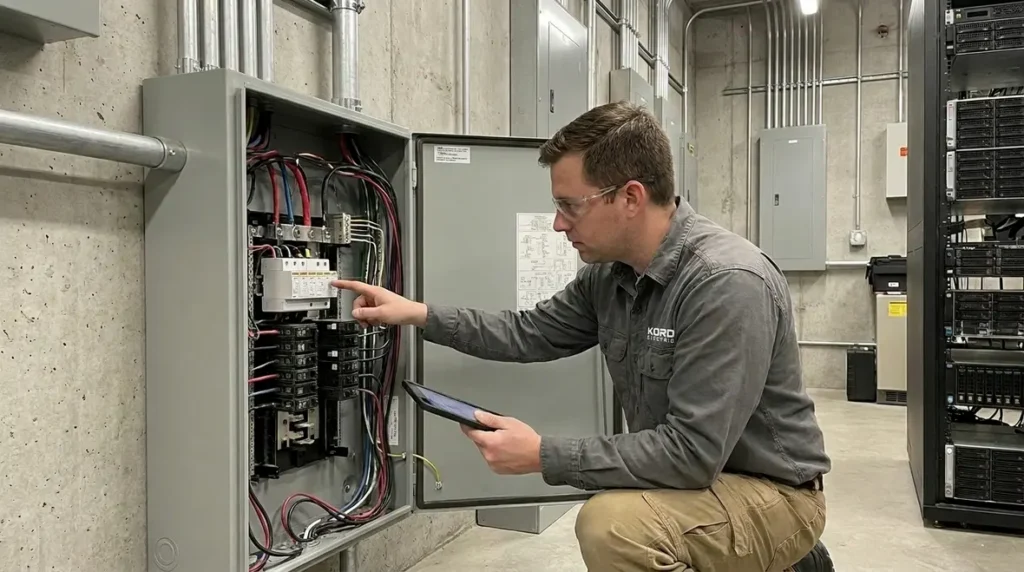
For many medical buildings, this code foundation also overlaps with electrical safety planning. Fire alarm power sources, emergency circuits, and related wiring must follow current standards so that the alarm system can do its job even when the rest of the facility is under stress. Kord Electric’s experience with national electrical standards and local adoption means we can help tie those pieces together without forcing facility teams to decipher every cross reference on their own.

Fire alarm and notification: what must happen when seconds count
When a fire starts in a healthcare environment, speed matters, and the alarm must do more than beep. A compliant system typically needs dependable detection, clear audible and visible notification, and zoning that supports organized response. Additionally, the system must supervise wiring and devices so failures show up before they become emergencies.
We see common issues during service calls for major property buildings. Sometimes the notification coverage changes after renovations, even when nobody thinks it counts. Other times, aging components respond slower than expected, or dirty sensing chambers trigger nuisance behavior that tempts people to ignore alarms. That is where professional service matters. It keeps the system honest.
Our expert service staff explains the logic behind coverage and testing so facility managers understand what “working” means. For example, we do not treat testing as a ritual. Instead, we verify device health, confirm proper alarm annunciation, and help others understand what maintenance records must show for audit readiness. In the healthcare world, “I think it should work” is not a plan.
Modern medical facilities also rely on coordination between the fire alarm system and other building controls. Door hardware, elevator recall, air handling shutdown, and even nurse call interfaces may depend on clean, predictable alarm signals. When we test, we are not just pulling devices; we are confirming that the right doors release, the right fans stop or start, and the right staff see the right indicators at the right time.
Detection and suppression coordination for medical risk
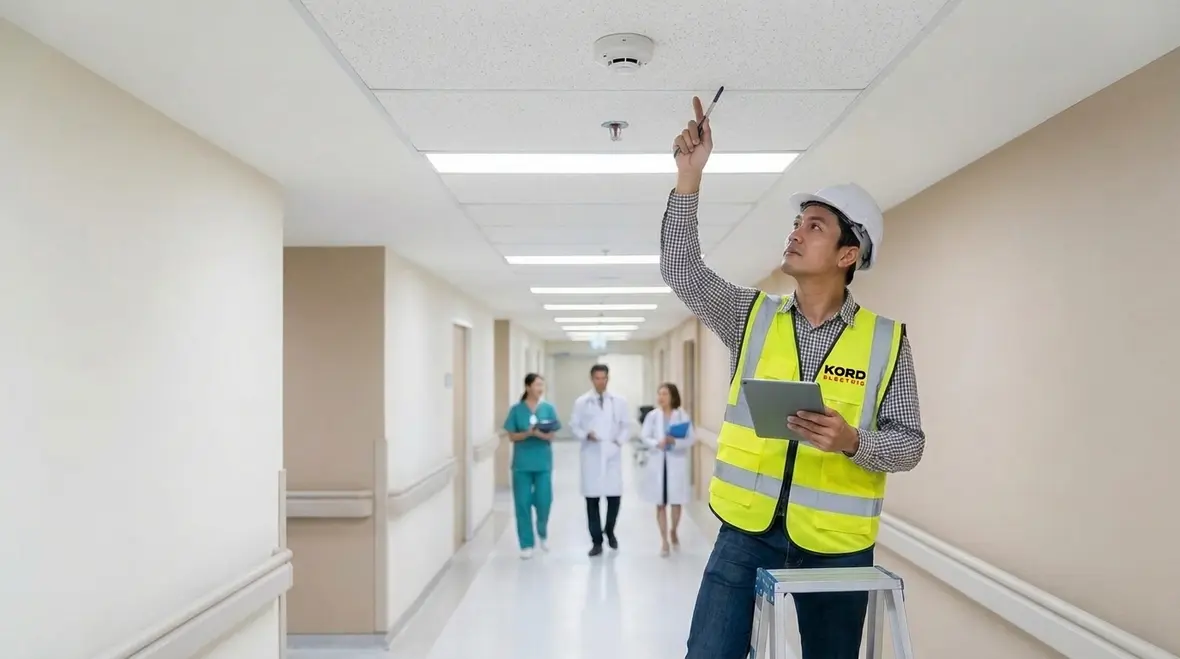
Detection and suppression should not act like separate worlds. They must coordinate so a fire gets detected early and controlled fast, based on the hazards present in the spaces. For medical facilities, that often includes areas like patient care rooms, corridors, support spaces, and equipment zones. Because smoke, heat, and fire behavior can differ by room function, the design must reflect that reality.
As a company focused on commercial and industrial facilities and major property buildings, Kord Electric handles these systems with a building wide mindset. First, we consider how the building layout and occupancy patterns create exposure points. Then, we help ensure that detection placement and suppression coverage match the fire load and the risk profile.
During service work, our technicians often explain how device selection affects performance. For instance, sensor sensitivity and maintenance routines can make the difference between fast response and unwanted alarms. Meanwhile, suppression systems require correct inspection and records to confirm they stay ready. And yes, we occasionally get asked whether the system needs “a little rest.” It does not. Fire protection equipment does not binge Netflix and take breaks. It works when it is needed.
In higher risk areas—such as imaging suites, laboratories, or equipment rooms—detection and suppression may require specialized approaches. Clean agent systems, sensitive smoke detection, or additional supervisory points might come into play. Our role is to keep those decisions aligned with medical building fire safety requirements california while still fitting the workflow of the staff who actually use the space every day.
Life safety and evacuation support in healthcare settings
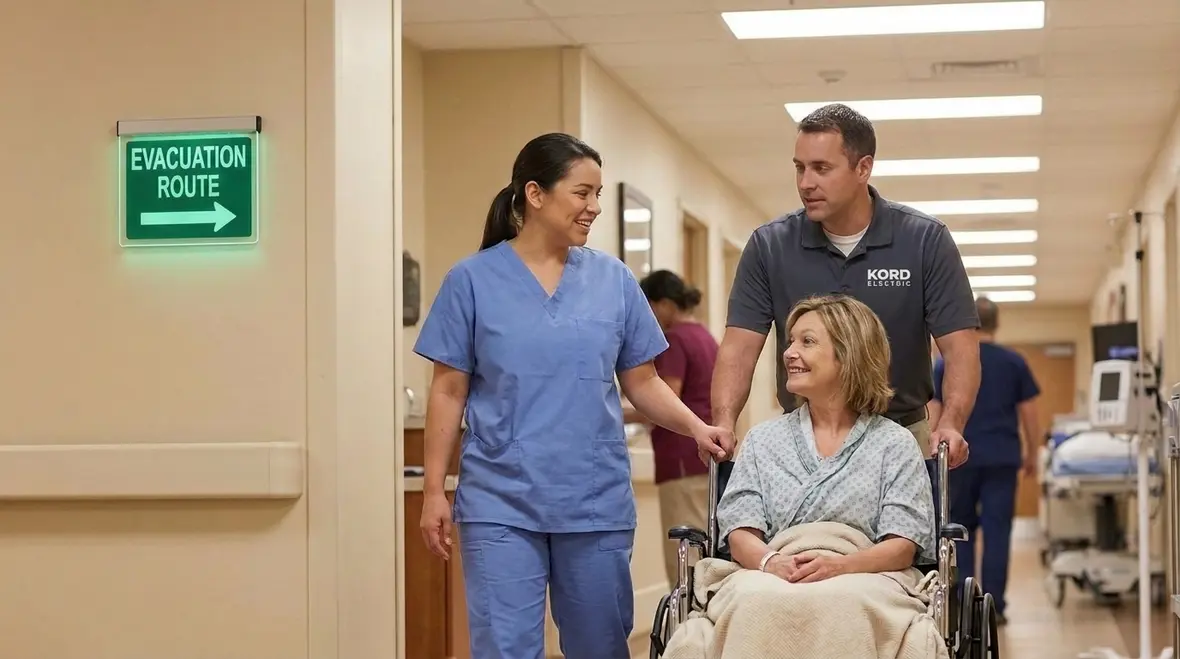
Even when detection works perfectly, people still need safe routes and clear guidance. In healthcare, evacuation plans must consider mobility limitations, staffing levels, and the fact that some patients cannot self evacuate. Therefore, life safety features and procedures need alignment with the building’s fire protection design.
That alignment shows up in how alarm signals coordinate with notification strategies and how emergency communications prepare responders. In many cases, features like door holding or release logic, smoke related operations, and emergency signage must support the intended evacuation path. Additionally, staff training and drills connect technical reliability with real behavior.
Kord Electric assists others by explaining system interactions in plain language. Our expert service staff helps explain what supervisors should look for during inspections, how to read documentation, and what conditions indicate a need for immediate attention. When facility teams understand how the system supports evacuation, they respond faster, and they respond better.
We also encourage medical facility leaders to keep evacuation concepts connected to other building upgrades. Changes to access control, new wings, or updated clinical spaces can all affect life safety routes. Reviewing these changes regularly with a fire and electrical perspective helps keep medical building fire safety requirements california in view, instead of forcing everyone to scramble later when an inspector asks tough questions.
Inspections, testing, and maintenance that stand up to scrutiny
Fire safety does not stop after installation. In California medical facilities, ongoing testing and maintenance protect both people and property, and they support compliance. Many requirements focus on periodic inspection, functional testing, and proper record keeping. This matters because equipment can drift out of spec over time due to age, dust, corrosion, physical changes, or routine wear.
Here is what good maintenance looks like in real life. First, a schedule covers inspections and tests for detectors, notification appliances, control panels, and related devices. Next, service includes verification that troubles and supervisory signals operate correctly. Then, records document outcomes so others can show due diligence during audits or authority involvement.
Our technicians work in a structured way. They follow procedures, they log what they find, and they clearly explain recommendations. If a part needs attention, we explain why, what symptoms indicate, and how we help prevent repeat issues. In other words, we keep the system working so facility teams do not need to guess what will happen during an emergency.
For facility leaders who manage more than one property or coordinate with corporate compliance groups, this kind of documentation becomes even more important. Consistent test reports, deficiency tracking, and follow up repairs help prove that medical building fire safety requirements california are not just printed in a binder—they are reflected in real, verifiable work.
How we help medical building teams stay compliant without chaos
Medical buildings often run on tight timelines and high daily demands. In that environment, fire safety compliance should reduce chaos, not create it. Kord Electric supports commercial and industrial facilities and major property buildings with service planning that fits how these properties operate.
During a typical engagement, others start by identifying the building scope and system details. Next, we review existing documentation and current conditions. Then, our technicians explain what the medical building fire safety requirements california expect in terms of testing and maintenance, and what that means for the building’s schedule. After that, we perform service and provide clear reporting so facility teams can move forward.
To make things even easier, we use a simple workflow that many property managers recognize right away:
What we do
- Review system setup and maintenance history
- Inspect, test, and repair fire alarm and life safety components
- Validate performance through practical verification
- Provide documentation for compliance readiness
How it helps
- Fewer surprises during inspections
- More reliable alarm and detection behavior
- Clear next steps for facility teams
- Better confidence for staff and responders
Because healthcare buildings are complex, we keep communication steady. And if you are thinking about calling someone “just to see if it is fine,” we get it. However, we help others choose the right level of service, so the building does not rely on luck. Luck is great for sports. Fire safety is not a halftime strategy.
If your team manages a portfolio across Los Angeles County, it can also help to connect your medical fire safety planning with broader electrical and infrastructure work. Kord Electric’s dedicated Los Angeles County electrical services support complex facilities that need coordinated upgrades, preventive maintenance, and reliable power behind their life safety systems.
FAQ: Medical fire safety requirements in California
Need a compliance focused fire safety plan? Call Kord Electric
Compliance should feel steady, not stressful. Kord Electric helps property teams meet medical building fire safety requirements california with expert technicians, clear explanations, and service that supports reliable performance. If your medical facility needs inspection, testing, system repairs, or documentation support for major property buildings, we are ready to help. Contact Kord Electric today to review your systems and map out the right next steps. We will bring calm, careful work, and the kind of documentation that makes inspections go smoother.
For facilities that want a unified approach to alarms, sprinklers, extinguishers, and related life safety systems, partnering with a full service fire protection company can make compliance far easier. Explore how Kord Fire Protection supports fire sprinklers, suppression systems, fire alarms, and ongoing inspection programs across Southern California so your electrical and fire protection strategies move in the same direction.
When your team is ready to connect fire protection planning with electrical reliability, you can request support directly through Kord Electric’s contact pathways or combine efforts with related fire protection services for a more complete safety roadmap.