
NEC 200.4 Grounded Conductor General Rules for Safety
In our day to day work with commercial and industrial facilities, we see one thing again and again: grounded conductors must be handled the right way, or the system pays for it later. That is why the NEC 200.4 grounded conductor general rules matter. In that section, the code sets broad requirements that guide how grounded conductors are installed, maintained, and connected. It helps protect people, equipment, and business continuity. And yes, when we explain it to clients, we sometimes hear, “Why can’t electricity just behave like a polite tenant?” Unfortunately, power is more like a celebrity. It shows up, it causes drama, and it follows the rules.
What the NEC 200.4 grounded conductor general rules require for grounded conductors
In plain terms, the NEC 200.4 grounded conductor general rules set expectations for grounded conductors across the installation. Technically, they guide what conductors count as grounded, how they should be used, and how they must stay reliable through the life of the system. Importantly, these general rules do not stand alone. They work with other NEC articles and with good design practice. As a result, field teams cannot treat grounded conductors as an afterthought.
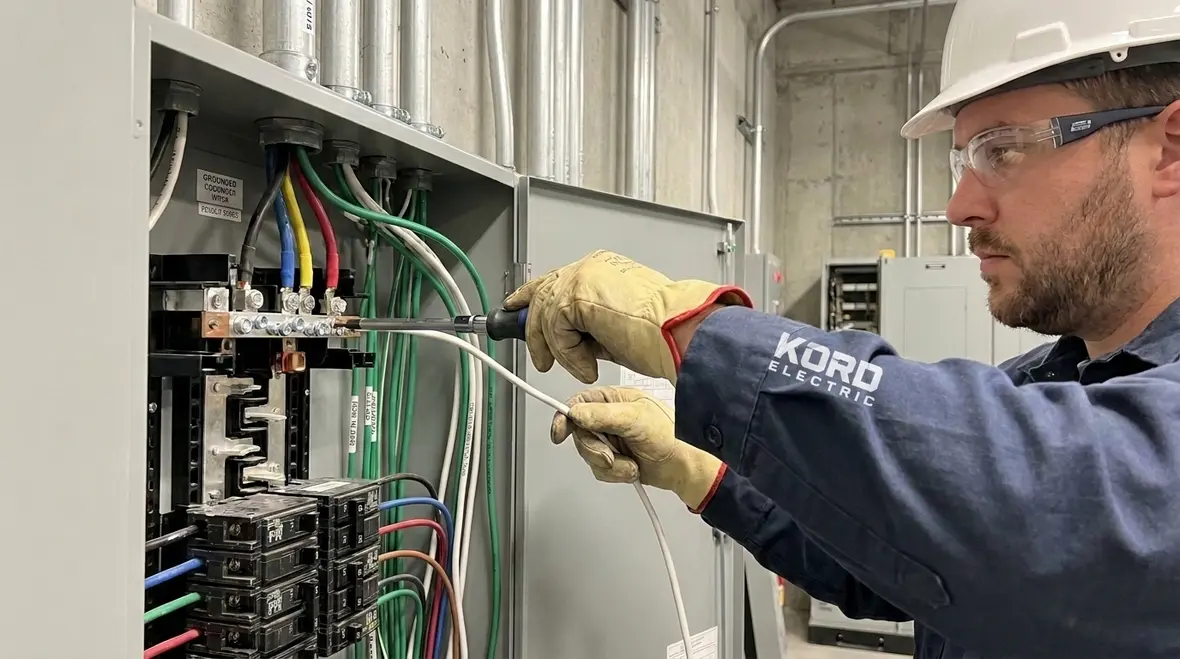
Our technicians and expert service staff approach this the same way they approach load studies and panel work. First, we confirm system type, then we confirm bonding and grounding intent, and only then we verify routing, labeling, and termination. That order matters, because skipping steps turns a “simple ground wire” into a future troubleshooting project.
When grounded conductors follow NEC 200.4 grounded conductor general guidance, the facility gets steadier reference points for voltage. That, in turn, supports overcurrent protection and helps reduce unsafe voltage on metal parts. So, while the code reads like a rulebook, the outcome reads like reliability.

How grounded conductor choices affect safety and equipment protection
Commercial and industrial buildings rely on stable electrical systems. Therefore, grounded conductors do more than satisfy an inspection checklist. They help control what happens when faults occur. When a fault happens, the system should direct current along a planned path so protective devices clear the problem. If grounded conductors are wrong, loose, or mismatched, the protective device may not act as designed.
Think of it like traffic control. If the signals and lanes do not match the roadway plan, even honest drivers end up in trouble. Likewise, if the grounded conductor connections do not meet code expectations, fault currents may behave unpredictably. Our field service staff sees that pattern when they find mixed practices from older work, poorly labeled conductors, or terminations that look tight but are not properly prepared.
We also watch how grounded conductor decisions interact with equipment needs. In many facilities, sensitive controls, drives, and communications equipment share space with power distribution. Consequently, the grounded conductor approach helps manage the electrical environment around those devices. When clients review broader NEC context, many of them also read companion resources like Understanding NFPA 70: The National Electrical Code Explained for 2026 to see how grounded conductor work fits into the bigger rulebook picture.

Bonding, grounding, and the grounded conductor general approach
Many facility owners ask us about the difference between bonding and grounding, and we answer clearly. Bonding ties conductive parts together so they share the same electrical potential. Grounding connects that bonded system to earth or an equivalent reference path. Grounded conductors play a key role in that picture because they provide the connection that makes the “shared potential” idea real.
Under the NEC 200.4 grounded conductor general rules, teams must treat grounded conductors with discipline. For example, they should not be installed as a casual substitute for proper grounding and bonding design. They also should not be treated as “good enough” when the terminations look convenient but are not correctly prepared.
Our technicians follow a consistent work flow. First, we review the engineered one line diagram and the device list. Then we check field conditions. After that, we confirm that bonding jumpers, grounding electrodes, and grounded conductors align with the system design. Finally, we document results so the facility team can maintain the installation.
And when someone wants to “just make it work today,” we respond with calm firmness. Electrical systems do not forgive improvisation. They simply wait for the next outage, then they take your lunch money.
Proper installation and termination practices in commercial buildings
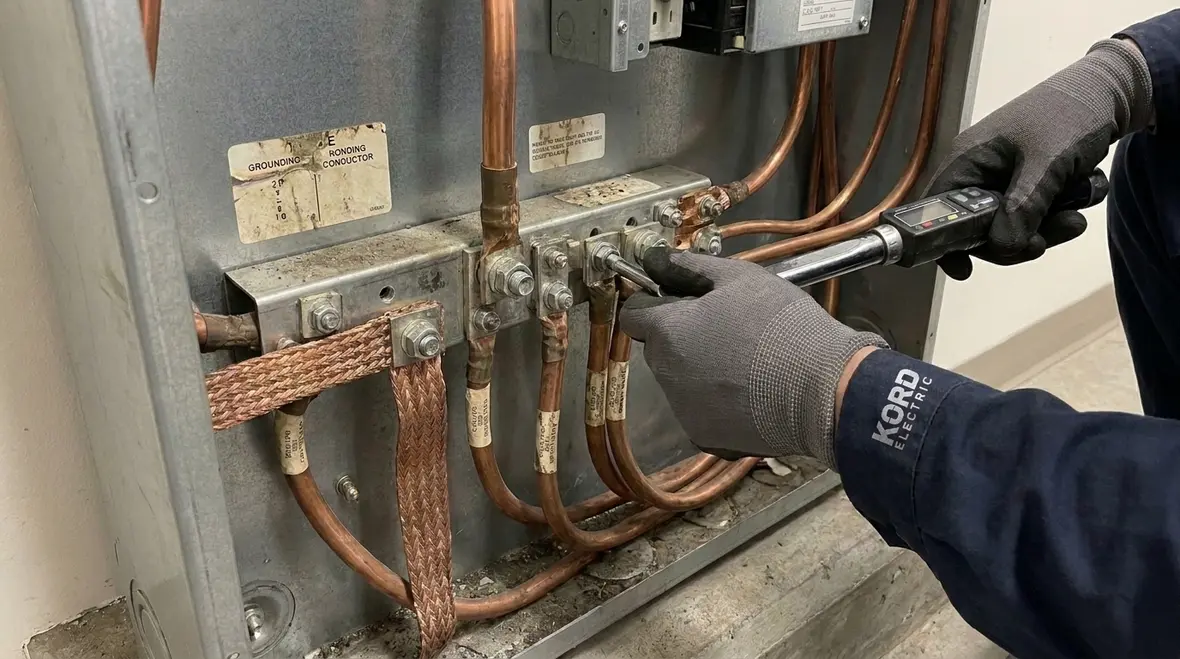
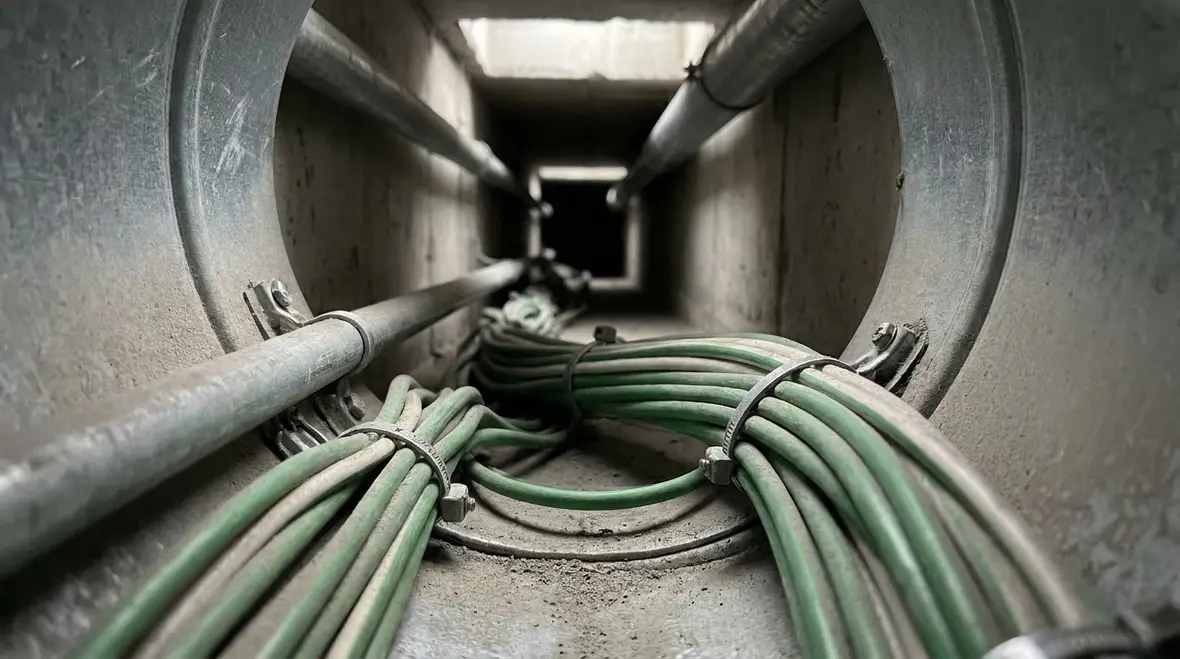
Installation details decide whether grounded conductors will perform during real conditions. Therefore we focus on the small things that inspections do not always reveal, such as conductor preparation, termination torque, and physical support. Grounded conductors must also stay protected from damage. In a commercial setting, that means proper routing in conduit, safe passage through structural members, and secure anchoring.
Termination matters because it affects contact resistance. Higher resistance can cause heat, which accelerates insulation aging. Heat also weakens connections over time. So, a connection that looks fine at first can become a problem later. We prevent that by training our team to prepare conductors the right way and verify that terminals accept the conductor size and type intended.
Our expert service staff also checks continuity and verifies the grounding path before closing up walls or panels. That step gives clients peace of mind. It also makes future troubleshooting faster, because we leave a clear record of what we tested and what we found.
For multi-tenant or complex properties, coordination is essential. We schedule work to keep critical systems online and to avoid conflicts with fire protection, mechanical crews, and building operations. In other words, we treat grounded conductor work as part of the whole building plan, not a standalone job.
Common compliance mistakes we help facilities avoid
In the field, we see recurring problems tied to grounded conductor handling. They show up in new builds, in retrofits, and after tenant improvements. Yet the pattern is consistent. When teams skip documentation, they struggle to maintain compliance. When they skip proper termination, they build a future failure point.
Here are the mistakes we often correct for commercial and industrial clients:
- Misidentifying grounded conductors versus equipment grounding conductors, which leads to wrong connection points.
- Improper conductor sizing in branches or feeders, which can violate the NEC intent for fault clearing.
- Loose or underprepared terminations where the mechanical connection feels tight but the contact is not.
- Missing or inconsistent bonding that leaves metal parts outside the intended potential plane.
- Relying on visual guesses instead of test results, especially in remodels where old work remains.
Because Kord Electric focuses on commercial and industrial facilities and major property buildings, we bring a process-driven approach. We do not treat code compliance like a one time hurdle. Instead, we treat it like a living system that must function through decades of use.
And if you are wondering how this connects to other NEC topics, the answer is simple. Grounded conductors support many downstream protections. So, getting them right reduces the odds that later systems fail in a way that costs time, product, or safety.
How our team supports NEC grounded conductor work in real projects
Projects fail when responsibility ends at “installation.” For that reason, we stay involved from design review through closeout, and we explain what matters. Our technicians and expert service staff work with facility managers, electricians, and property stakeholders so the outcome matches both the code and the operational goals of the building.
We often start by aligning on system type, equipment needs, and the building’s risk profile. Then, we plan the grounded conductor installation steps so the work supports uptime and safe access. During commissioning, we verify grounding path integrity and document results in a way that makes sense to the people who maintain the building later.
Clients also benefit from plain spoken explanations. We do not hide behind jargon. Instead, we translate NEC requirements into what crews must do and what facility teams should expect after the work is complete. That is the real value. A grounded conductor system that is understood gets maintained. A grounded conductor system that is a mystery gets ignored. And ignored electrical work is how you end up with a call at the worst possible time. Usually during business hours. Always during business hours.
For broader NEC context, we also reference industry guidance and our own blog resources, including our NEC overview content and related code discussions. While those materials cover more than grounding alone, they show how the NEC pieces fit together for 2026 updates and beyond. We help clients move from “reading code” to “building safe outcomes.”
When grounded conductor questions tie into larger upgrades, we often connect them to planning resources on topics like NEC general requirements, application scope, or code upgrade consulting so that grounded conductor decisions align with the rest of the project instead of living in a silo.
FAQ about NEC grounding and grounded conductor requirements
Final thoughts and next steps with Kord Electric
When grounded conductors follow the NEC 200.4 grounded conductor general approach, commercial and industrial facilities gain safer fault behavior, stronger equipment protection, and fewer surprises during outages. At Kord Electric, our technicians and expert service staff bring a careful process, clear explanations, and documented results. If you need grounded conductor work reviewed, corrected, or planned for a project, contact us. We will help you protect your building like adults protect their coffee. With care, planning, and no shortcuts.
Because grounded conductor choices affect everything from overcurrent protection to emergency power performance, many facility teams pair this work with a broader review of their Los Angeles County electrical services so that code compliance, reliability, and future capacity planning move forward together instead of in disconnected steps.
If your team wants to keep digging into the rulebook that shapes grounded conductor requirements, exploring NEC resources on scope, application, and general safety expectations will help you see how NEC 200.4 fits into the larger NEC 200.4 grounded conductor general usage and the rest of NFPA 70 for 2026 and beyond.


