
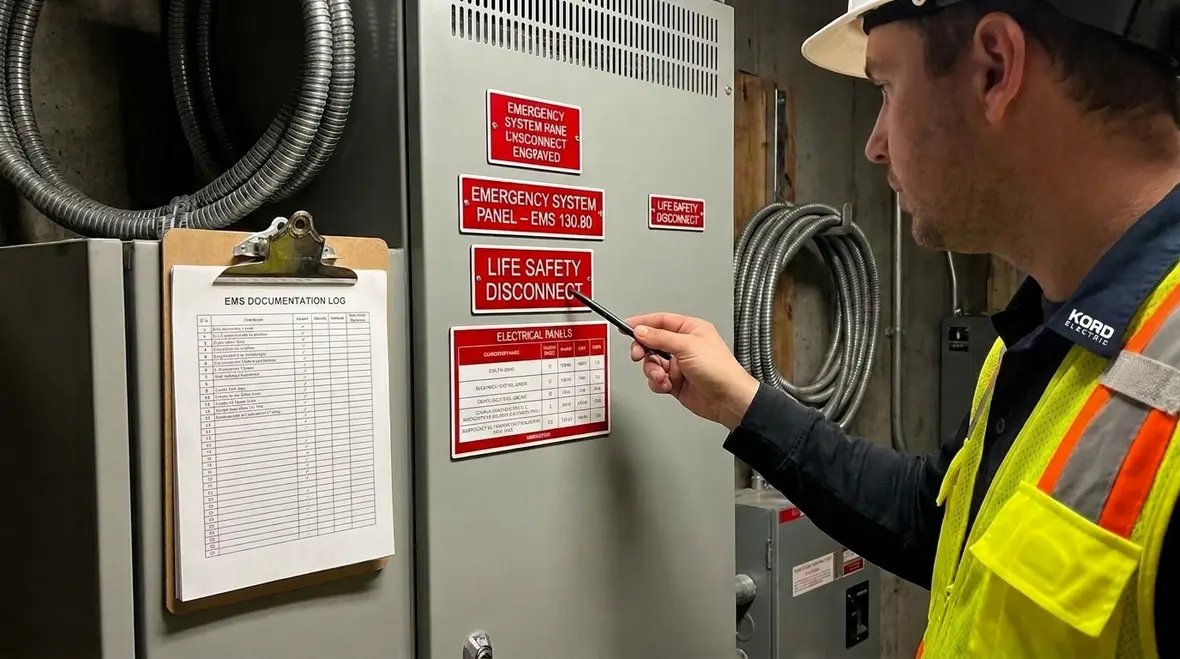
NFPA 70 Section 130.80 EMS Marking Documentation
NFPA 70 Section 130.80 is where we draw the line between “it looks fine” and “it is fine when inspectors show up.” In the first 100 to 150 words of this guide, we make it clear how our NEC EMS marking documentation rules work in the real world: we verify the Emergency and Life Safety Systems are marked in a way that helps responders and maintenance staff find what they need fast, and we document that marking so it can be reviewed, audited, and maintained over time. Then we stay consistent, because our teams do not treat compliance like a one time task. They treat it like a schedule, a standard, and a promise.
And yes, if you think marking is “just labels,” then you have never watched an emergency plan get executed with split second decisions. Labels do not save lives by themselves, but they help people do their jobs with less guesswork. That guesswork is expensive, stressful, and frankly, it ruins everyone’s day.
Section 130.80 and how EMS marking protects people
When a commercial or industrial facility relies on Emergency and Life Safety Systems, the wiring and equipment are only half the story. The other half is human. People need to locate, confirm, and respond. NFPA 70 Section 130.80 focuses on EMS marking and documentation, and we build our process around that purpose.
At Kord Electric, our expert service staff explains it plainly. First, they help building teams identify what EMS related components exist on site. Next, they ensure the marking is consistent with the way those systems operate, including the pathways used for emergency response. Finally, they document what they installed and what they verified, so the next person to touch the system does not start from scratch. That next person might be a technician from our team, an electrical contractor, or an inspection authority. We prefer the kind of continuity that makes everyone’s workload smaller.
In other words, the marking is not decoration. It is a functional map. And like any map, it only works when it is accurate, legible, and kept current. If the labeling is vague, outdated, or missing, then even a well designed electrical system becomes harder to manage under pressure. That pressure shows up during testing, maintenance, upgrades, and emergencies.
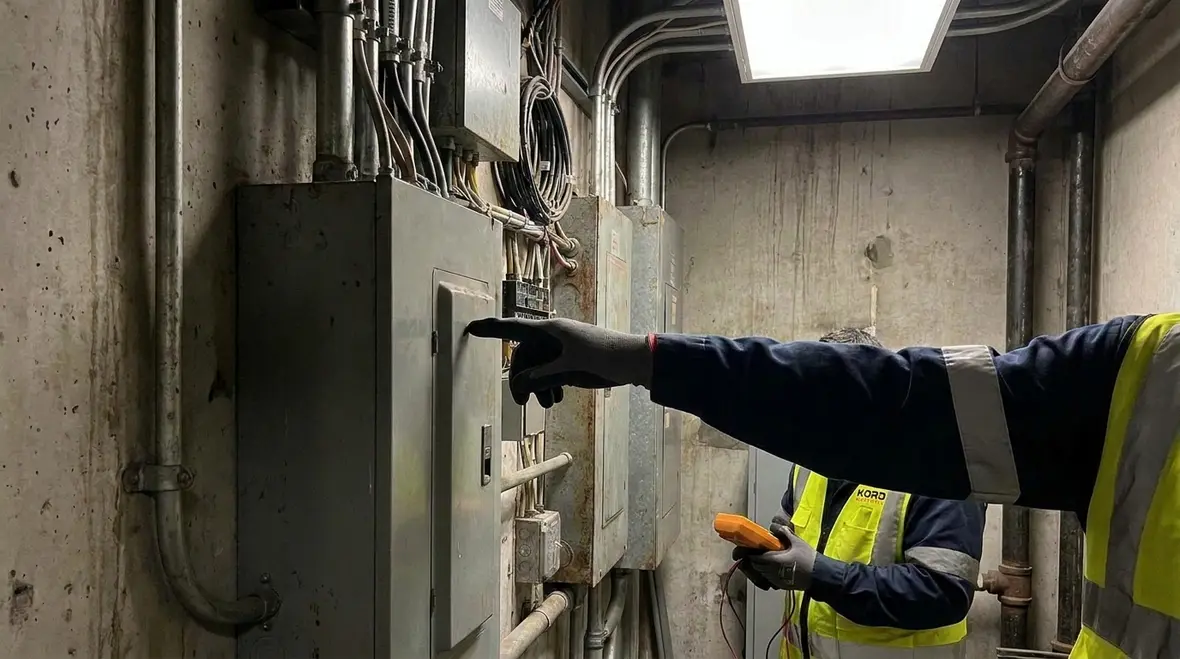
For teams that want broader grounding in how the National Electrical Code shapes day to day decisions, you can also explore our deeper guide, Understanding NFPA 70: The National Electrical Code Explained for 2026. It provides additional context on how the rulebook behind NFPA 70 Section 130.80 connects to real projects, inspections, and upgrades in the field.
What we look for in NEC EMS marking documentation rules
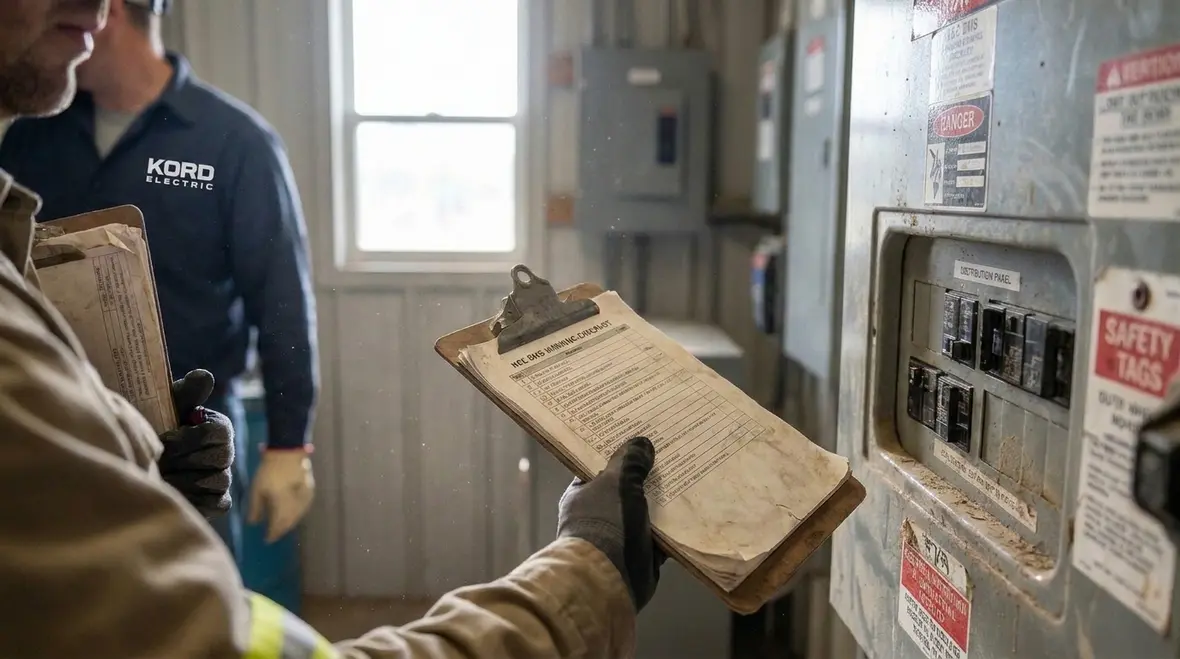
Compliance starts with a checklist, but it does not end there. We follow NEC EMS marking documentation rules in a way that supports long term operation, not just project closeout. To do that, our technicians review the site context first, then they verify what must be marked based on how the EMS is set up.
We typically confirm several things during the marking and documentation phase. First, we verify the equipment and circuits that need EMS identification are clearly marked. Second, we ensure the markings align with the facility’s documentation so people do not chase contradictions. Third, we confirm that labeling style works in the environment. Dust, vibration, heat, and cleanliness levels all matter in industrial buildings.
Finally, and this is where our expert service staff really earns their keep, we make sure the documentation is complete and traceable. The goal is simple: if someone asks what was changed, when it was changed, and where it is located, the documentation should answer the question without drama.
Our clients in major property buildings and commercial sites often tell us they value the calm that comes after labeling is done right. They stop worrying that the next maintenance call will turn into a scavenger hunt.
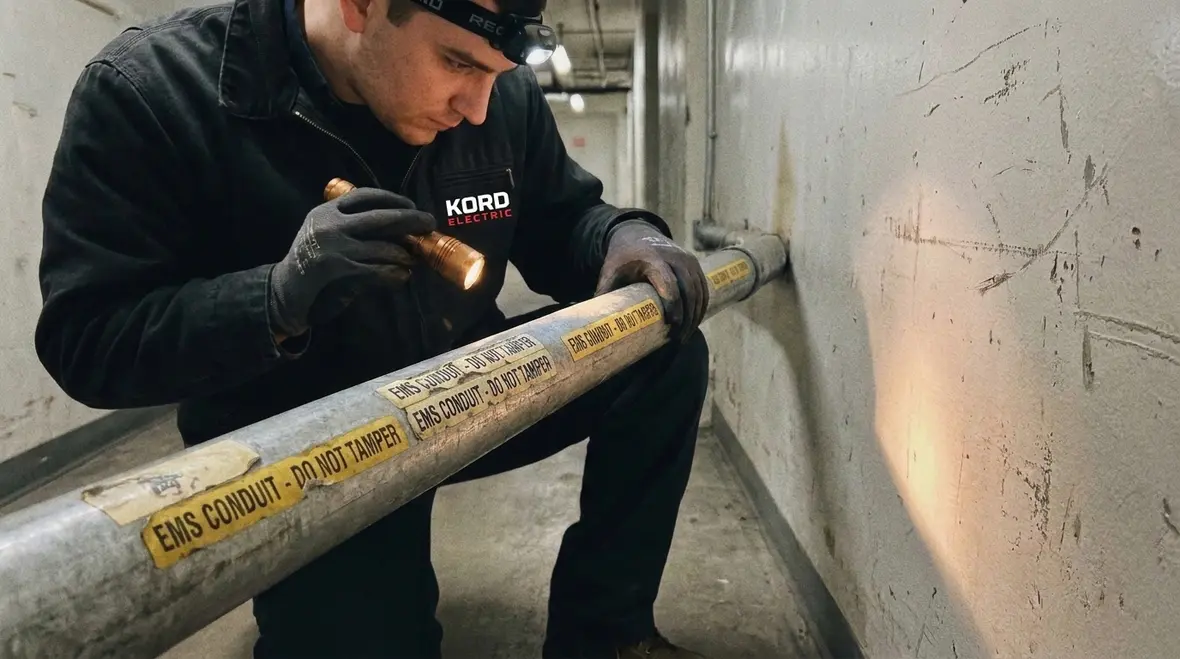
How we keep EMS labels clear for responders and maintenance techs
Good marking does not just follow a rule. It communicates. So we treat clarity as a requirement. Our approach focuses on how labels help real people, not how they look in a photo.
First, we ensure visibility. That means placement that does not get buried behind conduit, doors, or access hardware. Then we address legibility. Our technicians avoid faded, incorrect, or hard to read text, because when conditions are stressful, small details become big problems.
Next, we make sure the EMS marking matches the system intent. If a label points someone to the wrong component, even briefly, it can slow down response and create avoidable risk. Therefore, our team uses the facility’s electrical one line information and operational intent to keep labeling aligned with how systems actually function.
Then we document. We record what was labeled, what it corresponds to, and how it ties back into the electrical records. As a result, future inspections and maintenance work become smoother. It also helps during system upgrades, because staff can map what already exists before adding anything new.
Yes, we occasionally joke that labels are like song lyrics. If you get one line wrong, the whole chorus feels off. But in emergency response, the stakes are not like karaoke. So we take it seriously.
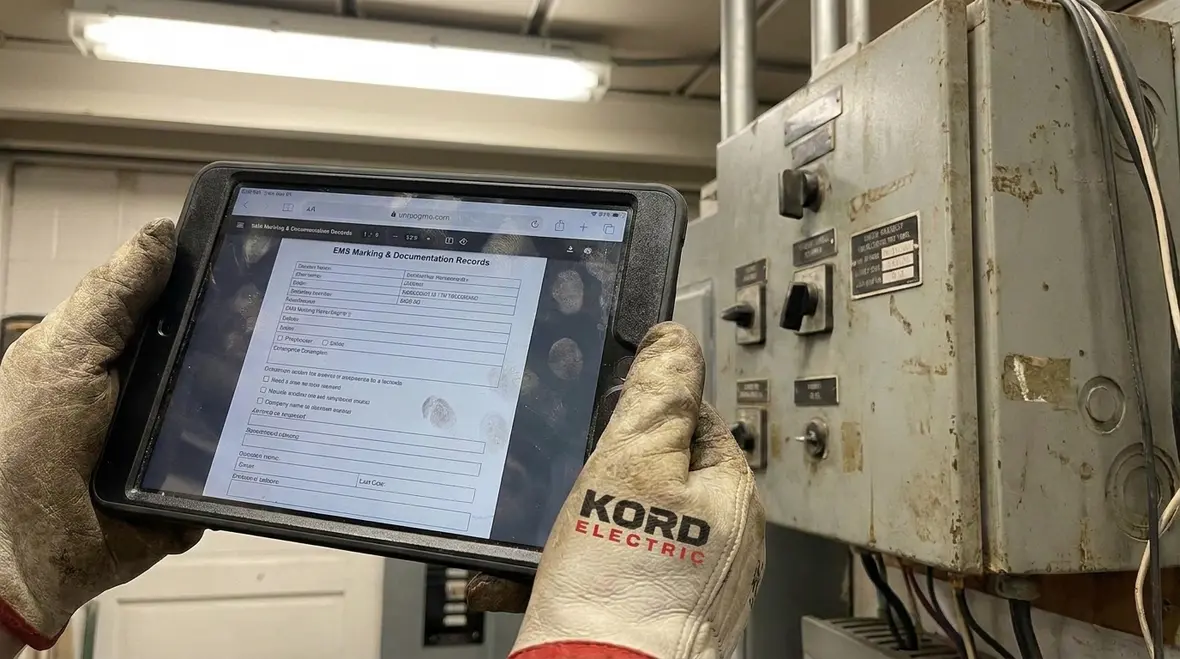
Documentation that survives upgrades, audits, and real life
Facilities change. Equipment gets replaced. Panels get updated. Contractors come and go. If your EMS marking documentation cannot survive that change, it will eventually fail you at the worst time.
For NEC EMS marking documentation rules, our process supports continuity. We create or update records in a format that building teams can use, and we ensure our technicians keep documentation tied to physical locations and system components. That means someone can trace a label in the field back to the project documentation without guessing.
When our experts deliver electrical work for commercial and industrial facilities, we consider how the site will look after the commissioning dust settles. In addition, we coordinate documentation updates during the project workflow, not after everyone has moved on to the next job. This reduces rework and prevents mismatches between labeled systems and the official records.
Our service mindset also supports audits. If an authority requests proof that labeling and documentation were done correctly, we can produce the details in a structured way. That is not just helpful. It protects schedule, reduces downtime, and keeps your team from having to “re explain” the same things.
As one of our long time clients put it, “Kord Electric made compliance feel boring.” In this industry, boring is a compliment.
Where Kord Electric fits for commercial and industrial buildings
Kord Electric supports the types of facilities that cannot afford sloppy electrical details: commercial and industrial locations and major property buildings that depend on reliable life safety and emergency systems. We align our work with site needs, because every facility has different access constraints, labeling standards, and operational requirements.
We also understand coordination challenges. EMS labeling often touches multiple areas like panels, distribution gear, control equipment, and system interfaces. Therefore, our technicians plan labeling around accessibility and maintenance paths so the labels remain useful after installation and over time.
Additionally, when facilities require more than one trade to complete a project, we work to keep labeling and documentation consistent across the team. That reduces the chance that one contractor updates equipment while another updates records later, creating mismatches.
We do not chase shortcuts. We chase clarity. And when people need to act fast, clarity is not a luxury. It is the difference between confidence and confusion.
For those who want broader context on NEC concepts, our team also shares educational resources through Kord Fire and Kord Fire Australia, because fire and life safety systems tie closely to the way emergency power and communications behave during incidents. You can explore those resources at kordfire.com and kordfire.com.au, and we keep the focus on practical, field ready guidance rather than textbook fluff. For guidance on best practices related to pumps and systems that can interact with emergency response infrastructure, some teams also reference firepumps.org. We treat all such material as learning support, then we apply the rules to the specific site.
Common mistakes that delay projects or cause rework
In practice, we often see the same labeling and documentation problems show up across facilities. Here are the major ones, and what we do to prevent them.
Labels placed without verifying system relationships. Sometimes teams label equipment based on what they assume, not what the system actually does. Our technicians verify relationships so the marking reflects the real EMS design.
Documentation created after the fact. When records are updated at the end, they tend to lag behind field reality. We build documentation as the project proceeds so the paperwork matches the physical installation.
Inconsistent labeling styles across the site. When labels vary by area or by contractor, staff lose time comparing formats. We standardize labeling so maintenance and response teams can scan and understand quickly.
Missing updates after equipment changes. Replacement and retrofits happen. Yet labels and records sometimes remain unchanged. Our expert service staff helps ensure that updates carry through the full loop: field labeling plus documentation plus future reference.
To put it simply, if the marking is wrong or incomplete, you pay later with delays, extra site visits, and increased risk. And no one in a major property building wants to schedule “guesswork recovery” on a tight outage window. That is like booking a doctor appointment for a patient you have not diagnosed yet. It is avoidable.
FAQ about NFPA 70 Section 130.80 EMS marking and documentation
Conclusion
Kord Electric helps commercial and industrial facilities handle NFPA 70 Section 130.80 with EMS marking and documentation that stays accurate through upgrades, audits, and daily maintenance. Our technicians and expert service staff review the site, verify system relationships, and then document everything clearly so your team does not guess under pressure. If you want labels that responders can trust and records inspectors can verify, we are ready. Reach out to Kord Electric to plan a compliant, field ready EMS marking and documentation review.
For facilities across the region that want broader support around inspections, repairs, and NEC driven upgrades, you can also explore our dedicated Los Angeles County electrical services for commercial and industrial properties. It connects EMS labeling work with the larger picture of reliability, capacity, and long term electrical planning.


