
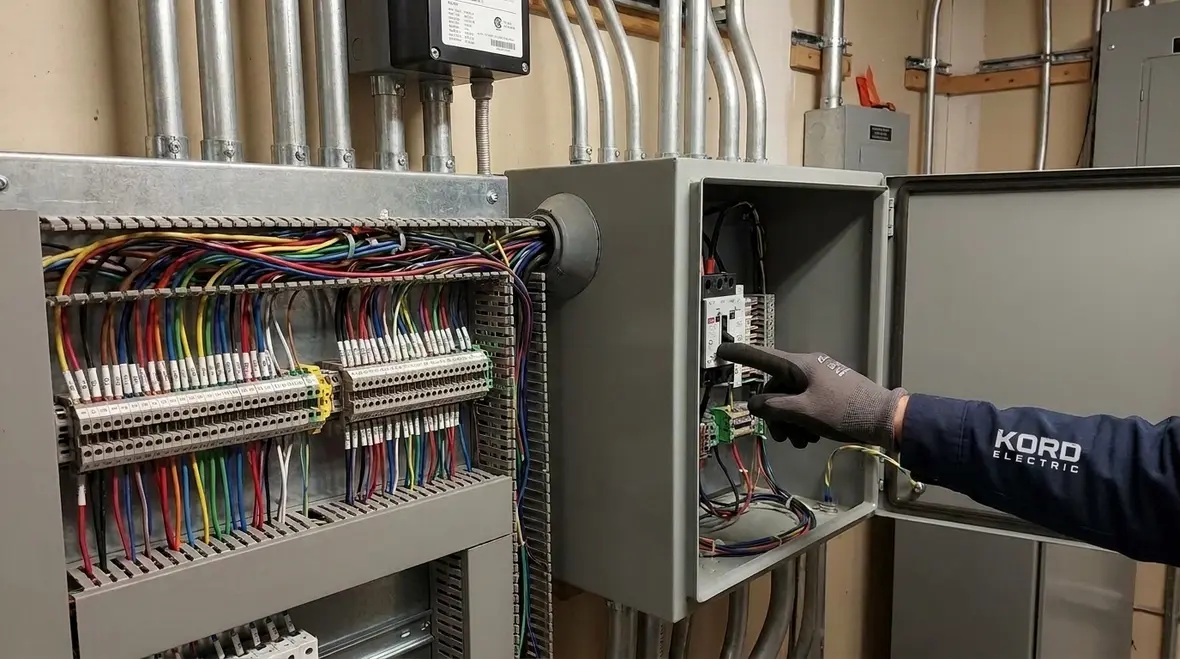
NFPA 70 Section 130.60 for NEC EMS Conductors Equipment Code
Kord Electric serves commercial and industrial facilities, and for us the NEC is not bedtime reading. In the first stretch of this guide, we center on NFPA 70 Section 130.60 and the NEC EMS conductors equipment code that governs EMS wiring and devices. Right away, we set the expectation: this section protects systems that report or signal emergency and related functions. Then, as we go deeper, our expert service staff explains how to keep conductors, terminations, and equipment arranged so the installation holds up under real conditions, not just under perfect lab assumptions.
What NFPA 70 Section 130.60 requires for EMS
In plain terms, NFPA 70 Section 130.60 addresses how EMS conductors and equipment must be installed and protected. Because EMS systems often connect to life safety related operations, electricians cannot treat the wiring like any other low voltage job. Instead, we design the routing, protection, and support with care.
However, the section does not ask for guesswork. Our technicians follow the code intent: prevent damage, reduce the chance of accidental disconnection, and keep conductors and equipment in a safe condition. Even if your facility has a modern control room, the wiring behind the walls still matters. And yes, walls can hide problems like a bad reality show hides plot holes.
As a result, facilities that use an EMS need installations that stay consistent from panel to equipment. This matters when maintenance occurs, when tenants change, or when a system gets expanded. Kord Electric treats these projects like engineered upgrades, not like quick repairs.
NEC EMS conductors equipment code: where the wiring must stay reliable
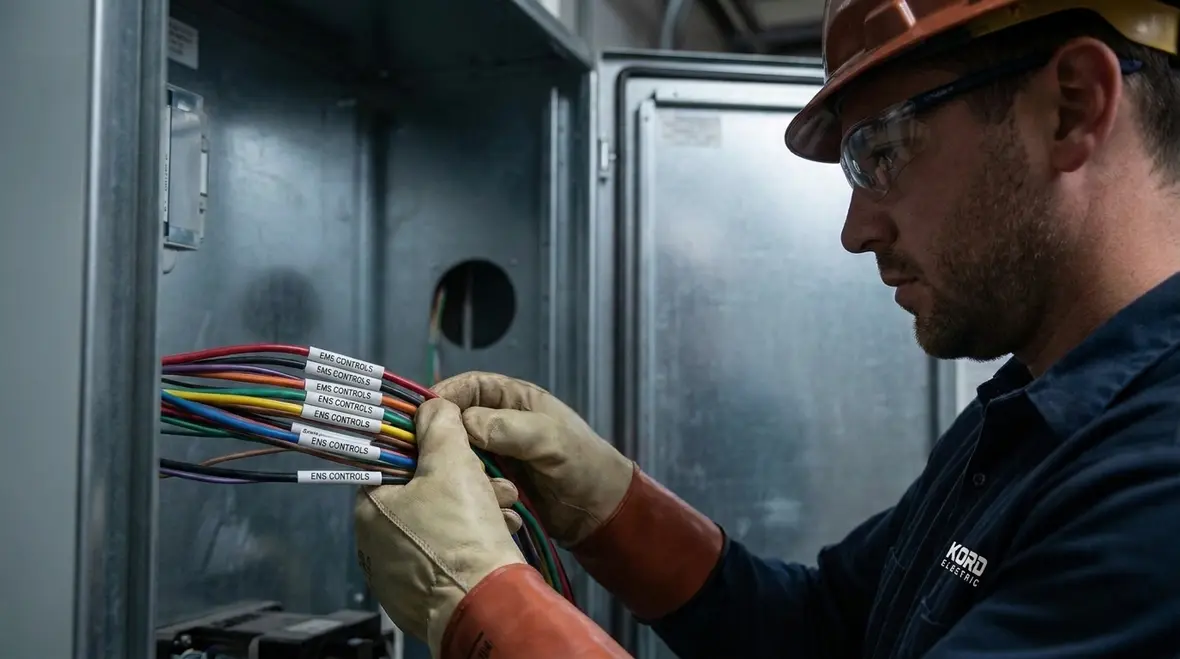
The NEC EMS conductors equipment code concept shows up in practice whenever an EMS installation needs to keep working through abnormal conditions. In commercial and industrial buildings, those abnormal conditions might include heat, vibration, wet locations, or disruptions from other equipment. Therefore, the installation choices for EMS wiring must match the environment.
We also consider how installers label, route, and terminate the conductors. Next, we verify separation from sources of interference where that helps the system operate as intended. In many cases, good separation reduces nuisance behavior, which then reduces service calls. Honestly, nobody wants to spend a Tuesday chasing a fault that started with a sloppy routing decision on a Monday.
When our expert service staff reviews an EMS project, we focus on practical outcomes: clear paths, strong support, correct fittings, and proper terminations. Then we check how the equipment gets mounted and protected, so it stays serviceable even years after the job closes out.
Equipment, terminations, and support: the details that prevent future failures
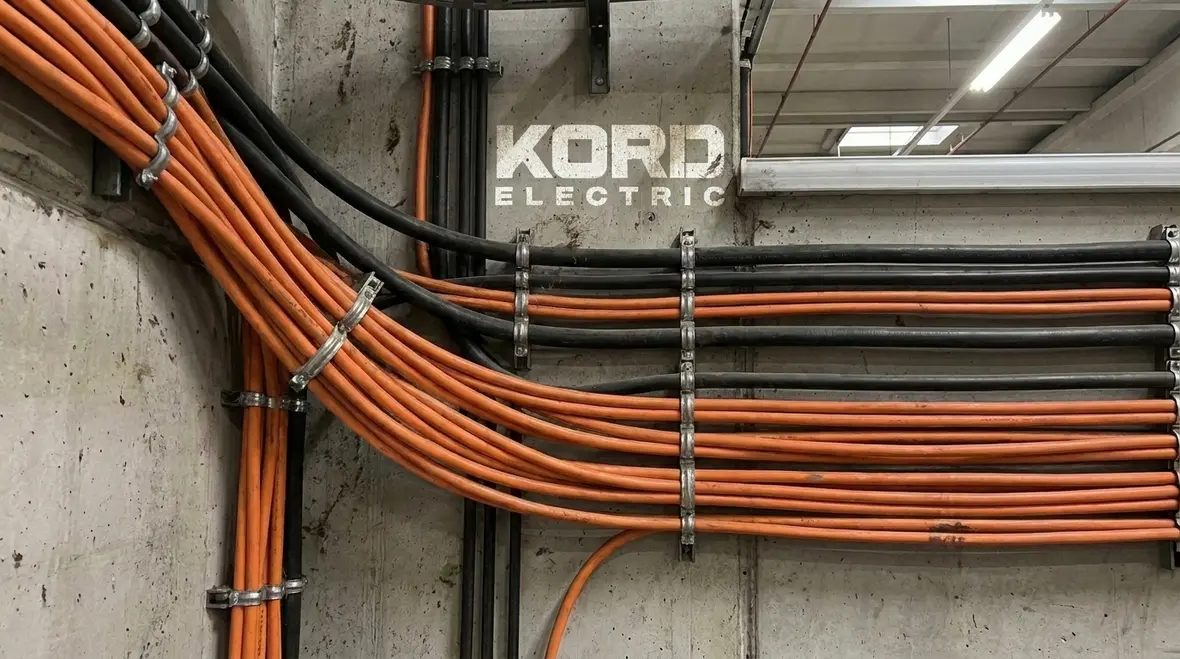
Section 130.60 pays attention to more than conductor sizes. It also pushes the job toward solid installation practices for EMS equipment. That includes how equipment gets installed, how conductors get secured, and how terminations get handled. If you do not control these steps, the wiring may still function today and still fail later, which is how many service tickets are born.
Our technicians explain the logic to facility owners in straightforward terms. First, good support prevents strain on terminations. Second, correct terminations prevent loose connections that create heat and intermittent faults. Third, protection measures reduce the risk that the wiring gets cut or damaged during routine maintenance.
To keep things calm and clear, we use a simple approach on active sites. We plan work so that temporary shutdowns stay minimal, and we document each stage. Then, after the install, we verify the system behavior in a way that matches how the EMS will run during normal operations.
Designing EMS pathways in commercial and industrial buildings
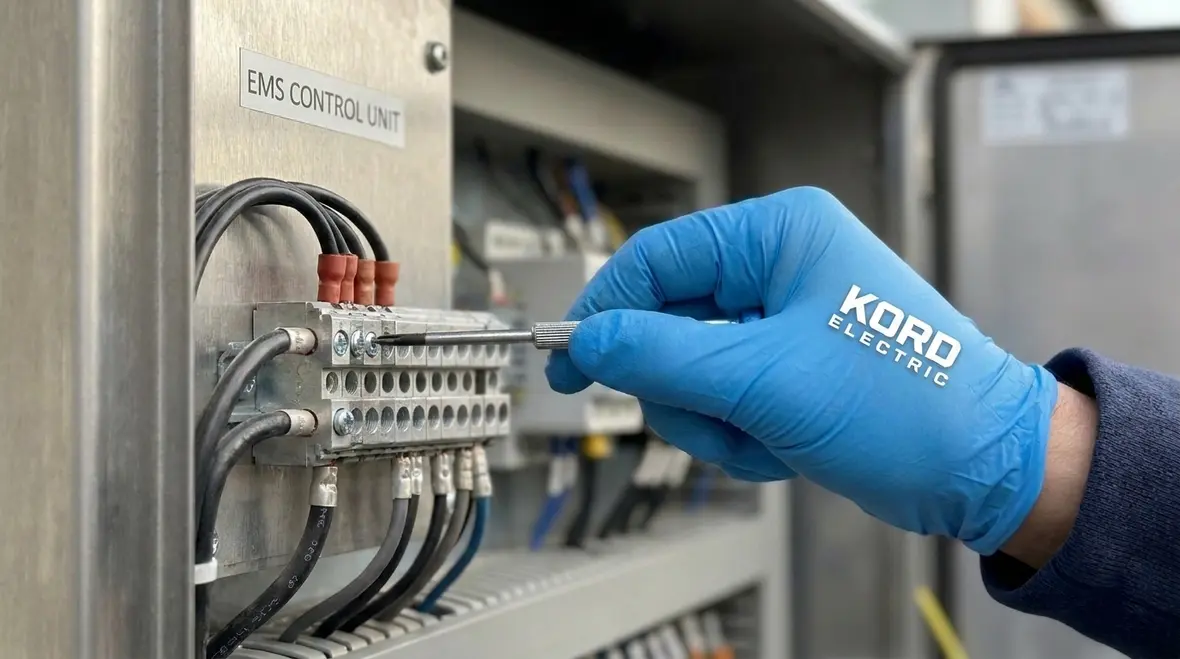
Commercial and industrial facilities do not behave like a single-family home. They have machinery, heavy foot traffic, frequent upgrades, and multiple trades working in the same area. For that reason, we plan EMS wiring pathways with real site conditions in mind.
In many projects, the EMS interfaces with other systems. Therefore, we pay attention to physical layout and the “where” as much as the “how.” We ask: where will someone drill next year, where will maintenance crews access, and where does water or dust collect? Then we select routing and support to reduce exposure.
Also, we consider major property buildings where multiple floors and wings connect to one control scheme. In those setups, consistent installation standards make troubleshooting faster. When a fault shows up, technicians need to locate the source without turning the site into a giant scavenger hunt.
Kord Electric builds that consistency. And when questions arise, our experienced service staff explains the why, not just the rule. Clients do not just get compliance. They get clarity they can use.
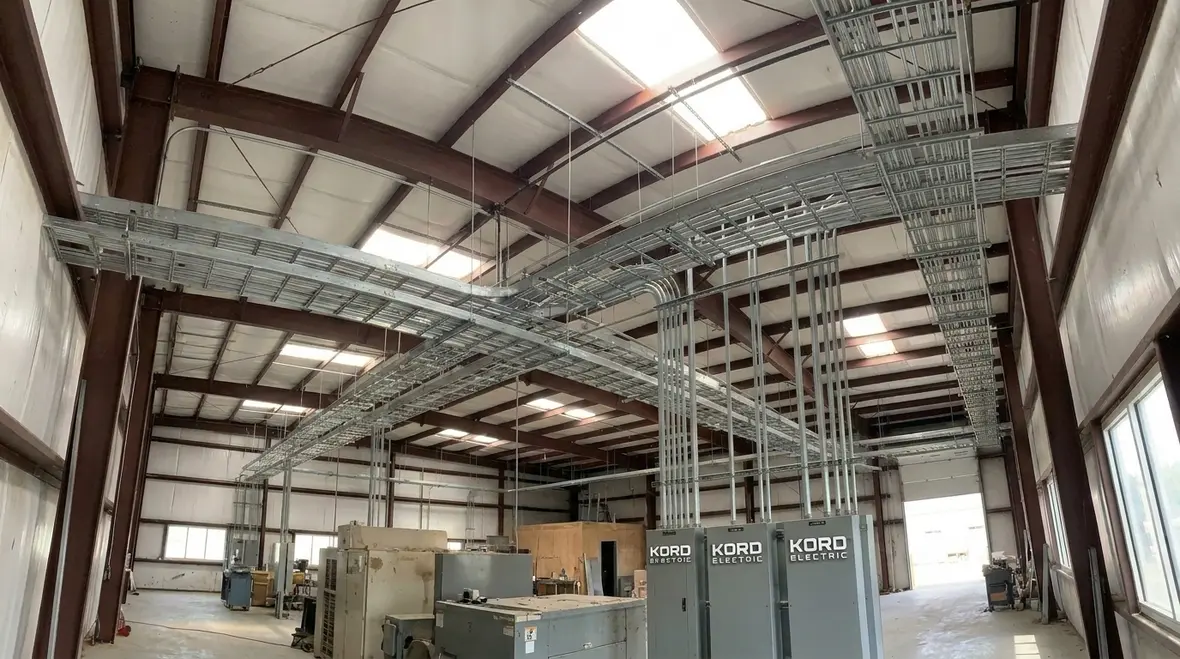
Connecting EMS pathways to broader NEC planning
Because EMS conductors and equipment sit inside the larger electrical system, we align the pathway design with how the rest of the installation follows NFPA 70. When facility leaders review EMS options, we often reference resources like Understanding NFPA 70: The National Electrical Code Explained for 2026 so teams can see how Section 130.60 fits into the wider NEC picture for design, installation, and inspection.
Coordination with the broader NEC and life safety expectations
While Section 130.60 stands on its own, it also fits into the wider NEC framework and into life safety expectations. So, we do not treat EMS wiring as an isolated task. Instead, we coordinate it with other electrical requirements on the project.
For example, we think about raceway practices, system labeling, and how equipment gets grouped in a control space. Next, we coordinate with fire alarm, emergency power, and other emergency related circuits where the building design calls for it. In these environments, sloppy coordination can lead to conflicts during commissioning. Then the facility pays the price in delayed start dates. That delay can feel longer than the slowest dramatic monologue in cinema.
We also draw from resources that explain NEC structure and practical interpretation. Our team aligns guidance from industry references and code focused explanations published by Kord Electric and KordFire, including material on NFPA 70 basics and how the NEC gets applied on real job sites. That way, our commercial and industrial customers get guidance that matches both code and job reality.
Tying EMS planning to NEC scope and application
Because EMS circuits interact with power distribution, emergency power, and control systems, we keep an eye on how NFPA 70 scope sections apply across the installation. In practice, that means we cross-check EMS plans against broader resources like the 2026 NEC application and scope guidance and our internal code interpretations, so the EMS design lines up with the same standards that govern the rest of the building’s electrical infrastructure.
Service checks and documentation after installation
Inspection does not end at “pass” on the day of testing. EMS systems live in buildings that change. Equipment gets replaced. Access panels get opened. Contractors come and go. Therefore, we build service checks into our approach.
Our expert service staff documents installation details so that future technicians can trace the system quickly. We also flag areas where access or protection deserves extra attention. Then we recommend maintenance steps that help keep EMS wiring and equipment in dependable shape.
When a facility needs upgrades, we treat them as controlled extensions. We match existing installation methods, verify compatibility, and ensure changes do not undermine the original design intent. In short, we protect the system’s reliability as the property evolves.
Using EMS documentation to speed up troubleshooting
Well structured EMS documentation does more than satisfy a checklist. It helps technicians work faster when they respond to alarms, abnormal readings, or equipment failures. By capturing conductor routing, terminations, device locations, and test results, we give facility teams a clear map they can lean on during critical moments, instead of asking them to guess what is behind each panel or inside every conduit.
Who should handle EMS conductor and equipment work
EMS work requires a disciplined approach. That is why we recommend that only qualified teams handle the NEC EMS conductors equipment code duties in commercial and industrial spaces. This includes selecting correct materials, installing them with the required care, and verifying system performance.
Kord Electric brings technicians who work with the realities of major property buildings, not just textbook scenarios. We know how other trades schedule around electrical work. We know how to keep documentation clean. We know how to explain decisions in a way that facility managers can use.
In our experience, the best outcomes happen when the electrical team communicates early. So, we ask for site plans, equipment schedules, and any prior EMS documentation. Then we map the EMS conductor and equipment plan so the job stays predictable, calm, and on track.
Pairing EMS code work with broader electrical services
For facilities that want EMS upgrades to fit into a wider reliability strategy, we connect EMS planning with broader Los Angeles County electrical services. That way, EMS conductor and equipment improvements align with power distribution planning, panel upgrades, and long term maintenance, instead of becoming yet another isolated project that no one maps back to the big picture.
FAQ
Quick comparison between common installation mistakes and safer practices
Mistake
Conductors loosely supported or forced into terminations
Safer practice
Secure conductor support and proper termination methods to reduce stress and heat
Mistake
Routing that ignores access and maintenance areas
Safer practice
Plan pathways around access points and future service needs
Mistake
Poor documentation and unclear labeling
Safer practice
Maintain wiring records and labels so future technicians can find faults quickly
CTA: get EMS compliance and reliability support from Kord Electric
If your commercial or industrial facility needs EMS wiring support, Kord Electric can help you plan, install, and verify NFPA 70 Section 130.60 requirements with clear documentation and expert service. We bring technicians who explain each step in plain language, so your team knows what was done and why it matters. Then, when changes happen, we help you extend the system without breaking the original intent. Contact us to schedule a review and get your EMS conductors and equipment working the way they should.
For properties that want EMS work to integrate with new builds, retrofits, or complex distribution upgrades, our team also connects EMS planning with broader design guidance and commissioning support. That way, the same field-tested standards that govern your power systems also guide how you apply NEC EMS conductors equipment code expectations across emergency monitoring and signaling circuits.
When you are ready to bring EMS conductors and equipment in line with NFPA 70 without slowing down your operations, Kord Electric is here to help with disciplined planning, careful installation, and service-focused follow through.


