
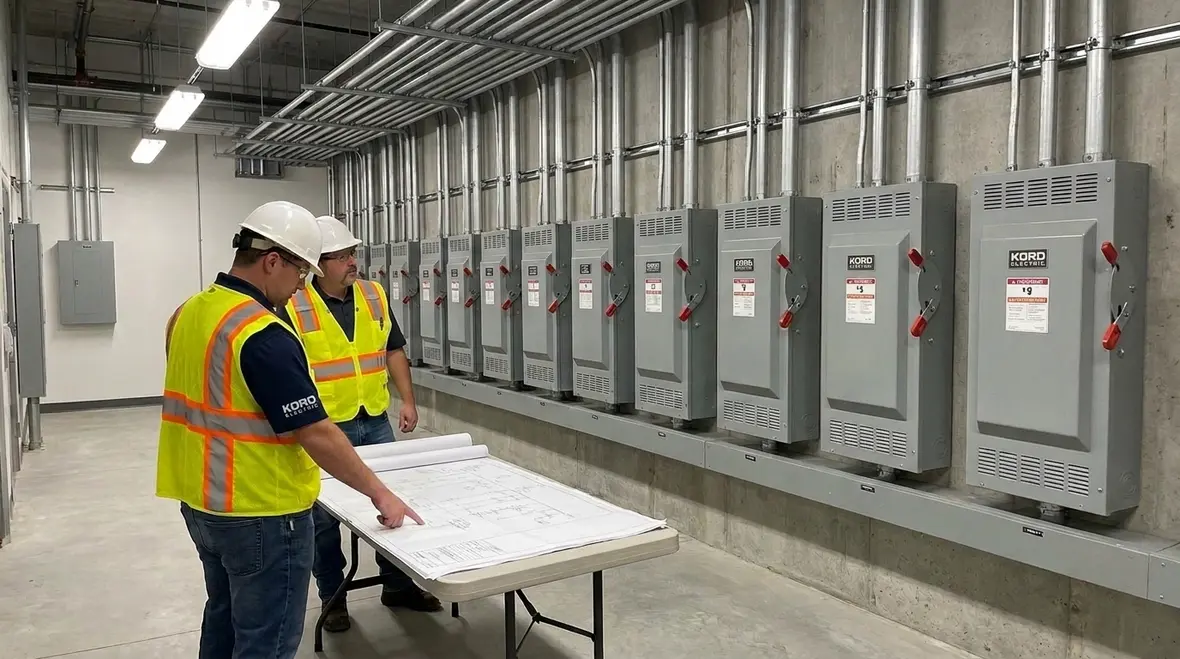
NEC 230.71 Maximum Service Disconnects Explained
NFPA 70 Section 230.71 sets the rules on the NEC maximum service disconnects allowed, and that detail matters a lot for commercial and industrial facilities. When a facility adds more equipment, more tenant loads, or more life safety gear, the service disconnect plan can turn from simple to complicated fast. At Kord Electric, we guide property owners and facility managers through that exact planning stage so the design stays safe, clear, and code compliant. Then our technicians explain the “why” in plain terms, because nobody should need a decoder ring to understand a main disconnect lineup. And yes, we have seen setups that looked organized from far away, like a sitcom prop table. Up close, the code questions start to show.
NEC maximum service disconnects allowed in 230.71, explained for major buildings
Section 230.71 limits how many service disconnects a building can use. In practice, that means your service equipment choices cannot be infinite, and the plan cannot ignore how the code wants service shutdown to work. For commercial and industrial buildings, this matters because the facility often contains multiple feeders, multiple electrical systems, and sometimes separated areas that need coordinated shutdown.
Now, the goal is not to reduce safety. Instead, it ensures the electrical system stays workable under stress. If there is a fire, a fault, or a maintenance event, the staff needs to shut things down in a controlled way. When the number of disconnects grows too high, the chance of confusion rises. Therefore, the NEC maximum service disconnects allowed in 230.71 acts like a safety rail for those operational moments.
At Kord Electric, we do not treat this as a box-checking exercise. Rather, we work with others on the project team so the service disconnect layout matches how the building actually operates. And because our expert service staff explains what they see and why it matters, owners can make decisions without guessing.
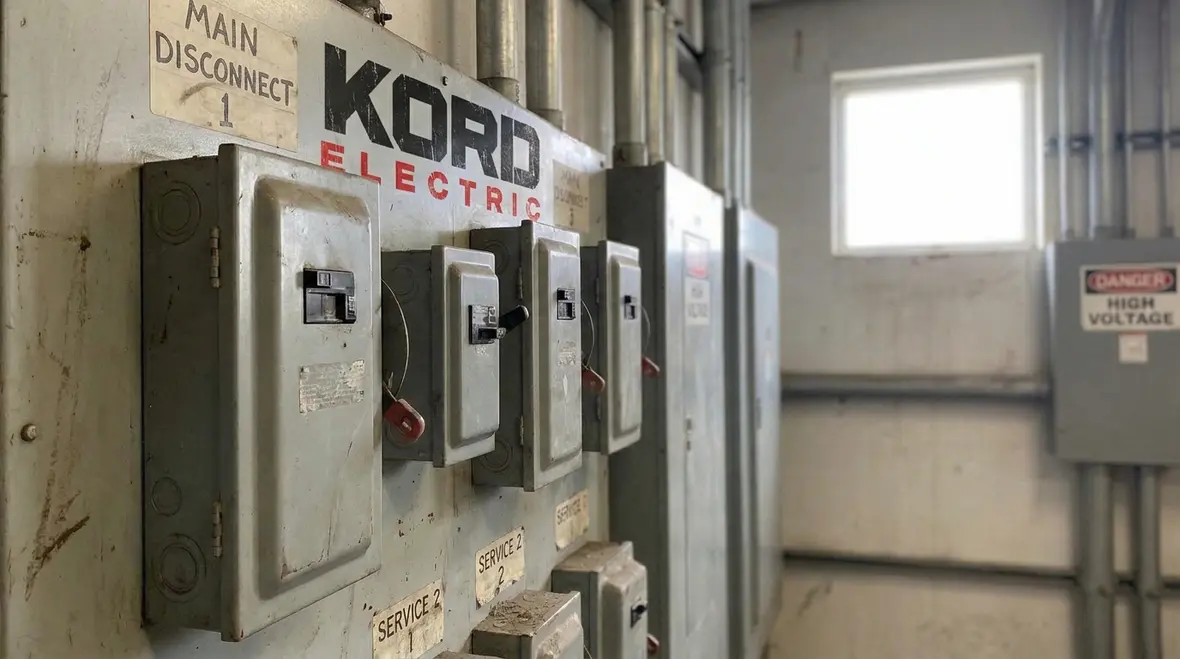
What “service disconnect” means in a real commercial electrical plan
A service disconnect is the equipment that can disconnect power supply to a building or a set of services. It is a key part of the service entrance system, and it connects to how emergency response and maintenance procedures work. In commercial and industrial facilities, we often see multiple service paths, special loads, and long-term plans for expansion.
Yet, many teams confuse service disconnects with other kinds of switching. For example, some people assume breakers, transfer switches, or panel disconnects count the same way for service shutdown rules. However, 230.71 focuses on service disconnecting means at the service point, not every local disconnect you may place downstream. So, the layout can look busy and still remain compliant if the service disconnecting means stays within the section limits.
To prevent costly redesign, we review the single line diagram early. Then, we compare it to the service equipment boundaries and how the shutdown function is intended to operate. In other words, we help the design stay aligned before the construction team locks in the physical layout. That approach also reduces the odds of a last-minute call to change equipment, which nobody enjoys, unless they are getting paid for it.
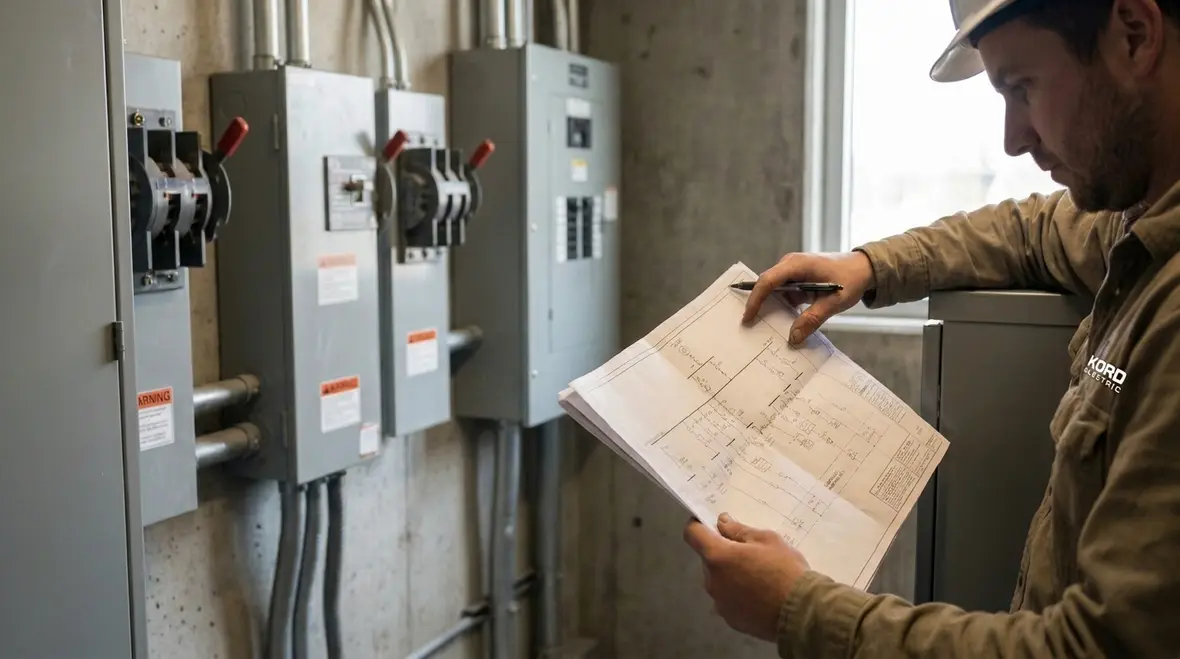
How 230.71 works with multiple disconnecting means
Section 230.71 addresses how many service disconnecting means are permitted and how they must be arranged. While designers might want flexibility to serve different building areas, the code requires a limit so shutdown remains understandable. Therefore, the service plan needs to match the intent of the rule: quick, reliable, and clearly identified power control.
When a building uses multiple disconnects, you typically need a clean strategy for identification, labeling, and operational clarity. If the labels are unclear or the disconnect grouping does not match the building’s wiring reality, staff can waste time during emergencies. At Kord Electric, we take those operational realities seriously for major property buildings, because our work does not stop at installation. It continues into how the facility will run day to day.
Also, coordination matters. The facility may have electrical rooms that require access control, tenant buildouts that add circuits, and upgrades that expand capacity. However, the service disconnect plan cannot expand endlessly. So, the most efficient path often involves choosing equipment that supports growth within the code framework, rather than adding disconnects as a “future fix.”
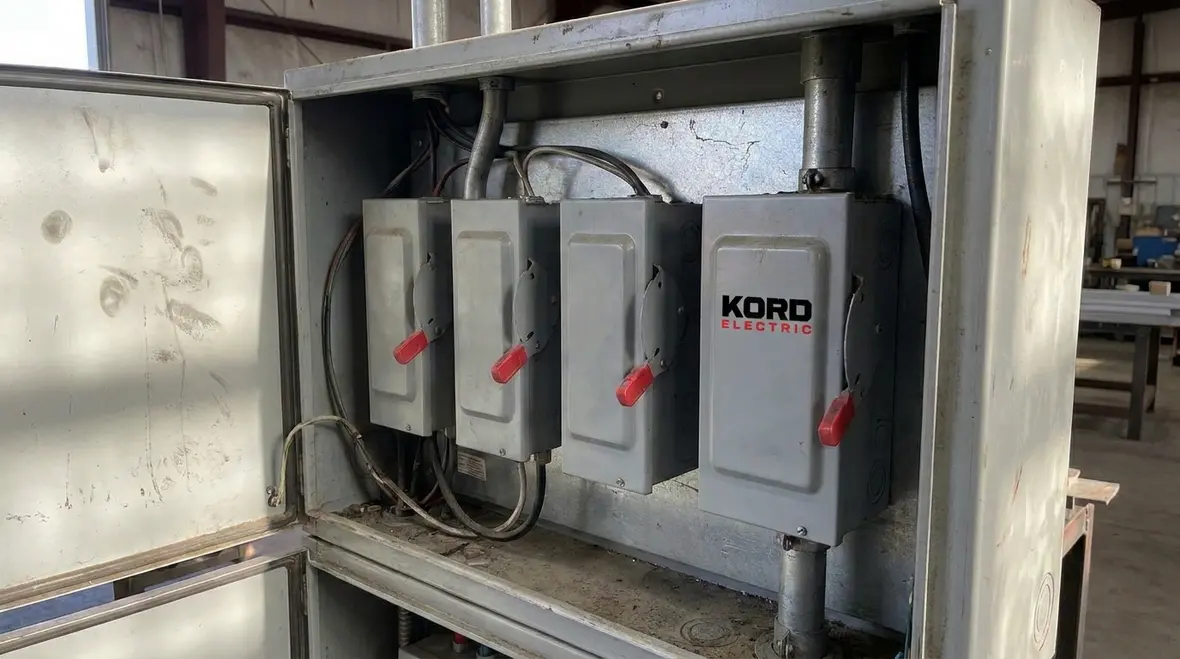
Where confusion happens during design and inspections
In the field, the main trouble spots usually come from misunderstanding the code boundary between service equipment and downstream disconnecting equipment. For example, teams may treat a distribution panel as the service disconnect when it functions like a downstream disconnect in the system. Then, the numbers get miscounted. Once that happens, the project may need revisions, and revisions cost time and money.
Another issue appears when a facility includes life safety systems and other critical loads. Designers may want each category to have its own shutdown approach. Yet, the service disconnecting means count in 230.71 still has to make sense. So, even when the building needs selective control, we still keep the service shutdown rules in view.
Because we support commercial and industrial facilities, we also pay attention to how the building’s electrical rooms are laid out and how staff will access the equipment. Even if a plan is technically correct, poor placement and unclear identification can defeat the safety purpose. Therefore, our technicians and expert service staff often explain how the operational flow should look, not just how the wiring diagram should read.
And yes, sometimes people try to solve code issues with extra labels. Labels help, but they do not change the number of service disconnecting means. Code compliance does not run on stickers. It runs on structure.
Planning for expansion without breaking NEC rules
Commercial and industrial projects rarely stay still. Loads grow. Tenants change. Production lines add equipment. Data closets become server rooms. So, owners ask a fair question: how do we handle expansion while staying within the NEC maximum service disconnects allowed?
The answer starts with planning the entire service entrance concept. That means understanding the current load, the future load timeline, and the practical path for adding feeders without turning the service disconnect layout into a maze. Instead of treating expansion as a separate problem, we integrate it early with the service equipment strategy.
We also recommend a coordinated approach between the engineer, electrical contractor, and the facility stakeholders. When each party understands the service shutdown requirements, the design keeps its structure. Then, future changes can stay within the section limits rather than triggering a redesign.
At Kord Electric, our process typically includes reviewing the single line diagram, verifying the service equipment boundaries, confirming the disconnecting means count, and then mapping the operational identification plan. As a result, building owners do not just get “installed equipment.” They get a system that makes sense for how people will shut things down.
And if you are wondering whether this topic overlaps with fire and emergency planning, it does. Clear service control supports safe response. For broader NEC context, teams often reference helpful code explainers from Kord Electric’s learning resources, including an overview of NFPA 70 and the National Electrical Code, along with partner materials in the electrical and fire world.
Connecting service disconnect planning with broader electrical strategy
Service disconnect design does not live in a vacuum. It ties directly into how you size feeders, arrange switchgear, and plan for future capacity. That is why our team often connects NEC 230.71 discussions with larger topics like commercial electrical service upgrades, load balancing, and zero-downtime planning across major property buildings. A strong service disconnect strategy becomes the backbone of a resilient system, not an isolated detail that only appears on inspection day.
For owners who want a deeper dive into system-wide planning, related Kord Electric resources on data-driven electrical design and building electrical system planning show how disconnect choices interact with modeling, redundancy, and operational sequences over the life of the facility. Those decisions influence not just safety, but also how confidently your team can expand production, add EV charging, or support new tenants without tripping over service limitations.
Keep the service disconnect plan practical for operations
A code compliant plan must also work in real life. In a major property building, facility teams run maintenance cycles, respond to alarms, and coordinate with emergency response. If the service disconnect arrangement confuses the staff, the building’s electrical safety margin shrinks.
So, we focus on operational clarity. We help define how staff will find the correct disconnect, how they will communicate status, and how the facility will document changes. Over time, that documentation becomes a tool for safety and speed. It also makes inspections smoother.
Our expert service staff often shows what to look for during routine walkdowns, including how identification should align with actual wiring and equipment functions. Then, when questions come up during future upgrades, the team already understands the “service shutdown story.”
In other words, we build systems that do not just pass review. We help them hold up when real conditions show up, like the middle of a busy weekday when everyone has places to be.
Tying service disconnect clarity to ongoing maintenance
Once the NEC maximum service disconnects layout is in place, the work shifts to how you maintain and verify it over time. That includes confirming that labels stay accurate when equipment changes, that drawings are updated when feeders move, and that staff training keeps pace with system modifications. As facilities evolve, a clear service disconnect scheme can start drifting away from reality unless someone owns the documentation.
Kord Electric often supports commercial and industrial clients with preventative maintenance, electrical asset site analysis, and service upgrade planning that explicitly checks the health of the service disconnecting means. We pay attention to how those disconnects integrate with emergency power, life safety systems, and any zero-downtime strategies your building depends on. That way, the shutdown plan you approved on paper continues to work when it counts.
FAQ: NEC maximum service disconnects and 230.71 basics
Conclusion: call Kord Electric before the electrical plan gets stuck
If your commercial or industrial facility needs a new service entrance, tenant upgrades, or an expansion plan, do not wait until the last minute to check the NEC maximum service disconnects allowed under 230.71. At Kord Electric, our technicians and expert service staff help you review the single line diagram, confirm the service disconnecting means count, and build an operationally clear shutdown strategy. Reach out to us now so we can keep your project code aligned, inspection ready, and calm under pressure. That is the power move.
For facilities across Southern California, that can also include coordinating with our broader Los Angeles County electrical services team so service disconnect planning aligns with panel upgrades, load studies, and long-range electrical strategies. When service entrance decisions connect directly to day-to-day operations and future projects, your building is better prepared for growth, inspections, and whatever the next phase of your business demands from its power system.


