
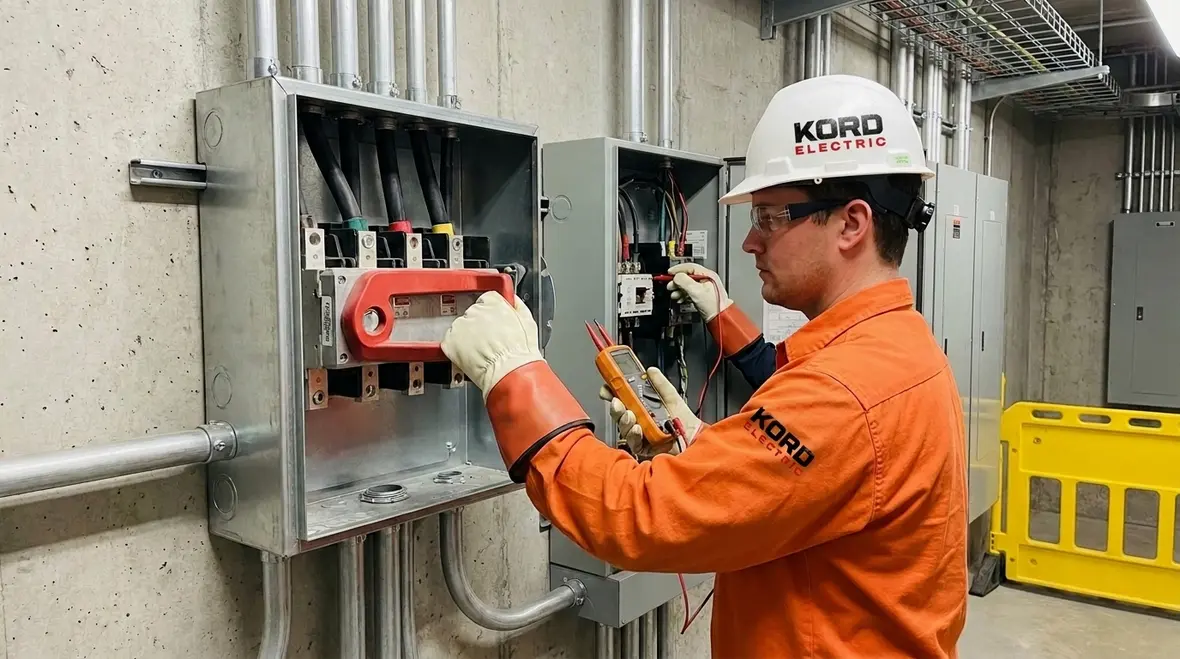
NEC Simultaneous Opening of Poles Requirements 230.74
Understanding NEC rules on simultaneous disconnect pole opening
In the first stretch of our review of NEC simultaneous opening of poles, we focus on NFPA 70 Section 230.74. This rule requires that when a disconnect opens, it does so in a way that does not leave some poles energized while other poles are already separated. In other words, the electrical system must not pretend it is “off” for one part of the circuit while another part still carries live voltage. That is not a vibe, and it is not a joke we want any facility to learn the hard way.
At Kord Electric, our expert service staff explains these requirements in clear, business focused terms for commercial and industrial facilities and major property buildings. Then we help our clients apply the rule correctly, so their disconnects protect workers and support safer troubleshooting. Later in this article, we will cover what Section 230.74 means in real installations, what inspectors typically look for, and how we plan maintenance around the rule.
What Section 230.74 really demands in the field
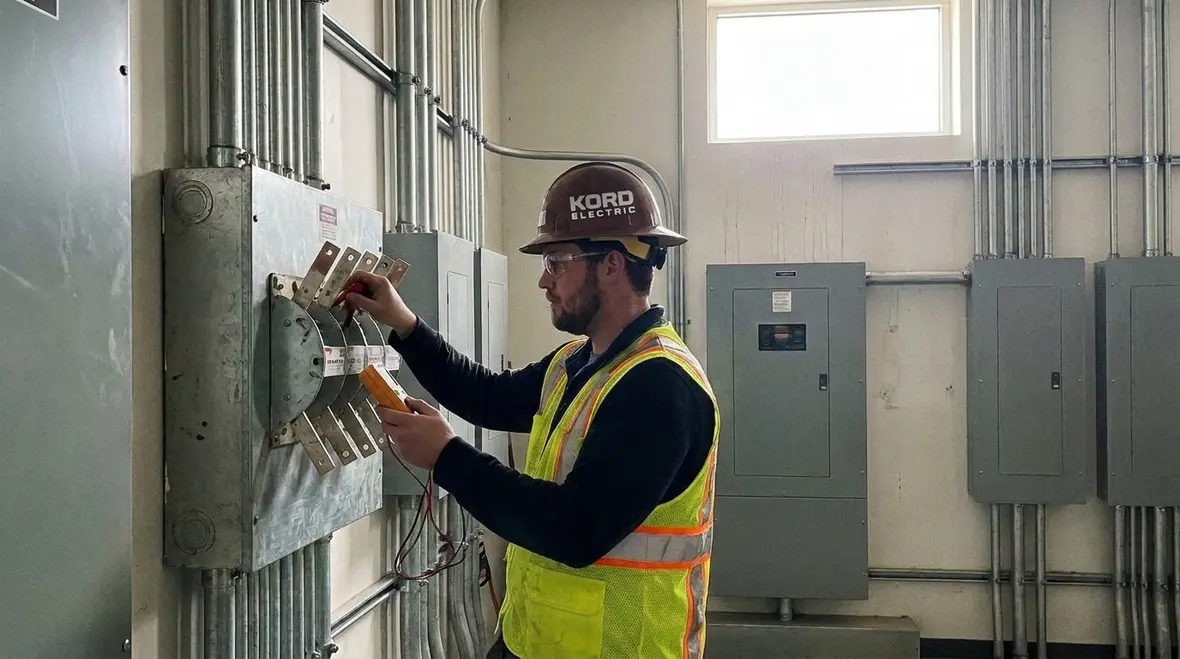
NFPA 70 Section 230.74 addresses more than a paperwork detail. It targets the moment a disconnect operates, and it does it with a straightforward goal: when the disconnect opens, all required poles must open in a coordinated way so that the disconnect truly interrupts the intended conductors.
To understand it, we help our technicians break the process into steps. First, the disconnect mechanism must switch the circuit in a single action or a sequence that achieves the same safety outcome. Second, it must prevent a condition where one pole opens early and another stays closed long enough to keep parts of the circuit energized. Third, it must do this under the expected mechanical behavior of the device.
Now here is where facility teams often run into trouble. Many think safety comes from the label that says “off.” However, electrical safety comes from the actual switching behavior. In fact, the NEC does not care about what a sign says. It cares about what the poles do. The sign can sit there like a motivational poster, but the conductors do the talking.
Why coordinated pole opening reduces risk for workers
Commercial and industrial buildings involve heavy equipment, frequent access by electricians, and ongoing troubleshooting. Therefore, a disconnect must protect workers not only during normal shutdown, but also during the messy middle when staff verify conditions, test circuits, and prepare equipment for service.
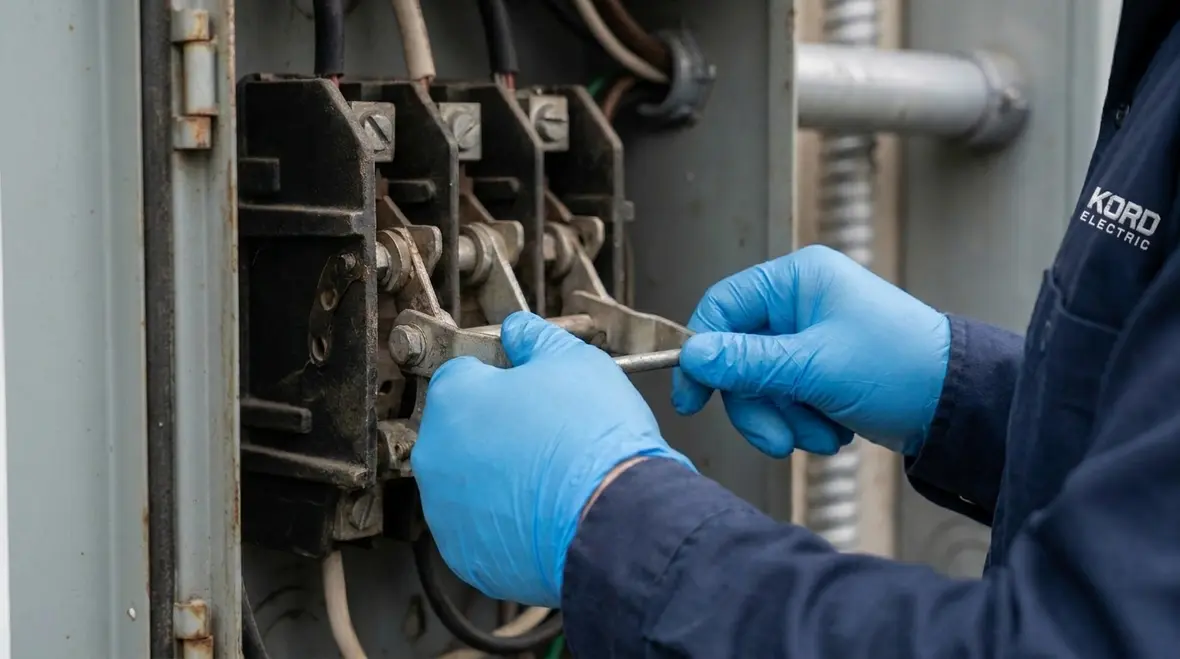
When poles do not open together, the system can create an unexpected energized path. As a result, a worker could assume deenergization because one pole opened, while another pole remains connected and still presents a hazardous voltage potential. In addition, test instruments can show confusing results, especially if the circuit includes control power paths, parallel feeders, or multiwire configurations.
Our expert service staff often explains it like this: if a disconnect is the front door to a hazardous area, then all locks must turn the same direction. If one lock turns early, people can still walk into danger thinking the door is closed. Transition after transition, verification after verification, the coordinated opening requirement helps keep the facility safer and the workflow calmer.
How we evaluate disconnects and their switching behavior
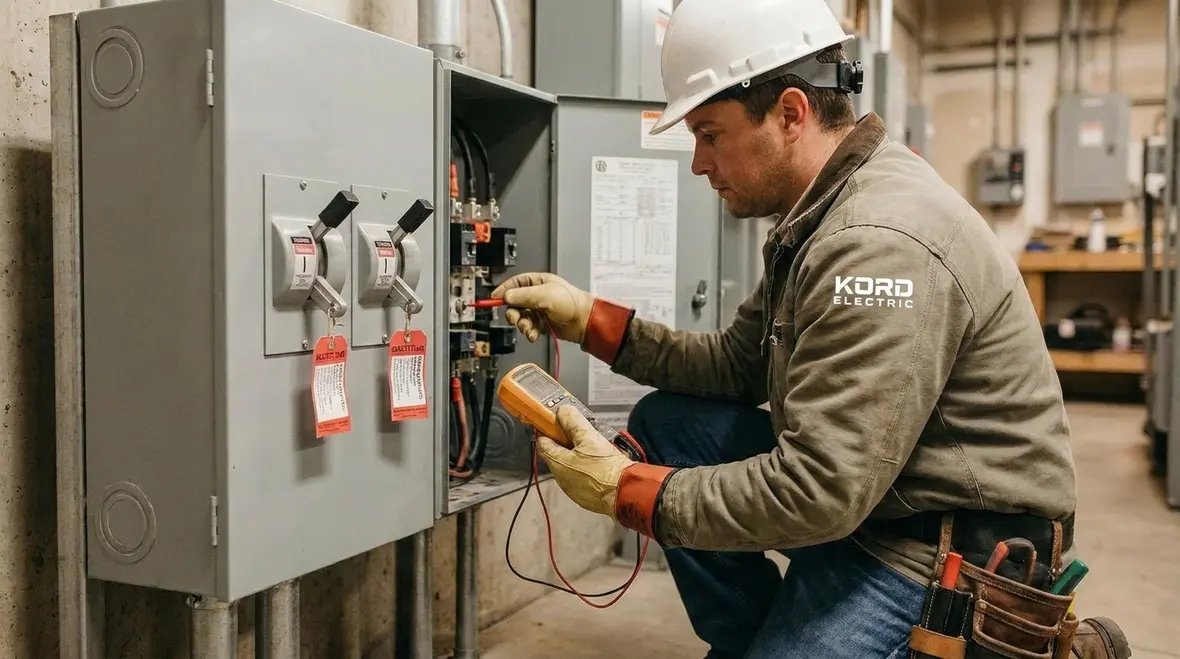
At Kord Electric, we approach Section 230.74 as an engineering and field verification task, not a guessing game. First, we identify the disconnect type, rating, and intended location within the electrical distribution system. Then we confirm how many poles the device controls and how the mechanism operates during opening.
Next, we review the installation details that can affect pole behavior. For example, wiring practices, terminal integrity, and mechanical condition of the disconnect handle all matter. Furthermore, we consider whether the equipment design includes situations where different poles might not open at the same time because of linkage wear, contact misalignment, or aging hardware.
After that, we document the findings and explain them in plain terms. We do not just say “it looks fine.” We explain what we checked, why we checked it, and what it means for your facility. And yes, sometimes we will make a small joke about how “time” matters, because the wrong sequence can turn a shutdown into a suspense movie. But our goal remains serious: safer work and fewer disruptions.
Inspection and compliance signals we help teams plan for
When an AHJ or facility safety team reviews disconnect setups, they tend to look for evidence that the device meets the intended safety function. While inspectors can vary, we consistently recommend that commercial and industrial facilities plan for clear documentation and repeatable field conditions.
Therefore, we encourage clients to maintain service records showing the disconnect condition, any replacement history, and maintenance performed. Additionally, we ensure labeling matches the equipment functions, because mismatched labeling leads to human errors during emergency response or routine service.
Then we pay attention to practical compliance signals. If a disconnect has visible mechanical wear, inconsistent feel, or signs of corrosion at contact points, it can contribute to delayed or incomplete pole operation. As a result, it can undermine the safety outcome the NEC wants.
We also help teams coordinate shutdown procedures with electrical work permits. When maintenance staff follow the proper work sequence, they reduce confusion, and they reduce the chance that someone will treat “off” as a suggestion instead of a verified condition. In a lot of ways, proper procedure is the unsung hero of compliance.
Practical installation steps for commercial and industrial facilities
For major property buildings, installation quality matters because the equipment must serve many tenants, many systems, and many operating schedules. To support that reality, we focus on the practical steps that reduce the risk of pole coordination issues.
First, our technicians verify the correct device selection for the application. That means matching the disconnect’s pole arrangement and operating mechanism to the circuit requirements. Second, we confirm proper termination practices, because poor connections can lead to contact performance problems and unexpected behavior over time.
Third, we ensure the disconnect operates smoothly and consistently. This includes mechanical checks and careful observation during commissioning or maintenance events. Then we educate facility staff on what normal operation feels like. When people know what “right” looks and sounds like, they notice “wrong” faster.
Lastly, we consider how the facility will handle future service. If the building expects routine upgrades, reconfiguration, or equipment replacements, then planned maintenance schedules must include disconnect inspection. In the commercial world, equipment never stays still, and we plan like it.
If you want a broader backdrop on how the NEC is explained for 2026 and beyond, we keep our understanding aligned with current guidance and interpretation. For a deeper review, you can explore our resource Understanding NFPA 70: The National Electrical Code Explained for 2026, where we break down how code cycles affect real-world planning.
Service, testing, and maintenance that keep the rule working
Even a correct installation can drift over time. Therefore, our maintenance approach treats Section 230.74 as an ongoing performance requirement. We do not assume that because something was compliant once, it will remain compliant forever.
During scheduled service, our expert service staff inspects the disconnect for wear, verifies mechanical alignment, and checks the condition of contact points. In addition, we review the operational history so we can spot patterns like frequent cycling, maintenance shortcuts, or deferred repairs.
Then we train the right people. We explain how and why the coordinated pole opening matters for safe service. We also explain how to verify deenergization using the right steps for your facility’s electrical culture. In a well run building, electricians do not rely on hope. They rely on procedure, measurement, and good equipment behavior.
And yes, if you run a facility, you already know that maintenance is like the MCU. Nobody notices the details until something breaks in the most inconvenient scene imaginable. Our job is to reduce the chance that you get that scene.
FAQ
Schedule an expert review with Kord Electric
If your facility uses disconnects for distribution, we recommend a careful review of how they operate during shutdown. Kord Electric helps commercial and industrial teams confirm NEC simultaneous opening of poles performance, reduce safety risk, and support inspection readiness with practical field checks. Our technicians and expert service staff explain what we find and what you need to fix, then we plan maintenance that keeps the rule working.
For facilities across Southern California and beyond, our broader Los Angeles County electrical services overview shows how we support everything from NEC-driven upgrades to day-to-day troubleshooting and preventive maintenance. When you coordinate disconnect performance with larger system planning, your electrical infrastructure becomes easier to service and easier to defend during inspections.
If you are also coordinating fire protection and electrical planning, our teams stay aligned with the latest NFPA 70 interpretation so that disconnect behavior, overcurrent protection, and downstream equipment all support the same safety story, not competing versions. That way, your workers, inspectors, and stakeholders see a consistent approach from the service entrance to the last piece of critical equipment.
Contact Kord Electric today to schedule a service consultation, verify how your disconnects handle NEC simultaneous opening of poles requirements under real conditions, and build a maintenance roadmap that keeps Section 230.74 working for the long term instead of just passing a single inspection.


