
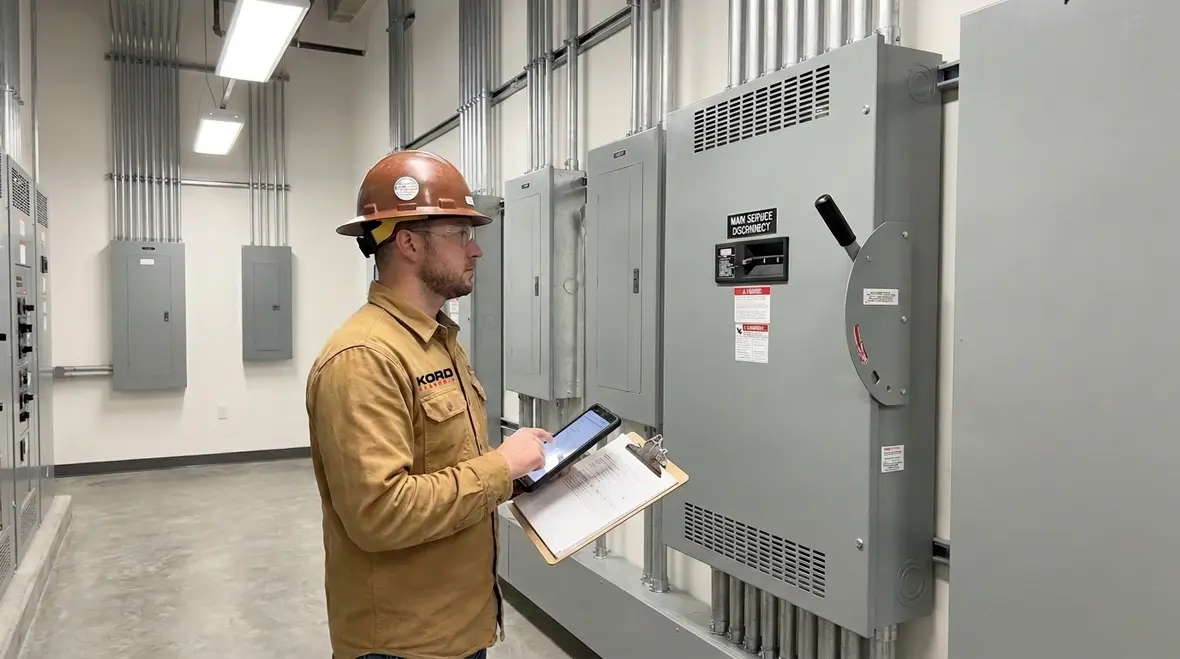
NEC Power Operable Service Disconnects 230.76 Compliance
At Kord Electric, we see it every day: commercial and industrial sites rely on electrical systems that must be safe, clear, and dependable. That is why we pay close attention to NEC power operable service disconnects, especially the rules around how service disconnects work and how people can operate them. NFPA 70 Section 230.76 sets the expectations for manually or power operable service disconnects, and we guide our customers through what compliance looks like in the real world. And yes, we explain it in plain terms, because nothing kills a workday faster than a “simple” switch that everyone argues about like it is a sports debate. Our technicians and expert service staff walk the facility team step by step, then verify the setup so the disconnect functions the way the code intends.
NFPA 70 230.76, what it really requires for facilities
In the field, Section 230.76 focuses on one idea: the service disconnect must be operable in a way that supports safe shutdown. First, the code defines the disconnect as the point where service conductors can be disconnected for emergency or maintenance needs. Then, it addresses whether the disconnect operates manually or by power. However, the requirement is not just about having a disconnect box on paper. It is about making sure the facility team can actually use it when it matters.
Additionally, the section ties into the broader intent of the NEC: fewer surprises, clear operation, and safer handling. Therefore, Kord Electric treats this as a practical design and verification task. We review the equipment choice, the operation method, and the installation details that can affect how the disconnect performs. If something does not match the code intent, our technicians flag it before it becomes a problem during inspection, commissioning, or an emergency response.
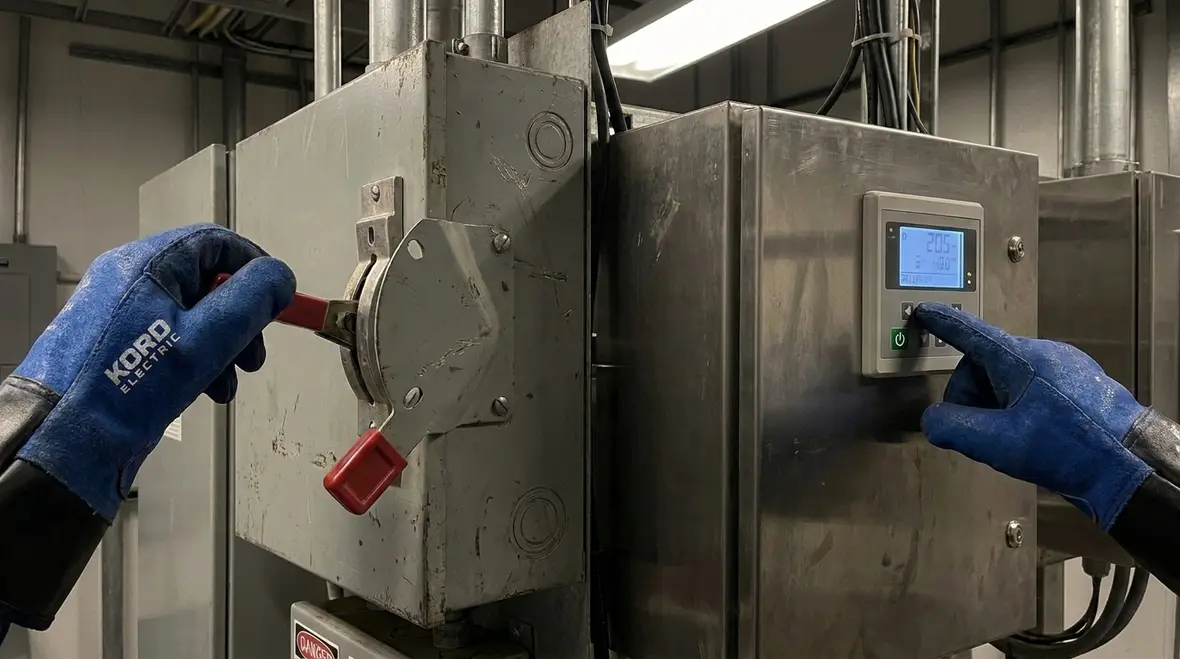
How Section 230.76 fits into the NEC big picture
Section 230.76 zooms in on how the service disconnecting means must actually operate, but it also sits inside a larger NEC framework. For many facilities, this article pairs naturally with broader code resources like Understanding NFPA 70: The National Electrical Code Explained For 2026, which lays out how the rulebook shapes design, installation, and inspection expectations across a whole building. We use Section 230.76 as the “how does this switch really behave” chapter in that bigger story.
When we review a facility’s service entrance, we look at more than just a box with a handle. We examine how the disconnect is identified, how it is reached under stress, and how it supports the building’s emergency planning. The code requirement becomes a working asset instead of a mystery lever that everyone hopes behaves when things get loud and urgent.
Manually or power operable service disconnects, operation and control
Let us talk about the choice between manual operation and power operation. With a manual disconnect, the facility team expects straightforward operation. Yet “straightforward” does not mean “optional.” It still must be installed, identified, and arranged so the operator can act without confusion.
With power operation, things get more important, and a lot more sensitive to details. The disconnect uses electrical power to perform the opening and closing function. That means the control system, the operating mechanism, and the reliability of the power source all matter. Even if the disconnect is labeled correctly, the facility does not get compliance value unless it can operate as intended during normal conditions and when a shutdown is required.
Our expert service staff explains the operating sequence, including what the operator should expect when they command opening. Then, we verify how the control circuit behaves under real installation conditions. We also coordinate with facility stakeholders so they understand the difference between the disconnect status and the broader electrical state of the building. After all, a disconnect that opens is not the same thing as “everything is safe,” and we do not let that misunderstanding slide.
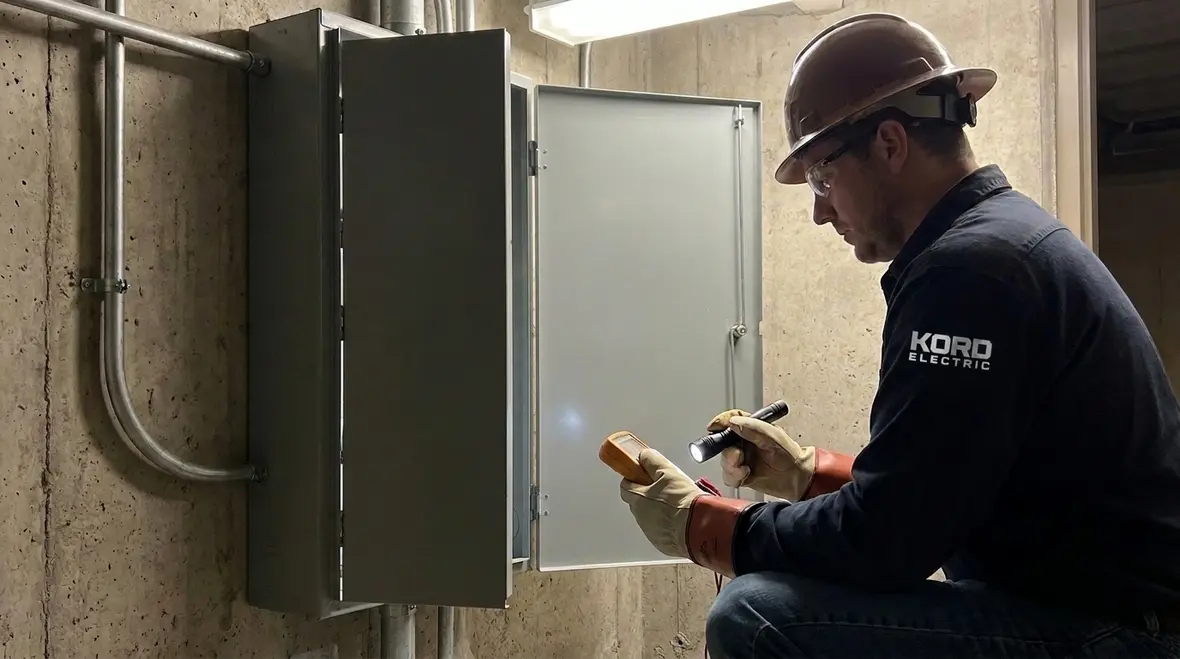
Control logic, power sources, and NEC expectations
For NEC power operable service disconnects, the code language may look compact, but the design work behind it is not. When a disconnect is power operated, we examine:
How the control circuit is powered and what happens if that source fails
Whether the operating mechanism still lets qualified personnel achieve the required opening under abnormal conditions
How feedback is shown to the operator so they can confirm the disconnect position without guessing
How interlocks, remote controls, or automation sequences affect the real shutdown behavior
In some commercial and industrial facilities, the disconnect may tie into building automation or generator transfer logic. We make sure the clever parts do not defeat the simple mission: when you need the service disconnect to open, it opens, and people know it has opened.
Real-world examples from commercial and industrial sites
On one project, the service disconnect was technically power operated and installed per the drawings, but the control source relied on a branch circuit that could be de-energized upstream by another procedure. The paperwork looked clean; the reality did not. We reworked the control arrangement so operators could still achieve the opening sequence without playing electrical chess during an emergency.
In another facility, the manual operation was buried behind storage racks that kept creeping closer as the warehouse expanded. We helped the owner re-establish clear access, update signage, and adjust procedures so no one had to move half a pallet just to reach the disconnect when time mattered.
What makes NEC power operable service disconnects safe and usable
Safety and usability come from several design habits that Section 230.76 supports. First, the disconnect must clearly control the service conductors. Next, the operation must match the type of equipment installed. Then, the physical arrangement must support fast identification and operation by qualified personnel.
Also, power operation introduces control reliability concerns. Therefore, Kord Electric reviews the control arrangement to reduce the chance of a command that does not produce the expected action. We pay attention to how the operating mechanism receives signals, how it responds, and how status feedback gets communicated. In many commercial and industrial environments, multiple teams share responsibility, and clear indication prevents delays.
Some facilities treat electrical shutdown like a game of telephone. Someone hears “switch is over there” and everyone else has a different version of where “over there” is. We fix that with disciplined labeling, consistent documentation, and practical walkthroughs. Our technicians show facility staff exactly what to do, in what order, and how to confirm the disconnect operated correctly.
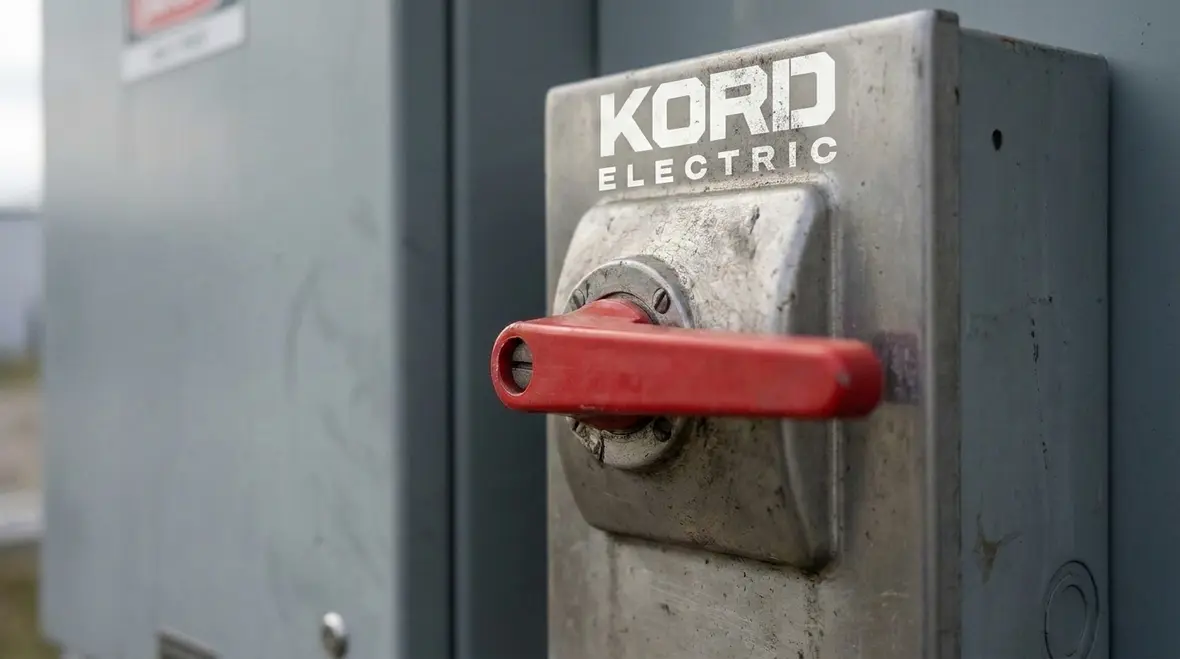
Labeling, documentation, and human factors
In a dim electrical room during a busy shift, people do not have time to decode mystery abbreviations. We use labels that match site documentation and training terms, not obscure internal shorthand that no one outside the design team recognizes. Our goal is that any qualified person can walk in, follow the labels, and operate the disconnect the same way every time.
We also align the disconnect labeling with panel schedules, one-line diagrams, and written procedures. That alignment gives inspectors confidence and gives maintenance teams a fighting chance when they troubleshoot a problem at 2 a.m. instead of during a calm office hour walkthrough.
Coordination with the rest of the NEC and facility systems
Section 230.76 does not live alone. It connects to many other NEC concepts like emergency planning, service entrance arrangements, and the way power flows through a site. In practice, that means the service disconnect cannot be designed in a vacuum.
For example, the facility may have generators, transfer equipment, switchgear, or multiple service sections. Therefore, the operating plan must align with how those systems interact. If a site uses backup sources, our team coordinates the disconnect operation expectations so that shutdown and restoration do not create unexpected conditions.
We also align the electrical design with the building’s operational reality. Major property buildings often include tenant spaces, shared loads, and complex switching. Kord Electric focuses on commercial and industrial facilities, so we build a compliance mindset that fits those systems. Our goal stays the same: the disconnect should make sense, work predictably, and support safe maintenance workflows.
When facility owners look at broader system planning topics such as Building Electrical System Design or modern distribution upgrades, we often point them toward resources like the Kord Electric guides on modern electrical systems and Los Angeles County electrical services. Those big-picture discussions help tie Section 230.76 service disconnect behavior back into overall system reliability, uptime, and inspection strategy.
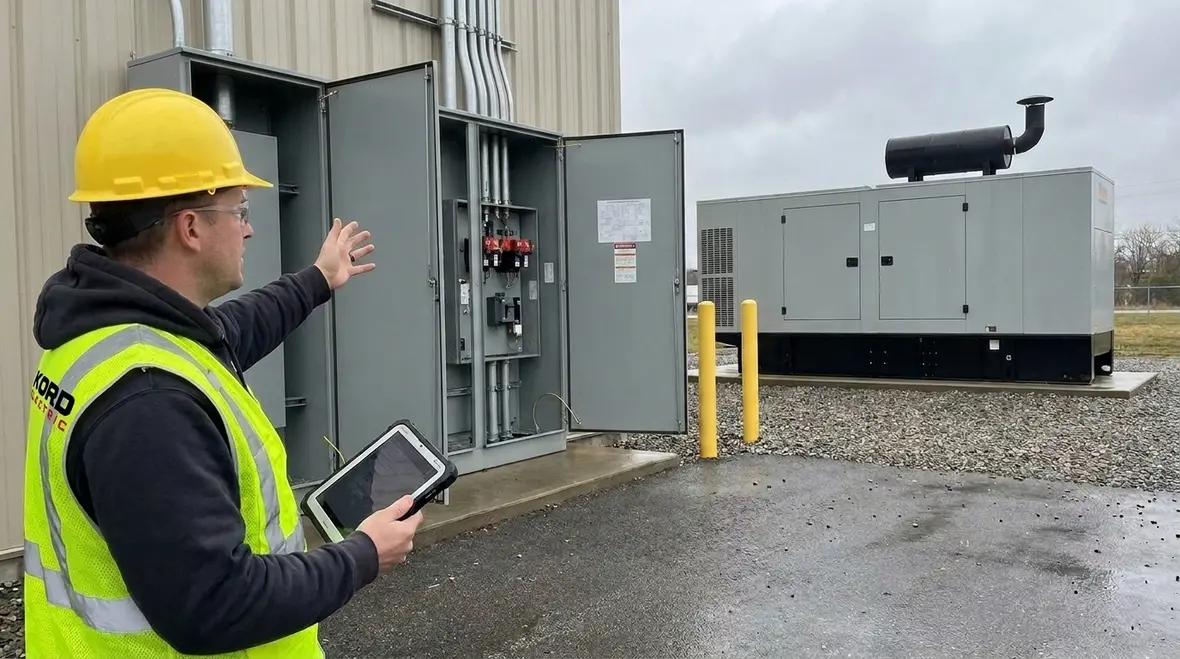
Service disconnects and backup sources
When generators, transfer switches, or multiple services are in the mix, the service disconnect becomes part of a choreography. Our team checks that:
Shutdown procedures reflect what really happens when a generator is online or a transfer switch is mid-operation
Operators know which disconnect controls which section of the system, especially where there are separate service disconnects for different parts of a property
The disconnect’s behavior is consistent with how the NEC expects life safety and essential systems to respond
We also encourage owners to include the service disconnect in their emergency drills. It is far better to discover a confusing label or unexpected interaction during a calm training session than during an actual outage or incident.
Inspection readiness, documentation, and proof in the field
Compliance should not feel like a scramble. We help facilities prepare with documentation and verification. First, we confirm the disconnect configuration matches the design intent and the applicable NEC requirements. Then, we verify labeling and installation details that affect operability.
Next, we review the service area layout so personnel can find and operate the disconnect without guessing. We know that in real buildings, people work under time pressure. So, we make the operation sequence simple and consistent.
Finally, we prepare facility stakeholders for what inspections tend to check. Our technicians explain what inspectors care about and where common issues show up. And yes, sometimes a disconnect looks perfect until you notice the real-world wiring and control arrangement does not match how it is supposed to operate. We catch those gaps early. We also keep the process calm, because no one needs electrical work that feels like a horror movie.
Common 230.76 issues we flag before inspection
Service disconnects labeled in a way that does not match drawings or operating procedures
Power operated disconnects that do not respond reliably under actual field conditions
Manual controls blocked by storage, equipment, or creative “temporary” arrangements that became permanent
Confusion between service disconnects and downstream equipment switches
Correcting those items in advance not only makes inspections smoother, it also makes day-to-day maintenance less stressful for everyone who has to interact with the electrical room.
Training and operation walkthroughs for facility teams
After installation or service work, training turns compliance into confidence. Kord Electric provides walkthroughs that explain operation and status cues in a way facility teams can use. We do not just point at a switch and say, “Good luck.” We show the steps, confirm what the operator should observe, and explain how to respond if the operation does not behave as expected.
Additionally, we review what power operation means for facility procedures. People often assume a power operated disconnect acts instantly and always. Yet controls and interlocks can affect response. Therefore, our expert service staff teaches the difference between a command, an action, and a confirmed state.
As a result, the facility team becomes better at safe shutdown and maintenance planning. They also reduce downtime, because they stop trying to solve electrical problems using guesswork. And if someone asks a question that sounds like a pop quiz, we answer it like a professional, not like a confused substitute teacher.
Building repeatable procedures around the service disconnect
Training sessions around NEC power operable service disconnects become the foundation for repeatable procedures. We help facilities:
Create step-by-step shutdown and re-energization checklists that match the actual field configuration
Document who is authorized to operate the service disconnect and under what conditions
Integrate electrical shutdown with life safety, security, and mechanical system procedures
Schedule periodic drills so the steps become familiar instead of theoretical
That practice means when an outage or incident happens, people are not improvising. They are following a plan that has already been tested in calmer moments.
FAQ about service disconnect operation under NFPA 70 Section 230.76
Conclusion and next step with Kord Electric
When your commercial or industrial facility needs safe, reliable shutdown, we help you do it right the first time. Kord Electric reviews manually or power operable service disconnects, supports inspection readiness, and trains your team so operation is clear and dependable. If you are planning new service equipment or updating an existing electrical setup, reach out to our technicians and expert service staff. We will help you understand the requirements, confirm operability, and document the details that keep your facility compliant and calm during emergencies.
Want a focused site review? Contact Kord Electric to schedule an assessment for your service disconnect arrangement and operation plan. For facilities across Southern California, this work often integrates naturally with broader Los Angeles County electrical services that align service disconnect behavior with panel upgrades, modern distribution, and long-term reliability goals.
If your team wants a deeper code-level foundation behind these projects, pairing this article with the Kord Electric guide Understanding NFPA 70: The National Electrical Code Explained For 2026 gives a clearer picture of how NEC expectations, including Section 230.76, shape real-world design, upgrades, and maintenance decisions.


