
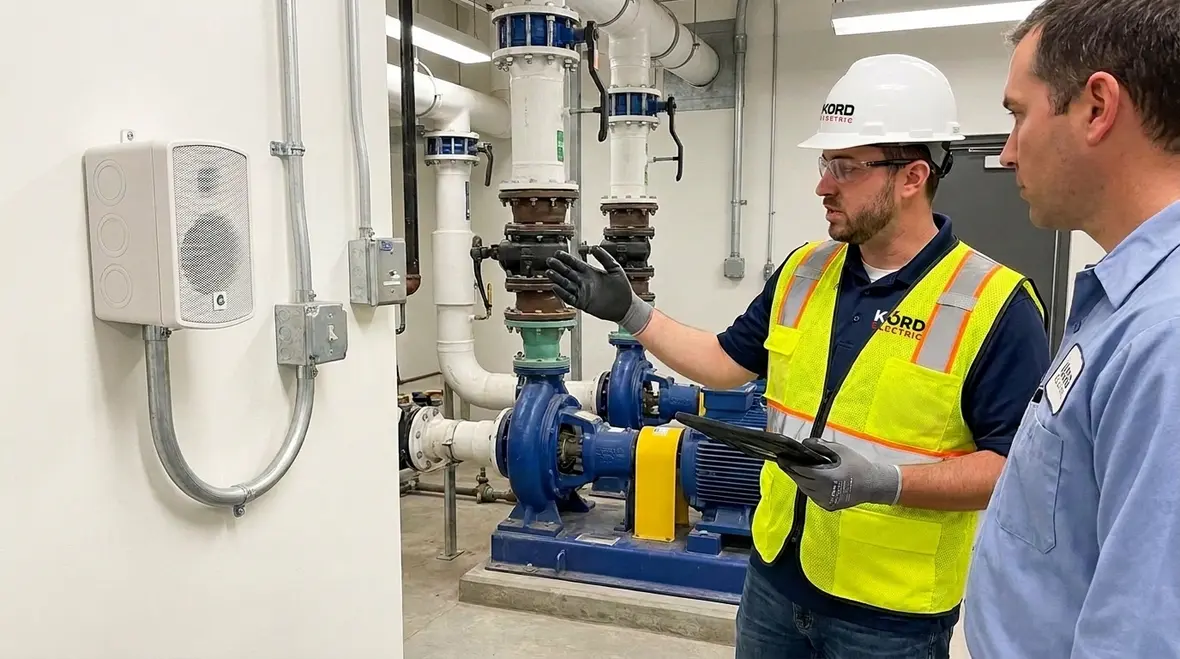
NEC 640.10 Audio Near Bodies of Water Requirements
At Kord Electric, we handle electrical systems for commercial and industrial facilities, along with major property buildings, where safety is not a suggestion and downtime is not a hobby. So when people ask about code requirements, we do more than recite rules. We explain them in plain language, step by step, the way our technicians and expert service staff do it on job sites. In the first glance, one key idea stands out: NEC Section 640.10 requires audio or sound signaling equipment to be installed near bodies of water to help protect people in those areas. And yes, we know, audio alarms near water can sound like a bizarre movie plot. Still, it exists because real life does not care about movie logic. From there, we connect the dots so facility managers can make smart decisions.
How the NEC keeps power and people safe
In commercial and industrial spaces, electrical work does not happen in isolation. It ties into life safety, fire protection, access control, and emergency response. That is exactly why the NEC exists. We focus on the National Electrical Code because it gives clear rules for wiring, equipment, grounding, bonding, and installation methods. Even when a facility uses modern technology, the NEC still sets the baseline for safe design and reliable performance.
Our team often explains it like this. Think of the NEC as a playbook for how electrical systems must behave. Then, when we design or upgrade, we follow the rules so the system performs the way it should when conditions get tough. And conditions do get tough. Dust rises in warehouses, humidity climbs in process spaces, and outages happen at the worst possible time. Therefore, we plan for those realities from the start.
Also, we do not treat compliance as a last minute task. We treat it as part of project delivery. Consequently, your building gets safer systems and fewer surprises during inspections.
What NEC Section 640.10 audio near bodies of water really means
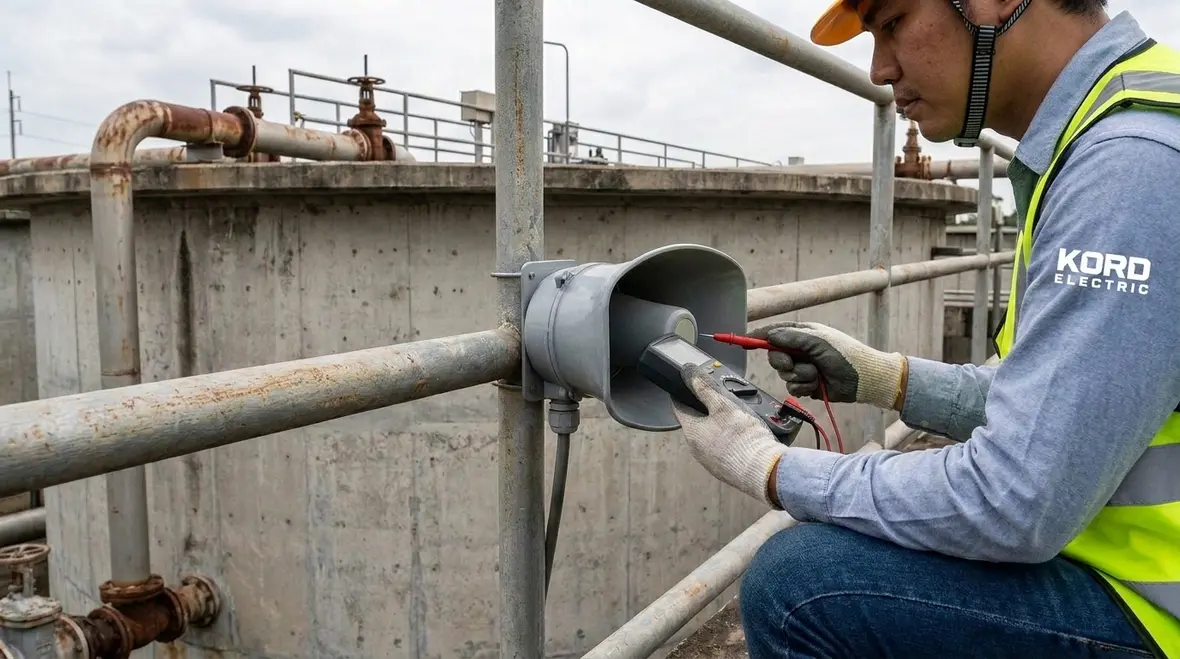
NEC Section 640.10 addresses where audio or sound signaling equipment must be installed in settings that include bodies of water. To facility owners, this matters because water changes risk. Water increases conductivity. It can reduce safe margins during faults. It also affects how people perceive hazards, especially in noisy or emergency conditions.
So how do we translate this into real field work? First, we help others identify the specific areas that count as near bodies of water in their facility layout. Then we confirm how the sound signaling devices are placed, powered, and protected. After that, our technicians verify that the installation approach supports the intended emergency function.
Importantly, we do not stop at “installed.” We verify performance and fit. For example, the signal must be placed where people can hear it. Additionally, the installation must resist damage from the environment, because corrosion and moisture do not take a day off.
If you are wondering why this shows up in the first place, here is the simple answer. The NEC aims to reduce harm during abnormal events. And audio near bodies of water supports quicker evacuation and better response, especially for areas that might be harder to monitor.
Where NEC Section 640.10 shows up in real facilities
In our commercial and industrial work, NEC Section 640.10 audio near bodies of water usage appears in more places than many people expect. Facility leaders often picture a pool deck or a decorative fountain, and they are right. But we also see these requirements come into play near indoor and outdoor water features, cooling ponds, process tanks, rehabilitation or therapy pools in healthcare settings, and certain exterior gathering spaces where water is a core part of the design. In each of those locations, clear sound signaling helps people understand when something is wrong, even if they cannot see the source of the hazard.
When we help a facility interpret “near” in NEC language, we look at how people move around the water, how close equipment is to the edge, and how quickly conditions can shift. Then we match that reality to the intent of the rule: protect people who spend time in or around that water, using audio that cuts through normal activity and background noise.
Integrating life safety systems with electrical work
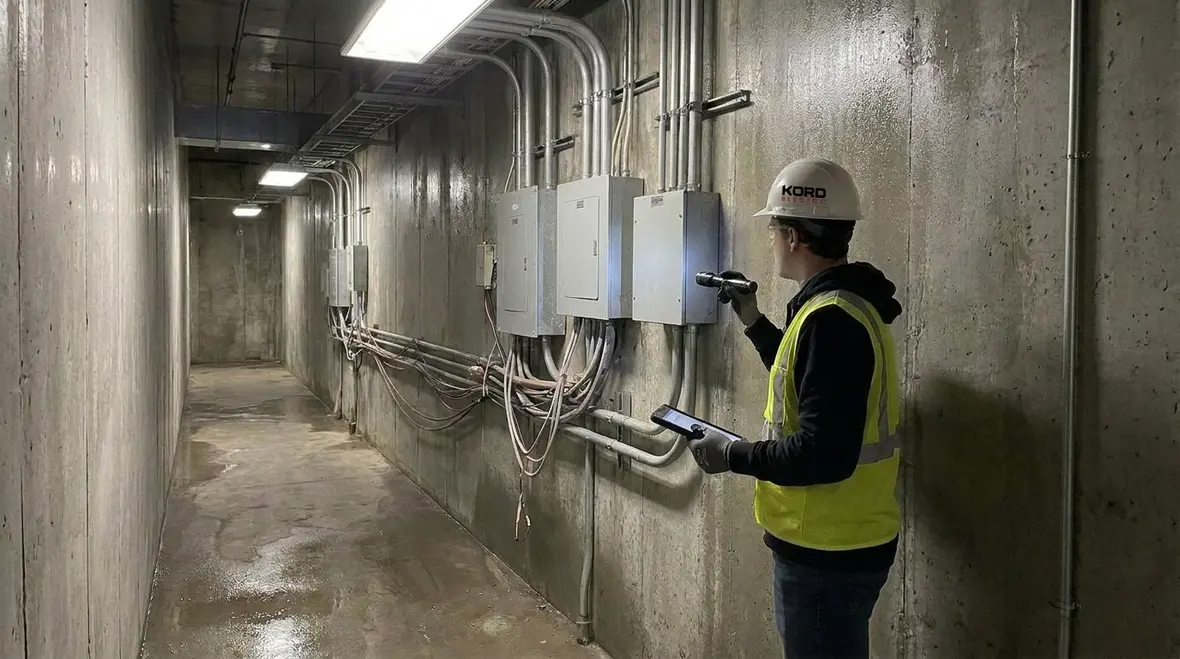
Most people think electrical code is about wires and panels. That is only part of the story. In major property buildings, electrical systems connect with alarms, emergency lighting, fire systems, and detection equipment. Therefore, electrical compliance supports life safety outcomes.
When we plan upgrades, we coordinate with the rest of the facility’s safety approach. We do this so power delivery matches the needs of the fire and notification equipment. We also make sure that circuits and control wiring support the intended sequence during emergencies.
Our expert service staff often explains this with a calm but direct analogy. If the electrical system is the nervous system, then life safety devices are the senses. When senses receive incorrect power or fail under fault conditions, the entire system suffers. Meanwhile, code requirements help the whole chain work under stress.
Also, commercial and industrial buildings often run with strict schedules. So we help teams plan shutdown windows, route work safely, and keep the facility operating. In other words, we make compliance practical, not disruptive.
How NEC 640.10 connects to broader NEC strategy
Audio near water is just one piece of a much larger safety picture. When we walk a facility, we constantly connect NEC 640.10 to other sections that shape the same environment: wiring methods that prevent ground faults, bonding that keeps metal parts at safe potential, overcurrent protection that clears faults correctly, and emergency power strategies that make sure sound signaling does not go quiet during an outage. For more background on that wider context, facility teams often pair this topic with resources like Understanding NFPA 70: The National Electrical Code Explained for 2026, which breaks down how the code guides planning across commercial and industrial sites.
Common compliance gaps we see during audits and inspections
Even well managed facilities can get hit by small issues that turn into big inspection problems. Over time, systems get expanded. Equipment gets replaced. Renovations get done in phases. Each change can leave behind a gap if the electrical installation does not match the current safety rules.
Here are gaps our technicians frequently uncover in commercial and industrial environments.
Improper device placement in moisture sensitive areas where signal performance matters
Routing changes that ignore required protection levels for cables and conduits
Unclear labeling or documentation that makes verification hard during emergencies
Grounding and bonding that no longer matches the existing equipment layout
Equipment that was added later without full coordination with life safety needs
To be clear, we are not pointing fingers. We are pointing out patterns. Then we help correct them in a way that supports safe operation. Because once the system is corrected, it performs better, and the building’s safety plan becomes more dependable.
And yes, we have seen cases where a “temporary fix” lasted so long that it became a permanent tradition. The NEC does not laugh at tradition, and neither do our service teams.
Typical NEC 640.10 issues around water
Specifically for NEC Section 640.10 audio near bodies of water usage, the gaps tend to fall into a few repeat categories. Some facilities install sounders or speakers that are technically nearby but blocked by walls, landscaping, or ambient noise, so people cannot hear what they need to hear. Others rely on devices that are not rated for the humidity, chemical exposure, or cleaning practices around pools and process tanks. We also see cases where the power source for audio signaling is tied to circuits that are more vulnerable to faults in wet locations, which undermines the whole goal of having alarms in the first place.
When we uncover those issues, we document them clearly and map a route back to compliance. That often includes relocating devices, upgrading enclosures, rerouting circuits, or improving labels so on-site staff can verify performance quickly during testing and inspections.
How we help facility teams plan compliant upgrades
When Kord Electric supports a facility, we follow a process that reduces risk and keeps teams confident. First, we review existing drawings, panel schedules, and device layouts. Then we inspect the field to confirm what is actually installed, not what was last noted in a binder.
After that, we evaluate safety requirements tied to the building’s use, occupancy needs, and any relevant sections of the NEC. We pay special attention to areas connected to life safety expectations. That includes sound signaling and the electrical conditions that allow those devices to operate when needed.
Next, we coordinate scope, materials, and installation steps. Meanwhile, our technicians plan the work so it aligns with the facility’s operating schedule. We also help clients understand how the changes support ongoing compliance, rather than just passing an inspection today.
Finally, we document the work clearly. Because when a building manager needs to prove what was done and why, documentation saves time, reduces confusion, and supports long term maintenance.
Designing around water, noise, and human behavior
Designing to NEC Section 640.10 is not just about placing a device near water and calling it a day. We look at how people actually use the space: where they gather, where they might be distracted, and how background noise shifts during events, cleaning, or production. In some facilities, that means aiming sounders toward seating or work areas rather than the water itself. In others, it means coordinating with visual signaling so people with hearing challenges still receive clear warnings.
We also consider maintenance reality. Devices placed over water features or in hard-to-reach recesses tend to get ignored when schedules tighten. So we balance code intent, sound coverage, and access for inspection or replacement. The result is a system that stays compliant not just on day one, but years later when your team is still relying on it during real emergencies.
Why NEC knowledge matters for commercial buildings
For large facilities, code knowledge helps teams avoid hidden costs. A single non compliant detail can trigger rework, delays, or expensive troubleshooting. Therefore, knowing the NEC helps you plan better from day one.
Also, many facility leaders manage multiple disciplines at once. They handle operations, contractors, maintenance cycles, and safety plans. When the electrical side does not align with the rest, the facility pays the price through extra downtime and stress.
That is why Kord Electric focuses only on commercial and industrial facilities and major property buildings. We specialize in environments where standards matter, systems connect, and safety cannot be treated like a side project. If you manage a building where people depend on reliable electrical performance, you deserve experts who treat compliance as core work, not optional paperwork.
Meanwhile, we stay active in related safety discussions through our wider network and resources. If you want more background on the NEC and how it connects to fire and building safety, Kord Fire and related industry resources provide additional context. We also keep learning because code updates shape how the industry designs and installs equipment, including requirements that touch life safety and installation methods.
For many facilities across the region, that bigger picture turns into practical action through services that support inspections, troubleshooting, and long term planning. When you coordinate NEC topics like Section 640.10 with structured programs for upgrades and maintenance, you move away from one-time fixes and toward a stable, predictable electrical strategy.
Connecting code compliance to regional electrical services
Because commercial and industrial properties rarely operate in isolation, many building owners pair NEC-focused work with coordinated regional planning. Kord Electric’s broader support for major properties throughout Los Angeles County helps teams unify upgrades, testing, and long term reliability goals. When a facility team wants to see how code-driven design ties into a complete electrical program, they often start by exploring the dedicated Los Angeles County electrical services overview and then align NEC-driven projects, including NEC Section 640.10 audio near bodies of water usage, under that same strategy.
FAQ
Ready to strengthen electrical and life safety compliance?
If your commercial or industrial facility needs electrical work aligned with the NEC, Kord Electric is ready to help. We send our experienced technicians and expert service staff to review your existing system, identify gaps, and plan practical upgrades with clear documentation. We also support safe installation steps that match your operating schedule. When you want fewer surprises and stronger safety performance, contact Kord Electric today and let us handle the details. You run the business, we protect the building.
Whether you are evaluating specific NEC Section 640.10 audio near bodies of water usage or reviewing a full power and life safety strategy, our team helps you connect everyday decisions to long term reliability. From targeted upgrades to coordinated regional support, we align code compliance, uptime, and safety so your building can operate with steady confidence instead of last minute improvisation.


