
NEC Section 640.22 Audio Equipment Rack Wiring Safety
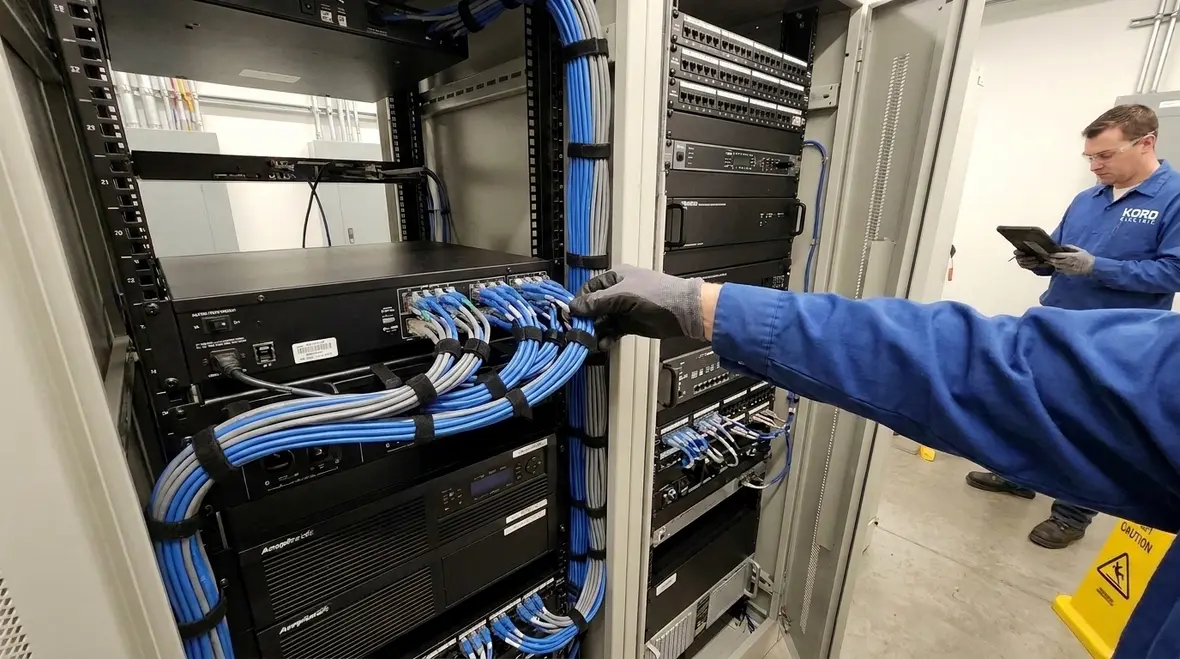
At Kord Electric, we approach electrical safety with the calm confidence of people who actually read the code before touching a wire. That mindset starts with how we handle NEC Section 640.22 audio equipment rack wiring in commercial and industrial facilities and major property buildings. We explain the rules to our clients in plain language, and our technicians walk the site, check the rack layout, and then confirm the wiring method matches the intent of the National Electrical Code. In other words, we make sure your audio systems do not turn into a surprise fireworks show, even if the venue lights are already doing that job.
In this guide, we cover the NEC’s role in protecting people, equipment, and operations. We also connect the dots between standards, practical install steps, and the inspection items that tend to catch teams off guard. And yes, we’ll keep it professional, but not so stiff that it could qualify as warehouse storage.
What the NEC does for commercial electrical safety
The NEC exists for one simple reason: to reduce risk when electrical systems operate in the real world, not in a textbook. For commercial and industrial facilities, the stakes rise because systems run longer hours, more loads get added over time, and the environment can be tough on equipment. That is why we rely on the NEC when we design and when we maintain electrical systems.
Third parties may call it “just regulations,” but our expert service staff treat it like a safety roadmap. They show facility managers how NEC requirements affect installation details such as routing, separation, and protection. Because when teams skip those details, the cost usually arrives later, usually louder, and often during a critical event when nobody wants delays.
We also remind clients that NEC compliance supports good operations. It helps standardize how crews build systems across sites, which reduces confusion and lowers the odds of errors during upgrades.
How NFPA 70 ties into real NEC compliance
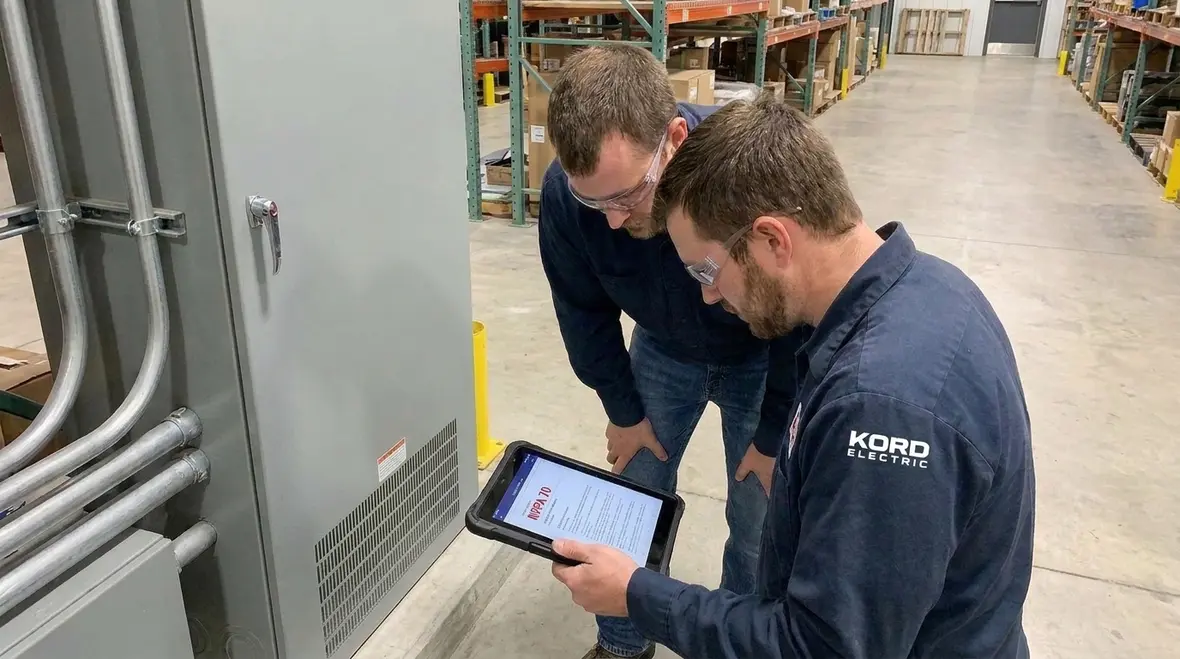
The NEC is published as part of NFPA 70, which means it is not a random list of tips. It is a safety-focused standard updated on a cycle, and jurisdictions adopt it with local amendments. So, when we plan work at a facility, we treat NFPA 70 as the baseline and then align with local requirements.
Here is where our technicians make the difference. They do not just look for a “pass” in inspection. Instead, they trace the intent behind the rules. For example, when wiring methods get specified in a certain chapter, that usually reflects how the system interacts with other circuits, how heat and fault conditions behave, and how personnel access the equipment.
In practice, compliance means we document what we install, we verify installed conditions match design intent, and we leave a trail that makes future maintenance easier. If you have ever tried to troubleshoot a mystery circuit at midnight, you already know documentation is not optional. It is the flashlight.
If your team wants a deeper grounding in why the code exists and how the 2026 direction shapes upgrades, our related resource Understanding NFPA 70, the National Electrical Code Explained for 2026 walks through those concepts in more detail before you ever step into an electrical room.
Where NEC requirements show up in day to day projects
In commercial and industrial spaces, electricians work in a constant loop of design, install, test, and update. NEC requirements show up at each step. We see this most clearly in these common project moments.
- Initial planning: We map power paths, identify equipment rooms, and confirm the location and use of racks, panels, and control spaces.
- Installation choices: We select wiring methods that support the conditions at the jobsite and the needs of the equipment.
- Protection and separation: We maintain required spacing and select protection to limit damage during faults.
- Testing and verification: We test circuits and document results, which helps with commissioning and future service.
- Facility changes: We plan upgrades so they do not create unsafe “patchwork” across older systems.
Then we bring in the NFPA 70 mindset: safety is built in, not added later. Others may treat compliance like an admin step. We treat it like a design constraint that keeps the site running and keeps people safe.
NEC Section 640.22 audio equipment rack wiring basics
When a facility includes production sound, public address, control rooms, or event systems, audio racks become a key part of the installation. NEC Section 640.22 addresses audio equipment rack wiring, including how conductors relate to the rack, how circuits connect, and how the installation supports safe operation and servicing.
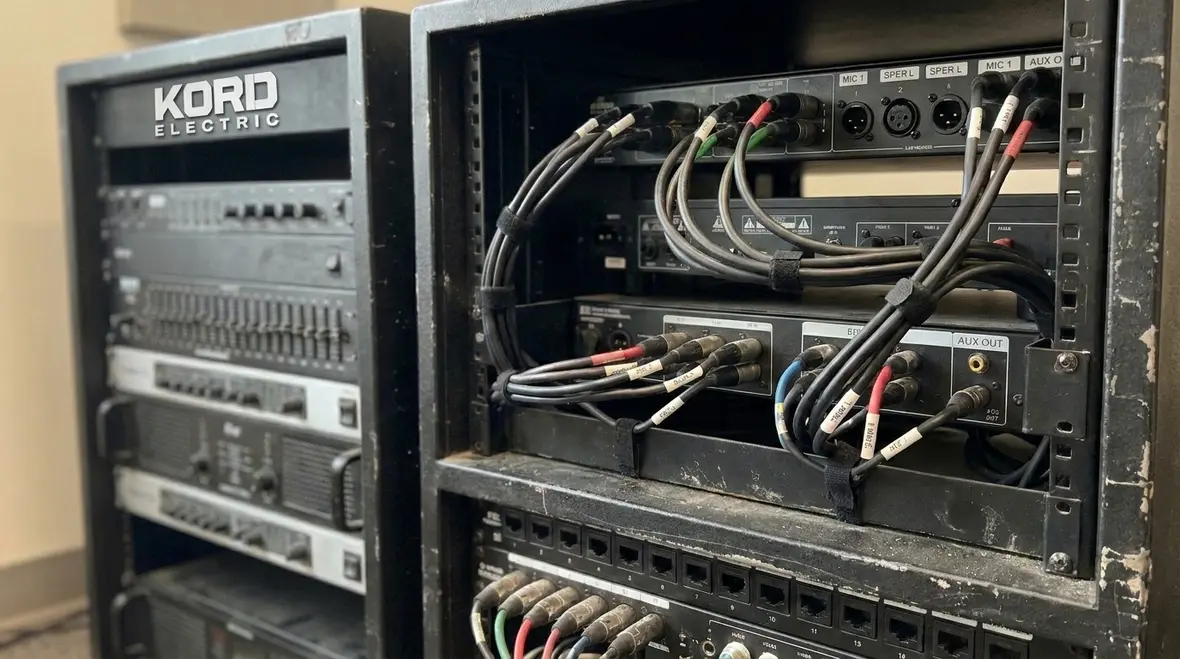
Our approach starts with understanding the rack’s role and the environment around it. Next, our technicians confirm routing paths, termination quality, labeling, and how cables enter the rack. After that, we verify that the wiring method and installation practices line up with the intent of the NEC, not just with what “seems fine” on a quick walkthrough.
Since these systems often tie into broader electrical infrastructure, we also coordinate with the facility’s power distribution plan. This helps prevent issues like unwanted interference, mismatched circuit loads, or unsafe connections that could create faults. And yes, we know that in pop culture, audio gear seems immortal. In real life, wiring mistakes can be the villain, not the background beat.
To keep the process smooth, we explain the key inspection and verification points our expert service staff look for. That way, the client team knows what we will check and why it matters. It reduces surprises and keeps project timelines steady.
Dual check: power, grounding, and separation for audio systems
Even when teams focus on the audio gear itself, the electrical details drive safety. Therefore, we run a dual check that considers both performance and code intent. To make it easy for facility leaders to follow, we use a simple two-track review during our audits and installs.
| What we verify | Why it matters |
|
|
|
|
When we do this correctly, the audio rack wiring supports safe operation and easier troubleshooting. And when something does go wrong, the site team can isolate the issue without tearing through half the building. Nobody wants that kind of “boss fight” during an event.
Common mistakes we help facilities avoid
In the field, we see patterns. Some mistakes happen because teams rush, some because they inherit older layouts, and some because the project scope expands after initial planning. Regardless of the reason, we help facilities avoid repeat issues.
- Loose or unclear rack terminations: We tighten and confirm terminations, then we document what we did so maintenance stays safe.
- Improper cable entry and support: We control strain so cables do not wear out from repeated movement.
- Missing identification: We label conductors and connections, because guesswork is not a testing method.
- Weak coordination with the facility power plan: We align rack wiring with upstream distribution so circuit loading and separation stay appropriate.
- Skipping verification: We test and record results rather than assuming “it works” means “it is safe.”
Our technicians explain these points while they work, so facility teams understand the why, not just the what. That reduces the chance of future changes creating unsafe conditions. In other words, we do not just install; we teach the system so others can maintain it correctly.
How we align safety planning with ongoing service
Commercial and industrial sites rarely stay frozen. New equipment arrives, production workflows change, and control systems get upgraded. Therefore, we build a service mindset into our work. We plan for access, future additions, and consistent maintenance paths.
In addition, we use our expert service staff to coordinate with facility stakeholders. We review rack and circuit layouts, confirm where future wiring will likely land, and advise on safe expansion methods. That is how we help major property buildings avoid risky “bolt-on” changes that pile up over time.
If your facility also uses fire and life safety systems, we factor that into electrical planning. We do not operate in silos. We support safe system integration so the building performs as one unit, not as a collection of unrelated parts.
For facilities across the region that need help beyond the racks, our broader Los Angeles County electrical services support power distribution, panels, and system upgrades that keep NEC Section 640.22 audio equipment rack wiring aligned with the rest of your infrastructure.
FAQ
When to call Kord Electric for NEC driven work
If your facility includes audio racks, production systems, or upgraded control spaces, we invite you to contact Kord Electric. Our technicians and expert service staff help you plan safely, install correctly, and document the work so inspections go smoother. We also advise on safe future expansions, so upgrades do not create wiring problems later. Call us before the next event, renovation, or system change, and let’s handle the electrical side with the steady confidence it deserves.
Whether you are revisiting NEC Section 640.22 audio equipment rack wiring after an expansion or planning a new build from the ground up, bringing in a team that lives inside NFPA 70 every day turns code language into clear, practical steps on your site.


