
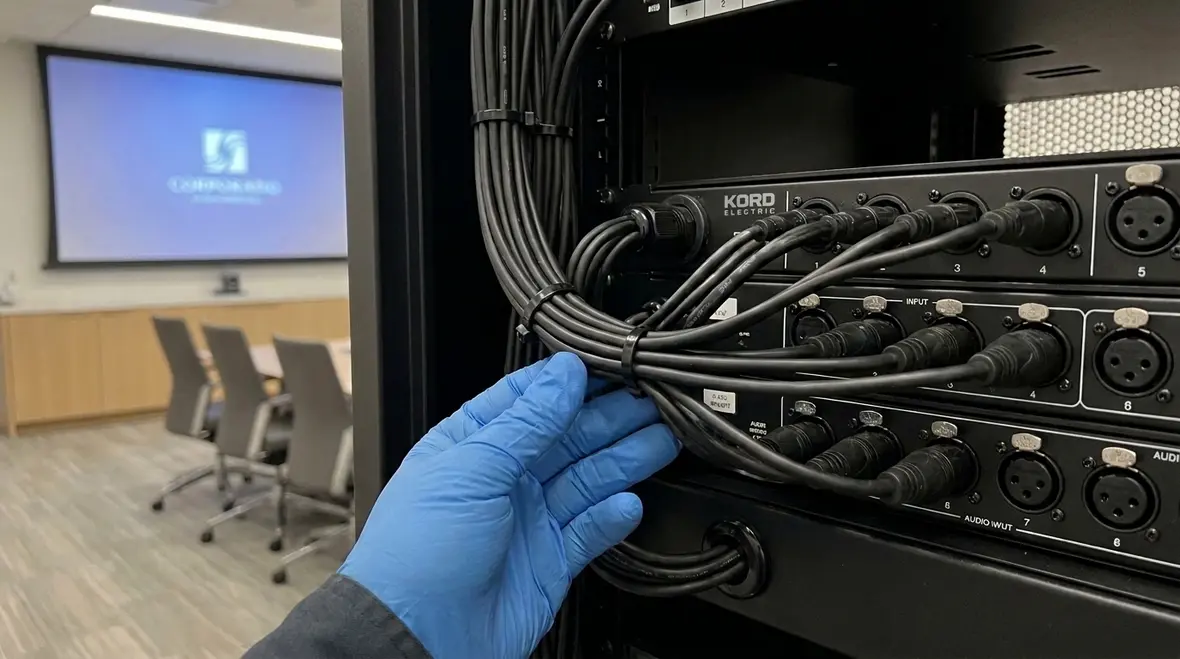
NEC 640.42 Audio Equipment Flexible Cord Safety Guide
When a facility needs clean power and safe setups, we take the wiring seriously. At Kord Electric, we often get called in when audio, communications, or specialty systems start acting up, and we must verify the cord and circuit details before anyone hits play. For example, NEC Section 640.42 audio equipment flexible cord use comes up fast in commercial and industrial spaces, like when stage mics, paging systems, intercoms, and background music lines get routed through busy areas. In these environments, one loose routing choice can turn a reliable system into a noise machine. And yes, we have heard the jokes, like “the speakers are just thinking.” Still, we handle it with calm, methodical work from our technicians and expert service staff.
In this article, we explain what the National Electrical Code expects for the real world, how NEC Section 640.42 fits into the bigger picture, and what facility teams should ask us to check. We also connect the dots to help commercial and industrial owners reduce risk, avoid delays, and keep systems running.
So, let’s do this the right way, before the next meeting starts with feedback squeals.
National Electrical Code basics for commercial and industrial facilities
The National Electrical Code, often called NEC, sets rules that guide electrical design, installation, and inspections. While people sometimes treat it like a textbook, we treat it like a safety roadmap for workplaces where uptime matters and where the consequences of a mistake are real.
For commercial and industrial facilities, the NEC covers how circuits, equipment connections, wiring methods, grounding, and labeling must work together. In other words, the NEC does not focus on “just make it turn on.” Instead, it pushes toward safe operation under normal use and under fault conditions. That matters when facilities have heavy loads, shared spaces, and complex systems.
Our expert service staff explains this in plain terms: codes do not exist to slow projects down. They exist to keep people safe and help teams avoid the kind of rework that wastes money. And we have seen the cost of skipping details. When an audio or communications system fails after installation, the fix often reaches beyond one cable. It reaches routing, termination quality, strain relief, and sometimes even the power distribution design.
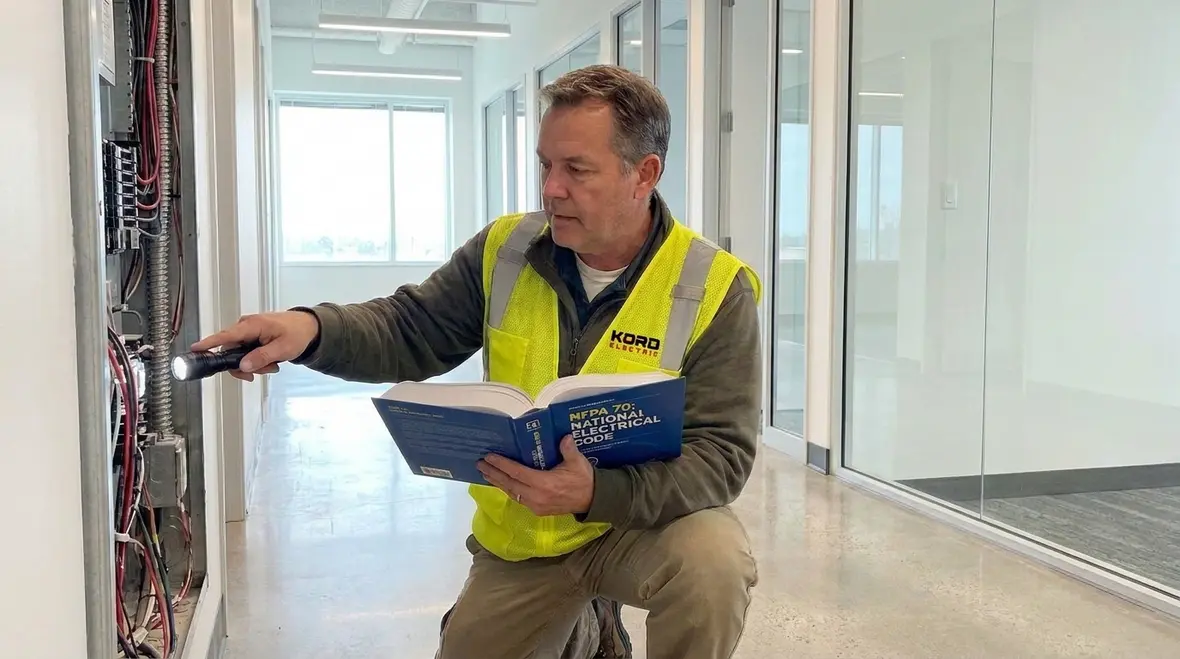
How NEC Section 640.42 supports safe audio cord routing and use
NEC Section 640.42 audio equipment flexible cord use targets a common real world problem. Flexible cords carry audio power and signal power in certain setups, especially in environments like conference centers, performance areas, and large office spaces with specialty audio needs. However, flexible cord use is not a free-for-all. The code limits how we can install, support, and use these cords so the system stays safe.
When our technicians review a site, we focus on the “chain of safety.” That chain includes the cord type, how it is routed, how it connects to equipment, and how strain is handled. If a cord gets pulled tight or gets pinched behind a door, it can damage insulation. Then, over time, that damage can create intermittent faults, shock hazards, or poor performance that sounds like “mystery noise.”
We also help teams avoid a classic mistake. People assume that because a cord looks intact, it is safe. Yet flex in one spot can wear the conductor and still look fine at first glance. Therefore, we check routing paths, support points, connector integrity, and how the cord moves during normal use.
In many facilities, the biggest risk shows up during “workflow movement.” That means carts, cleaning routines, staff movement, and equipment adjustments. As a result, we recommend clear routing and stable connections that do not depend on luck. Because luck is not a safety device, even if it feels like one right before the presentation begins.
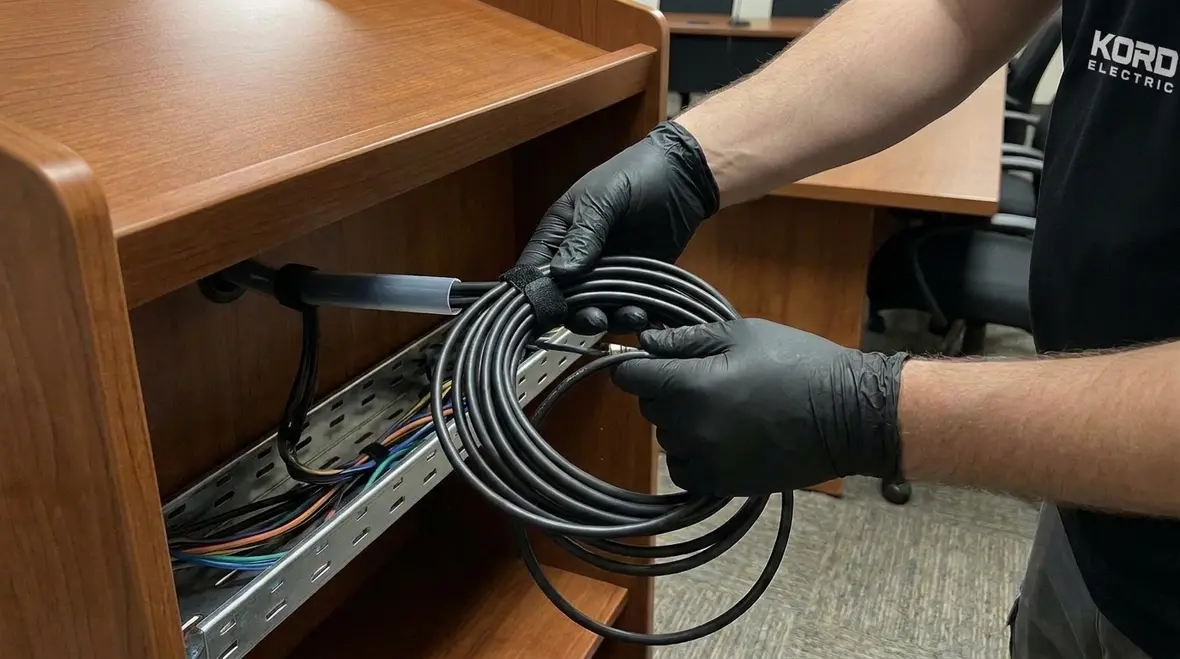
Flexible cord rules in practice: what our technicians look for
In the field, NEC requirements show up as visible choices. Our technicians walk through the installation like an inspector would, but with a business goal in mind: keep systems reliable and keep the facility compliant. We pay attention to details that many teams skip until something goes wrong.
1) Routing and protection
We verify that flexible cords do not run through areas where they can be damaged. Then we confirm the path avoids sharp edges and pinch points. When a cord crosses a walkway or sits near heavy foot traffic, we look for ways to guide it safely and keep it protected.
2) Strain relief and connection quality
Next, we check how the cord connects to equipment. A connection without proper strain relief can fail at the connector, even if the rest of the cable looks fine. Meanwhile, loose terminations can create intermittent audio problems that waste hours of troubleshooting time.
3) Support and movement limits
Flexible cords must not act like permanent building wiring. Therefore, we confirm that the installation supports normal movement without forcing the cord to bend sharply or repeatedly at one spot.
4) Compatibility with the equipment setup
We ensure the cord and plug types match the audio equipment and the intended use. If teams mix components without confirming compatibility, they can create unsafe conditions or system instability.
To keep it easy to understand, our expert service staff explains it this way: the system is only as safe as its weakest point. And in audio setups, the weakest point often hides in plain sight, right where the cable bends the most.
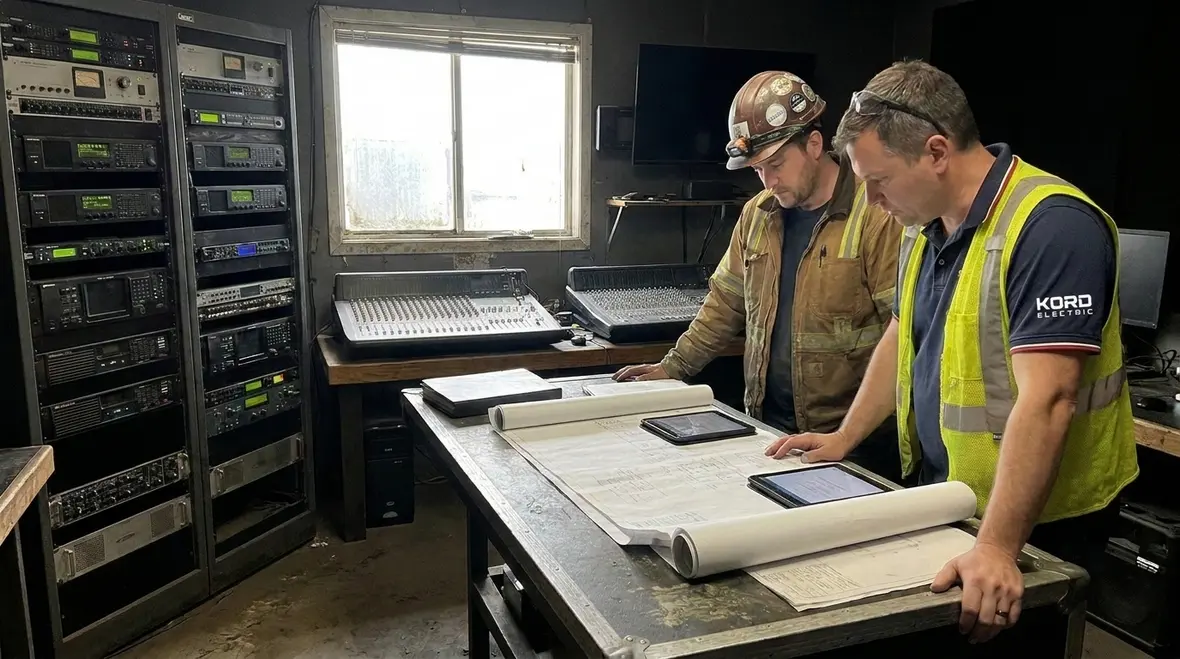
NEC compliance strategy for major properties and property buildings
Commercial and industrial facilities rarely rely on a single system. They run power, fire safety, communications, and life safety support in the same building. That is why NEC compliance cannot live in isolation. Instead, we build a plan that connects installation rules across trades.
When we work with property owners and facility managers, we help them treat code compliance as a living program. That means we consider how renovations, tenant changes, and equipment swaps can affect the original installation. For example, a tenant may add a new sound system, re-route a cord, or relocate equipment for events. Consequently, the original NEC compliant setup can drift out of compliance if the flexible cord and connection points are changed without review.
We also coordinate with fire and life safety concerns. If a system shares pathways or cabinet space with other building systems, we ensure the layout supports safe separation and proper routing. In some cases, teams need help aligning electrical work with broader safety requirements, including those addressed by NFPA resources.
If the facility team wants to go deeper, we point them to resources like Kord Fire’s overview on the NEC, as well as Kord Fire Australia for regional guidance. We also encourage teams to use fire service industry references when planning large projects, including materials from firepumps.org, because they help connect the dots between code intent and real hazards. For a more electrical focused perspective, many facility managers also review our related Kord Electric guide, Understanding NFPA 70: The National Electrical Code Explained for 2026, to see how these rules shape everyday design and upgrade decisions.
Common installation mistakes we prevent during audits
We do not just check boxes. We also stop patterns we see again and again. For commercial and industrial facilities, these are the kinds of problems that lead to costly downtime, repeated service calls, and paperwork stress.
1) Overstressing the cord during routine use
Teams often route cords behind desks, across doors, or near frequently moved furniture. As people move around the space, cords experience stress. Over time, that stress can damage the cable. We correct the route, then we confirm the cord has a stable path and proper support.
2) Ignoring connector strain
We have watched connectors loosen after repeated pulling, and then audio performance gets “mysteriously worse.” At the same time, electrical risk increases. Therefore, we tighten, inspect, and confirm strain relief where required.
3) Treating flexible cords like permanent wiring
Flexible cords belong in specific setups. If we install them in ways that the code does not support, the system becomes unreliable and may fail inspection. Our technicians align the installation method with the intended use and keep it stable.
4) Delayed troubleshooting
When audio issues start, some teams swap equipment first. That can cost money and still not solve the root problem. Instead, we start with the electrical path, then verify routing, connections, and cord condition before replacing hardware.
And yes, we sometimes hear the pop culture line, “If it’s not broke, don’t fix it.” But in electrical systems, “broke” often shows up as “working… until it doesn’t.” We would rather catch the small problems now than listen to a full blown system malfunction later.
Keeping audio systems reliable while staying compliant
Compliance and performance can work together, and we design our approach around that. When NEC rules fit well into the real job, audio systems sound better, behave more consistently, and require fewer emergency visits.
During planning, we recommend teams think about the full workflow. That includes where staff will stand, how cables must move during equipment setup, and what happens during maintenance. Then we choose the right installation method so the cord stays safe through daily use.
We also advise facilities to document changes. If someone upgrades audio gear, changes a rack, or relocates speakers, we encourage a quick review of flexible cord routing and connection points. That one step helps prevent “silent drift,” where the system gradually moves out of code fit without anyone noticing until a problem interrupts operations.
Our expert service staff also explains that inspections should not be one-time events. A building evolves, and so do the electrical setups inside it. Therefore, ongoing checks protect both safety and budgets.
For facilities that want to fold audio system reliability into a broader electrical plan, partnering with a contractor who can handle both NEC interpretation and real-world troubleshooting matters. Whether you are coordinating with life safety infrastructure or planning Los Angeles County electrical services across multiple locations, disciplined cord management keeps surprises off the schedule.
FAQ: NEC Section 640.42 and audio flexible cord use
Contact Kord Electric for code focused audio electrical support
If your commercial or industrial facility runs audio systems, do not wait for a feedback event or an inspection deadline to start fixing cord and connection issues. Kord Electric sends our technicians and expert service staff to review routing, strain relief, and equipment compatibility under NEC expectations, including NEC Section 640.42 audio equipment flexible cord use. Call us to schedule an audit, plan compliant upgrades, or troubleshoot reliability issues. We keep your systems safe, your operations steady, and your budget calmer than a Sunday morning playlist.
Whether you are refreshing a single conference room, modernizing a paging network across multiple buildings, or coordinating audio upgrades alongside broader code improvements, our team helps you connect the dots between written rules and real wiring. We align cord choices, routing, and protection with the rest of your NEC strategy so your facility can focus on work instead of wondering what might buzz, trip, or crackle next.


