
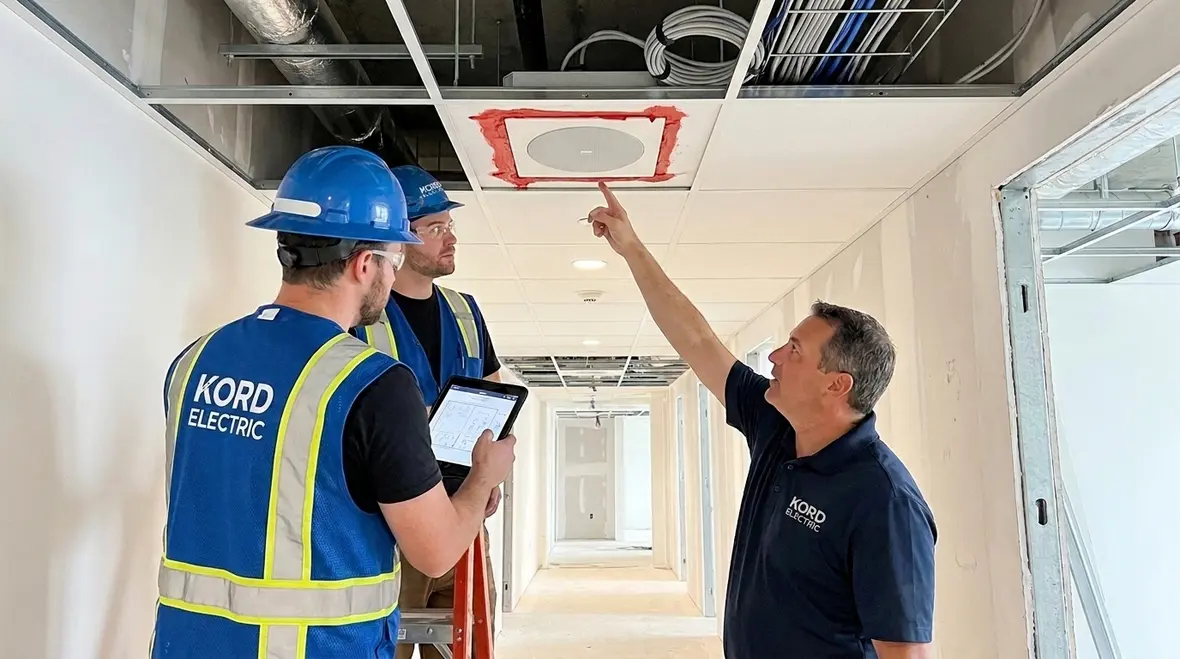
NEC Section 640.25 Loudspeaker Fire Rated Ceiling Installation
At Kord Electric, we handle electrical and fire life safety work for commercial and industrial facilities, plus major property buildings where code compliance cannot be a “maybe.” That is why we start with a practical example: NEC Section 640.25 loudspeaker fire-rated ceiling installation. In the field, we often see teams treat this like a standard ceiling project, but fire rated systems demand careful cable routing, the right device fit, and proof that the install matches the listing and the code intent. Our technicians explain the why as we work, and we keep the pace calm, deliberate, and thorough, like a soothing narrator who still checks every torque value. And yes, we also remind people that electricity does not care how confident a contractor feels.
NEC and life safety: what our commercial teams must get right
In the simplest terms, the National Electrical Code sets rules that help prevent fire, shock, and unsafe operation. However, for buildings that serve the public or host critical operations, the NEC also supports the bigger goal: keeping evacuation and emergency response systems functioning when conditions turn harsh. Therefore, we treat NEC work as a system, not a set of isolated rules.
Our expert service staff and field technicians walk clients through what matters most for commercial and industrial spaces. For example, if an electrical system supports alarms, emergency communication, or signaling, then the code details around circuits, equipment, and installation methods become mission critical. Moreover, we align our documentation and testing with what inspectors typically expect to see. That means we do not just “install and hope.” We install and verify.
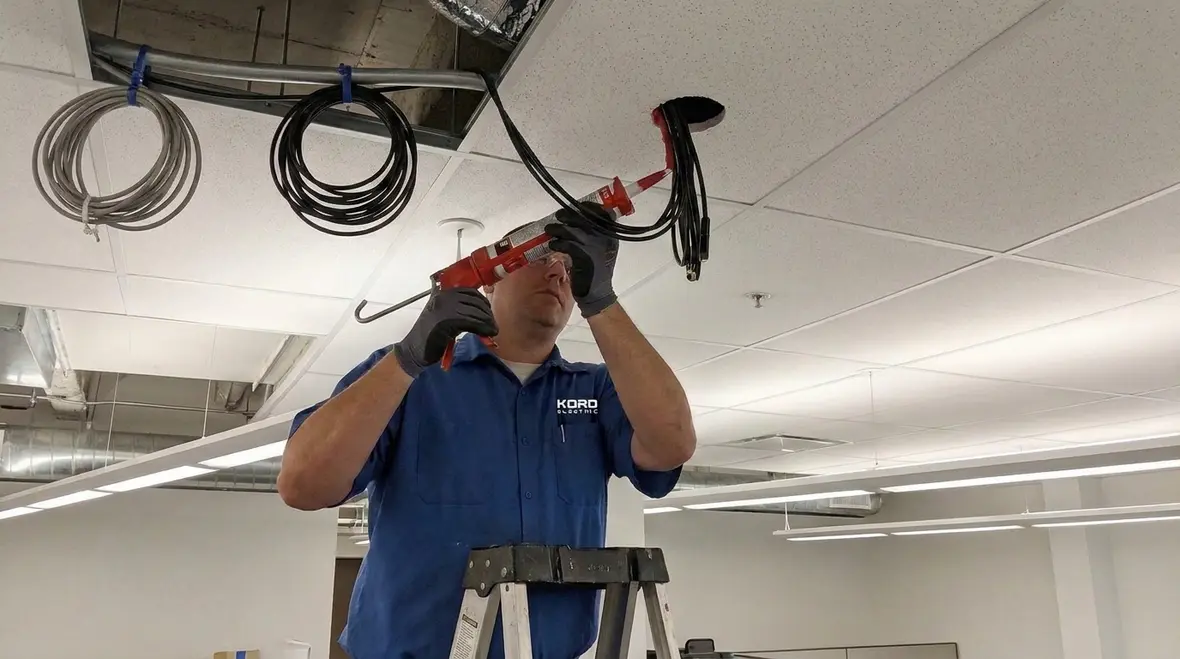
Why NEC coordination matters across power, circuits, and signaling
Many facilities assume that electrical compliance stops at the panel schedule. Yet the truth is more connected. We see how power distribution, control circuits, grounding, and signaling pathways all interact. Even when each component meets its own specifications, the way the overall system is installed can create weak points.
For this reason, our technicians plan the workflow around the entire life safety layout. First, we review the facility type, the emergency system design basis, and the intended device locations. Next, we coordinate with fire alarm trades, ceiling construction teams, and fire stopping contractors. Then, we verify that installation choices support fire rated integrity and safe operation.
And because we know that “coordinate” can sound like a buzzword, here is what it means in practice. We pay attention to cable fill, routing constraints, bend radius, support methods, and how penetrations impact rated assemblies. If we cannot trace the pathway and justify it in the field, we slow down and correct it before it becomes someone else’s problem. Usually, that someone is the inspector. The inspector enjoys clarity more than anyone enjoys surprises.
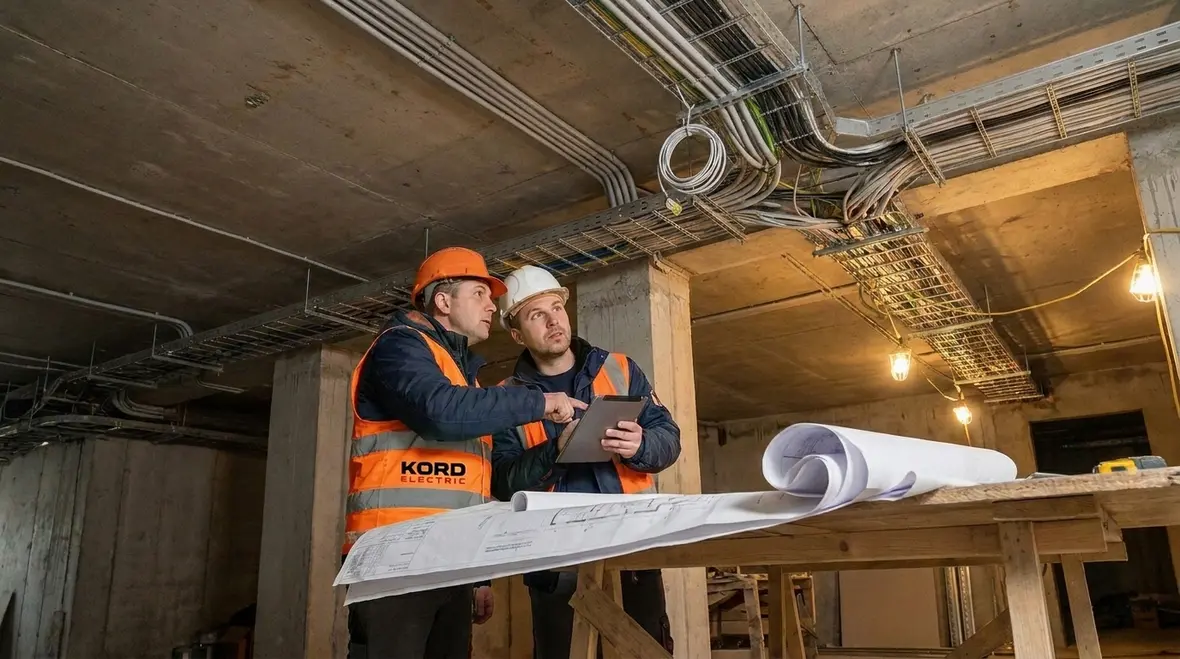
Fire rated ceiling installs: applying NEC Section 640.25 in real buildings
Now we zoom in on the topic that often causes confusion during commercial projects: NEC Section 640.25 loudspeaker fire-rated ceiling installation. This requirement focuses on how loudspeakers and related components are installed in fire rated ceilings so the assembly continues to meet the fire resistance rating. If a ceiling is rated, you do not get to treat it like a non rated drywall panel and “sprinkle in a hole.”
To apply the rule correctly, we help our clients maintain these core priorities:
- Respect the ceiling rating. We match the installation method to the fire rated ceiling system and device listing.
- Control penetrations. We plan where and how the loudspeaker openings occur so fire stopping and sealing stay correct.
- Use approved materials and methods. We choose devices, brackets, gaskets, and sealants that support the rated assembly.
- Verify mechanical support. We secure loudspeakers so the assembly remains stable, especially where ceiling construction uses different layers or finishes.
As our technicians explain on site, the code does not only ask whether the device works. It asks whether the system protects the building during fire conditions. Therefore, when we install loudspeakers in fire rated ceilings, we treat the ceiling like a life safety boundary, not just a visual finish.
In addition, we connect the installation to how emergency communication systems must perform. That means the work supports clear coverage, correct wiring practices, and dependable system operation. Put simply, we aim for both electrical safety and fire performance, because in real emergencies those two goals show up together.
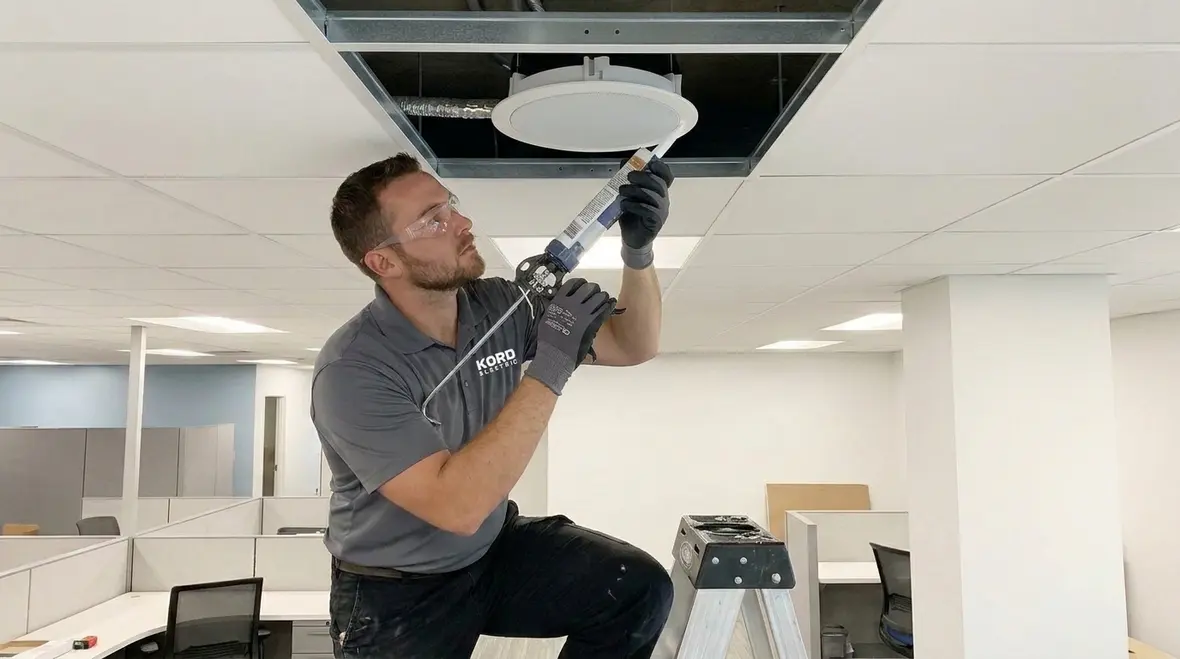
Common mistakes we prevent before they become expensive
Even strong teams run into predictable trouble points. And once a ceiling is closed up, fixes cost more and timelines slip. So we focus on prevention.
Here are the mistakes we see most in commercial and industrial environments:
- Incorrect ceiling modification. People cut without understanding the rated assembly structure or the required sealing method.
- Loose device attachment. When loudspeakers do not mount properly, vibration and shifting can affect both electrical connections and ceiling integrity.
- Improper sealing around penetrations. Fire rated ceiling systems need the right sealing approach, and “good enough” does not pass scrutiny.
- Skipping documentation. Without product cut sheets, installation notes, and system labeling, the final proof becomes harder than it should be.
- Routing problems. Poor cable routing can lead to abrasion, tension, or routing that does not meet installation requirements.
Because we are hands on, our expert service staff often shows clients examples from past builds. Additionally, we walk through what inspectors ask for in the field. We keep the tone steady. Nobody needs a lecture, but everyone needs clarity.
And if you are wondering whether we ever use humor while we train, we do. Sometimes we tell teams that fire rated ceilings are not “whatever works” ceilings. They are more like “whatever survives.” That usually lands.

How our technicians verify compliance and system readiness
After installation, we shift from building to proving. This is where our process separates “installed” from “ready.” We verify the physical install, the electrical connections, and the life safety intent.
Our verification steps commonly include:
- Visual checks. We confirm correct mounting, cable routing, and sealing at ceiling penetrations.
- Support and strain relief review. We ensure cables stay secure and do not hang or rub against sharp edges.
- Device and circuit labeling. We help maintain clear identification for troubleshooting and inspection support.
- Coordination confirmation. We make sure fire stopping and ceiling trades align with the rated system approach.
- Functional awareness. While alarm system testing has its own procedures, we ensure our electrical work supports the alarm pathway as designed.
As we work, our technicians explain what they see and why it matters. That way, facility managers and project leads learn what to look for next time. Meanwhile, we keep all documentation organized for the handoff. We know that in commercial and industrial buildings, “handoff” is not a formality. It is when the next team takes over and needs confidence.
Looking at NEC updates and related guidance for 2026
Code work is not static. It evolves as authorities refine requirements and as designers learn from real incidents. We keep our team informed on updates, including guidance that clarifies how the NEC should be interpreted in modern installations. For that reason, we review updated discussions and practical summaries tied to the National Electrical Code for 2026 and related NEC topics. Our team often points clients to deeper resources like Kord Electric’s guide Understanding NFPA 70, the National Electrical Code Explained for 2026 when they want more context behind project decisions.
When we share updates with clients, we do it in a way that supports decisions. In other words, we translate “what changed” into “what you must do differently on your project.” Moreover, we align our internal checklists with those changes so our field work stays consistent.
We also stay alert to how fire protection and emergency systems connect. If a facility relies on loudspeaker notification, then electrical installation choices can affect overall system reliability. Therefore, our approach respects both the electrical standards and the fire life safety intent. That is where we draw strength from the broader fire and code ecosystem, including the kind of resources found through Kordfire and FirePumps, and the regional context supported by Kordfire Australia.
FAQ for commercial NEC compliance and 640.25 ceiling installs
Frequently asked questions (featured snippet style)
- Do we work only on commercial and industrial sites? Yes. We focus on commercial and industrial facilities and major property buildings, where life safety standards and inspection expectations are high.
- How do we support fire rated ceiling loudspeaker installs? We install loudspeakers using the required methods to preserve the ceiling fire rating, and our technicians explain every step in plain terms.
- What should a facility manager prepare for before installation? They should provide approved ceiling plans, product listings or specs for the loudspeakers, and any rated ceiling assembly details so we match the system correctly.
- How do we prevent repeat problems on future projects? We document what we installed and share field lessons with your team so the next ceiling install starts right the first time.
Choose a team that installs, explains, and documents the details
If your facility needs loudspeaker notification in a fire rated ceiling, do not gamble with the ceiling integrity or the inspection outcome. At Kord Electric, our technicians handle NEC Section 640.25 loudspeaker fire-rated ceiling installation with careful coordination, clear explanations, and solid documentation for commercial and industrial projects. We also support broader life safety work, from NEC planning to Los Angeles County electrical services for commercial and industrial buildings, so your power and signaling stay aligned across the site.
Contact us for an on site review and a practical plan that respects the rated assembly from day one. We will help you move forward with confidence, and we will keep the process calmer than a sitcom plot twist.

When you are ready to move from “maybe compliant” to truly documented and inspector-ready, our crew is ready to help you plan, install, and verify every loudspeaker and pathway tied to NEC Section 640.25 loudspeaker fire-rated ceiling installation. From initial design conversations through final testing, we keep your team informed and your rated ceilings protected.
If your project also includes broader electrical upgrades or preventive maintenance, our commercial specialists can integrate those scopes so you avoid duplicate shutdowns or conflicting timelines. That way, the same disciplined approach we use for loudspeakers, emergency communication, and fire rated assemblies also supports your panels, feeders, and distribution gear.
Whether you are planning a retrofit in an occupied building or a ground up build with strict life safety criteria, Kord Electric treats your NEC and fire rated ceiling work like the mission critical task it is, not an afterthought hidden above the ceiling tiles.


