
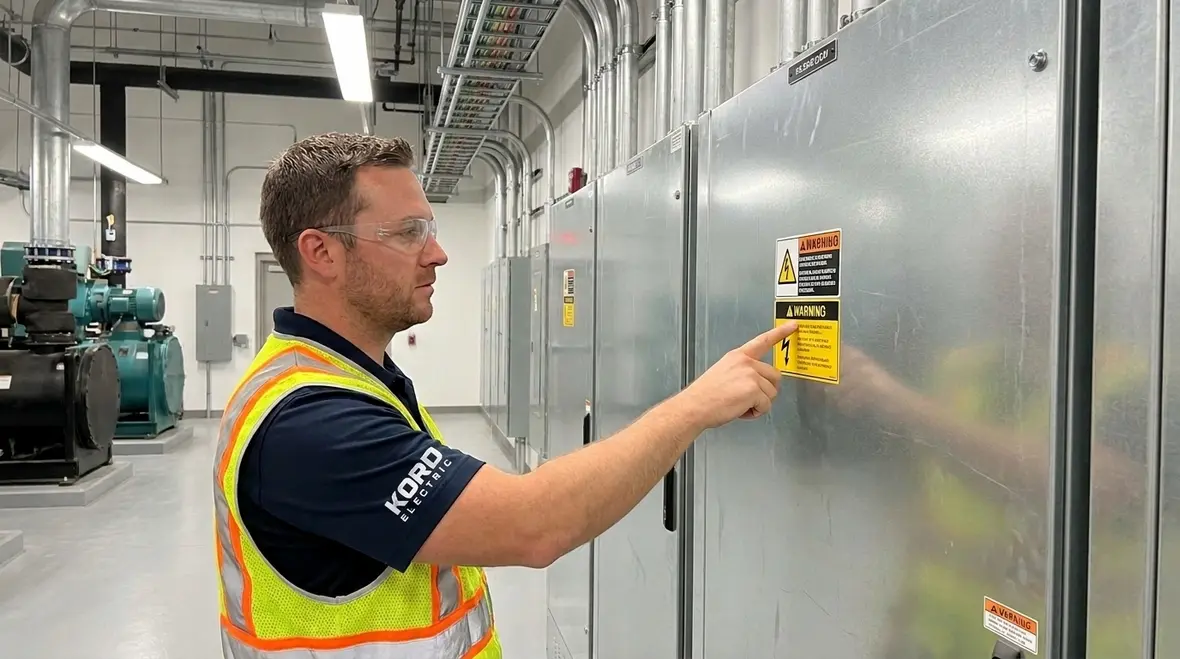
NEC 665.23 Dielectric Heating Hazard Labels Explained
NEC Section 665.23 dielectric heating hazard labels belong on the jobsite like a clear sign on a dark road. In the first place, these labels help people recognize areas where dielectric heating could pose a risk. At Kord Electric, we explain it calmly and thoroughly, because when codes show up, they should bring clarity, not chaos. In this guide, we cover what the 2026 National Electrical Code will mean for commercial and industrial facilities and major property buildings. Our technicians and expert service staff walk through the practical “what to do next” details, so your teams can move forward with confidence. And yes, we know nobody wakes up excited to read code. But if we can turn that code into safer installations, we will do it. Slowly. Like a pro explaining how a breaker trips, and why it is not personal.
Why NEC clarity matters for commercial and industrial sites
Third party inspectors, facility managers, and electricians all want the same thing: fewer surprises and safer systems. However, electrical work does not happen in a vacuum. It happens in real buildings where people move, equipment runs, and heat can build up in places that do not always look dangerous. For that reason, we focus on how the National Electrical Code supports safe design and safe installation across the types of spaces that actually need it most: offices, warehouses, medical centers, manufacturing areas, and major property buildings.
As we work with teams at Kord Electric, we often see one pattern. People treat code as a checklist, then they wonder why the system does not behave the way they expect. Instead, we help others connect the dots between requirements and real-world outcomes. Transition happens fast in the field: one change in equipment, one new process load, or one update to controls, and the risk picture shifts. So, when NEC guidance speaks to hazards like dielectric heating, we treat it as an operational safety topic, not a paperwork topic.
How dielectric heating becomes a hazard in real buildings
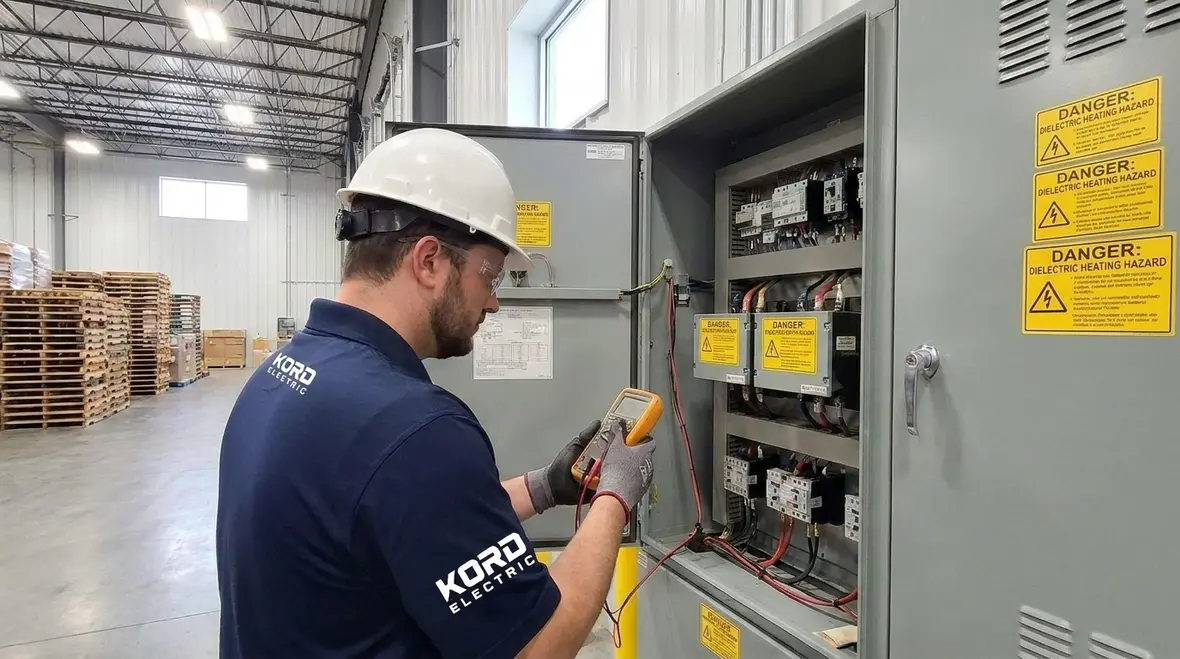
Dielectric heating occurs when certain electrical fields cause material to warm, often under specific conditions. Consequently, when systems and materials align the wrong way, heat can concentrate and create risks for equipment, surrounding components, and workspaces. That is why NEC requirements aim to alert people before they step into danger, and why labels matter. We do not just talk about what the code says. We explain what it means on the floor, in the mechanical room, and around process areas.
Here is the business reality: commercial and industrial projects often include different vendors, changing schedules, and multiple trades. Therefore, your facility does not only need code compliance at the time of inspection. It needs understanding that lasts, because systems get modified. Controls get updated. Cable routes get reused. New loads get added. Even when everyone means well, small changes can shift performance.
Our technicians take a deliberate approach. First, we identify where dielectric heating conditions could exist. Next, we match those areas to the required signage and documentation. Then, we help your team keep those requirements consistent through maintenance and upgrades. And when someone asks, “Do we really need those labels?” we answer like we are explaining a classic sitcom plot. Yes, because the label is the punchline that prevents the next episode from becoming a problem.
What NEC Section 665.23 requires for hazard labeling
When your project involves dielectric heating, NEC Section 665.23 dielectric heating hazard labels play a clear role. In short, the code targets communication. It tells those who work near specific areas that dielectric heating hazards may exist, and it supports safer awareness for anyone who interacts with the system. Importantly, the label does not replace proper engineering or installation practices. Instead, it complements them by improving on-site recognition.
As we review projects at Kord Electric, we see that labeling issues often show up in the same places. Sometimes labels get installed after the fact, which makes them feel optional. Sometimes labels do not match the actual layout, because cable routing changes during construction. Other times, the labels exist but the operations team never receives a practical explanation, so the label turns into wall art.
To prevent that, we coordinate the labeling requirement with installation details. We confirm the placement aligns with the field reality. We also help your staff understand what to watch for during maintenance cycles. In other words, we treat the labels as part of safe operation, not just the final step before closeout.
Connecting NEC Section 665.23 to broader NEC planning
Dielectric heating is not an isolated topic. It connects to clearances, equipment access, and how teams plan work near energized components. For facility leaders who want a broader foundation on how code rules fit together, resources like Kord Electric’s explainer on Understanding NFPA 70: The National Electrical Code Explained for 2026 help show how labeling, spacing, and protection choices support the same safety goals across the building.
Compliance in practice: from design reviews to field installation
Codes can read one way on paper, and behave another way in a finished building. Therefore, our process starts earlier than people expect. First, our expert service staff reviews the design intent with the project team. Then we map electrical equipment, conductors, and working areas to the actual building layout. After that, we plan how the required hazard messaging will be applied and maintained over time.
Next comes the field step, where we keep it simple and strong. We verify installation details, including proper spacing, approved equipment, and correct routing, because these items often influence heat buildup and field effects. Then we check the labeling outcome. We make sure the labels show up where the people are likely to be, where access happens, and where the hazard recognition matters.
Finally, we support your facility with a handoff that people can use. That means we explain expectations in plain terms, and we train the right folks. Our technicians do not just say, “It meets code.” They explain what your team should do when systems get maintained, when processes change, or when new sections come online. If fire safety websites can explain complex topics in a way people remember, then we should be able to do the same for electrical safety.

Carrying labeling requirements through maintenance cycles
The real test of NEC Section 665.23 dielectric heating hazard labels shows up months or years after inspection, when someone swaps equipment, adds a new conductor run, or adjusts a process line. We encourage facility teams to treat labeling like any other asset: something that needs to be checked, documented, and updated as conditions change. That way, a label applied today still tells the truth when the building’s electrical story evolves.
NEC and NFPA resources we reference for safer decisions
At Kord Electric, we stay current and we reference multiple safety sources that support the National Electrical Code. For example, our teams review NEC related guidance and application notes, including information available through our connected resources. We also stay aligned with broader fire and electrical safety educational materials that help teams understand how electrical hazards connect to overall life safety goals.
If you want a clearer look at how professionals interpret NEC topics, we often point people toward relevant educational pages like the explanations we and our partners publish for NEC and electrical safety themes, including Kord Fire’s overview on NFPA 70 and the National Electrical Code and specialized resources that discuss fire pumps and life safety systems. As a result, facility teams get a bigger picture, not just a narrow compliance path.
We also remind others to use code resources the right way. A page can explain a concept, but it cannot replace a site visit. So, when your building needs hazard labeling, dielectric heating awareness, and installation checks, we bring the field experience. And yes, we have seen the “we read it once” approach. It works about as well as trusting a smoke detector that has never been tested since the building opened.
Linking dielectric heating labels to other NEC priorities
In many projects, dielectric heating concerns travel alongside topics like work space clearances, autotransformer-derived circuits, and ungrounded DC systems. When facility teams explore related articles such as Kord Electric’s coverage of work space rules, inspections and tests, and DC system behavior, it becomes easier to see how each section of NFPA 70 reinforces the others. Labels are one visible piece of a much larger reliability and safety picture.
Common mistakes we help teams avoid
Even well-run facilities can stumble when projects bring new equipment or when maintenance teams work under time pressure. So, we focus on the mistakes we see most often in commercial and industrial settings.
- Labels installed in the wrong locations because the field layout changes and nobody updates the label placement.
- Labels added after installation with no explanation to the operators, so people overlook them during daily work.
- Missing coordination between trades where cable routing, access panels, and equipment placement shift without a safety review.
- No plan for future changes when equipment gets replaced or process loads evolve, leaving labels that no longer match the system.
- Assuming the inspection ends the work when, in real life, maintenance and modifications can reintroduce hazards.
Then, we correct course. We verify the hazard identification aligns with actual conditions. We help your project team document what was done. And we train operations so they know what the labels mean. That approach reduces rework and protects people.
Turning “just labels” into a living part of safety culture
When teams treat dielectric heating labels as part of the story they tell during onboarding, toolbox talks, and maintenance planning, those labels stop fading into the background. Instead, they become visual reminders tied to real procedures: what to isolate, what to avoid, and when to call in expert help. Our goal is to make NEC Section 665.23 dielectric heating hazard labels feel like part of everyday safety language, not a mystery sticker someone added on a slow afternoon.
FAQ: NEC dielectric heating hazard labels and NEC Section 665.23
Bottom line: choose electrical safety that holds up after inspection
We build electrical compliance into the real life of your facility. At Kord Electric, our technicians and expert service staff help commercial and industrial teams handle NEC Section 665.23 dielectric heating hazard labels with correct placement, clear documentation, and practical training. That means fewer surprises, smoother inspections, and safer operations when upgrades arrive later. If your site needs dielectric heating hazard awareness handled the right way, contact us today. We will review your setup, explain what matters, and map the safest next steps forward.
For facility leaders in Southern California, that support extends across complete commercial and industrial electrical services. Whether you need help integrating dielectric heating labels into a broader upgrade, or you are planning a new project that calls for experienced NEC guidance, Kord Electric’s Los Angeles County electrical services team can coordinate design reviews, field installation, and long-term maintenance so your labeling strategy fits the way your building actually operates.
When you are ready to turn code text into calm, predictable electrical systems, work with a team that treats every label, panel, and conductor as part of the same safety story instead of a stack of disconnected tasks.


