
NEC 680.10 Pool Water Heater Wiring for Safe Installations
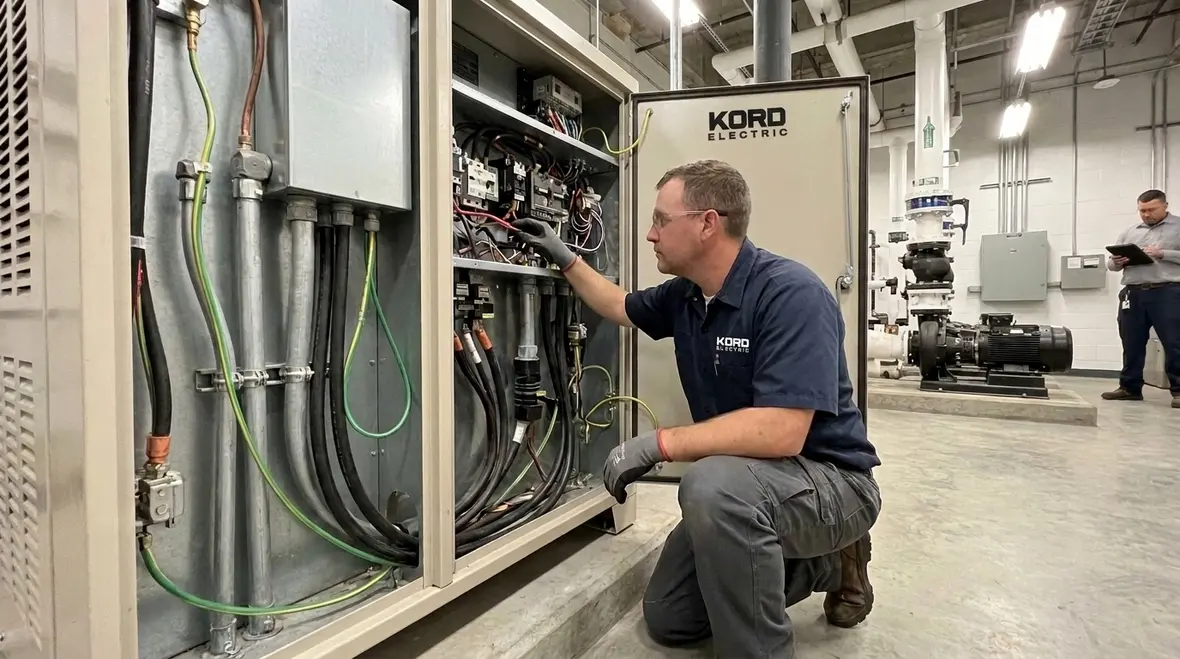
When a commercial pool facility, apartment complex, or major property building installs a heater, the wiring details matter from day one. In many cases, NEC Section 680.10 pool water heater wiring sets the tone for how we keep equipment safe, properly connected, and ready for service. At Kord Electric, our team treats these rules like a blueprint, not a suggestion. Our technicians and expert service staff explain what the text means in plain terms, then we verify the setup on site, because guesswork is fun only in movies. And in real electrical work, guesswork tends to end with expensive downtime, not applause.
Why NEC rules shape real-world safety in pool heater systems
Third person or not, the logic stays the same: pool heaters combine electricity, wet locations, and heavy duty use. Therefore, the National Electrical Code demands tighter control than you might see in typical dry commercial spaces. NEC Section 680.10 pool water heater wiring is designed to reduce shock risk, prevent overheating, and maintain reliable operation when loads run day after day.
To make this practical for facility managers, we break the rule down into its main goals. First, the wiring method and routing should support long term durability. Next, bonding and grounding should limit unwanted voltage on metal parts. After that, the installation should allow service without risky workarounds. Our expert service staff typically says the same thing during walkthroughs: “We do not just meet code. We build a system that survives maintenance.”
How our technicians interpret NEC Section 680.10 requirements
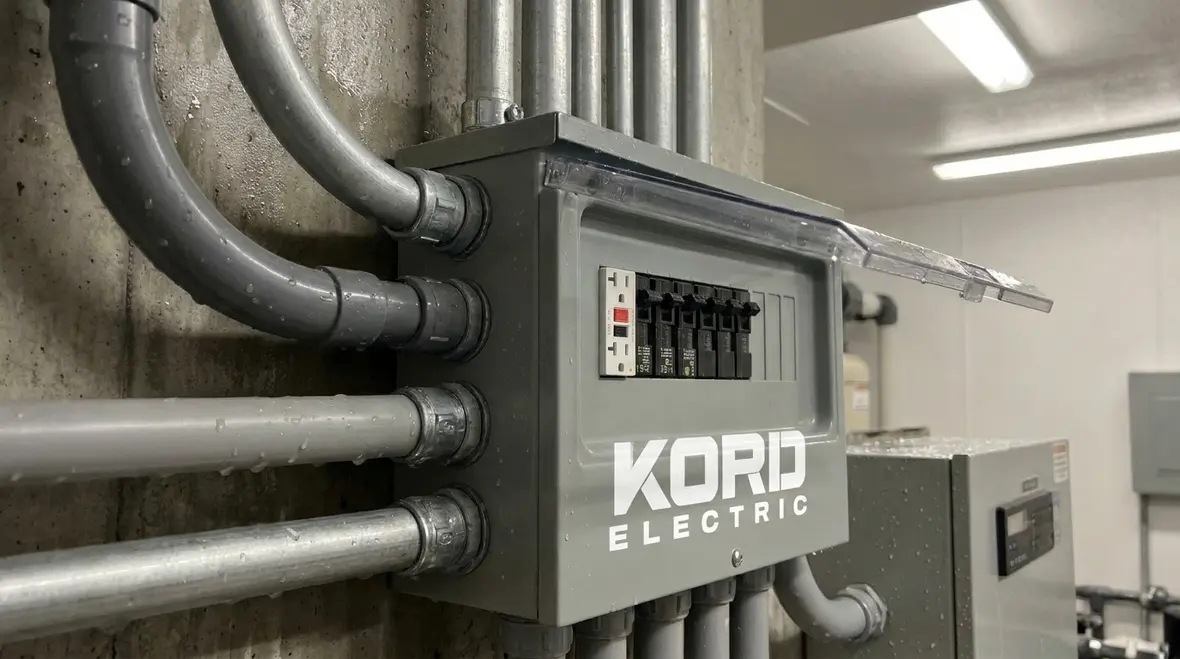
Kord Electric approaches these standards as a sequence, not a checklist. For commercial and industrial facilities, that matters because the heater rarely operates alone. It pairs with pumps, controls, filters, and often multiple circuits that interact with each other. So we follow a clear path: identify equipment, confirm the rated environment, then map the wiring method to the code intent.
In the field, our technicians commonly focus on four themes. First, they confirm the wiring method used for the heater is appropriate for the location and conditions. Second, they verify that conductors remain protected and correctly sized for load demands. Third, they ensure that termination practices match the equipment listing and the wiring method. Finally, they test continuity, insulation resistance where applicable, and functional performance to confirm the installation acts as designed.
And yes, we sometimes hear the old line, “It worked last time.” That is the electrical equivalent of saying, “I have been driving this way for years, so the laws of physics must be optional.” Physics is not impressed.
Choosing safe wiring methods for commercial pool equipment
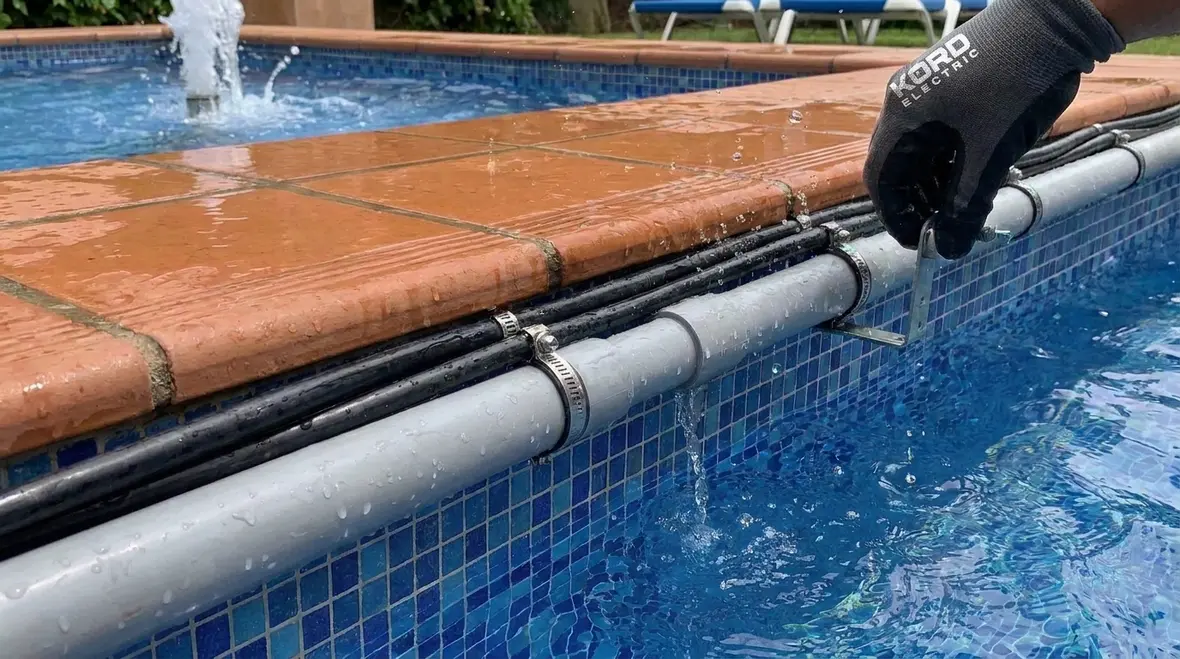
Even when the electrical plan looks tidy on paper, real pools create real conditions: splashes, moisture migration, washdown cycles, and corrosion risk. Therefore, the wiring method and physical protection must match how the facility operates. Kord Electric pays close attention to routing and support so that cables do not chafe, sag, or trap water.
When we install, we also think ahead to service. For example, if a heater needs replacement, the wiring should not force the technician to dismantle half the room to access terminations. That reduces downtime and supports safe work practices for our staff and third party operators.
Our expert service staff also coordinates with the wider electrical system. If the building uses a panel schedule with shared equipment feeds, we confirm load separation and correct labeling. Then we confirm protective devices provide expected clearing times. In short, we keep the heater circuit stable, and we keep the rest of the electrical system calm too.
Bonding, grounding, and bonding conductors that actually hold up
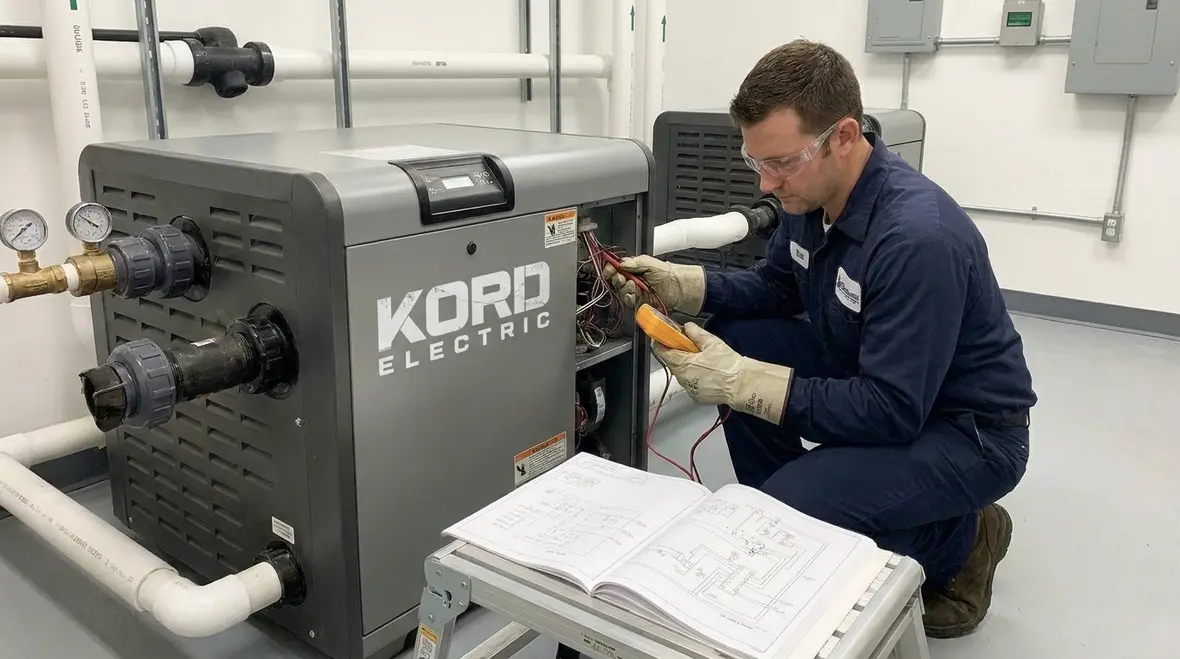
Bonding and grounding form the backbone of safe pool heater installations. Without the right connections, metal parts can end up at the wrong potential. Then, instead of a system that stays predictable, you get one that can surprise people during wet conditions or during fault events.
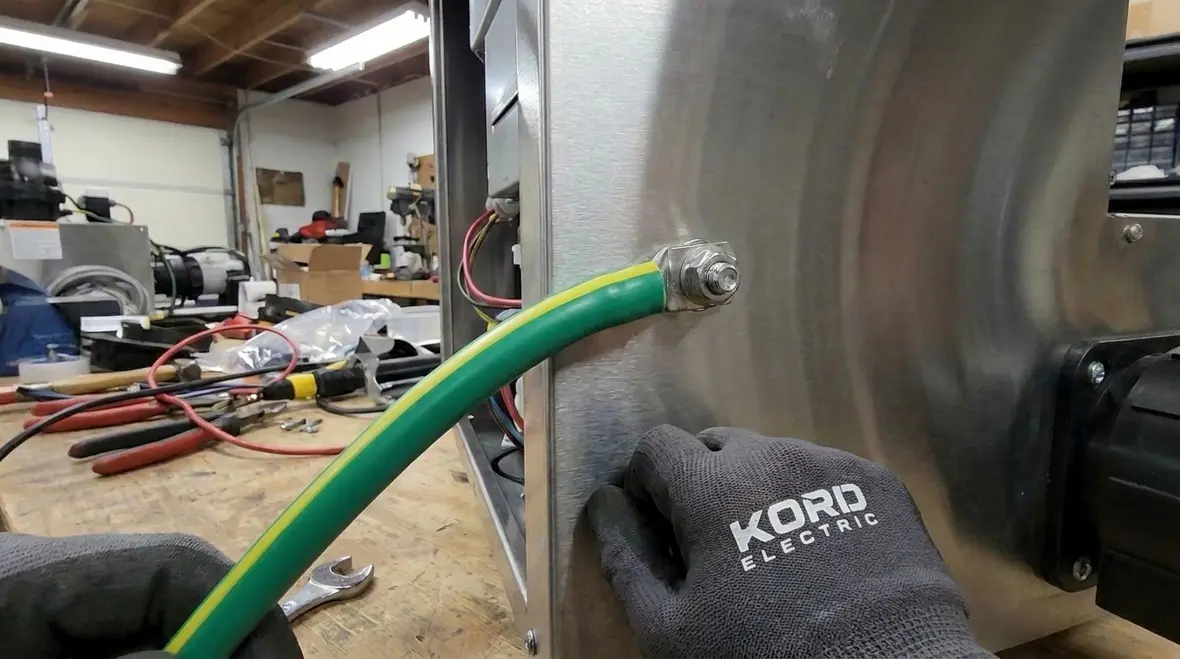
At Kord Electric, we ensure the bonding strategy supports the heater and associated metal parts used in the equipment system. That includes verifying continuity of bonding paths and ensuring connections remain secure under typical thermal and mechanical stress. Our technicians document findings so facility teams can track what we did and why.
To keep it clear, our staff explains it like this: grounding gives faults a safe path, and bonding keeps connected metal parts at the same electrical reference. When those pieces work together, the heater room behaves like it should. When they do not, you can end up chasing intermittent issues that show up only after a long weekend. That is a special kind of stress.
Coordination with protective devices and control circuits
NEC requirements do not exist in isolation, and pool heater circuits rarely function in isolation either. Therefore, we coordinate the wiring work with protective devices and controls. This includes confirming that circuit breakers or fuses match the heater load requirements and that the protective device ratings align with conductor ampacity and equipment specs.
We also check the control circuit interface, especially where facilities use time clocks, pump interlocks, or heater control boards. Then we confirm correct separation between power and control wiring where required. By doing this, we reduce the chance that a control fault becomes a nuisance trip or, worse, a dangerous condition.
Because commercial and industrial sites demand uptime, we plan for performance testing. Our technicians confirm correct heater operation, verify that protective devices respond as expected, and ensure the installation supports safe troubleshooting without cutting corners.
Quality assurance and service readiness for major property buildings
After installation, we do not simply hand over a label and walk away. We verify the work in a way that supports future service. That approach matters for large property buildings where many teams handle parts of the system: facilities staff, vendors, and maintenance contractors. If everyone has different assumptions, the site becomes a maze. So we try to make the maze smaller.
We keep records, including wiring method details, termination checks, and test results. Then we align those records with the facility’s maintenance needs. For example, we note access points and provide guidance on safe inspection intervals so equipment does not run beyond its intended condition.
In addition, Kord Electric stays consistent with broader code education from industry sources we reference during planning. For example, the team looks at NEC focused guidance from our partners and learning hubs, including Kord Fire resources and general NEC interpretations, to ensure our practical methods reflect modern safety expectations. Facility teams who want to step back and see the bigger rulebook often review articles like Understanding NFPA 70: The National Electrical Code Explained for 2026 on the Kord Electric blog, then connect that guidance to their own inspection and upgrade plans.
Where Kord Electric fits in for commercial and industrial sites
Kord Electric supports commercial and industrial facilities and major property buildings. That means we plan around real operations: safety audits, shutdown windows, asset management goals, and the need to keep people moving through the building without drama. We coordinate with site managers, schedule work responsibly, and keep the process clear from first visit to final verification.
When a project touches pool water heater wiring, we handle it as a system issue, not a small wiring task. We consider equipment integration, protective devices, and future service access. Our technicians explain the steps clearly, so facility teams understand what is compliant, what is tested, and what is next for ongoing maintenance.
Meanwhile, for fire protection and broader safety planning, some facilities also consult resources like Kord Fire and FirePumps to align electrical work with the bigger safety picture. That alignment helps prevent gaps between departments, and in a major building, gaps become expensive fast.
FAQ
Planning next steps with NEC Section 680.10 pool water heater wiring
For facility leaders, the most practical way to use NEC Section 680.10 pool water heater wiring is to fold it into project planning from day one. That means treating the heater as part of the building’s electrical story, not just a standalone upgrade. When drawings call out wiring methods, conductor sizes, bonding points, and protective device ratings up front, it becomes easier to align the field work with the code language and avoid last-minute changes during inspection.
On many sites, our team pairs NEC 680.10 planning with broader NEC review, especially where pool equipment lives near mechanical rooms, life safety feeders, or distribution panels already serving other major loads. That way, a pool upgrade does not accidentally push a panel beyond calculated load limits or create confusing labeling for future technicians. When capacity questions arise, we reference NEC load calculation guidance and cross-check the heater circuit against other planned work so the full system stays within its design envelope.
Over time, that mindset turns into a maintenance advantage. When NEC Section 680.10 pool water heater wiring is documented alongside other NEC requirements that affect the same equipment space, facilities gain a consistent reference point for inspections, capital planning, and shutdown coordination. Instead of reacting to failures, teams can schedule upgrades based on condition, risk, and business priorities.
Connecting pool heater work to building-wide electrical strategy
Pool systems can feel like a specialty corner of the building, but they are tied to the same electrical backbone that supports offices, common areas, and critical services. When Kord Electric reviews a pool heater project, we look beyond the equipment pad to see how feeders, subpanels, grounding grids, and distribution paths interact. That perspective is especially important in major property buildings where the same room might contain mechanical, fire protection, and electrical infrastructure.
For many clients, the next logical step after a focused pool heater project is a broader review of how NFPA 70 applies across their facility. Articles such as the National Electrical Code overviews on the Kord Electric blog and related Kord Fire content help teams think about how NEC Section 680.10 fits alongside other rules for conductors, connections, and overcurrent protection. When those pieces line up, pool equipment upgrades support the overall safety plan instead of becoming isolated one-off jobs.
If your organization is coordinating a series of renovations or planning to expand amenities, it may be the right time to look at how NEC 680.10, bonding and grounding practices, and panel capacity all come together. A well-planned sequence reduces repeated shutdowns, shortens testing windows, and gives your operations team a clearer roadmap for the next few years of electrical work.
For facilities located in Southern California and nearby regions, it can also be helpful to align pool heater projects with broader service needs such as panel upgrades, feeder improvements, or critical system maintenance. Kord Electric’s regional teams understand both the National Electrical Code expectations and local inspection patterns, which helps streamline projects from the first walkthrough through final verification.
If your site is in or around Los Angeles County and you want to integrate pool water heater wiring work with other electrical upgrades, you can explore how our broader services support complex facilities by reviewing our Los Angeles County electrical services overview, then coordinating those capabilities with your pool and amenity plans.
Final take from Kord Electric
NEC Section 680.10 pool water heater wiring is not just a line in a book. It is the difference between a heater that runs smoothly and one that creates risk and downtime. Kord Electric puts our technicians and expert service staff behind the details, from wiring method choices to bonding, grounding, protective device coordination, and final verification. If your commercial site needs a pool heater installation, upgrade, or inspection, we can help. Contact Kord Electric today to keep your facility safe, code focused, and ready for heavy use.
For teams who like to see how individual NEC topics connect, resources such as Understanding NFPA 70: The National Electrical Code Explained for 2026 and other code-focused guides on the Kord Electric blog, along with Kord Fire and FirePumps educational content, give additional context. Combined with on-site evaluations, that context turns NEC Section 680.10 pool water heater wiring from a technical requirement into a practical roadmap for long term, safe pool operation in demanding commercial environments.


