
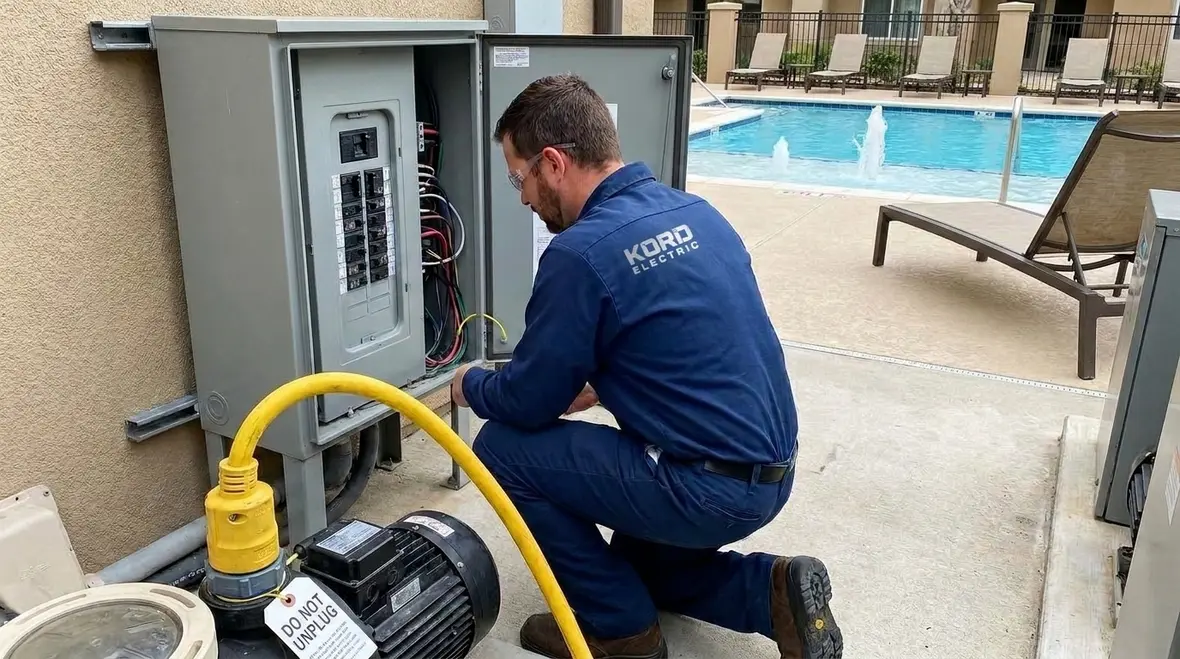
NEC 680.8 Pool Cord-Connected Equipment Power Safety
When a commercial or industrial site adds a pool, spa, fountain, or similar water feature, we do not treat power like a casual afterthought. For example, the NEC Section 680.8 pool cord-connected equipment sets clear expectations for how certain cord-connected appliances and equipment should be handled around wet areas. In practice, that means our team plans, inspects, and documents the electrical choices so the equipment stays safe, reliable, and compliant. And yes, we have seen what happens when someone treats pool power like it is magic. Electricity is not magic. It is just picky. We make it behave.
What NEC and NFPA 70 mean for commercial and industrial sites
The electrical rules often come from multiple sources, but in the field we live inside NFPA 70, which is the National Electrical Code. Then we drill down to the specific articles that match the job. For pool installations, that means we focus on the sections that govern the water zone, equipment, wiring methods, bonding, grounding, and protection requirements.
Our technicians explain it like this: codes do not exist to make your life harder. They exist because people got hurt before the rules were refined. So, we build our work around the current NEC edition and the site’s specific risk profile. That includes whether the facility is a hotel, a hospital campus, a manufacturing property with a pool amenity, an office building with a spa deck, or a large mixed use development.
Now, a quick reality check. Many facility managers only hear the word “code” during an inspection. However, we recommend looking ahead. If you plan your electrical design early, you avoid redesign later. And if we can avoid redesign, we also avoid the budget version of a cliffhanger.
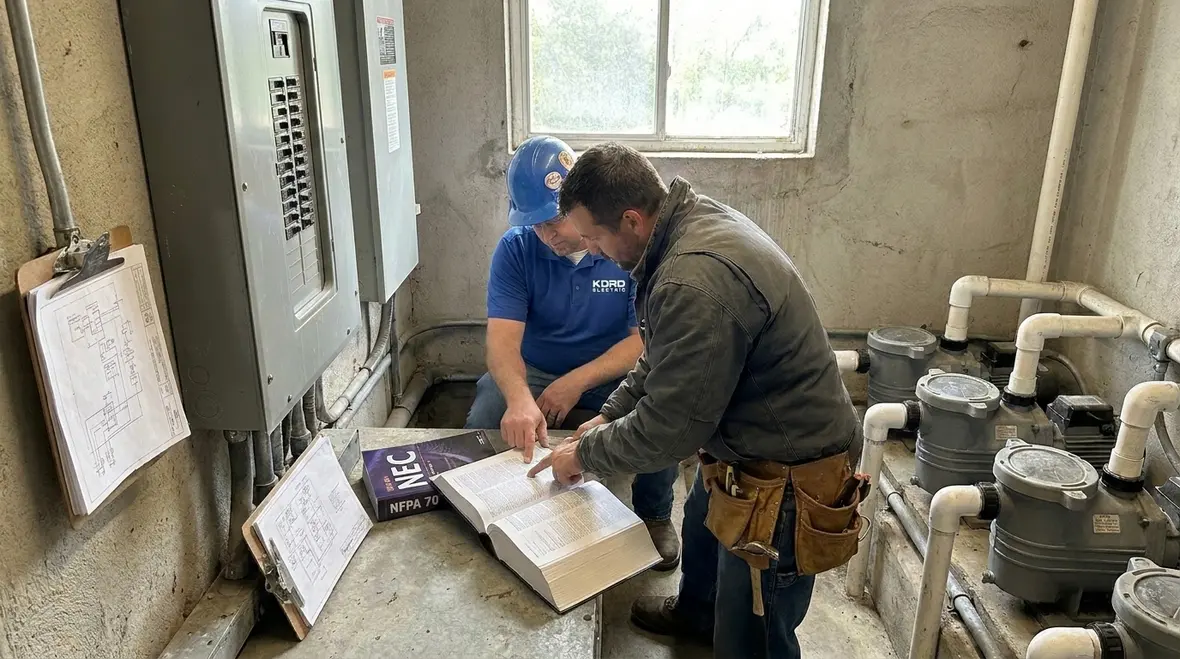
NEC 680.8 and pool cord-connected equipment, explained the practical way
When our expert service staff describes NEC Section 680.8 pool cord-connected equipment, we emphasize the “why” behind the limitations. The pool area has water, and water changes everything about shock risk. In response, NEC requirements steer installations toward equipment that stays safe under wet conditions and that avoids hidden failure paths.
First, we assess what equipment actually plugs in or connects by cord. Then we identify where those connections occur. After that, we coordinate with the project team so that the design supports safe access, safe placement, and correct protective devices.
Next, we address the typical failure points we see in the field. For instance, cords can be damaged, connectors can loosen, and equipment can end up in locations that were never intended by the installation design. Therefore, we make sure the site uses approved equipment, correct connection methods, and the right electrical protection. We also plan for maintenance staff behavior, because even the best setup fails if people improvise.
To keep this grounded, our technicians document how the equipment ties into the rest of the system. We also confirm how the pool area is labeled and how the circuit is protected. The goal is simple: if something goes wrong, the system should fail in a safe way, not in a “wait and see” way.
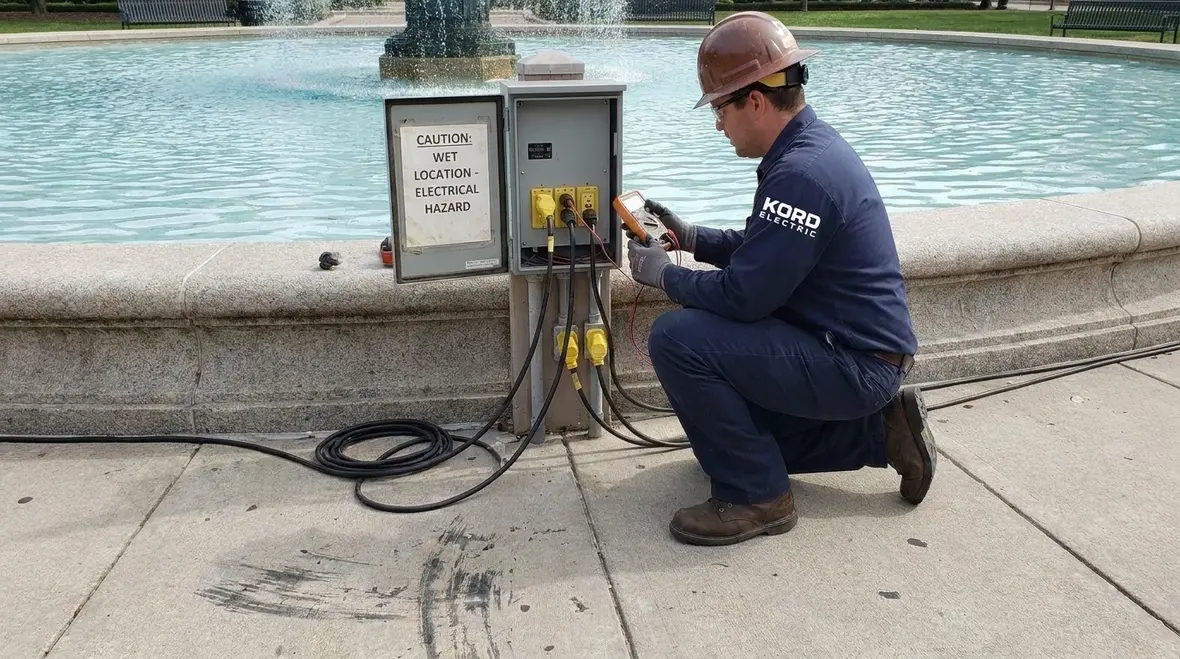
How we design pool area power for safety, reliability, and compliance
A strong design does not just pass. It performs during heat, humidity, splash exposure, and routine operations. So we treat pool and water feature electrical systems as a specialized scope for commercial and industrial properties.
To do that, we follow a methodical path. First, we map the wet area zones and identify the equipment that feeds from cords or fixed connections. Then we select wiring and protection methods that match those conditions. After that, we coordinate bonding and grounding so conductive parts do not create unexpected voltage paths.
We also plan for correct device behavior. For example, protective components must protect the circuit without nuisance trips that push staff to bypass safety devices. In other words, we design for real life, not for a perfect test day.
Here is where we keep it simple for facility teams. When you invest in a pool for a property, you want dependable operation. Yet if the electrical system is sloppy, the pool becomes a constant maintenance issue. And if the pool becomes a maintenance issue, guests, residents, and staff notice. So we prevent that by building a system that stays steady.
And if you are thinking, “This sounds like a lot for a pool,” we get it. It is like hearing the rules for a rollercoaster safety harness. Annoying at first. Then you see what happens when people skip it.
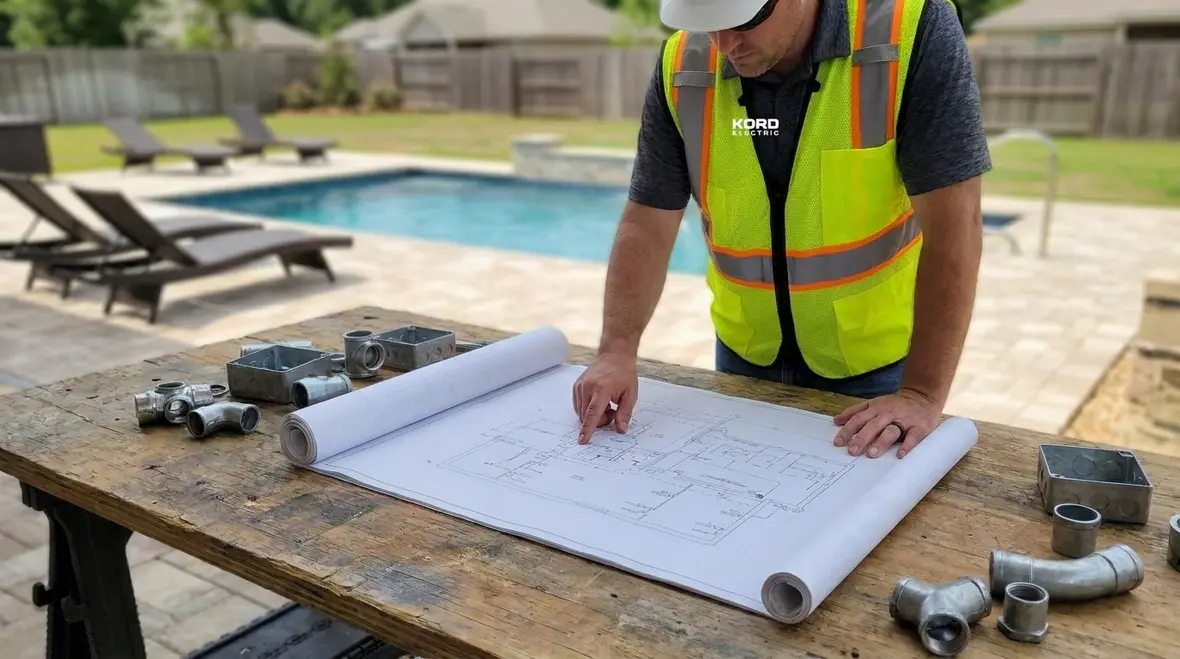
Coordination, inspections, and documentation that keep projects moving
Commercial and industrial builds often involve multiple trades, suppliers, and timelines. That is why we coordinate early. We confirm equipment specs, connection requirements, and the intended installation location. Then we align our electrical scope with the contractor schedule so the electrical work supports the rest of the site delivery plan.
From there, we maintain documentation. We provide records that help with inspections and help the facility later. Our technicians explain what was installed, where it connects, and how it should be serviced. This approach reduces confusion when new maintenance staff step in, and it helps prevent unsafe “temporary fixes” that linger for years.
For our clients, we also support a smooth inspection path. We verify that protective devices, circuit labeling, and installation practices align with the NEC requirements relevant to the pool area. In addition, we review the system to ensure no missing steps remain.
If an inspector asks a question, we do not hand them a guessing game. We provide clear answers backed by field records. That is how a job stays calm instead of turning into a courtroom drama where nobody brought the right paperwork.
Common mistakes we stop before they become expensive problems
Our team spends time on commercial and industrial facilities, so we see patterns. And those patterns become preventable trends when we catch them early.
First, we notice cords and connections placed without proper consideration for the location and the wet exposure. Even if the equipment “works,” the setup can create shock risk if it sits where it should not.
Second, we see protective devices selected or configured in a way that does not match the load and the installation environment. As a result, the system can either fail to protect or trip too often. When it trips too often, some people bypass it. That is not a plan. That is a problem waiting for a deadline.
Third, we find bonding and grounding left as an afterthought. In pool areas, conductive parts must stay at safe potential. Therefore, we verify the bonding paths and ensure correct grounding practices are implemented.
Lastly, we see maintenance neglect. Cords get pinched, connectors get exposed, and equipment gets moved. So we design for the actual behavior of staff and provide clear service guidance. We do not just install. We help you operate safely.
What to ask during your next pool electrical review
If you run a commercial or major property building with pool amenities, you deserve an electrical review that is clear and targeted. When we perform a review, we focus on the pool area risks and the electrical system that serves it.
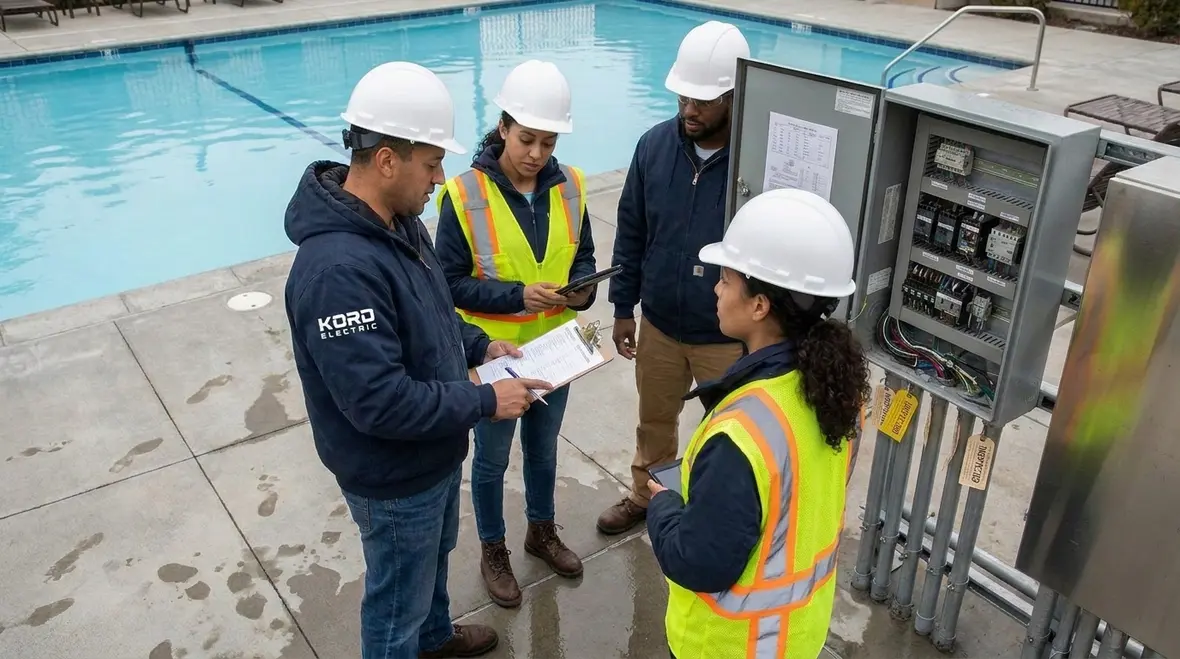
Our process includes walking through the pool equipment layout, checking how equipment is connected, and verifying that protection and wiring methods fit the requirements. Then we review labeling and service access. After that, we document findings and recommend next steps.
To help facility teams and project managers, here are practical prompts we encourage you to bring up with us. We use your answers to guide design and service priorities without wasting time.
Key checks for pool power
Equipment connections: What devices are cord-connected, and where are their connection points located?
Protection: What protective devices protect the circuit, and how do they respond during fault conditions?
Bonding and grounding: Are conductive parts bonded as required, and is grounding verified?
Maintenance reality: How does staff access and service the equipment during normal operations?
Documentation: Do you have installation records, circuit labeling, and a clear service plan?
Some people treat these conversations like small talk. We treat them like risk management. Small talk does not prevent shock hazards.
Quick dual view: code focus and service outcomes
To make this easy for busy teams, we align code expectations with what you actually get on site. Here is the dual view we use during planning sessions.
Code focus |
Service outcome |
NEC requirements for water area electrical safety and equipment connection rules |
Clear installation steps that support safe operation and reduce surprise failures |
Protection, bonding, and grounding needs tied to pool area risk |
Systems that behave correctly during abnormal events and during routine maintenance |
Correct documentation and inspection readiness |
Fewer delays, calmer inspections, and easier service handoffs |
FAQ
If you want a deeper background on how the National Electrical Code shapes decisions across your property, you can also explore Kord Electric’s guide Understanding NFPA 70: The National Electrical Code Explained for 2026, which connects code language to real-world planning and maintenance choices for commercial and industrial facilities.
For projects that extend beyond the pool deck, our team also supports broader system upgrades and service work across the region. When you need a partner who understands how NEC Section 680.8 pool cord-connected equipment usage fits into the bigger electrical picture, our Los Angeles County electrical services team coordinates pool power, distribution, and safety systems so the entire facility stays aligned with current NEC expectations.
Final call to action for safer pool electrical systems
If your commercial or industrial facility operates a pool, spa, or water feature, do not leave electrical safety to chance. We at Kord Electric bring expert planning, careful installation, and technician backed documentation that aligns with the NEC. Contact us for a pool area electrical review or a new build consult. We will walk through the equipment connections, protection, bonding, and service access, then map practical next steps. Let us help your site stay safe, code aligned, and ready for everyday operation.


