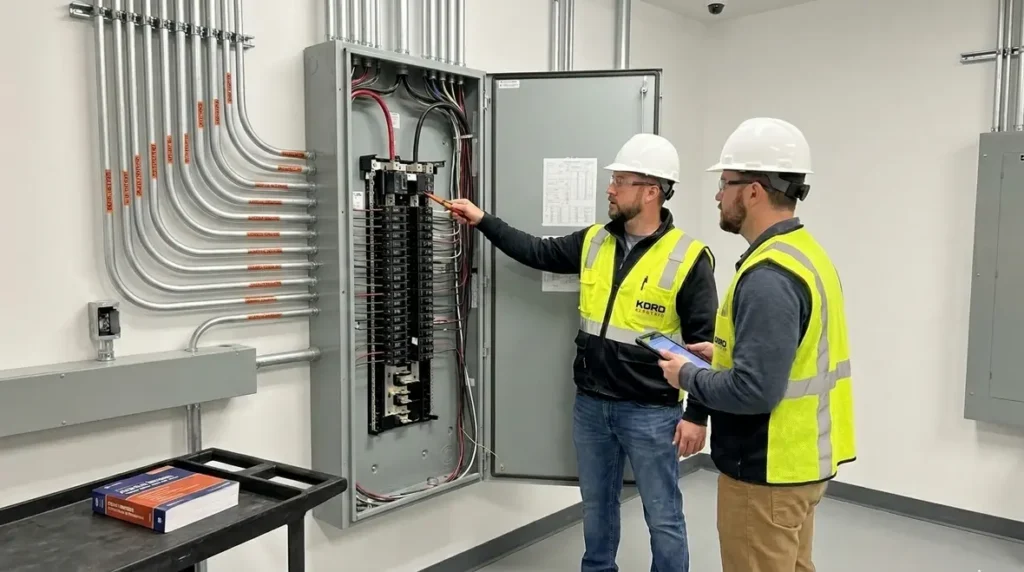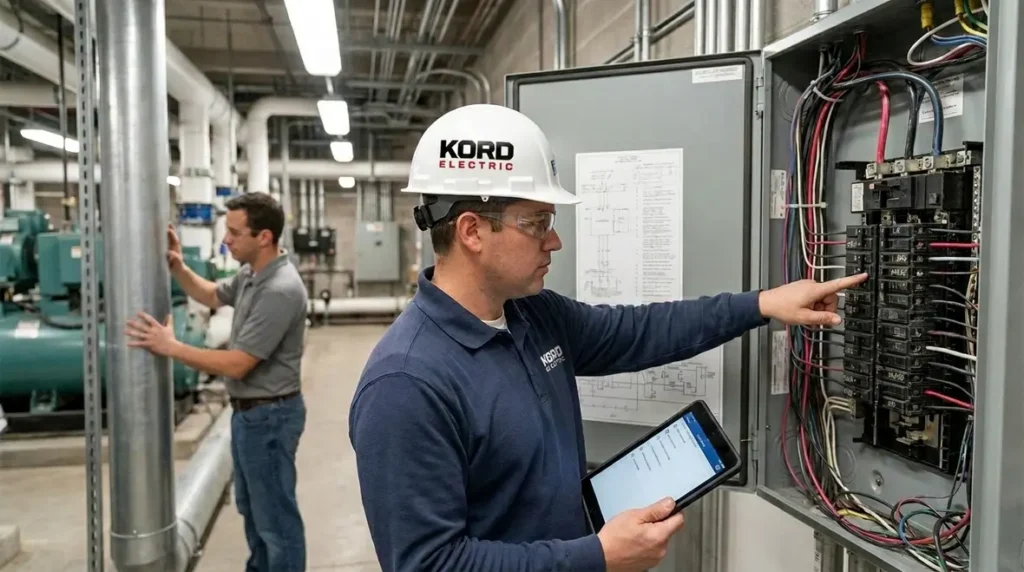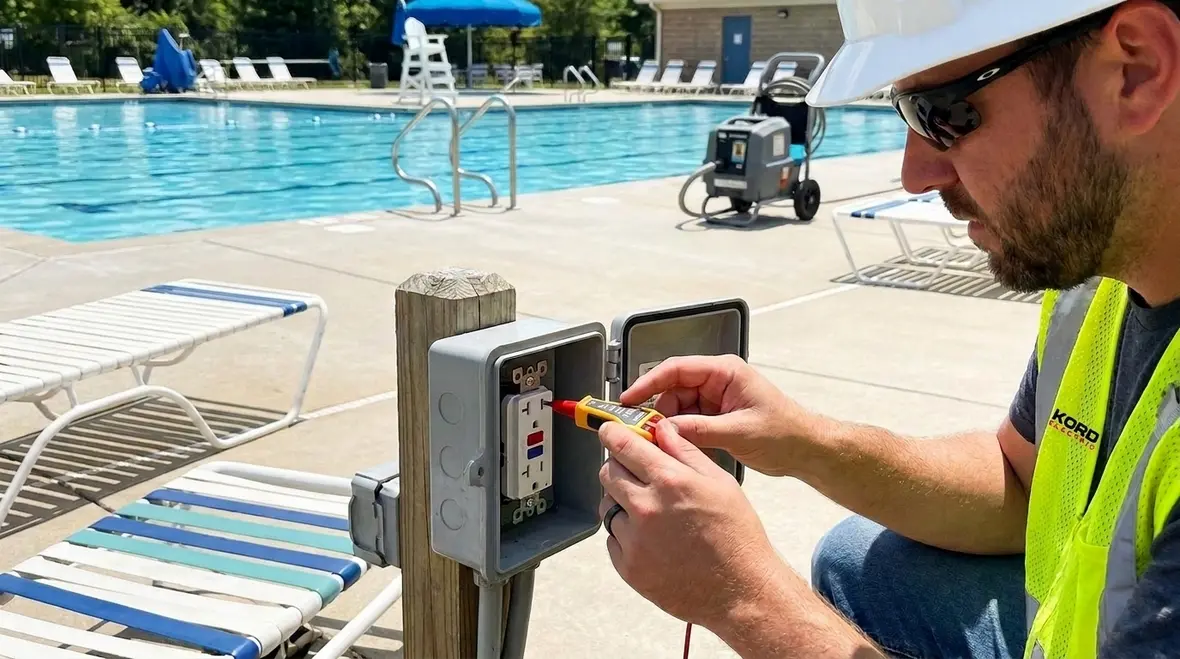
NEC 680.5 Pool GFCI Protection for Safe Wet Areas
When commercial and industrial teams plan electrical work for water related areas, we do not start with guesses. We start with safety requirements that actually hold up under inspection. In particular, NEC Section 680.5 pool GFCI protection sets a clear direction for how outlets near pools and similar water locations must be protected. Because water plus electricity is a combination that no one invites to the party, we build our planning around the National Electrical Code and the latest guidance for 2026 updates. Our field technicians and expert service staff explain the “why” behind the rule, so your facility team understands what we will do, what we will verify, and how you stay ready for audits and ongoing operations.
And yes, we still treat electrical safety like it is serious. Not like a superhero movie where the hero forgets the rules for ten minutes and somehow survives. Real facilities do not run on plot armor.
NEC 680.5 pool GFCI protection: what it protects and when it matters
In our work, we see the same pattern again and again. People think GFCI is just a “nice feature.” However, NEC Section 680.5 pool GFCI protection focuses on reducing shock risk where conditions can become dangerous fast. The requirement applies to circuits that supply electrical equipment in and around pool areas, spas, and similar installations. The point is not to make a pool look safer. The point is to limit the chance that a person gets harmed if an electrical fault occurs.
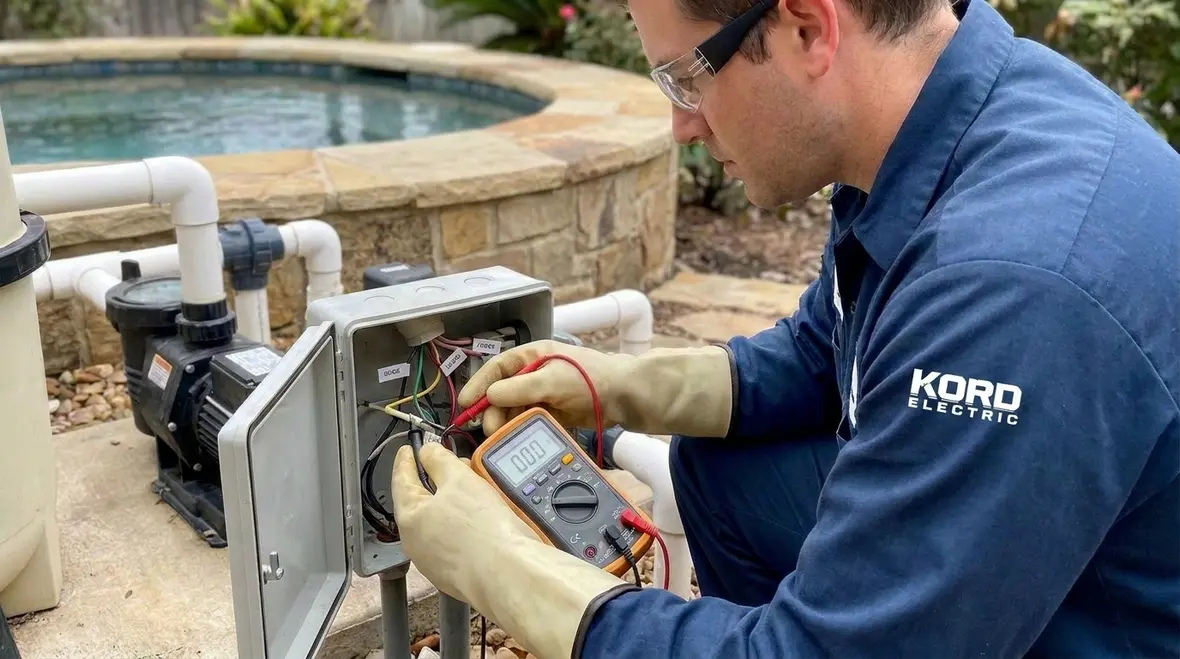
Our technicians walk facility owners through real scenarios. For example, they explain how a small ground fault can create a shock hazard in wet areas. Then they connect that to how GFCI devices react when leakage currents reach a set level. As a result, the device trips quickly enough to help prevent severe shock.
Next, we make it practical. We help our customers map the exact locations that fall under the pool area rules. Then we plan the wiring layout, the placement of protection, and the test steps. After installation, our expert service staff confirm proper operation and document results for internal records and inspections.
For readers who want a deeper code overview to pair with these pool area requirements, many facility teams also review the Kord Electric guide Understanding NFPA 70: The National Electrical Code Explained for 2026, which connects high level NEC concepts to real project decisions and inspection expectations.
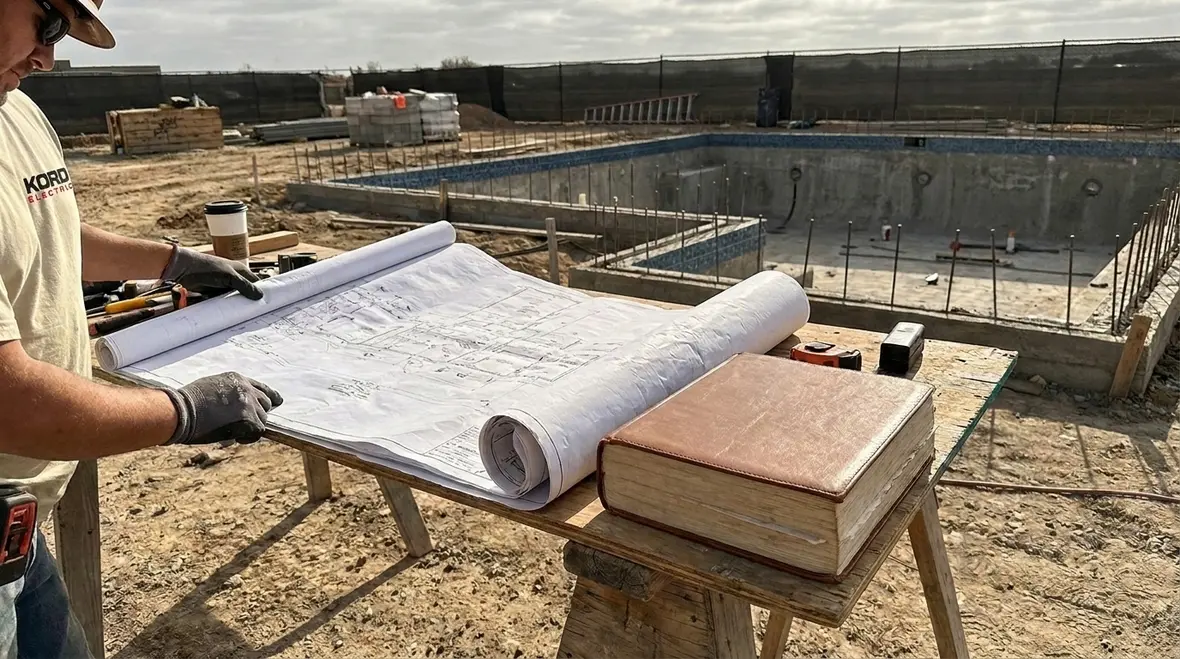
How the 2026 NEC direction reshapes pool area electrical design
The NEC keeps evolving, and we treat that like a weather forecast. If we ignore it, the storm still shows up, and it usually shows up at the worst time. In the 2026 period, the focus stays on clearer safety expectations and consistent application of rules. We also notice that inspectors pay close attention to how facilities apply earlier requirements and how they update documentation during modernization.
From our perspective at Kord Electric, pool area electrical work needs clean design choices. That includes correct circuit grouping, correct device selection, and correct physical layout. Additionally, it includes coordination with other safety systems already on site.
We help commercial and industrial facilities avoid “almost compliant” setups. Those are the ones that pass early checks and then fail later when conditions change, like equipment replacement, renovations, or expanded pool decks. So, we plan with future service in mind, which means easier troubleshooting and fewer repeat trips.
Also, if your facility uses contractors from multiple trades, we explain how the electrical scope must align with plumbing, deck work, lighting placement, and any controls tied to pool equipment. This reduces miscommunication. It also reduces the chance of a costly rework cycle that everyone pretends will not happen. Spoiler: it usually happens.
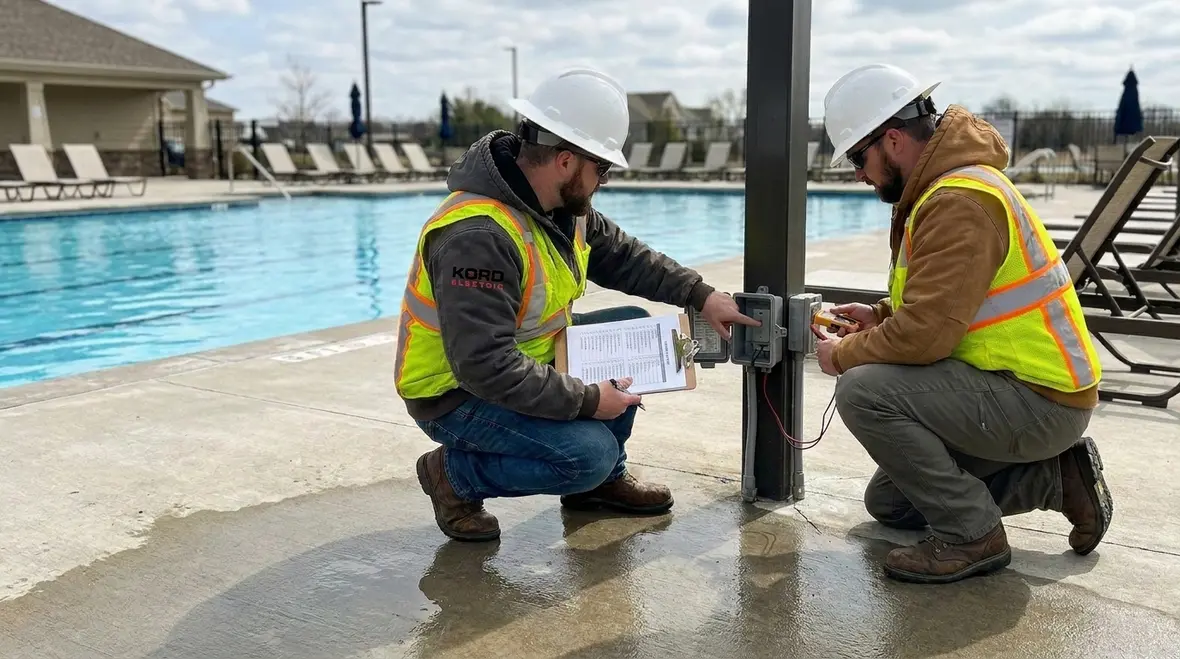
Linking pool work to broader NEC planning
Pool areas rarely exist in isolation. They live inside larger facilities with service corridors, mechanical rooms, life safety systems, and tenant spaces. That means NEC Section 680.5 pool GFCI protection decisions should line up with the rest of your electrical planning. When we help teams think through upgrades, we often pair pool scope reviews with broader NEC strategy, using resources like the Kord Electric articles on how to read NFPA 70 and how the NEC 2026 code scope applies to commercial and industrial buildings. This keeps pool circuits from becoming a “side quest” that conflicts with the rest of the system.
GFCI and pool wiring: what we check before we energize
We do not rely on a device name on a box. We verify behavior and correct installation. Our process starts before power is applied, and it continues after. That is how we keep the work stable in real facility operations.
When our technicians evaluate pool area wiring, they typically confirm the following items in a clear order. First, we verify that the correct circuits feed the correct equipment. Then we confirm proper protection coverage for each required location. After that, we inspect wiring methods and connections, including bonding where it applies. Finally, we confirm the field tests.
Because facilities operate year round, we also consider service access. We plan so that future maintenance does not require disruptive demolition. In addition, we ensure labeling is readable and consistent, so operators can identify circuits without guessing.
To keep it concrete, our team often uses a structured check list during commissioning. We verify termination quality, device rating fit, and that the protective device trips as required when test conditions are applied. Then we document the outcomes for your facility records. That documentation matters when an auditor asks how you confirm safety after installation.
If you have ever watched a TV detective look at the wrong evidence and confidently build a case, you know what we avoid. We make sure the evidence is correct. Then we let the electrical safety do its job.
Field verification that matches NEC intent
Pool GFCI protection only works as intended when real world details line up with the drawings. That means verifying conductor routing, confirming that neutral and equipment grounding conductors are separated or combined where they should be, and ensuring that bonding connections in metallic raceways, enclosures, and pool structures stay tight over time. When needed, we cross reference NEC 2026 updates and Kord Fire educational resources so facility teams understand how today’s inspection questions tie back to the code language they see in books and online explainers.
Common mistakes we prevent in major property installations
Commercial and industrial projects often involve tight schedules and multiple teams. Therefore, mistakes can slip in through small gaps, like misunderstanding location boundaries or assuming an upstream device covers a downstream need. Our expert service staff routinely see the same errors, so we build our planning to stop them early.
One frequent issue is incomplete coverage. Teams may protect some outlets and forget others within the pool area boundary. Another is incorrect device placement or wiring that does not match the intended circuit design. Additionally, some facilities reuse older infrastructure during upgrades and assume it still meets the current safety expectations.
We also watch for confusion between protection methods. Some teams mix safety roles and treat grounding, bonding, and GFCI protection as interchangeable. They are related, but they do different work. So, we explain the difference during site walkdowns, using plain language and real examples from the field.
Another practical problem shows up when equipment changes. If a facility adds new lighting, upgrades pump controls, or replaces pool heaters, the electrical system may need re-evaluation. We treat that like changing the locks after moving into a new building. It is not about distrust. It is about staying safe and staying current.
For those who want broader context on how code guidance applies across the industry, we often point teams to the educational resources from Kord Fire sites, since they explain NEC topics in a way that helps non electrical stakeholders follow along. And for major property buildings that also involve fire protection planning, coordinating electrical safety with life safety systems prevents the “two departments, two answers” problem.
Design coordination that avoids “almost compliant” installs
When we coordinate design for large pool decks, spas, or water features, we treat NEC 680.5 pool GFCI protection as one piece of a larger picture. That picture includes conductor sizing, breaker selection, grounding for nonelectrical equipment, and even feeder diagram clarity for maintenance staff. Kord Electric’s other NEC explainers on topics like multiwire branch circuits, feeder diagrams, and wiring integrity support that same goal: every part of the system should make sense when a technician opens a panel five years from now and needs to understand how the pool equipment is protected.
GFCI testing, documentation, and ongoing compliance for facilities
After installation, we still stay involved. Electrical safety is not a “set it and forget it” task, especially in wet area environments where equipment gets used daily. Our technicians plan testing steps and confirm that protection works as intended.
We also help our commercial and industrial clients build a steady compliance routine. That routine often includes periodic inspection checks, functional testing when appropriate, and maintaining records of results. As a result, when someone asks, “How do you prove it works?” your facility has an answer ready, not a scramble at the last minute.
We explain what documentation should contain. It should note testing dates, device identification, and outcomes. It should also tie back to the equipment it protects and the areas it serves. Our expert service staff treat documentation like a business asset, not a chore.
And yes, we will tell you plainly: if a test fails, do not “try again tomorrow” and hope for the best. We investigate the cause, correct wiring or device issues, and retest. That is how we keep safety working the way it should.
Building a sustainable inspection and testing rhythm
Many facilities combine their pool GFCI checks with broader electrical safety and training programs. Kord Electric’s guidance on electrical safety training requirements, code upgrade consulting, and emergency power planning often supports the same teams that own pool operations. By aligning these efforts, facility leaders get a single, coherent plan for testing, documentation, and responses when issues appear, instead of a patchwork of separate routines that fight each other for calendar space.
How Kord Electric approaches NEC aligned work for commercial and industrial buildings
At Kord Electric, we serve commercial and industrial facilities and major property buildings. That focus changes how we plan, schedule, and support our clients. We do not sell one time fixes. We build long term reliability.
Our approach combines field experience with code driven design thinking. First, we review site conditions and identify where pool area rules apply. Then we coordinate with facility managers and other contractors so installation matches the real layout, not a generic diagram. After that, our technicians install the required protection and verify operation.
Next, we provide service support for ongoing questions. Our expert service staff do not just say, “It should be fine.” They explain what “fine” means in practical terms. They also outline what facility staff should watch for during routine operations.
To see how we coordinate expertise across electrical and broader life safety discussions, customers often explore related content at Kord Fire and Kord Fire Australia. For additional industry context around pool and safety related code education, firepumps.org also helps teams think through system safety planning, especially when facilities link water related systems and safety responsibilities.
If your building is in Southern California and you need help applying NEC 680.5 pool GFCI protection inside a broader upgrade or renovation, you can also review how our Los Angeles County electrical services support code minded planning, installation, and verification for large commercial and industrial properties.
Connecting pool protection to your overall NEC strategy
Pool areas may be the most visible part of your electrical system to guests and staff, but behind the scenes, they depend on the same disciplined NEC approach that keeps the rest of the building running. By treating NEC Section 680.5 pool GFCI protection as part of a structured, 2026 ready compliance plan – not as an afterthought – Kord Electric helps facility teams reduce risk, control change orders, and move through inspections with fewer surprises.
FAQ
Conclusion: let us handle pool area electrical safety for your facility
Pool area electrical work affects real people and real liability. Therefore, we help commercial and industrial facilities design, install, test, and document NEC compliant protection, including NEC Section 680.5 pool GFCI protection. Our technicians and expert service staff explain what we do and why, so your team stays confident during inspections and daily operations. If you are planning a new installation, a renovation, or an equipment upgrade, contact Kord Electric now. We will assess your site, confirm requirements, and build a clear path to safe, reliable power.