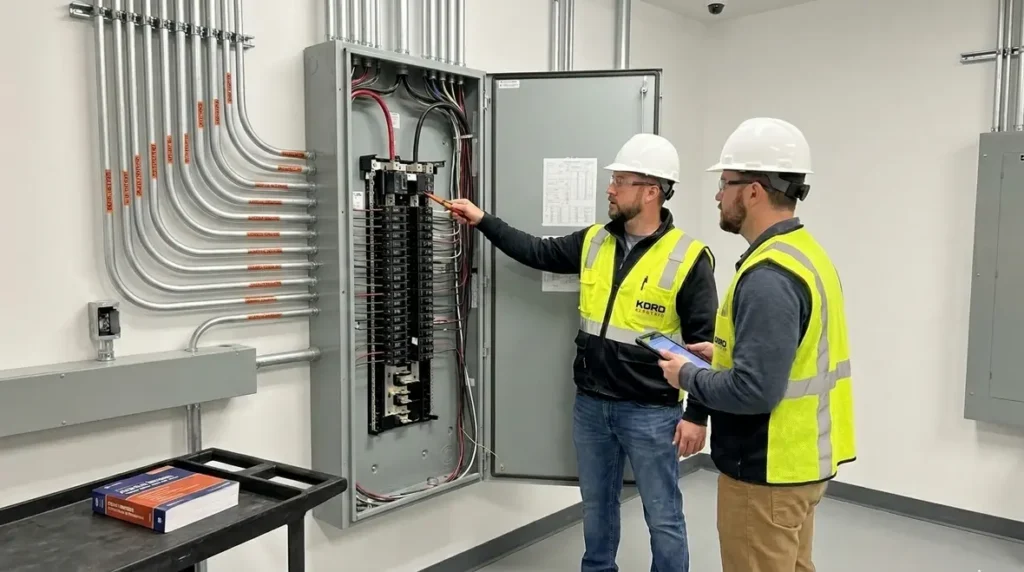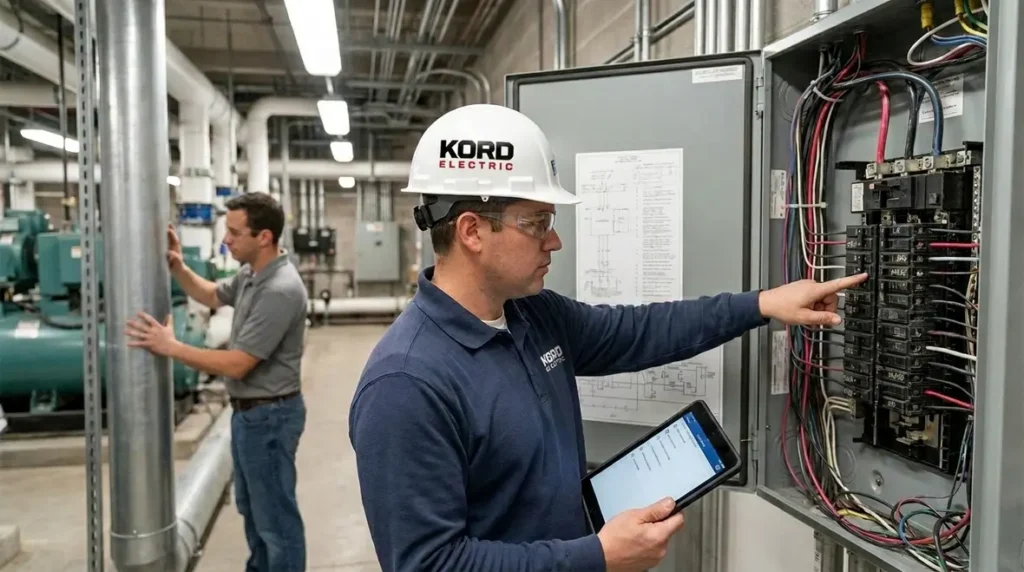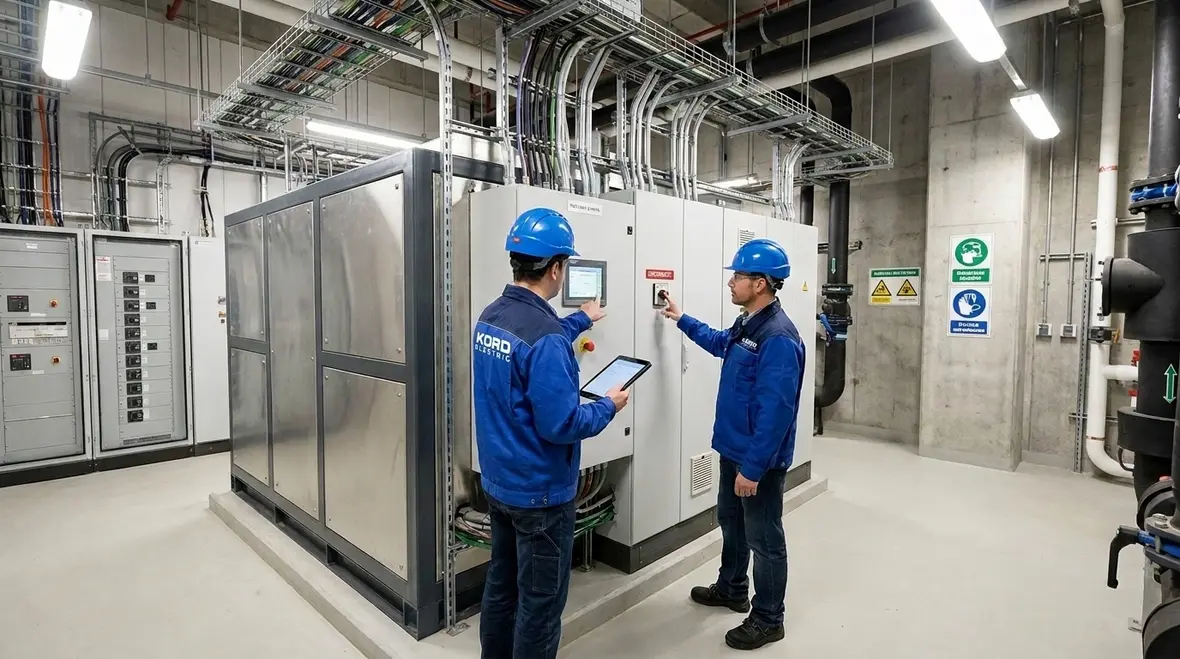
NEC 692.50 Fuel Cell Power Source Installation Guide
In the first place, we treat electrical safety as a system, not a checklist. For fuel cell power source installations, we follow the NEC Section 692.50 fuel cell power source rules, because they spell out how these systems should connect, protect, and operate. In other words, we build our approach around what the code demands, and we make sure the details match the real world on site. And yes, our technicians explain it clearly, because nobody wants to interpret “it should be installed per the listing” like it is a riddle from a detective show.
In this guide, we focus on commercial and industrial facilities and major property buildings. We guide owners, facility managers, and electrical teams through practical steps, key code concepts, and common mistakes. Then we wrap it up with a straightforward path to get expert help from Kord Electric.
What NEC 692.50 fuel cell power source rules require for safe operation
Third person readers often ask what NEC Section 692.50 actually forces the project team to do. First, the rules address how a fuel cell power system acts like a power source and how it must interface with the building electrical system. Then, the code focuses on protective measures and control so that electrical faults do not become physical hazards. Most importantly, the installation must follow the requirements tied to the system’s wiring methods, equipment ratings, and protection strategies.
To keep it grounded, our technicians walk the job like inspectors do, because they want the same result: a safe, compliant system that works as intended. We also remind teams that “compliant” does not mean “vague.” It means clear. It means installed the right way, with the right devices, at the right points.
For fuel cell systems, the code approach aims to prevent backfeed hazards, control abnormal operation, and make sure fault conditions receive fast, proper interruption. Therefore, the design must account for how the system connects to service equipment or transfer equipment and how protective devices coordinate. If the coordination is wrong, the system may still operate, but safety margins shrink and the facility takes on avoidable risk.
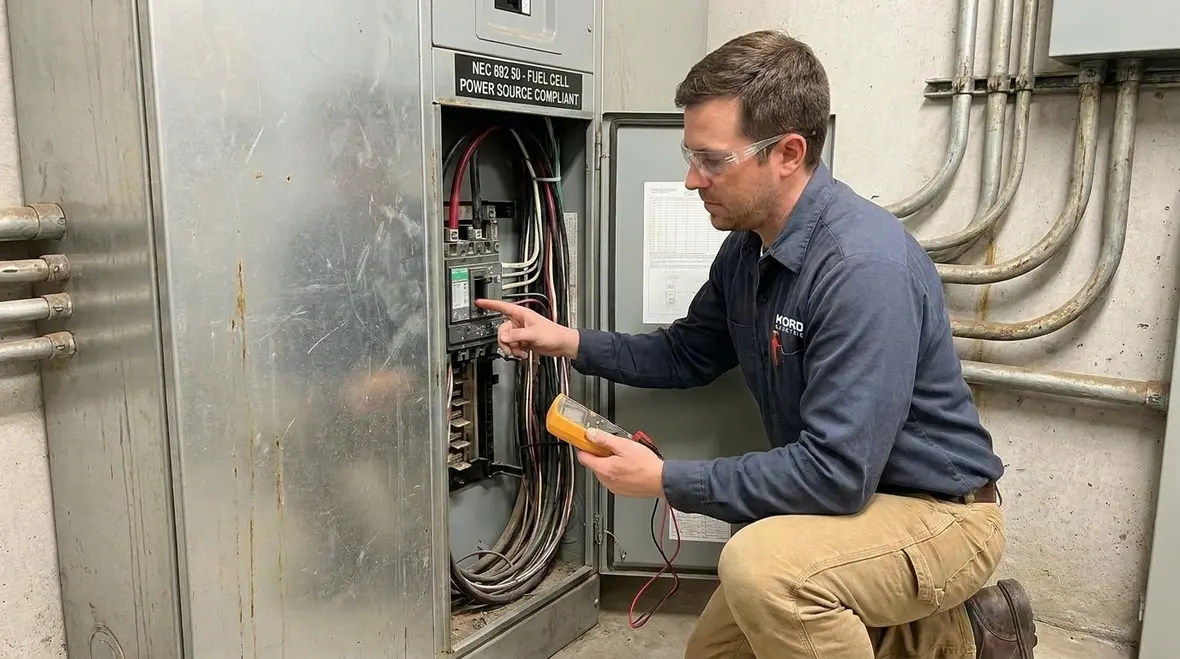
When we talk about NEC Section 692.50 fuel cell power source rules, we also connect them to the bigger picture inside NFPA 70. Fuel cells may look like a “special topic,” but they still live inside the same code logic used across your building. For a deeper high-level overview of how the National Electrical Code shapes electrical decisions in 2026, many facility teams review the Kord Electric resource Understanding NFPA 70, the National Electrical Code Explained for 2026 before they dive into fuel cell specifics. That way, everyone shares the same foundation before the drawings and wiring start to get complex.
Because fuel cell systems often support business continuity or resilience goals, we also align 692.50 decisions with upstream and downstream power strategies. When a project will tie into emergency systems, transfer equipment, or critical loads, our staff reference design lessons similar to what we apply in our emergency power planning work. That perspective keeps the fuel cell from becoming a standalone “science project” and instead makes it part of a disciplined electrical safety system.
How we apply the National Electrical Code to commercial and industrial sites
Commercial and industrial electrical environments never stay still. Loads change, equipment gets added, and operational needs evolve. As a result, the NEC method fits well when applied as a whole. It helps the team plan for normal power flow, planned switching, and emergency operation. Also, it guides how the building distributes power, protects conductors, and ensures the system can shut down safely when needed.
From our work at Kord Electric, we have seen that many failures do not start with brand new ideas. They start when someone connects a new power component like a fuel cell without fully mapping how it interacts with existing switchgear, protective devices, grounding, and bonding. Then, the facility ends up with a “works today” situation, not a “works safely tomorrow” situation.
Our expert service staff explain these interactions in plain language. They break down how the NEC requirements connect to real equipment and real wiring. In fact, the most common theme we hear is simple: people want certainty. We deliver that by checking the full path from source to distribution and back again.
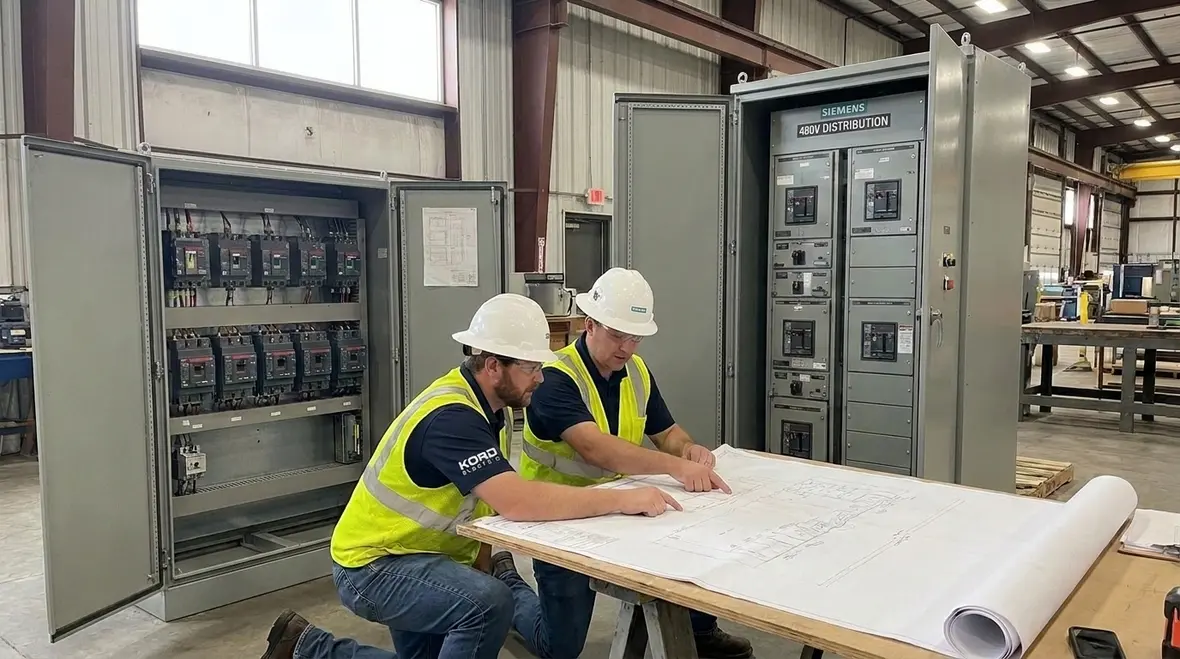
When a fuel cell ties into a building that already supports data centers, automation, or large HVAC plants, NEC Section 692.50 fuel cell power source rules become one piece of a larger risk picture. We often coordinate those decisions with broader design strategies similar to the data-driven electrical design work our teams use for complex facilities. That mindset keeps the project honest about how real loads behave instead of assuming yesterday’s one-line still protects tomorrow’s expansion.
Because many commercial and industrial properties in our service areas rely on sophisticated backup strategies, we also map fuel cell behavior alongside existing emergency power plans. The same way we treat redundancy and transfer schemes in business continuity designs, we verify that a fuel cell will not surprise the system when it switches states, rides through disturbances, or hands off to other sources during abnormal events.
Protection and coordination: where most projects go wrong
Fault protection looks boring until you need it. Then it becomes the main character, and it shows up fast. In most fuel cell related projects for major property buildings, problems appear when the team assumes protective devices will “just handle it.” However, code compliance and engineering practice both require proper coordination.
As a facility grows, short circuit current levels and fault clearing times matter. Therefore, protective devices must match the system’s behavior and the available fault current. If a protective device trips too early, operations suffer. If it trips too late, conductors and equipment face stress. Either way, the facility manager gets the call at the worst time.
Our technicians treat coordination like a map. First, they identify the likely fault scenarios. Next, they verify that overcurrent protection, disconnecting means, and switching devices work together. Then, they confirm that the protective approach aligns with what NEC expects for this class of power source systems. If the project includes related fire and emergency functions, we also ensure the electrical plan supports those goals without creating dangerous interactions.
Sometimes we add a joke to keep the mood steady: protection coordination is like a band rehearsal. Everyone has to play in the right order, at the right time, with the right tempo. If the drummer starts whenever they feel like it, the song ends badly. The code does not want your song to end badly.
In fuel cell projects that share gear with other distributed energy resources, we also look at how fault currents stack up when multiple sources feed the same bus. That includes how a fuel cell will behave during upstream faults, how it will disconnect under abnormal grid conditions, and how fast its protective elements coordinate with breakers and fuses already installed for other systems. The goal is simple: one clean, predictable response instead of a tangle of half-coordinated trips.
We also examine how fuel cell power sources interact with surge events and abnormal transients. The same way our teams protect commercial buildings from power surge damage, we apply layered protection and thoughtful device placement around fuel cell interfaces. That keeps the sensitive power conversion equipment from becoming the “weakest link” during lightning events, switching surges, or utility disturbances.
Wiring methods, disconnecting means, and system interfaces
The next step is making sure the installation details match the code intent. Fuel cell power systems connect to the building through a defined set of interfaces. That includes wiring methods, terminations, and where disconnecting means belong. It also includes how the system integrates with switching, service equipment, and any controls used to manage operation.
In practice, this is where drawings and field work either line up or drift apart. We see teams that design a clean single line, then install field components without confirming clearance, routing, labeling, and termination integrity. Afterward, the project team tries to fix it through patchwork changes that do not fully address safety or compliance.
Therefore, our expert service staff verify the interfaces before power-up. They check that disconnecting means provide the correct ability to isolate the fuel cell source and that the system’s wiring method supports the environment where it runs. Then they confirm that control and protective components communicate the intended behavior during abnormal conditions.
Because we focus only on commercial and industrial facilities and major property buildings, we concentrate on the complexity those sites demand. That means we plan for higher equipment density, system integration, and the practical reality of working around operating operations schedules.
When wiring methods and interfaces are laid out, we also think ahead to how inspectors, maintenance technicians, and operations staff will interact with the system. Clear, durable labeling, logical routing, and accessible disconnects make it easier to verify NEC Section 692.50 fuel cell power source rules in the field. They also make life easier when troubleshooting, upgrading, or training new personnel.
Good interface design also respects how fuel cells exchange information with building automation systems, monitoring platforms, and upstream control logic. We coordinate control points, alarms, and status signals so that operators can see whether the fuel cell is online, in fault, or in a safe shutdown state. That transparency supports safer switching and quicker decisions during both routine work and abnormal events.
Common compliance pitfalls and how we help teams avoid them
Even competent teams run into pitfalls. First, they may misread code language and treat “where applicable” as a permission slip. Second, they may neglect coordination between new power source equipment and existing protective devices. Third, they may assume the fuel cell system listing covers every site-specific requirement without confirming how the installation must still comply.
Also, facility teams sometimes overlook how the installation affects maintenance access. If technicians cannot reach equipment safely, the facility will avoid proper testing and inspections. Then, the system loses the very confidence the owner expects from a modern power architecture.
We prevent these issues by taking a structured approach. Our staff review the electrical design intent, then we compare it with the field plan. Next, we verify labeling and identification, because clear identification supports safe switching and troubleshooting. Finally, we confirm that the installed protection and disconnecting arrangement supports the code approach for fuel cell power source integration.
To keep people aligned, we also point teams to supporting resources from our related efforts and partners in the code and safety ecosystem. For more NEC context on national guidance, readers can explore our fire and electrical code content at Kord Fire and related safety perspectives at Fire Pumps. Those resources help teams understand the bigger picture around electrical safety, protective requirements, and the way the fire and electrical worlds overlap in real buildings.
When a site is new or undergoing major expansion, we fold fuel cell planning into broader electrical safety checklists. That includes confirming that new equipment clearances, labeling schemes, and documentation fit alongside the rest of the building’s electrical story. Integrating fuel cell work with these wider checklists reduces the chance that 692.50 details will be missed during tight project timelines.
Scheduling inspections and commissioning for fuel cell system projects
After installation comes the part most people underestimate: commissioning and verification. In a commercial or industrial setting, commissioning must match the schedule and the operational risk. It also must include checks that confirm the system behaves as designed. If commissioning skips the right steps, later troubleshooting can take weeks, and the facility experiences downtime and uncertainty.
We recommend a clear process. First, teams verify documentation, including the single line diagram, protective device settings, and interface details. Next, technicians confirm operational sequences and safety interlocks. Then they validate that disconnecting means isolate the correct portions of the system and that protection behaves as expected under fault conditions.
Our expert service staff explain commissioning outcomes to facility stakeholders in direct terms. They do not hide behind jargon. They highlight what passed, what needs adjustment, and what requires follow-up testing. As a result, decision makers get clarity instead of confusion, and the project moves toward acceptance with less drama than a sitcom plot twist.
When people ask for the best time to plan these steps, we say now. Because the earlier teams include commissioning and inspection planning, the fewer changes they face late in the project lifecycle.
For facilities in Southern California and nearby regions, that planning often includes coordination with local Authorities Having Jurisdiction and utility providers, especially when interconnection, export control, or parallel operation with the grid is part of the design. Our teams help clients prepare documentation and testing sequences so inspections move faster instead of turning into a string of surprise corrections.
Featured FAQ for NEC fuel cell installations
Facility leaders, project managers, and electrical teams usually ask the same core questions when NEC Section 692.50 fuel cell power source rules show up in a project. Below, we capture those questions and answer them using the same plain language our technicians use in the field, so you can share this section with your team during planning meetings or design reviews.
Conclusion: Get expert NEC support from Kord Electric
Fuel cell power projects succeed when the team treats the electrical plan as a safety system, not a set of lines on paper. Kord Electric supports commercial and industrial facilities and major property buildings with disciplined reviews, clear technician-led explanations, and field verification that aligns with code intent. If your project involves a fuel cell power source integration, we can help you reduce risk, protect assets, and move through commissioning with confidence. Contact Kord Electric today to discuss your site and electrical design needs.
For facility leaders looking at broader upgrades beyond a single fuel cell project, our team also delivers comprehensive Los Angeles County commercial and industrial electrical services. That work ranges from new system design and panel upgrades to emergency power planning and ongoing maintenance. When NEC Section 692.50 fuel cell power source rules sit inside a much larger electrical story, having one contractor who understands the full system helps keep every part of the plan moving in the same direction.