
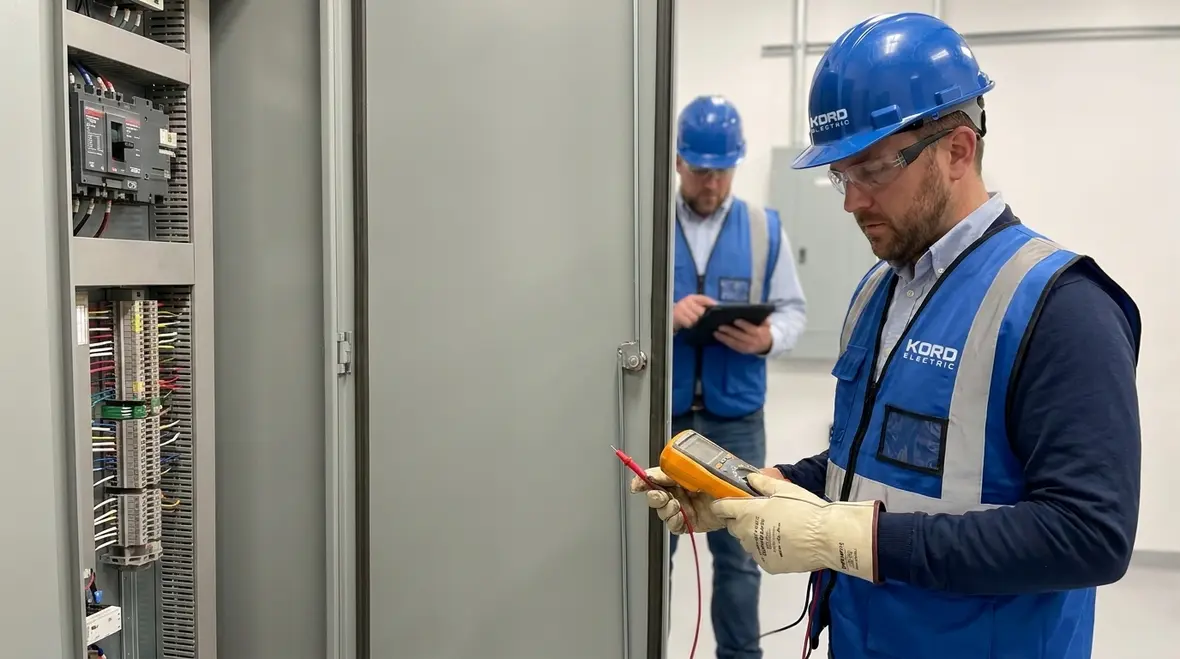
NEC Arc Flash Hazard Labeling Under NFPA 70 Section 110.16
At Kord Electric, we treat electrical safety like we treat deadlines: seriously, clearly, and with zero drama. That is why our team focuses on NEC arc flash hazard labeling in the first place, especially when facilities follow NFPA 70 Section 110.16. Arc flash hazards do not announce themselves. They can flare in a fraction of a second, and then the damage writes the story for everyone involved.
In this article, we explain how Section 110.16 sets the rules for arc flash hazard labeling code, what it requires for commercial and industrial facilities, and how our expert service staff helps property managers and electrical teams apply it in real life. We also keep the tone calm because, in most cases, the best outcome is the one nobody has to earn the hard way.
Why NFPA 70 Section 110.16 matters for high risk panels
NFPA 70 Section 110.16 — Arc flash hazard labeling code exists for a reason that is both simple and urgent. When someone opens an energized electrical enclosure, works near live parts, or performs maintenance, they face risk from an arc flash event. Therefore, the standard requires labels that communicate the hazard level so workers can choose the right PPE and safe work method.
For commercial and industrial facilities, the stakes are higher because there are more people on site, more shift changes, and more equipment in active service. Moreover, major property buildings often have multiple one off systems installed over years. So while the electrical gear looks tidy, the risk profile can change as soon as someone swaps a component or reconfigures a circuit.
Our technicians approach this like a roadmap, not a mystery novel. First, they confirm the energized work scenarios. Then, they align the labeling with the actual hazard results. In other words, the label does not guess. It points.
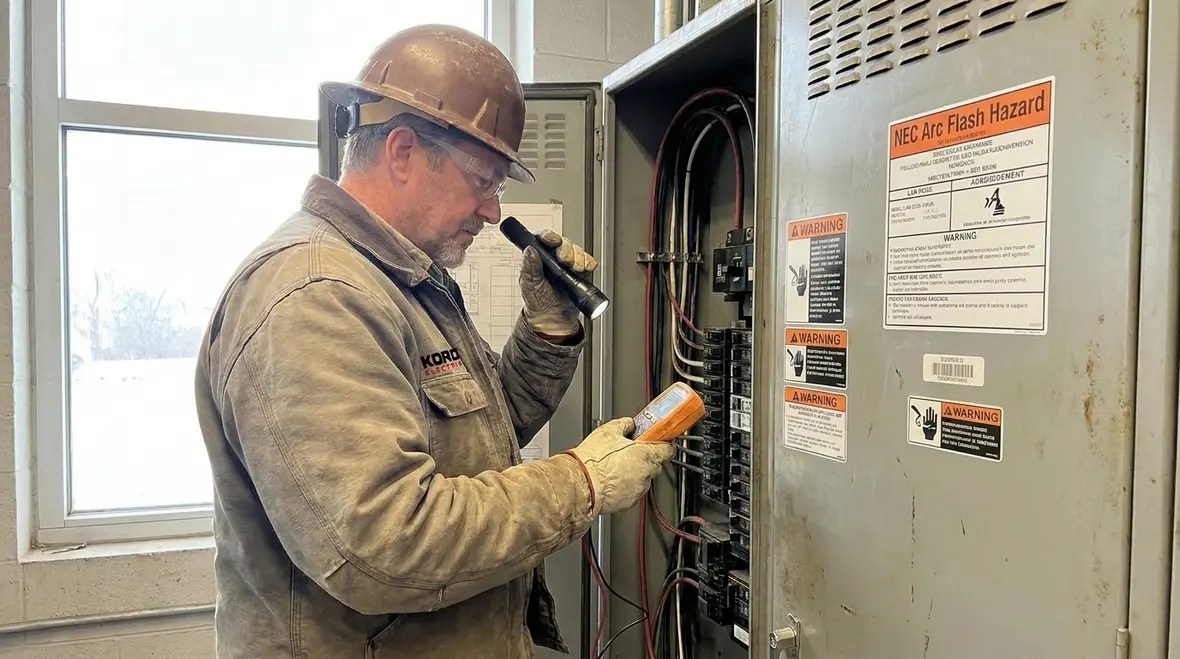
In many facilities, Section 110.16 also becomes one piece of a larger compliance roadmap. When teams step back and look at the full rulebook, they often connect this requirement with broader NFPA 70 guidance on safe wiring methods, equipment ratings, and inspection expectations. Resources like Kord Electric’s overview in Understanding NFPA 70: The National Electrical Code Explained for 2026 help facility leaders see how arc flash labeling fits into the bigger picture of electrical safety and long term system planning.
What NEC arc flash hazard labeling communicates in plain terms
NEC arc flash hazard labeling and its goal do not confuse the field. It tells qualified workers how dangerous the task can be at a specific location and at a specific working distance. In practice, the label supports safer decisions when the worker selects PPE and verifies that the task matches the planned approach.
Typically, an arc flash label communicates key details such as the incident energy, the arc flash boundary concept, and the conditions under which the values apply. Additionally, it helps coordinate procedures across the team, including maintenance, electrical contractors, and facility operations.
However, the label fails if the facility treats it like wall art. In fact, if a panel changes and the hazard analysis does not update, the label becomes outdated. Thus, we recommend that Kord Electric help keep the labeling tied to the current system configuration, especially for major property buildings where changes happen quietly and often.
And just to lighten the mood, arc flash safety is not like a sports jersey. You cannot keep the old one and expect it to fit the new season.
For many commercial and industrial sites, clarity also means consistency. When labels follow a predictable format across multiple rooms and floors, workers can read them quickly, even under pressure. That is one reason Kord Electric often coordinates arc flash labeling with broader electrical documentation and panel schedules, so the information a technician sees at the door matches what they find in drawings, procedures, and work orders.
How the labeling code connects to hazard analysis and worker protection
Section 110.16 does not operate in isolation. It depends on hazard analysis work that identifies energy levels based on the system and protective device behavior. Therefore, the labeling reflects the results of that analysis, not just a generic calculation or a copy paste number from an old project.
When our expert service staff explains this to facility teams, they use a simple sequence. First, they confirm the system data: voltage, equipment configuration, conductor details, and protective device ratings. Next, they evaluate fault clearing times, because timing drives the incident energy. Then, they connect the results to the label so workers can understand the PPE category and safety boundaries they should respect.
In commercial and industrial environments, this process matters because protective devices can age, settings can change, and coordination can shift. Even when the equipment remains “the same” to non electrical staff, the behavior can change behind the scenes.
To keep it business casual and practical, Kord Electric treats these steps like quality control. We verify, we document, and we help teams avoid the common trap of labeling gear that no longer matches the actual hazard conditions.

This connection between study results and labels also ties into how a facility plans upgrades. When leaders look ahead at modernization work, such as service replacements or panelboard changes, they can treat the hazard analysis and labeling as part of the same scope. Articles like Kord Electric’s Building Electrical System Design: Planning Power for Commercial Facilities show how long term design decisions and safety practices like arc flash studies support each other instead of competing for budget or attention.
Placement and legibility requirements that teams can verify on site
A labeling program that looks good on paper can still fail in the field. So, we emphasize placement and legibility because workers rely on labels during real tasks, not in training slides.
Typically, the requirements focus on labeling at equipment where someone might work on or near exposed energized parts. Consequently, the label needs to be visible, durable, and positioned for quick identification. Additionally, the information must remain understandable under normal lighting and in the conditions where maintenance occurs.
Our technicians walk the site and confirm labeling practicality. For example, a label on the back side of a cabinet might look compliant from a desk review, but it will not help a worker who needs to open a door from the front. Meanwhile, labels that get covered by conduit clutter or removed by routine cleaning create a silent hazard.
Also, for facilities with multiple tenants or shared electrical rooms, labeling consistency becomes part of safety culture. When the label format matches what workers expect, the team spends less time guessing and more time executing safe procedures.
Because no one wants to hunt for information while the clock runs and the panel sits there like it is waiting to be sued. We do not let that happen.
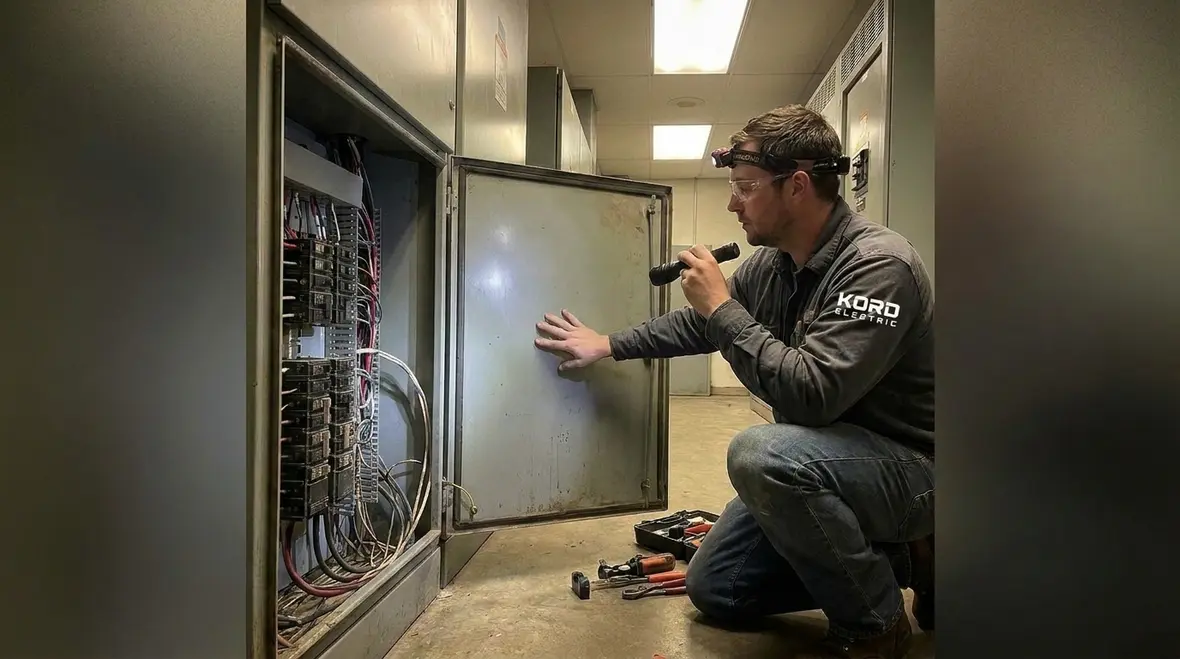
When Kord Electric reviews labeling on site, our technicians also keep an eye on how inspectors and Authorities Having Jurisdiction view the space. Clear, code aligned labels support smoother inspections and help demonstrate that the facility takes both NFPA 70 requirements and day to day worker safety seriously, instead of treating them as last minute paperwork.
Updating labels when equipment changes in major property buildings
Electrical gear evolves. And in major property buildings, the equipment often changes due to renovations, tenant improvements, load growth, and system upgrades. When this happens, hazard conditions can shift. Therefore, labels must stay tied to the current configuration.
Our approach centers on change control. Whenever there is a meaningful electrical modification, Kord Electric coordinates updates so the hazard analysis and NEC arc flash hazard labeling remains aligned. This includes work such as breaker replacement, transformer swaps, feeder reroutes, panel upgrades, or adjustments in protective device settings.
Moreover, we advise facilities to treat labeling review as part of project closeout, not an afterthought. That means our team can integrate the labeling needs with the electrical scope, helping the facility avoid the expensive scenario where a contractor leaves, the panel changes, and then later a safety audit shows a mismatch.
In the long run, updated labeling protects workers and reduces downtime. In the short run, it helps managers answer the question, calmly, when someone asks what PPE they need for the next task.
Common labeling gaps Kord Electric sees in the commercial world
Even well meaning teams can fall into predictable patterns. First, they assume old documentation still holds. Next, they label the equipment but do not connect it to current conditions. Then, they rely on one person’s memory instead of a repeatable process.
Some of the gaps we see include missing labels at key equipment locations, labels that do not match system changes, labels that lack clarity for the worker who faces the equipment during maintenance, and labels that conflict with the protective settings used in the hazard analysis.
Additionally, teams sometimes struggle with coordinating between electrical contractors, facility maintenance staff, and general property operations. When communication breaks, labeling can become inconsistent across floors, rooms, or shared service areas.
Our expert service staff helps bridge that gap. They explain what the label means, where it must sit, and how it ties to PPE and safe work practices. So, rather than a label that sits there unused, the program supports daily decisions.
Think of it like an instruction manual, not a fortune cookie. Workers deserve answers, not vibes.
Featured guidance for teams that want safer electrical work
If a facility wants to strengthen compliance and safety, it can start with a short, practical plan. First, confirm that an arc flash hazard analysis exists and reflects the current system. Next, ensure that NEC arc flash hazard labeling and any related labeling code requirements match the results. Then, verify placement and legibility in the actual access locations where workers open equipment.
After that, add a change review step for projects and maintenance work. Finally, train the people who rely on the labels so they understand what they must do before opening enclosures.
When our technicians support these steps, they help property teams keep safety consistent across busy schedules. That is the real advantage for commercial and industrial sites: fewer surprises, fewer delays, and a calmer crew when the job starts.
For facility leaders who want to see how arc flash requirements connect to broader electrical performance and reliability, Kord Electric’s broader code and system planning resources are a helpful next stop. From NFPA 70 fundamentals to modern electrical systems for commercial buildings, these guides show how labeling, maintenance, and system design work together rather than standing alone.
FAQ: NFPA 70 Section 110.16 and arc flash labeling
Conclusion: let Kord Electric keep your labeling accurate and usable
Arc flash safety works best when the label matches the equipment as it truly exists today. Kord Electric supports commercial and industrial facilities with practical verification, clear explanations from our technicians, and labeling that stays aligned through upgrades. If you manage major property buildings and want fewer surprises during inspections or maintenance, reach out. We will help you confirm compliance, spot gaps early, and keep your workers protected, without turning your electrical room into a suspense thriller.
Call Kord Electric to review NEC arc flash hazard labeling needs for your facility and get a plan you can trust. Our team also supports broader electrical needs across the region, including comprehensive Los Angeles County electrical services that align system performance, uptime, and safety with your long term facility strategy.


