
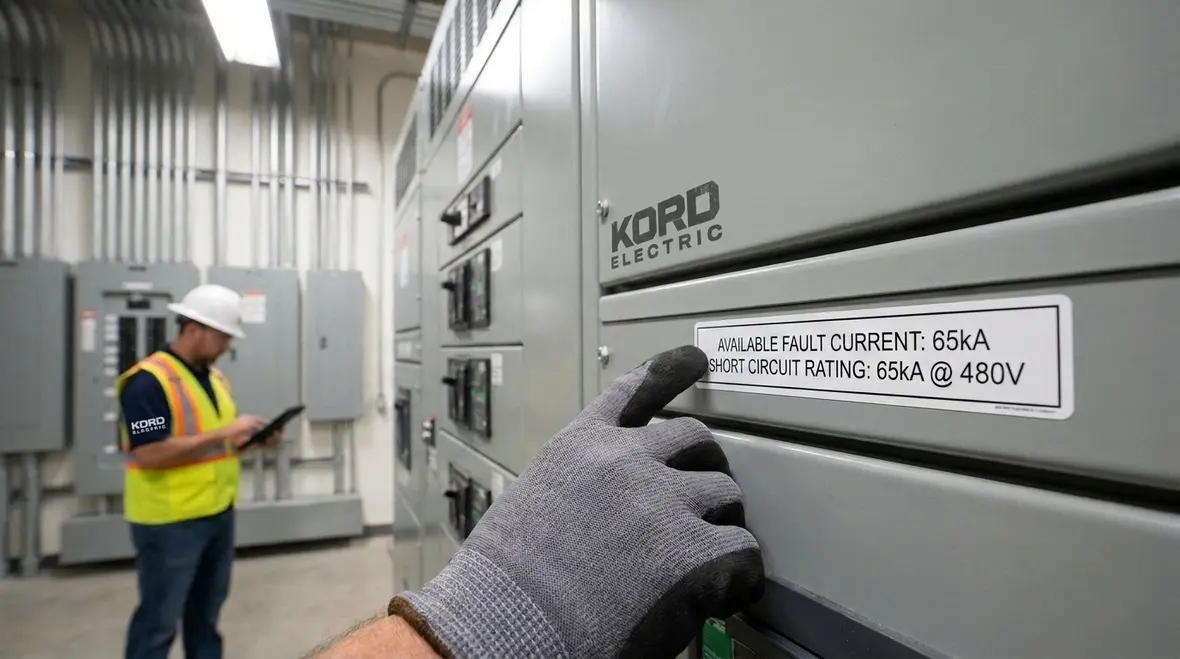
NEC Available Fault Current Marking Rules in Practice
NEC available fault current marking rules put into practice, fast
In the field, NFPA 70 Section 110.10 is where the electrical story either holds up under stress or turns into a confusing mystery novel. As Kord Electric technicians explain it, NEC available fault current marking rules require that key equipment ratings show what the system can deliver. That means labels must reflect the available fault current and the short circuit rating in a way that aligns with the installed protection and the design intent. In other words, we do not guess, and we do not “eyeball” the fault current like it is a football score. When the markings match reality, the rest of the protection plan has a better chance of working the way it was designed.
Since this article focuses on commercial and industrial facilities and major property buildings, we keep the discussion grounded in how engineers, electricians, and maintenance teams actually work together. And yes, we will add a joke now and then because even serious code work deserves a little breathing room. Think of it as a safety briefing with better lighting.
How Section 110.10 connects to short circuit ratings
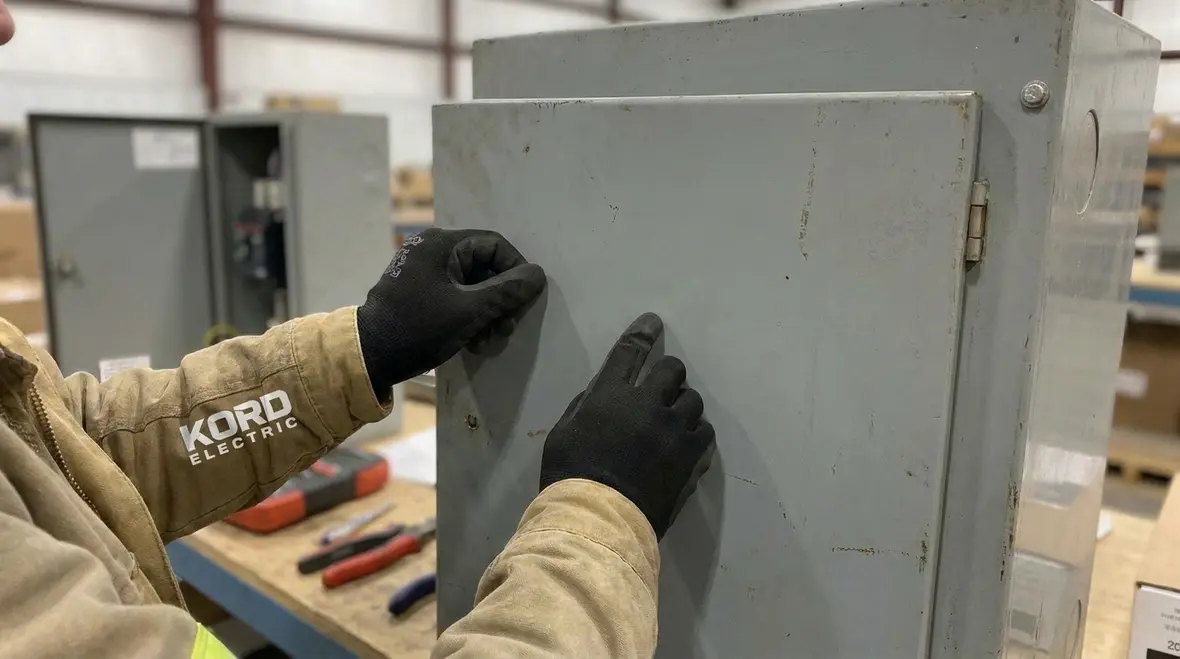
NFPA 70 Section 110.10 sets expectations for how electrical equipment should tolerate the fault conditions that can occur where it is installed. To put it simply, a fault current event is like a storm surge. If the equipment cannot withstand that surge, it fails. Therefore, the code requires that available fault current and short circuit ratings line up with the system data.
Here is the key flow we follow with our expert service staff. First, the system gets modeled or studied to find the available fault current at the equipment location. Next, the equipment must have short circuit ratings at least equal to what the system can deliver. Then we verify that the equipment labeling tells the truth in a format field teams can use during installation and later service.
At a commercial and industrial facility, this matters because one mismatch can turn a routine maintenance day into an expensive outage day. And nobody wants that. Even the most patient building manager has limits, and their patience is not rated for short circuit stress.
Available fault current: what it really means in a facility
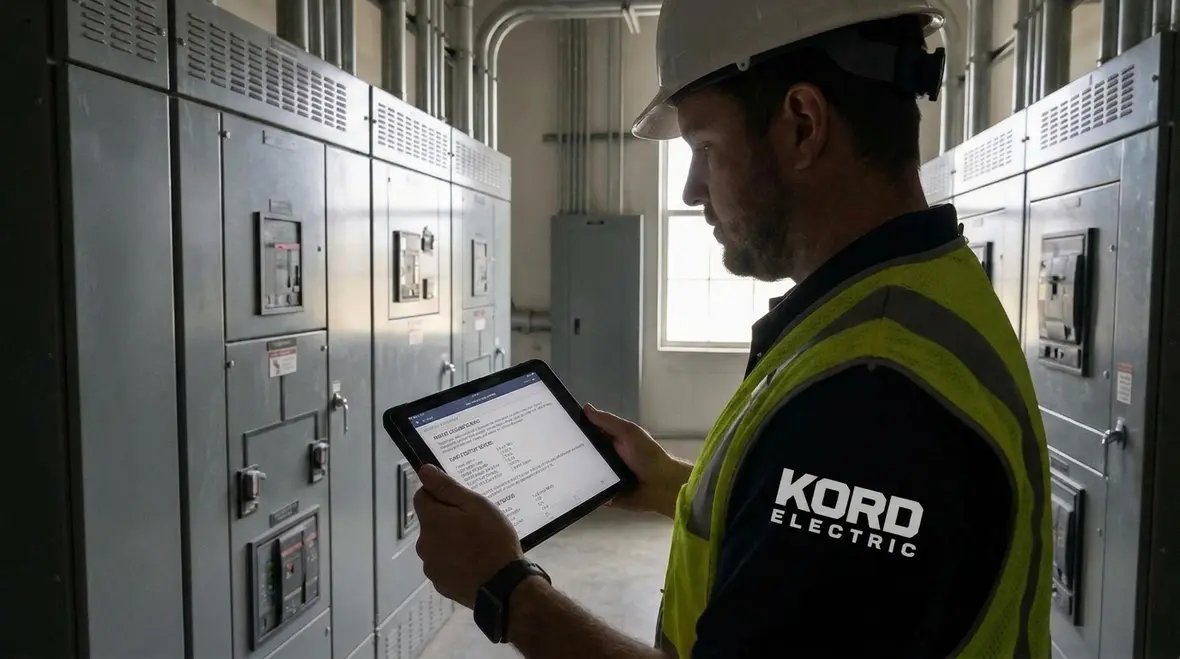
Available fault current is the maximum current a system can produce under a fault at a specific point. However, “maximum” does not mean “in every fantasy scenario.” It depends on the source, the system impedance, transformer settings, conductor runs, and the configuration in place.
That is why we urge our clients to treat fault current as site specific. For example, a high rise and a warehouse on different utility feeds can show noticeably different available fault current levels at the same equipment type. Also, utility upgrades, generator changes, or switching gear reconfiguration can alter the study results over time.
When our technicians explain the topic, they often use a calm, plain analogy. If you do not measure wind load on a building, you guess structural behavior. If you guess electrical fault current, you risk how switchgear, breakers, and bus systems perform during abnormal events. Over time, that guess turns into a trend, and trends can get expensive.
Why short circuit ratings matter more than you think
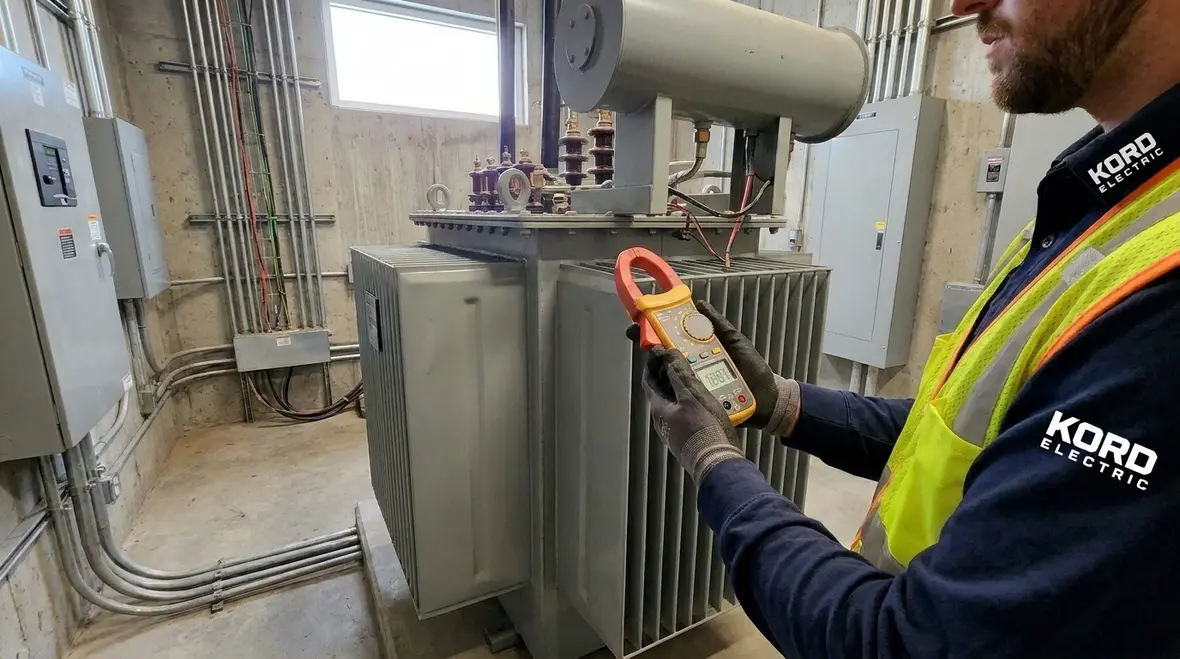
Short circuit rating is the equipment manufacturer’s verified ability to withstand a fault current for a specified duration and under defined conditions. So, this is not just a random number printed for decoration. It ties directly to the design, testing, and construction of the equipment.
Moreover, equipment does not only need a rating. It also needs the right rating for the fault current at its location. Therefore, a breaker with a certain short circuit rating cannot automatically be assumed safe if the available fault current at the bus or panel exceeds that rating.
In commercial and industrial installations, we often see multiple layers of equipment. Switchboards feed distribution panels, panels feed branch circuits, and gear may include main and tie breakers. As a result, teams need a clear map of what is rated for what, where, and why. Kord Electric focuses on these details because our customers run operations that cannot pause for “it should be fine” decisions.
And yes, we have heard the joke before: “If it hasn’t tripped yet, it must be okay.” That line is as reliable as flipping a coin to decide if a fire door closes. The code does not laugh, and neither do real failures.
Study data, labeling, and field verification in real terms
After fault current studies identify available fault current at each relevant location, the design team selects equipment with appropriate short circuit ratings. Then comes the practical part: labeling and marking the equipment so field teams can act without guesswork. This is where the NEC available fault current marking rules earn their keep.
In practice, we support commercial and industrial facilities by helping teams align the study assumptions with the actual equipment lineup. That includes checking utility source details, transformer impedances, and protective device configurations that influence the study results. Also, we verify that the equipment documentation matches the installed gear, including any modifications done during commissioning or upgrades.
Our expert service staff often works alongside electricians and maintenance leads during verification. So, if a label is unclear or missing, we address it before it becomes a service ticket with no satisfying ending. As a result, future troubleshooting gets faster, safer, and less dependent on “who remembers that one job” conversations.
Coordination, protection, and the human side of the code
Short circuit ratings and available fault current do not exist in isolation. They connect to how protective devices coordinate during faults. Therefore, even if a piece of equipment survives a fault, the overall system must also clear faults quickly and reliably to protect conductors, equipment, and people.
When our technicians walk through the topic, they explain how coordination affects both safety and uptime. For instance, protective settings and selective tripping reduce collateral damage. Meanwhile, proper short circuit ratings support the devices that carry the current during the fault window.
At a major property building, coordination also affects business operations. Elevators, critical loads, and life safety systems may depend on stable power. Consequently, our approach stays focused on commercial and industrial needs, not one off residential logic.
And if you ever wonder why this feels like a negotiation between physics and paperwork, you are not wrong. But the paperwork in this case is the part that prevents physics from winning every time.
Common gaps we see and how we prevent them
Even well funded projects can miss details when schedules get tight. Here are the gaps we most often see in commercial and industrial facilities and major property buildings, along with practical ways to prevent them.
- Outdated fault study assumptions: Teams reuse older study data despite utility changes or equipment swaps. We confirm whether the system still matches the study basis.
- Equipment substitution during installation: A procurement change swaps gear model numbers. We review short circuit ratings and labeling to keep the installed lineup aligned.
- Missing or unclear markings: Field teams need quick confirmation of available fault current and short circuit rating. We help ensure labels support service decisions.
- Uncoordinated protection approach: Even with correct ratings, the protection scheme can fail to clear faults in the intended manner. We coordinate with the electrical design intent.
Then, as the finishing step, our technicians document what was verified. Therefore, when future maintenance arrives, the records match the field. That reduces downtime and helps the next team avoid the classic trap of “guessing with confidence.”
FAQ
Two quick resources and a promise from Kord Electric
For readers who want a deeper code lens, Kord Electric and Kord Fire share practical breakdowns of the National Electrical Code topics, including how NEC sections connect to real jobsite decisions. For example, the Kord Electric blog resource Understanding NFPA 70: The National Electrical Code Explained For 2026 walks through how the rulebook shapes real-world design and inspections for modern facilities.
We also respect how widely used reference sites discuss code intent and safety planning. Still, the best results come when the theory meets the field verification, and when your fault current studies, short circuit ratings, and NEC available fault current marking rules all line up with the gear your technicians actually touch.
Our team at Kord Electric serves commercial and industrial facilities and major property buildings. We keep the process calm, clear, and documented. Then we help your staff move forward with confidence, because the goal is simple: safer gear, fewer surprises, and less downtime.
When facilities across the region need help aligning upgrades with code expectations, they often pair these studies and labeling efforts with the broader planning guidance from articles like the Electrical Infrastructure Upgrade Planning Guide or commercial system design resources on the Kord Electric blog. For sites in Southern California, our dedicated Los Angeles County electrical services help turn that planning into field-proven installations that respect both the NEC and your operating schedule.
Conclusion
When NFPA 70 Section 110.10 and the NEC available fault current marking rules line up with your actual system conditions, your switchgear, panels, and breakers stand on solid ground. Kord Electric helps commercial and industrial facilities verify fault current assumptions, confirm short circuit ratings, and support clear labeling so technicians can act fast during installation and service. If you are planning new gear, upgrading a system, or auditing existing equipment, contact us. We will walk the job step by step, and we will keep it professional, precise, and quietly reassuring.


