

NEC Branch Circuit Identification for Safer Commercial Systems
In commercial and industrial buildings, our goal stays the same: keep power systems clear, predictable, and safe. That is why the NEC branch circuit identification requirements in Section 210.5 do more than look official on paper. Early in the process, we make sure branch circuits get marked so electricians, inspectors, and maintenance teams can trace what feeds what. This includes proper labeling at the panel and clear documentation in the wiring path.
As our NFPA 70 team explains during walk-throughs, when identification is missing, troubleshooting turns into guesswork. And guesswork, in electrical work, is like trying to find Wi-Fi in a warehouse using interpretive dance. It is not that fun, and it never ends well.
Why Branch Circuit Identification Matters for Safer Commercial Electrical Systems
Branch circuits are where real life meets the code book. They are the paths that carry power from panels and disconnects out to lighting, receptacles, mechanical equipment, process loads, and life safety systems. When those paths are not clearly identified, every maintenance task, every shutdown plan, and every emergency response becomes slower and more hazardous than it needs to be.
Clear marking is not just about sticking a label on a breaker and hoping for the best. Good branch circuit identification supports safe lockout/tagout, cuts down on trial-and-error breaker flipping, and gives facility teams the confidence to work on systems without wondering if the wrong area is about to go dark. In buildings where tenants, production lines, data rooms, and life safety systems all depend on steady power, that clarity turns into uptime and real risk reduction.
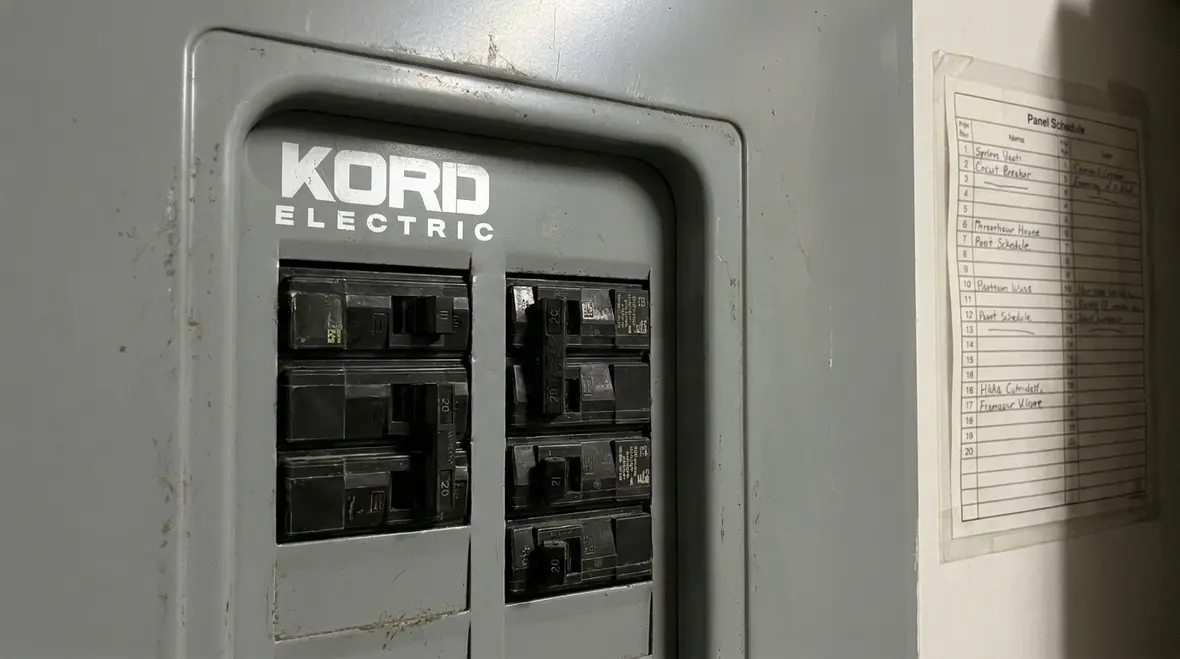
For many commercial and industrial facilities, there is also a planning angle. When loads grow, when new tenants arrive, or when mechanical systems get upgraded, a clear map of what each branch circuit feeds gives engineers and electricians a starting point that is grounded in reality. Instead of guessing which circuits can handle adjustments, teams can see exactly where power flows today and how to adapt it for tomorrow.
This is also where Kord Electric’s broader code-focused thinking comes into play. Our technicians do not look at branch circuit identification as a “label it once and walk away” task. They treat it the same way we treat commercial electrical load assessment, electrical infrastructure upgrade planning, and data-driven electrical design: as a living part of how a facility stays reliable and safe over the long term.
Section 210.5 in Plain Terms, Without the “Code-Speak” Fog
Section 210.5 focuses on how branch circuits should be identified so the system can be understood and serviced. In practice, we see it as a chain of clarity. First, the panel schedule needs to reflect the real world. Then, the equipment must match the schedule. Finally, the markings at the disconnect or overcurrent device must point to the correct load or area.
Our technicians, and the experienced service staff we deploy on major property projects, use a steady method: we verify what is installed, we check the circuit intent, and then we label it in a way that anyone can follow during normal operations or after an issue. That same approach aligns with the way NEC and NFPA 70 concepts are explained in our code resources, including the broader National Electrical Code guidance for 2026 and related NEC insights that support modern building design and upgrades.
If you want a deeper dive into how those code concepts shape real projects, you can explore Kord Electric’s resource on Understanding NFPA 70: The National Electrical Code Explained for 2026, which connects high-level rules to field-ready decisions.
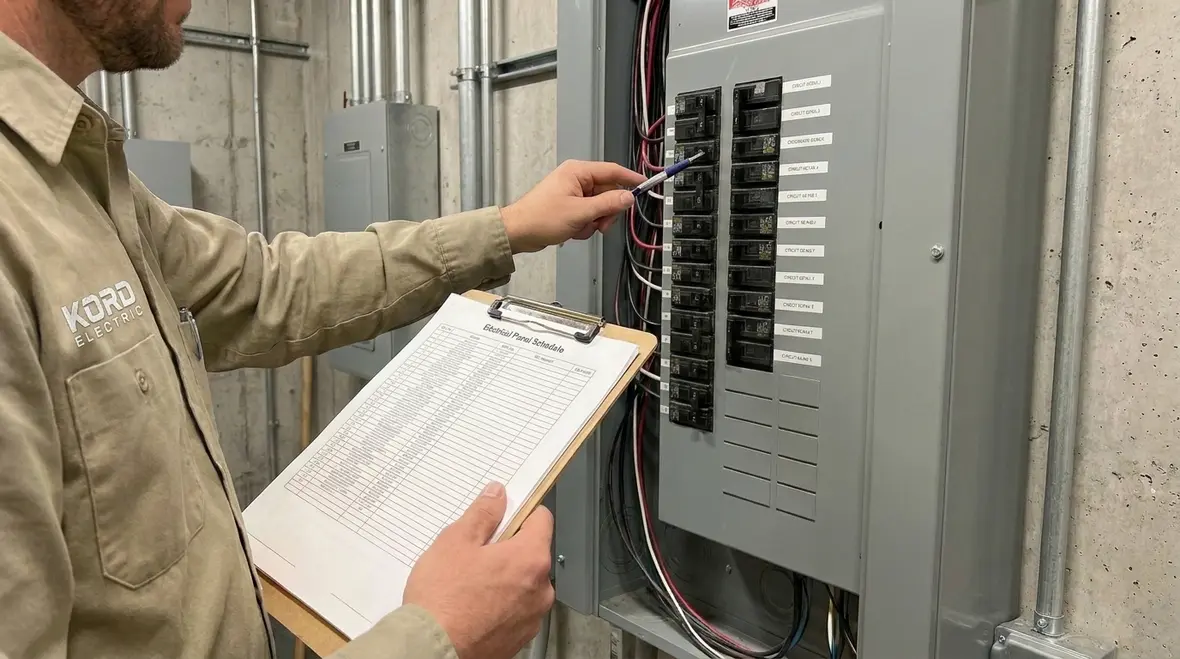
In other words, Section 210.5 is less about quoting exact sentences and more about creating a system that a qualified person can read quickly under real-world pressure. When a chiller is down, an office floor needs power restored, or life safety equipment must stay online during maintenance, readable identification becomes the difference between a calm, planned response and a scramble through a maze of unlabeled breakers.
How We Identify Circuits at Panels, Disconnects, and Overcurrent Devices
Proper identification does not start at the label maker. It starts at the breaker and the wiring it serves. Therefore, we confirm each branch circuit and map it to its corresponding load. This is especially important in commercial offices, manufacturing floors, healthcare facilities, and mixed-use property electrical rooms where loads evolve over time.
Next, we label the device locations. We mark the circuit at the panelboard, and we keep the labeling consistent with the circuit designation used in the facility records. When there are multiple areas or tenants, we ensure the labels identify the correct zone, suite, equipment, or system component. This reduces confusion for future service calls and for anyone who needs to isolate a specific circuit without pulling power that does not belong to the problem.
At the end of this process, we also pay attention to legibility and durability. We do not use “temporary” markings that fade in a few months. We treat identification as a long term operational tool, not a short term compliance checkbox. That means choosing labeling methods and materials that withstand real building conditions: dust, cleaning chemicals, vibration, and the occasional bump from a tool bag or cart.
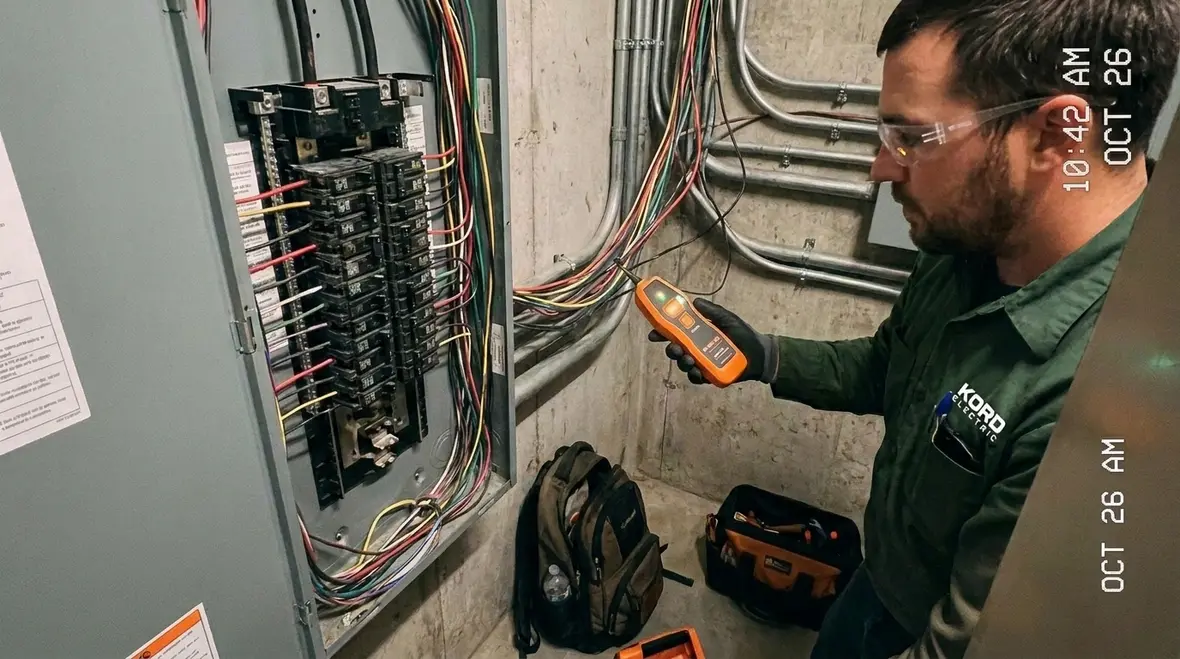
Our teams also verify that identification at disconnects and overcurrent devices lines up with the actual conductor routing. If a circuit feeds a rooftop unit through several junction points, for example, we make sure the label trail does not “disappear” halfway along the path. That way, future technicians can follow the logic without calling the original installer or guessing which conduit is the correct one in a crowded rack.
What Typical Labeling Methods Look Like in Real Buildings
Most facilities do not fail because someone forgot to label once. They fail because labeling drifts over time. New equipment gets added, branch circuits get rerouted, and schedules fall out of sync. As a result, the next service team opens the panel and sees names that no longer reflect reality.
To prevent that drift, we often implement a controlled labeling method. We use clear circuit numbers and descriptions that match the panel schedule. Then, we place identification where it actually helps. For example, we ensure the label helps someone find the correct breaker quickly during maintenance, commissioning, or a response after an alarm event.
In busy environments, clear markings also support safer work practices. And if you have ever watched a rushed electrician flip breakers like they are trying to win a prize from a vending machine, you already understand why identification helps. It turns chaos into a plan.
We also align our branch circuit identification work with larger planning and upgrade efforts. When Kord Electric performs an electrical asset site analysis, a commercial electrical load assessment, or a full electrical infrastructure upgrade planning study, panel schedules and branch circuit maps become part of the data set. That makes it easier to catch overloaded circuits, improperly shared neutrals, or mislabeled life safety loads before they show up as nuisance trips or failed inspections.
Where Confusion Happens and How Our Service Staff Prevents It
Commercial and industrial electrical systems grow in layers. One phase comes online. Then another. Then a tenant renovation. Then an equipment replacement. Therefore, confusion tends to show up in predictable places.
Common issues we look for include mismatched panel schedules, unlabeled breakers, vague descriptions like “misc load,” and identification that does not align with conductor routing. Sometimes a circuit gets moved during construction and nobody updates the label. Other times, labels exist, but they refer to an older system layout that no longer matches installed conditions.
Our expert service staff works differently than teams that simply “label what they see.” We also validate. We trace circuits when needed, review changes in the facility documentation, and then update identification so the information reflects current wiring. During walkthroughs, we explain what we found and why it matters, because good labeling is not just a requirement. It is operational intelligence.
We also coordinate with fire and life safety considerations when they apply to the building’s electrical design intent. For larger properties, that alignment matters because electrical pathways and load behavior can affect overall system performance. We reference code learning resources that support safe design thinking, including our code focused content across Kord Electric and Kord Fire resources, such as how NFPA 70 and NEC guidance is taught for safer facility operation, alongside industry discussions from organizations that focus on critical systems like fire pumps when those systems interact with building power.
Integrating Circuit Identification with Facility Documentation and Maintenance
To keep a building reliable, we treat identification as part of the facility’s electrical documentation system. That means the panel schedule, circuit labeling, and as-built records must agree. When they do, maintenance becomes faster and safer. In addition, inspections and commissioning activities feel less like a scavenger hunt and more like a clear process.
We also support the maintenance workflow. When the facility team calls for service, they need quick clarity: which breaker feeds the targeted equipment, which panel section relates to the area, and how the load is described. When the information matches, the maintenance team can isolate the correct circuit without shutting down unrelated processes.
On major property buildings, this matters even more. Power continuity and operational scheduling depend on accurate electrical knowledge. Thus, we aim to build a labeling system that survives real life: renovations, expansions, and the constant rhythm of commercial operations. Our technicians often connect this effort with broader building electrical system design planning and modern commercial electrical system strategies, so branch circuit identification fits into a complete picture, not an isolated task.
NFPA 70 and NEC Alignment for Commercial Compliance
Our clients often ask how NFPA 70 and NEC branch circuit identification requirements connect to day to day electrical work. The short answer is that NFPA 70 sets the foundation for safe electrical installations, and the NEC provides the structure for how to apply those safety goals. Section 210.5 becomes one of the practical rules that turns code concepts into readable, workable systems.
Therefore, when we design or service commercial and industrial electrical infrastructure, we do not stop at “it passes.” We focus on long term clarity. We also support consistency with facility standards, and we help ensure documentation supports electrical field reality.
For clients who care about broader life safety and system coordination, teams often look to the same ecosystem of resources that discuss code understanding and safe operation. That includes Kord Electric and Kord Fire content about NEC and NFPA 70 concepts and fire-aligned thinking for facility professionals. We also consider related industry perspectives, including education around fire pumps and critical emergency systems, when a project includes those interfaces, so branch circuit identification plays its part in a coordinated life safety strategy.
Quick FAQ for Featured Snippets
Book a Site Walk Through with Kord Electric
At Kord Electric, we support commercial and industrial facilities with dependable electrical service and careful documentation practices. When circuit identification is clear, maintenance runs smoother, troubleshooting gets faster, and safety improves. If your panels look labeled but the schedule does not match the field, we will help you close the gap.
Our team integrates branch circuit labeling with broader electrical planning and reliability work, so updates support projects like electrical infrastructure upgrades, data-driven electrical design, and commercial electrical load assessment. For owners and managers across Southern California, especially those responsible for complex properties, our dedicated Los Angeles County electrical services bring code-aware installation and service together with clear, durable identification.
If your facility needs a fresh set of eyes on panels, documentation, and NEC branch circuit identification requirements, schedule a site walk through. We will trace the circuits, verify the schedules, and build a practical plan to align labeling, wiring intent, and service workflows. Let us turn electrical confusion into something you can trust, every day.
Ready to see how better branch circuit identification and NEC-aligned documentation can support your next upgrade, expansion, or maintenance cycle? Our technicians are prepared to walk your site, explain options in clear language, and help you build a safer, more predictable electrical system.


