
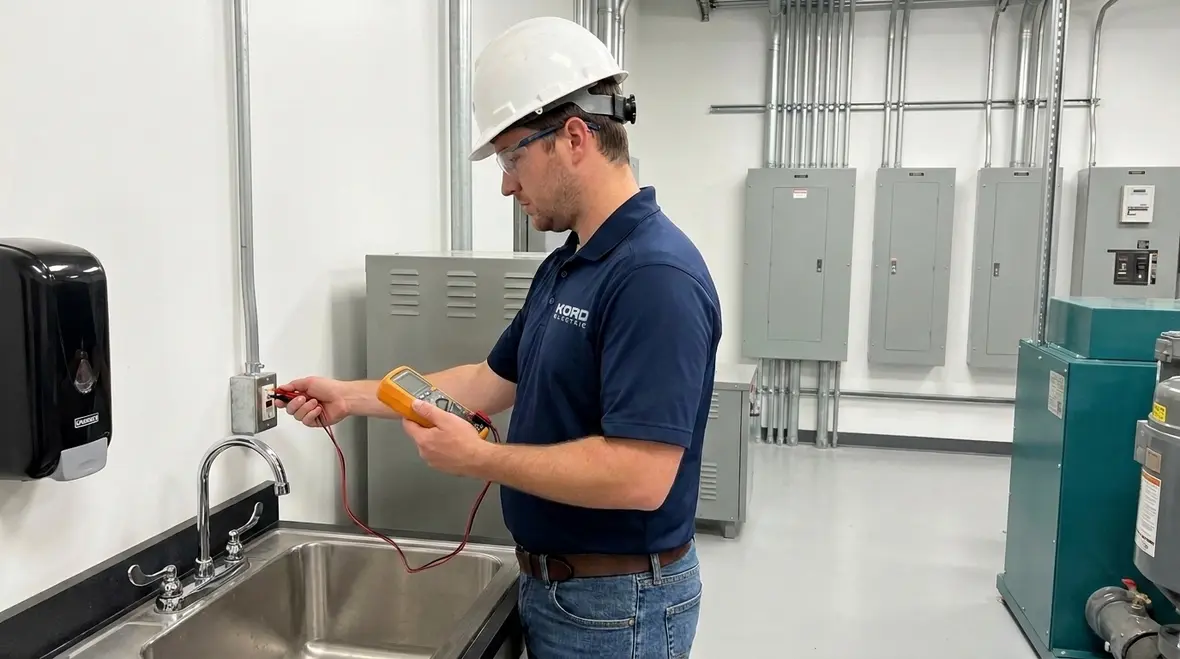
NFPA 70 Section 210.8 GFCI Protection Personnel Requirements in Real Life
NFPA 70 Section 210.8 focuses on GFCI protection for personnel, and we build our recommendations around the NEC GFCI protection personnel requirements early, before anyone signs off on plans. In commercial and industrial facilities, we treat this as a safety system, not a box to check. That means our team points out where GFCI protection must protect people, and we document what we found, what we tested, and what we changed. Then, our expert service staff explains it in plain language, the way a good teacher should, not like a textbook that learned to speak only in footnotes. If you run a major property building, we help you stay compliant while reducing risk, because nobody wants “electrical surprise parties.”
How Section 210.8 fits into the NEC electrical code for 2026
To understand Section 210.8, we first place it inside the larger NEC framework. The NEC sets rules that guide how electrical systems get designed, installed, and inspected. Meanwhile, Section 210.8 focuses on where shock hazards are more likely and where protection needs to act fast. In practice, we follow the NEC logic in order: first identify the circuits and locations, then determine the shock exposure, then choose the protection method. Our technicians approach it with a steady plan, and if the job is complex, we slow down instead of rushing, because rushing turns into callbacks.
In many commercial and industrial projects, the “why” matters as much as the “what.” For example, a wet area, a damp walkway, or equipment near water changes the risk profile. Therefore, Section 210.8 pushes the design toward GFCI devices that help limit the danger during a fault.
If you want a broader walk through of how the National Electrical Code shapes design choices, you can pair this discussion with Kord Electric’s guide Understanding NFPA 70: The National Electrical Code Explained for 2026, which connects code updates to real project planning.
Where GFCI protection for personnel gets required in facilities
Section 210.8 does not treat every space the same. It directs attention to locations that increase shock risk. Our expert service staff often sees the same pattern: someone assumes a space is dry enough because it looks calm in daylight, then the risk shows up at night or during cleaning. So we look at the actual operating conditions, including moisture, routine wash down, and equipment use. Then we map those conditions to the NEC intent.
Common facility areas we evaluate include spaces near sinks, wash areas, outdoors where weather affects equipment, and other zones where a person might contact grounded surfaces during a fault condition. Additionally, we examine how the circuit supplies equipment that can become energized through wiring faults or insulation breakdown.
Next, we confirm whether the existing installation already meets the requirements. If not, we plan corrective action. And if the building is part of a larger property group, we coordinate scheduling so operations keep moving. After all, downtime costs real money.
GFCI devices, circuit types, and what gets tested on site
GFCI protection has different implementation options, and we guide clients through them using practical criteria. For instance, some applications use receptacle level GFCI, while others require upstream GFCI protection for a circuit. Also, we look at whether the equipment needs coordination with other protective devices, so the system trips when it should, not when it feels like it. (Electrical work can be dramatic, but we prefer it to be predictable.)
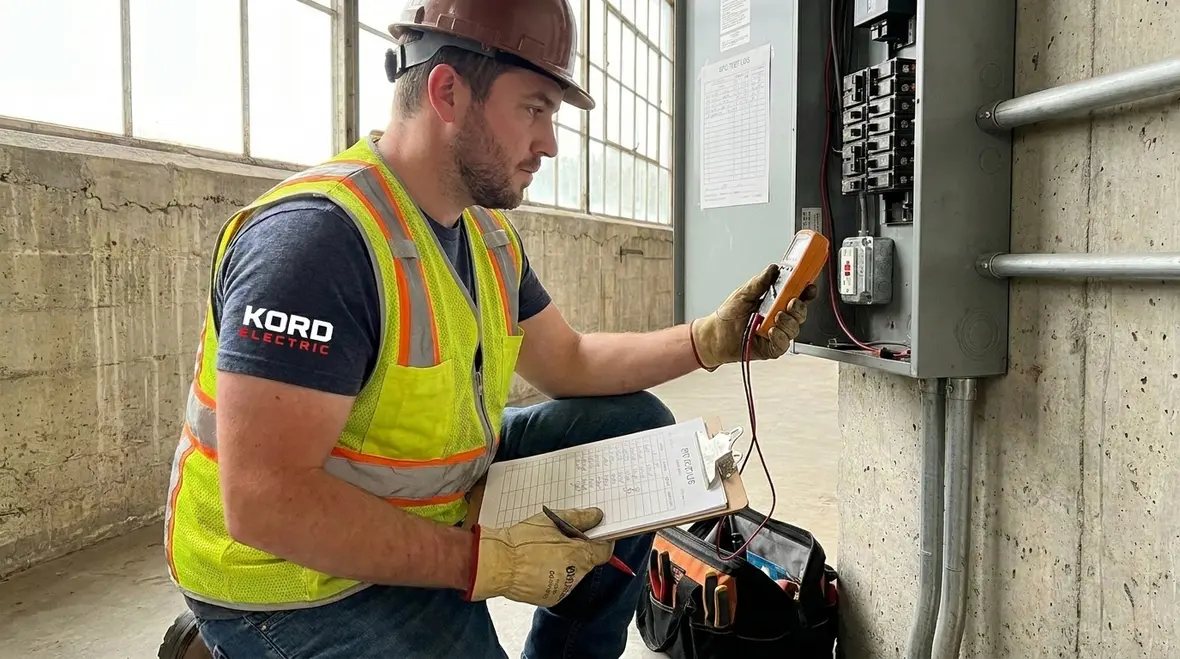
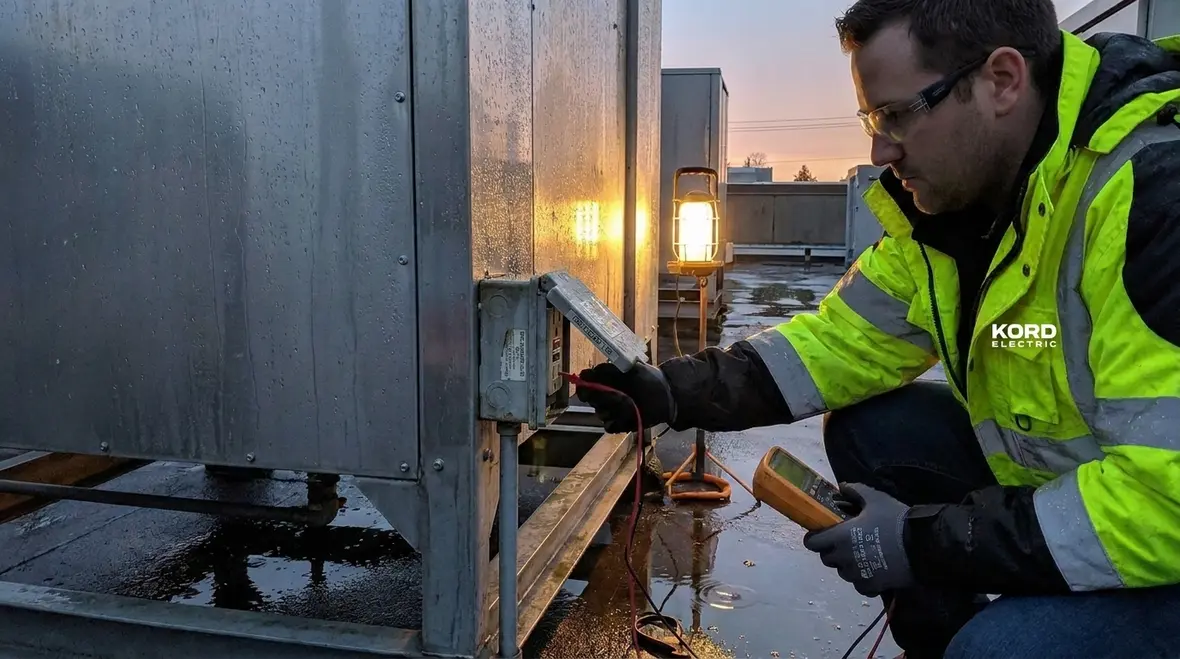
Once we identify the correct approach, our technicians test the installation with a clear method. They verify device function, confirm wiring integrity, and validate that the protection path operates as expected. Then we record results in a way that building owners and facility managers can understand. This matters for commercial and industrial environments, where safety documentation helps maintain compliance and supports future inspections.
Just as importantly, we explain what the “test” button does and what it does not do. A GFCI test confirms operation under a fault simulation, yet it does not replace proper installation checks. Therefore, we never treat testing as a substitute for wiring quality.
Common mistakes we see in commercial and industrial installs
Over time, our team at Kord Electric has seen a few recurring mistakes that turn into safety risks or inspection failures. First, some installations place protection in the wrong location because the plan set and field conditions did not match. Next, others use equipment or materials that do not align with the required method for personnel protection. Then there are jobs where someone assumes “near” equals “protected,” and that assumption creates a gap in coverage.
Another frequent issue involves maintenance. GFCI devices can get damaged, painted over in ways that affect the test indicators, or simply ignored until the facility experiences a trip. When that happens, the building team may reset and continue, and the underlying fault risk stays hidden. So we train facility staff on what to do when a trip occurs. Moreover, our expert service staff tells them when it is time to call for a deeper electrical evaluation instead of repeating resets.
Finally, we notice jobs that lack proper labeling. In a major property building, electricians, technicians, and facility managers share responsibility. If the circuit identification is unclear, response time slows down when something trips. Therefore, we label clearly and document the logic behind the GFCI protection personnel setup.
Planning a compliant retrofit without shutting down operations
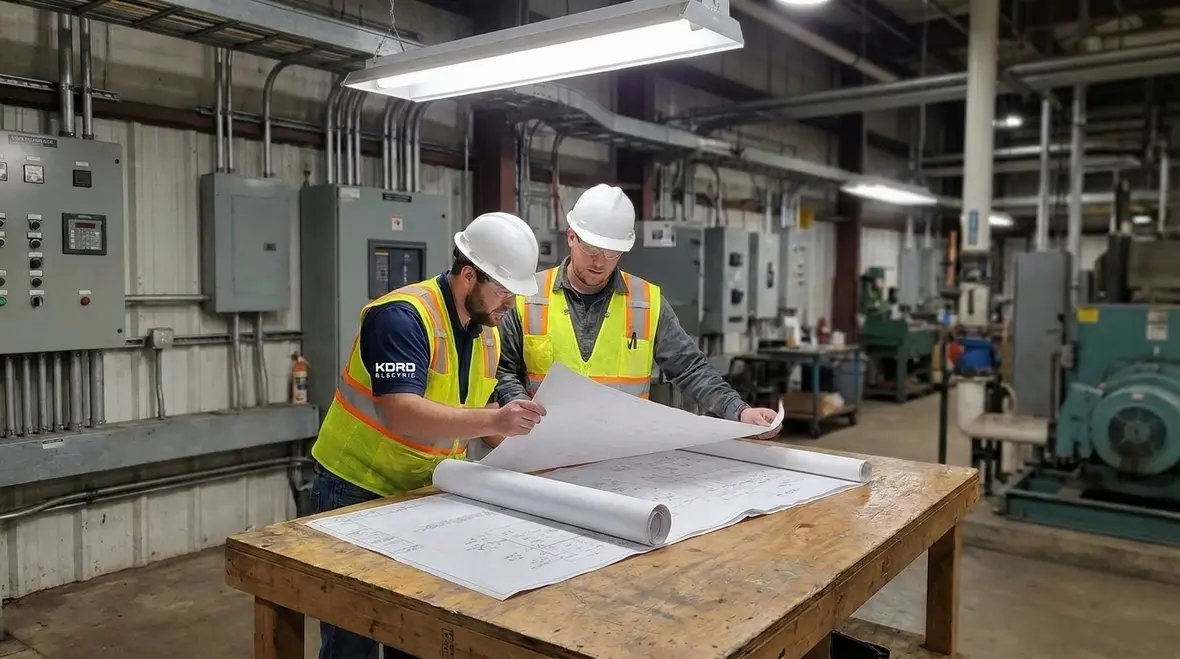
Retrofitting GFCI protection personnel requirements requires more than swapping devices. We plan it like a project, because commercial and industrial facilities need continuity. Our approach starts with a site walk and an electrical assessment. Then we review drawings and compare them to what exists in the field. After that, we develop a phased plan so critical systems stay stable.
We also coordinate work with facility schedules. For example, we may perform certain tasks after peak production hours, during maintenance windows, or in sections that can be isolated. In addition, we coordinate with stakeholders so the job stays clear. Our technicians communicate before they work, and they keep the scope tight.
Then comes the compliance step. We verify that every circuit and location meets the required intent, and we document the changes so the facility can maintain records. If you manage a major property building, we understand how inspections and tenant operations overlap, so we build our retrofit plan to reduce disruption.
How our team at Kord Electric and Kord Fire supports NEC safety
Kord Electric supports commercial and industrial clients with electrical solutions grounded in NEC principles, and we keep safety at the center of the conversation. Our field technicians do more than install. They explain. They walk clients through what the code asks for and what the building needs in order to meet those goals. When our expert service staff speaks with facility managers, they use plain language, clear documentation, and a calm tone that prevents misunderstandings.
Additionally, we align with broader life safety thinking, because electrical hazards often show up alongside other building risks. For that reason, we coordinate with the kinds of safety considerations discussed across our related resources and partners, including Kord Fire content such as NFPA 70: All About The National Electrical Code (NEC) 2026 and other fire and life safety guidance. We also look to reputable safety organizations and code education sites to stay sharp on how NEC rules connect to real systems.
If you want a contractor that treats code compliance as a living standard, not a one time deliverable, that is what we aim to deliver. And when your project grows beyond one building, our broader Los Angeles County electrical services help connect NEC-driven upgrades, maintenance, and emergency response across your full portfolio.
FAQ: quick answers about NEC Section 210.8 and personnel GFCI protection
Facility teams often ask similar questions when they first review NEC 210.8 requirements. These fast answers help align expectations before we walk the site and design the details.
Conclusion: get NEC 210.8 right before the inspection day gets loud
We help commercial and industrial facilities handle NEC Section 210.8 the right way, with careful site review, correct GFCI protection planning, and field testing that holds up under inspection. Our technicians explain the process clearly, and our expert service staff supports your facility team after installation, including what to do when a device trips. If your building needs a retrofit, a compliance check, or a safer upgrade, call Kord Electric and we will map the path forward. Let’s keep the surprises for your calendar, not your electrical system.
If you are already reviewing broader NEC strategy for your facilities, you can also explore how GFCI planning ties into topics like scope, enforcement, and wiring integrity across the rest of your system by pairing this article with Kord Electric and Kord Fire resources on NFPA 70 and 2026 NEC application requirements.


