

NEC Branch Circuit Voltage Limitations in NFPA 70 210.6
When commercial and industrial teams plan wiring, they often run into one quiet rule that can save real headaches later: NEC branch circuit voltage limitations. In NFPA 70 Section 210.6, the code limits the voltage drop and related branch circuit expectations so the equipment you pay for actually performs like the spec sheet promised. And yes, we have seen what happens when people ignore those limits. The lights flicker, the motors complain, and someone always says, “It worked fine last year,” which is the electrical version of saying, “I swear it was fine yesterday” right before a storm.
At Kord Electric, our expert service staff and field technicians explain these rules in plain, practical terms. Then we help teams design, inspect, and maintain systems that meet the code and stand up in the real world.
In this article, third person guidance is used, and the details stay focused on the commercial and industrial facilities and major property buildings that Kord Electric serves. And we will cover how Section 210.6 connects to safe operation, stable performance, and fewer costly surprises during commissioning and service calls.
Why NFPA 70 Section 210.6 matters to commercial wiring
NFPA 70 Section 210.6 addresses how branch circuits behave when voltage and load conditions change. Even when conductors are sized correctly, poor planning can still push the system toward problems like excessive voltage at the load, low voltage under starting conditions, or equipment stress over time.
To keep it simple, this section exists because voltage is not a static thing. It shifts based on circuit length, conductor resistance, load current, and starting behavior, especially in commercial environments where motors, pumps, and variable loads run in cycles. Therefore, Section 210.6 supports the bigger goal: equipment should run within a range it can handle without performance drift.
When our technicians review branch circuit design, they often look for three things first. First, they check the relationship between the supply voltage and the equipment rating. Next, they confirm the wiring method and conductor characteristics match the calculated expectations. Then, they verify that the installation matches the assumptions used in the design. Because if the design assumed one condition and the field delivered another, the code intent gets lost.
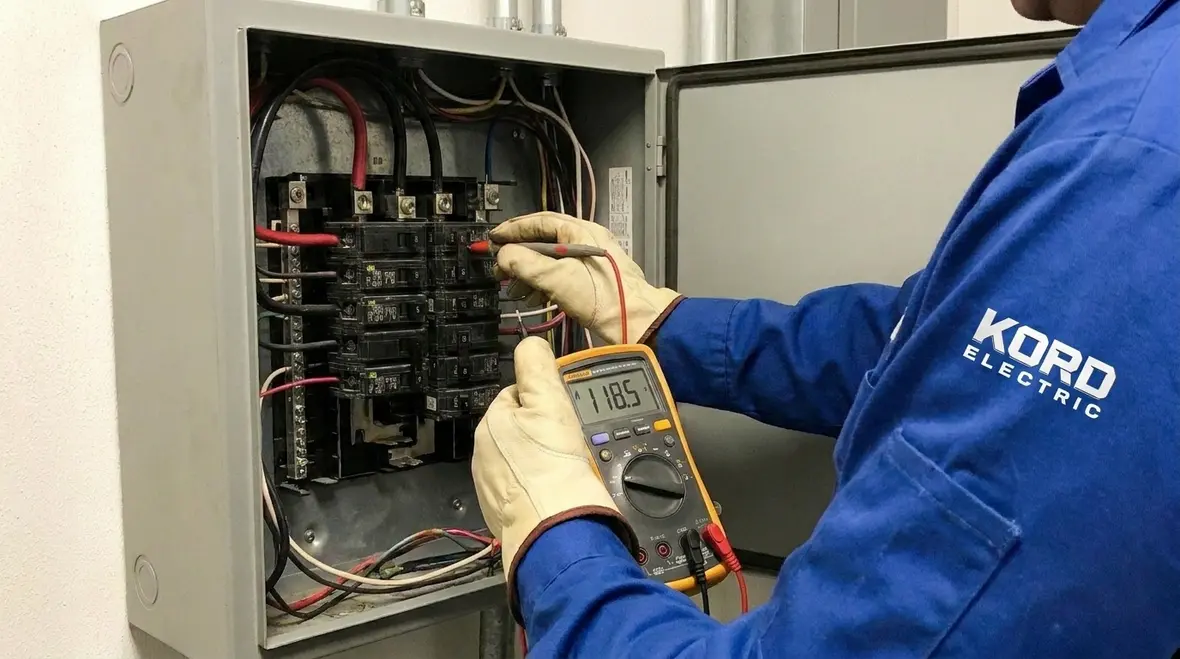
For facility leaders who want a broader code primer alongside Section 210.6, Kord Electric’s resource Understanding NFPA 70: The National Electrical Code Explained for 2026 connects the high level NEC structure to real-world decisions about branch circuits, distribution, and long term compliance.

How NEC branch circuit voltage limitations affect performance and safety
In many commercial and industrial sites, electrical systems run longer hours and under heavier duty cycles than people realize. Consequently, small electrical issues compound into big ones. The NEC branch circuit voltage limitations concepts in Section 210.6 help prevent that by keeping branch circuits aligned with what connected equipment expects during normal operation and typical load changes.
Our expert service staff explains it this way: voltage issues do not always “show up” immediately. However, they can increase heat, reduce motor torque, and cause contactor chatter. Over time, those effects shorten equipment life. And when equipment fails, facilities pay twice, once for the downtime and again for the replacement.
Additionally, stable branch circuit behavior supports safer operation. Stable voltage helps protective devices operate as intended. It also supports consistent performance in lighting, controls, and process equipment. In major property buildings, where tenant spaces depend on reliable systems, the value is not theoretical. It becomes the difference between “minor inconvenience” and “full service interruption.”
There is also a practical side. If teams plan for proper voltage limitations early, commissioning becomes smoother. If they do not, commissioning turns into a detective show where everyone is chasing a clue that keeps moving. The villain is voltage, and it always escapes when someone opens the panel without reading the problem first.
What engineers and facility teams should verify during design
Section 210.6 does not live alone. It connects with broader NEC rules and the way branch circuits are laid out. Therefore, teams should verify design assumptions before installation starts.
1) Equipment nameplate ratings and utilization voltage
Before finalizing wiring, facility teams should confirm the equipment is rated for the expected supply conditions. Then they should confirm the site transformer and distribution setup matches. If the equipment expects one voltage and the system delivers another, no amount of wishful thinking fixes it.
2) Conductor sizing, length, and wiring method
Voltage behavior depends on conductor resistance and circuit length. Even where equipment runs, voltage can shift under load. Thus, our technicians often look beyond “good enough wire size” and focus on what the electrical model predicts at the far end of each branch circuit.
3) Load characteristics
Motors and pumps behave differently from steady loads. Starting currents can pull voltage down, even if the system normally handles other loads well. So the design should account for starting and cycling patterns that match the facility’s real operating schedule.
4) Panelboard and distribution details
Branch circuit terminations, load connections, and device ratings also matter. If someone swaps components or changes distribution routing during field work, the voltage plan can drift. As a result, Kord Electric emphasizes review and coordination for commercial and industrial projects and major property buildings.
To be clear, our approach stays practical. We do not just “talk code.” We verify the system as it is, then explain what the numbers mean in everyday terms, so the facility team can make confident decisions.

Field coordination: where projects commonly go wrong
Even when a design starts correct, field realities can change outcomes. That is why Kord Electric keeps strong communication between design intent and installation execution. Our technicians and expert service staff explain these risk points early, so the job does not turn into a late-stage rework marathon.
Here are common problem areas we see in commercial environments:
- Unplanned routing changes
Longer runs than planned increase conductor resistance and can push voltage out of desired ranges. - Improper connections or terminations
Loose connections can add resistance and heat, which then changes how voltage behaves at the load. - Load substitutions during buildout
Replacing equipment with a different motor, controller, or power draw can shift load profiles. - Commissioning without voltage checks
If teams do functional testing but skip meaningful voltage verification under operating conditions, issues often stay hidden until later.
And here is the pop culture truth: it is like the final scene in a thriller where someone realizes the bad guy was in the room the whole time. Voltage problems hide in the “later” moment. That later moment usually shows up when people are least ready, like during peak production hours or a critical building event.
Kord Electric helps teams avoid that pattern by bringing clear explanations and hands on verification. Our goal stays simple: protect uptime, protect equipment, and protect the schedule.
Using code references and staying current with NEC updates
Electrical teams often ask how they should handle ongoing NEC updates and how to interpret code references correctly. In practice, they need consistent guidance across design, installation, inspection, and maintenance.
Kord Electric supports that by aligning field work with the intent of the NEC and by explaining how rules connect. For example, Kord Electric draws on broader NEC context covered in its educational resources and code focused guidance. When those resources explain the National Electrical Code for commercial users, they also emphasize how safety and performance depend on correct voltage behavior at branch circuits.
Additionally, our knowledge base stays supported by industry wide references, including materials tied to NFPA 70 and system level expectations. Kord Fire and related educational resources also focus on code understanding, which helps teams treat compliance as a real process rather than a last minute checklist.
So, in real terms, “staying current” means field teams verify the latest standards and confirm project requirements match the intended compliance path. Then they document findings so maintenance and future upgrades do not repeat the same mistakes.
Maintenance and service: keeping voltage behavior stable over time
Voltage issues often grow quietly. Therefore, service plans should include verification steps that match the site’s operating patterns, not just a quick visual inspection.
Our expert service staff recommends a service mindset that fits commercial and industrial facilities and major property buildings:
- Monitor and trend
Voltage behavior can shift due to equipment aging, changed loading, or new tenants and expanded operations. - Inspect terminations
Heat and vibration can alter connection integrity. Tight checks and targeted verification protect the circuit from creeping problems. - Validate under load
It is not enough to measure when the building is quiet. Our team explains why measurements under actual operating conditions reveal the truth. - Coordinate equipment upgrades
If the facility adds equipment, it changes the load profile and can affect how voltage behaves at branch circuits.
In addition, major property buildings often experience phased improvements. That makes it even more important to keep records of what was changed and how it affects system behavior. Kord Electric supports commercial teams with service communication that keeps everyone on the same page, so upgrades do not accidentally push circuits beyond what the equipment expects.
For teams planning broader system changes, resources like Kord Electric’s guides on modern electrical systems for commercial buildings and building electrical system design help connect branch circuit details to transformers, feeders, and long range capacity planning, so NEC branch circuit voltage limitations fit into a full system story instead of a one-off calculation.
When projects grow more complex, especially across Los Angeles County and greater Southern California, facilities often pair Section 210.6 reviews with full Los Angeles County electrical services support from Kord Electric. That way, voltage checks, load calculations, and coordination with local inspectors all move together instead of in disconnected steps.
FAQ: NEC branch circuit voltage limitations for Section 210.6
Final word from Kord Electric
Kord Electric helps commercial and industrial facilities and major property buildings handle NFPA 70 requirements with clarity, not confusion. Our technicians and expert service staff explain how NEC branch circuit voltage limitations and NFPA 70 Section 210.6 support reliable equipment performance in the real world. If your project needs a code aligned design review, commissioning support, or service planning, we can help you verify voltage behavior before problems show up. Reach out to Kord Electric today and keep your electrical system calm, stable, and ready for the next long day of operation.
For renovations, expansions, and new construction that must align NEC branch circuit voltage limitations with bigger picture goals like capacity, redundancy, and life safety systems, Kord Electric’s commercial electrical services team brings together code knowledge, field experience, and a service mindset that keeps projects moving without surprises.


