
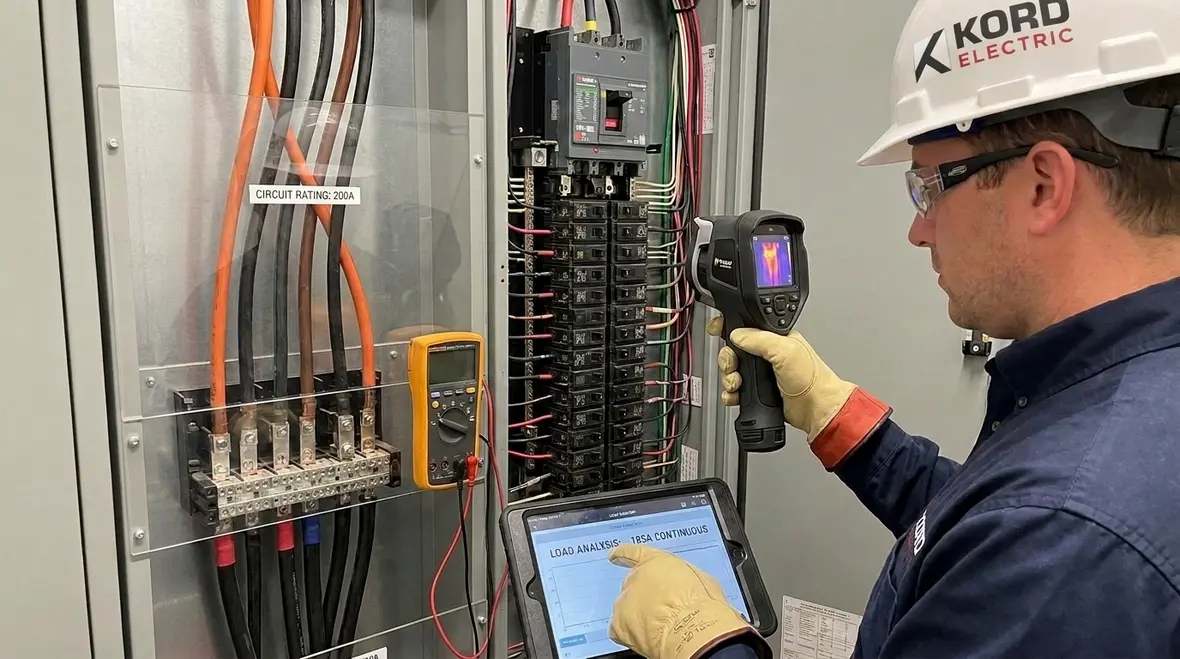
NEC Branch Circuit Rating Rules Under NFPA 70 210.18
NFPA 70 Section 210.18 sets clear NEC branch circuit rating rules for sizing conductors, overcurrent protection, and how we treat loads that do not run the same way every day. In other words, the code helps us avoid the classic problem: a system that looks fine until the real world shows up, wearing a hard hat and asking for more. At Kord Electric, we support commercial and industrial facilities and major property buildings, and we guide owners, facilities teams, and electrical contractors through the rules in plain language. Our technicians and expert service staff explain what the code means in the field, not just what it says on paper. And yes, we will also tell you when “it should be fine” is not a plan.
Why NEC branch circuit rating rules matter in commercial and industrial buildings
When a building uses many circuits across offices, plant areas, parking structures, and life safety systems, the electrical design has to stay steady under pressure. First, Section 210.18 addresses how branch circuits get rated based on the conductors and the equipment they feed. Then, it limits unsafe combinations where the wiring might handle a small part of the load in one moment, but not the full conditions that can occur later.
To keep operations reliable, we focus on the actual job conditions: motor starting surges, intermittent heating loads, and equipment that draws power for short cycles. Moreover, we do not treat each circuit as an isolated island. Instead, we connect the dots between overcurrent protection, conductor temperature limits, and the nameplate ratings on the connected equipment.
In practice, the NEC branch circuit rating rules help prevent three common failures. The first is nuisance trips that shut down production. The second is overheating at terminations, which turns connections into slow cookers. The third is undersizing, which can age insulation faster than planned. And because nobody wants to explain to a manager why the system failed, we plan carefully before anyone calls it a “surprise.”
What Section 210.18 covers, in field-ready terms
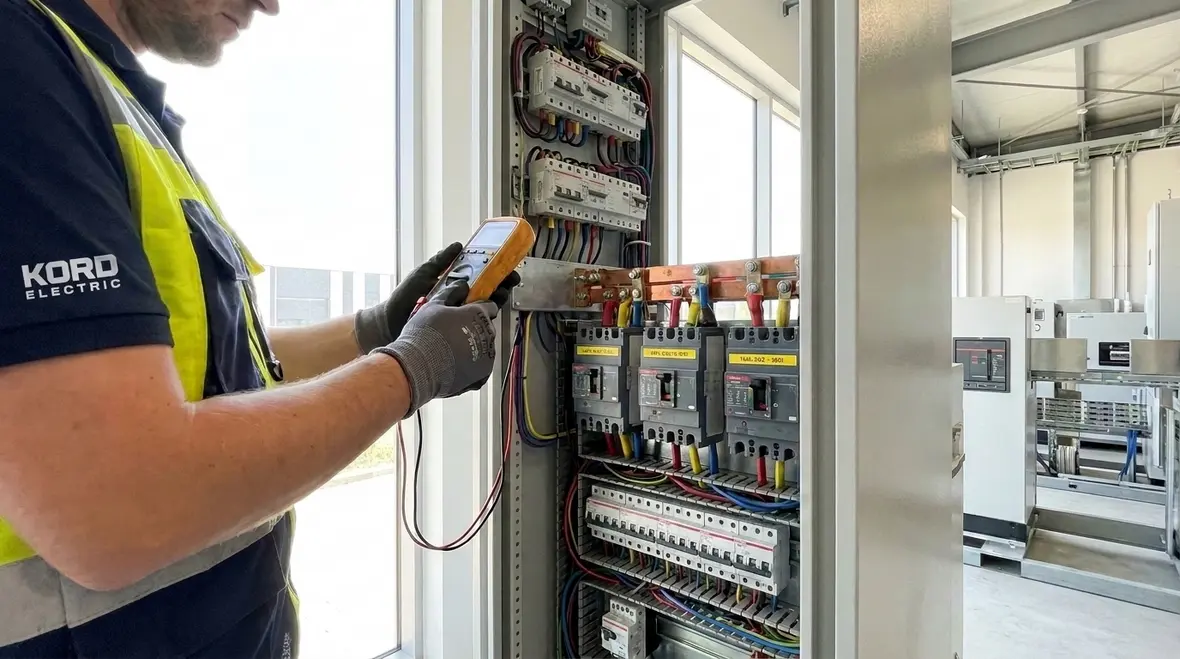
Section 210.18 lays out rules for rating branch circuits and overcurrent devices when there are different kinds of loads and conductors involved. We apply it when designing new electrical systems, upgrading existing ones, and reviewing change orders for major facilities.
Here is the key idea: the rating of the branch circuit must match the load in a way that protects conductors and equipment. Additionally, when equipment has nameplate ratings that do not align with the actual connected use, we verify how the circuit will operate. That includes looking at conductor insulation temperature ratings, installation type, and the way the load behaves.
Our expert service staff often explains it like this. If the circuit is a truck, Section 210.18 asks whether the engine, tires, and brakes can handle not just the average trip, but also the steep hill. We do that same thinking with electrical components.
Balancing conductors and overcurrent protection without guesswork
Commercial and industrial sites run on schedules, but the electrical load does not always obey a calendar. For example, a manufacturing line may draw peaks during start up, and HVAC cycles can change load patterns with weather and occupancy. Therefore, we avoid shortcuts like “rounding down” conductor sizes or choosing overcurrent protection that assumes a lower demand than what actually happens.
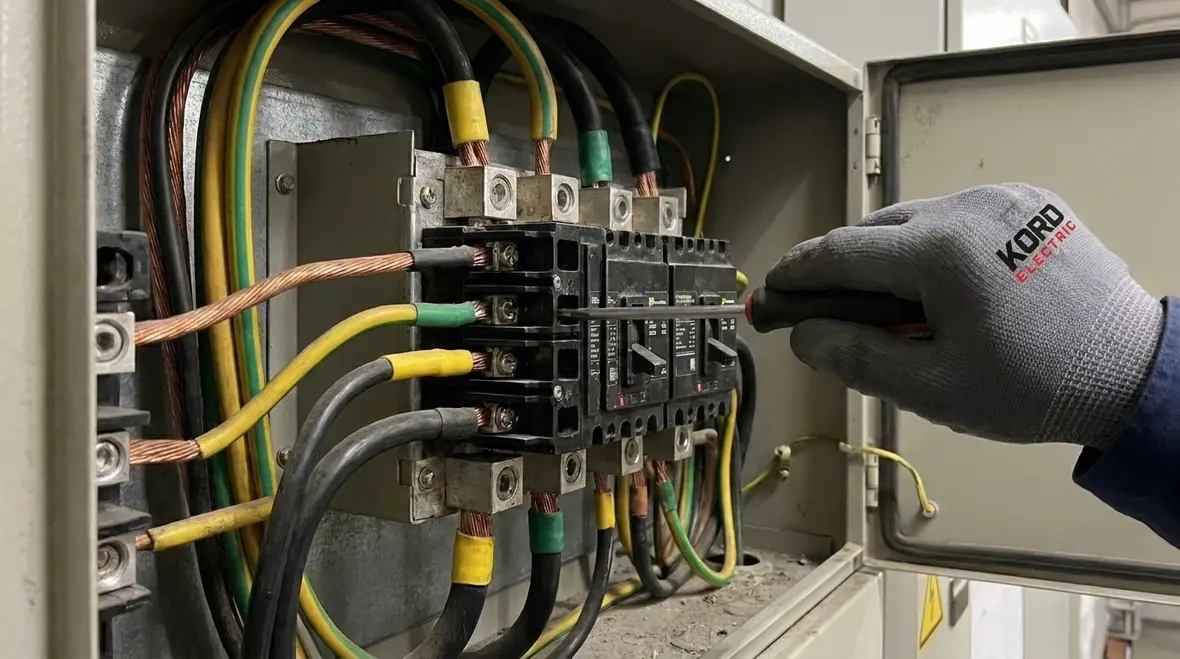
Section 210.18 ties the branch circuit rating to the conductor rating and the overcurrent protection arrangement. That means we do not just pick a breaker because it fits in the panel. Instead, we confirm the conductor ampacity under the installation conditions and verify the overcurrent device rating aligns with the design.
To keep projects smooth, we build our review process around documented equipment data. We check manufacturer requirements, circuit conductor details, and any derating needs. Then we apply the rules to ensure the NEC branch circuit rating rules are met throughout the distribution path.
How we handle continuous, noncontinuous, and cycling loads
Facilities rarely have perfectly steady power use. Some loads operate continuously, while others run in cycles. Even if two loads share the same voltage and similar nameplate amps, their behavior can differ. That is why we treat load classification seriously.
First, we identify which loads are continuous, which are noncontinuous, and which are intermittent or motor related. Next, we map those loads to the correct circuit rating and protection requirements. Then we review whether the branch circuit has any conductors shared among different equipment loads, since mixed use can change how we interpret safe rating and protection.
We also consider how circuit operating conditions influence conductor temperature and insulation life. In the field, this matters because a properly protected circuit can still run hot if the design ignores installation realities. And when a system runs hot long enough, even good materials do not last forever. Like a sitcom character who skips safety training, the circuit keeps going… until it does not.
Our technicians explain these patterns during design support and during field reviews, so facilities teams understand what we do and why. When people know what to expect, they ask better questions, and the whole process moves faster.
Dual-column walkthrough: a practical rating review approach
Below is how we approach a branch circuit rating review for commercial and industrial facilities. We keep it systematic, and we document the logic so other teams can audit it later.
| Step | What we verify |
|---|---|
| 1. Identify the loads | We list equipment on the circuit, including motor loads, heating elements, controls, and any intermittent devices. Then we confirm whether usage is continuous, noncontinuous, or cycling. |
| 2. Confirm conductor details | We check conductor material, insulation rating, ambient conditions, and installation method. We also account for derating factors that affect ampacity. |
| 3. Match overcurrent protection | We ensure breakers or fuses protect conductors in the way Section 210.18 requires, based on the circuit and the load characteristics. |
| 4. Validate terminations and panel conditions | We inspect connection quality and panel environment. Even when the math works, poor terminations still create heat and risk. |
| 5. Confirm labeling and operating intent | We review labeling, as-built documentation, and how the facility team expects the circuit to operate day to day. |
When we complete this, we also look for mismatches between drawings and actual installed conditions. After all, the best plan in the world loses to a loose lug in the real world.
Coordination and commissioning for major property buildings
For major property buildings, the electrical system often includes multiple floors, zones, and life safety loads. That complexity increases the chance that one circuit change creates ripple effects elsewhere. Therefore, we coordinate branch circuits with the upstream protection strategy and verify how the system behaves under realistic operating conditions.
During commissioning support, we focus on outcomes. We confirm voltage stability, verify load behavior, and monitor for symptoms like selective tripping patterns that do not match the design intent. Then we check that the rated components operate within safe ranges.
Just as important, we communicate clearly with the facilities team. We do not dump a report on someone and disappear. Instead, our technicians walk through findings and explain how the design meets code requirements, including the branch circuit rating intent found in NFPA 70 Section 210.18. If something needs correction, we propose practical options, aligned with commercial and industrial operating constraints.
And if you have ever watched a movie where everyone ignores the “red wire,” you already understand why we take this seriously. Electrical systems do not forgive mystery decisions.
Common mistakes we see, and how we prevent them
Even in well-run projects, a few missteps show up again and again. First, teams sometimes rely on outdated load schedules or assume equipment draws the same current as the prior installation. Then, they size conductors and protection based on assumptions rather than verified nameplate data and operating patterns.
Second, people occasionally overlook installation details that affect ampacity. For example, ambient temperature, conduit fill, insulation ratings, or routing changes can shift safe conductor capacity. If that happens, the branch circuit rating intent gets compromised.
Third, we see coordination problems when someone adds equipment to an existing circuit without reviewing how Section 210.18 applies to the new load mix. That can lead to overheating, nuisance tripping, or premature breaker wear. Finally, labeling and documentation sometimes lag behind field changes, which makes future troubleshooting harder and more expensive.
Our approach helps stop these issues early. We use field checks, verified equipment data, and clear communication with contractors and facility stakeholders. That is how we keep uptime strong and avoid the kind of surprises that turn into after-hours phone calls.
How NEC branch circuit rating rules connect to broader NFPA 70 guidance
Branch circuit decisions do not live alone in the code book. When we apply NEC branch circuit rating rules under Section 210.18, we also reference related NEC topics like wiring integrity, overcurrent protection coordination, and maintenance planning. That way, the circuit you approve today still aligns with the system you depend on tomorrow.
For facility teams that want a deeper primer on how the National Electrical Code shapes everyday design choices, we often point them to our broader NEC resources, including the guide Understanding NFPA 70: The National Electrical Code Explained for 2026. That article walks through the bigger picture behind NFPA 70, so this detailed branch circuit work fits into a clear, code-based strategy.
FAQ about NFPA 70 Section 210.18 and branch circuit ratings
How this ties into electrical services for complex facilities
Branch circuit reviews often uncover bigger questions about system capacity, expansion plans, and long-term maintenance. When we see recurring issues across multiple panels or floors, we help facilities step back and look at the broader distribution system, not just one troublesome breaker.
For facility leaders across Southern California and beyond, that often means pairing NEC branch circuit rating rules with a wider strategy for upgrades, testing, and documentation. If you are planning larger work in jurisdictions like Los Angeles County, coordinating that plan with experienced Los Angeles County electrical services support can keep permitting, inspections, and long-term reliability aligned instead of feeling like three separate projects.
Final word from Kord Electric
We know branch circuits can feel like boring plumbing, until someone tries to run a facility and the power says no. At Kord Electric, we help commercial and industrial sites and major property buildings design and verify branch circuit rating decisions with a calm, code-based process grounded in NFPA 70 Section 210.18. If you are planning an upgrade or need a rating review, contact us. Our technicians will walk through the details, explain what matters, and help you move forward with confidence.


