
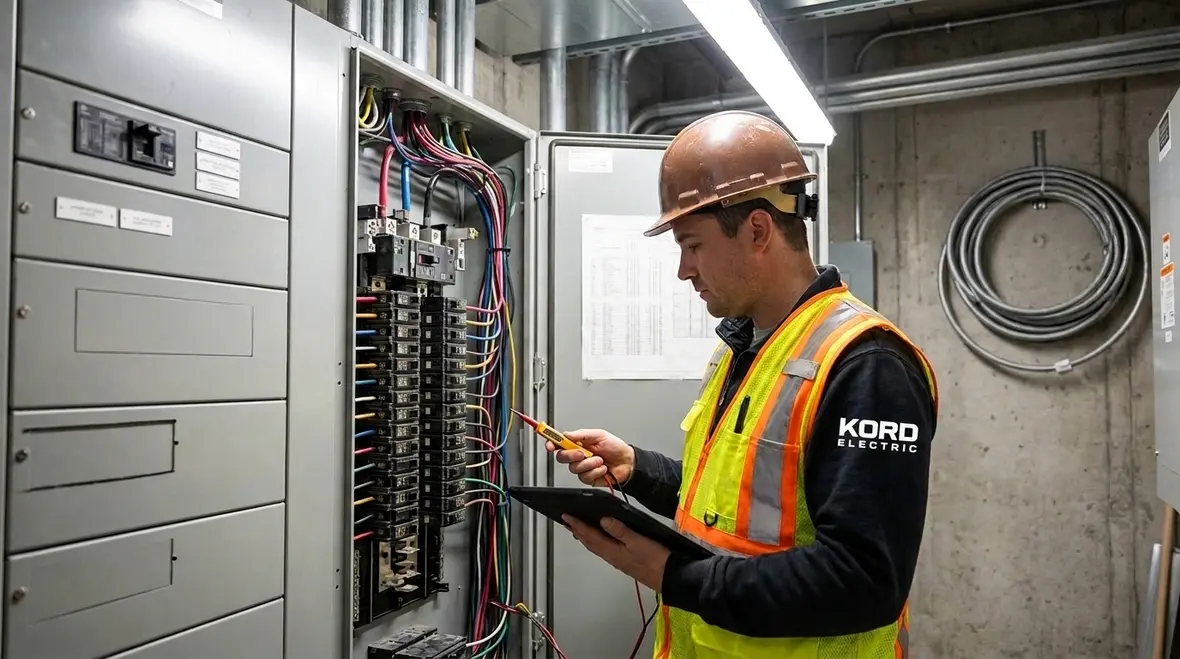
NFPA 70 Section 210.14 and NEC Specific Purpose Branch Circuits
Kord Electric serves commercial and industrial facilities and major property buildings, and we take your electrical planning seriously from day one. When we review NEC specific purpose branch circuits for a project, we focus on the right circuit type, the right rules, and the right end use. We also walk through NFPA 70 Section 210.14 with our clients in plain language, so no one feels like they are reading a phone book written by a robot. And yes, our technicians and expert service staff do explain the “why” behind the code, not just the “what,” because a working system beats a perfectly memorized diagram every time.
In this guide, we explain what Section 210.14 does, how it affects design and field work, and how you can avoid the common mistakes that show up during inspections. We will keep it clear, practical, and built for the realities of commercial and industrial work.
How NFPA 70 Section 210.14 controls specific-purpose wiring in buildings
NFPA 70 is the NEC, and Section 210.14 spells out specific-purpose branch circuit requirements. In simple terms, the rule tells us when a circuit must serve a defined purpose only, and how the wiring must match that purpose. This matters in commercial and industrial facilities where loads can be critical, access can be limited, and downtime is expensive.
For example, when a circuit is intended for a specific function, the code expects it to stay dedicated. This reduces the chance that someone later repurposes the circuit for a general plug load or other unrelated use. In other words, the circuit is like a specialist worker, not the person who gets handed every task because “they seem handy.”
Now, we should also note that Section 210.14 fits into a bigger picture. Other NEC sections cover overcurrent protection, conductor sizing, grounding, and wiring methods. However, Section 210.14 plays a key role by deciding when the circuit must be dedicated based on the function it supports.
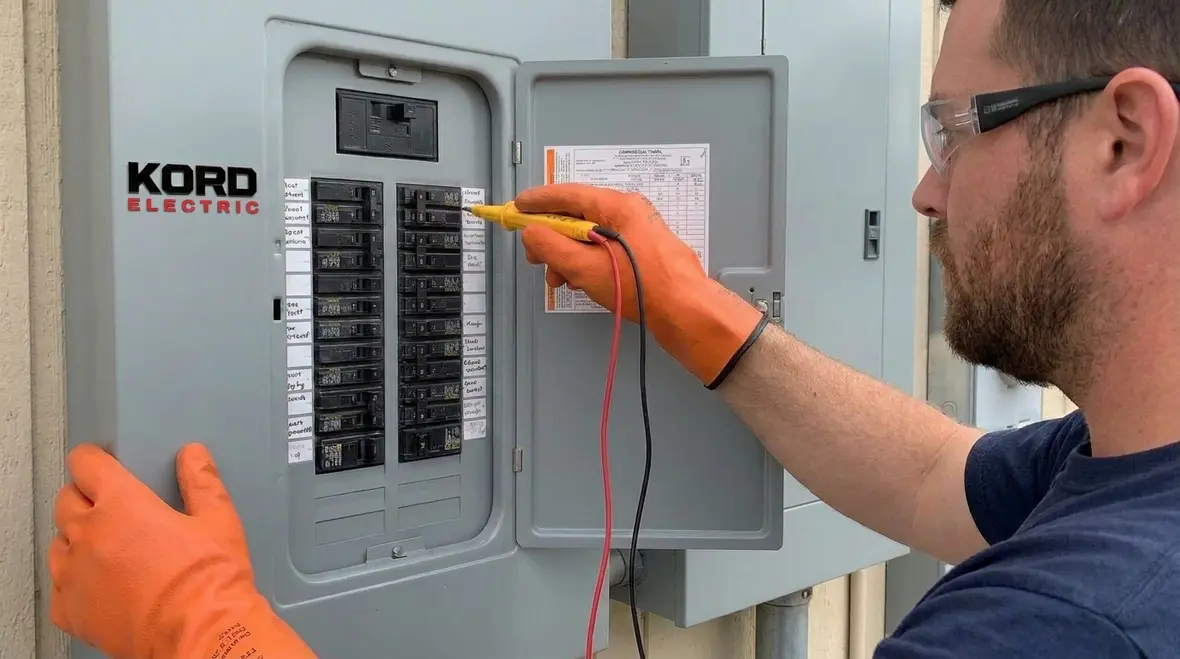
What counts as a “specific purpose” under the NEC
When people hear “specific purpose,” they often picture only emergency loads. That is not always the case. Section 210.14 covers a range of circuit categories where the NEC expects separation from general circuits. The goal stays consistent: reliable operation for a known function.
In practice, we see this in places like:
Equipment that needs stable power for safe operation or proper control
Systems that rely on dedicated wiring paths for correct performance
Areas where code wants the wiring to remain isolated for clear troubleshooting and safety
Then there is the human factor. Even when teams do great work at commissioning, future changes happen. Someone later adds equipment, shifts usage, or “borrows” circuits because the panel schedule is outdated. Because the circuit served a specific purpose, Section 210.14 helps prevent that kind of drift. Our field staff explains this during project closeout because it is one thing to install correctly and another to keep it correct years later.
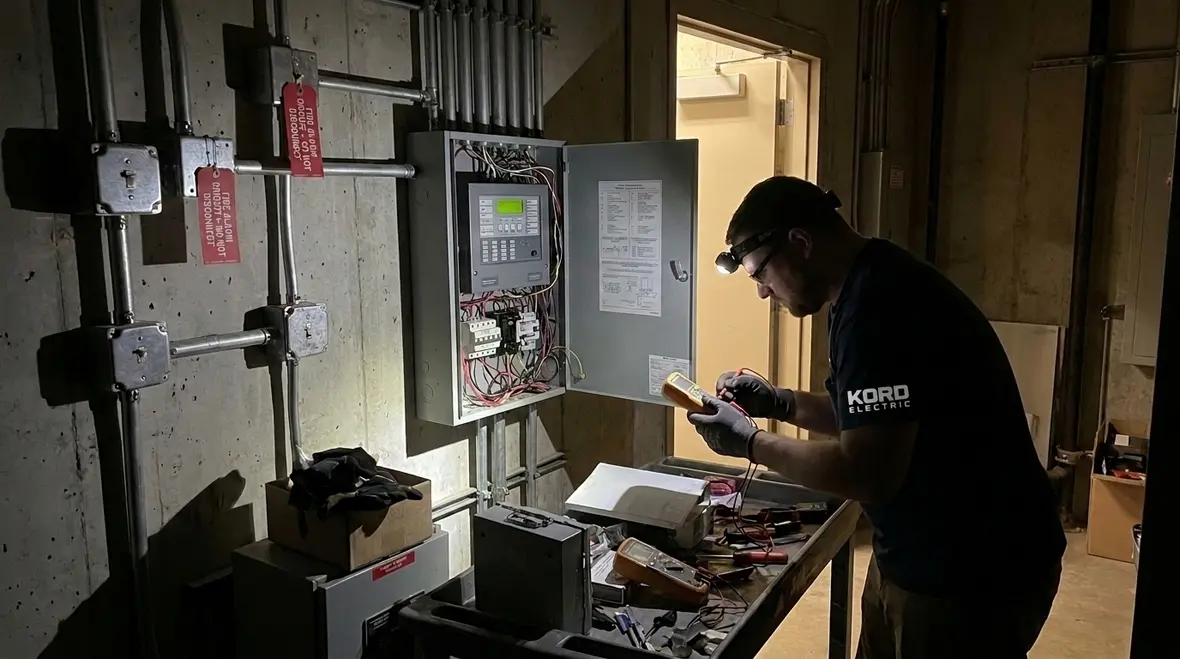
Connecting Section 210.14 to the rest of the NEC
Specific-purpose rules never live in isolation. They tie into the broader NEC branch circuit framework, including how Section 210.1 sets scope and how Section 210.3 guides branch circuit equipment suitability across a facility. When we design or review branch circuits, we often pair Section 210.14 with code guidance from these related sections so the system behaves as a single, coordinated design instead of a pile of disconnected decisions.
If your team wants a bigger NEC orientation while you explore specific-purpose wiring, resources like Kord Electric’s article on Understanding NFPA 70: The National Electrical Code Explained for 2026 help connect the structure of the code to the day-to-day branch circuit decisions you make on commercial and industrial projects.
Why NEC specific purpose branch circuits prevent operational and safety headaches
Dedicated circuits reduce risk in three main ways. First, they limit unintended loading. If a circuit is dedicated and stays dedicated, a new device cannot quietly overload it. Second, they improve troubleshooting. Technicians can isolate the right circuit faster and restore service with less guesswork. Third, they support reliability for systems where performance matters.
We also manage real-world constraints. In major property buildings, tenants change. Operations grow. A room that once held one piece of equipment may later hold three. Therefore, we plan dedicated pathways so future projects do not turn your electrical room into a mystery novel with missing pages.
Our technicians often use a simple analogy when we explain this to owners and facility managers. “If a fire alarm circuit shares space with random power outlets, you get confusion when it matters most.” Then, with a calm smile, we add that confusing systems do not make for good days, and they definitely do not help during inspections. Pop culture gets brought up more than you would expect too, because people remember stories. Like those crime shows where the detective needs the right wire, not “the vibe.”
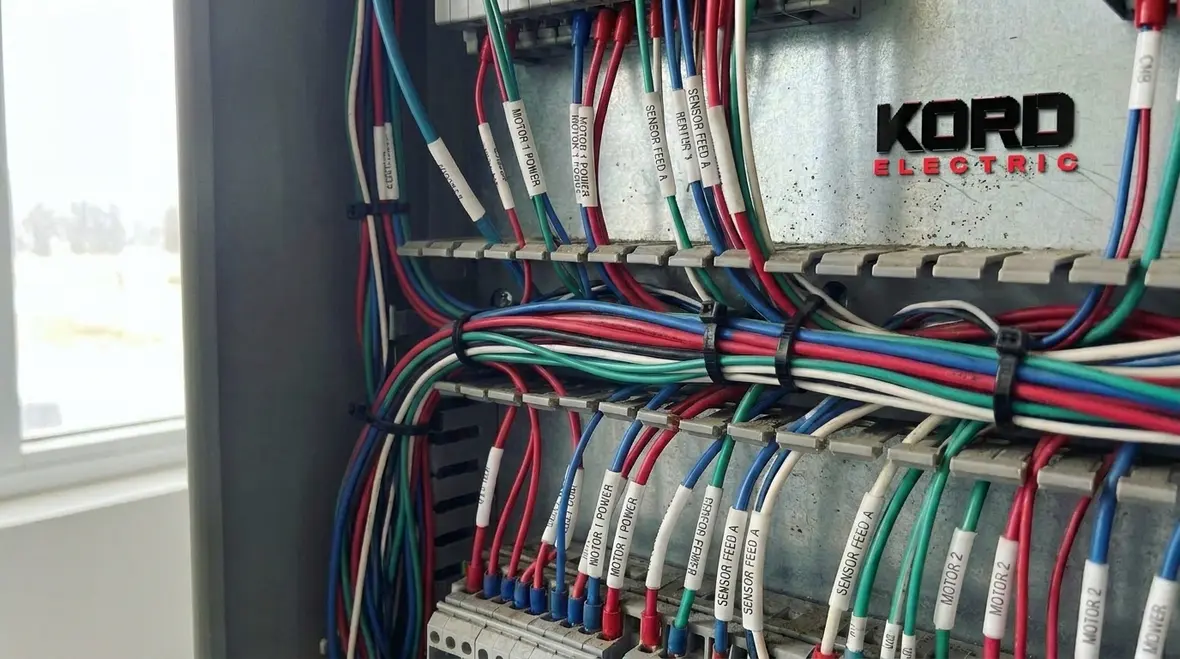
Reliability gains you can feel in daily operations
When NEC specific purpose branch circuits are laid out cleanly and labeled with intent, staff notice the difference during shutdowns, upgrades, and incident response. Crews find the right circuit faster, avoid tripping unrelated equipment, and move through lockout/tagout with less drama. You get fewer “we were sure that was the right breaker” moments and more calm, methodical work even when production or tenants are watching the clock.
That quiet reliability is exactly what facility leaders look for when they invest in electrical upgrades, surge protection strategies, or broader infrastructure work. It forms part of the same mindset that guides Kord Electric’s planning for topics such as NEC application scope, grounding and bonding, and industrial surge protection, where every circuit and every device is treated as part of a bigger safety and uptime picture.
How we verify design and field compliance for commercial projects
Compliance starts before any wire is pulled. Then it continues long after the first test. We use a process that fits commercial and industrial schedules, not fantasy schedules.
Here is how our team verifies alignment with NFPA 70 Section 210.14 and the related NEC rules:
We confirm the intended equipment or system function that drives the specific purpose
We review the panel schedule, labeling, and circuit numbering so the purpose matches the documentation
We check circuit routing, termination practices, and conductor sizing based on the expected load and installation rules
We coordinate with controls, electrical distribution, and commissioning needs so the system operates as planned
We verify field labeling and make sure the circuit stays dedicated after any changes
Next, our expert service staff explains what to watch during turnover. We help clients understand that the code requirement does not end when the job is complete. It continues when contractors, tenants, or maintenance teams interact with the electrical system. To put it plainly, we do not want a future upgrade to accidentally “fix” something by breaking it.
We also support the broader compliance context. For example, if the facility also uses fire pumps, standby power, or other life safety systems, we make sure the design approach matches the expectations for those systems. Industry groups like fire-focused alliances highlight how life safety equipment depends on sound design and correct installation practices. We respect that ecosystem, because facilities often require both electrical and life safety coordination.
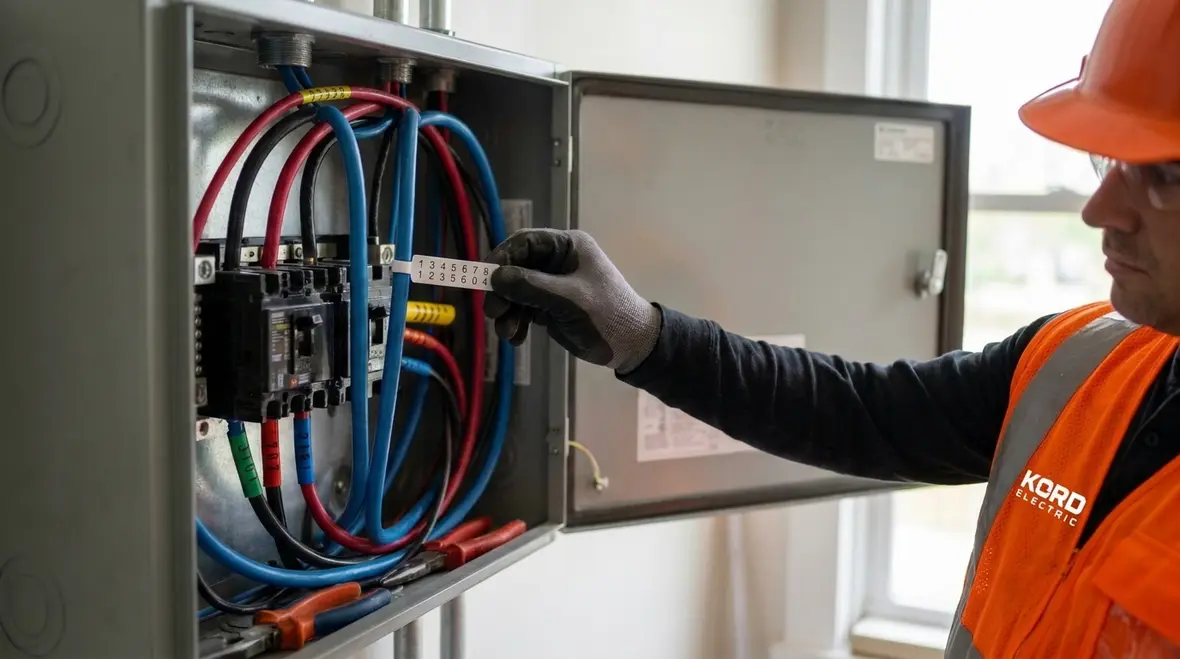
Documentation that actually survives the next project
Our teams treat documentation as part of the installation, not an afterthought. That means panel schedules that match reality, labels that can still be read after a few years in a mechanical room, and records that make sense even if the original project team has moved on. When someone opens a panel down the road, they should see a clear story of which circuits are specific purpose, which are general, and what must never be casually repurposed.
We also align this documentation habit with broader NEC scope and application expectations so facility managers can trace how NFPA 70 applies from Section 90.2’s high-level coverage down into focused rules like Section 210.14. That way, when inspectors have questions, your answers are already organized and backed by a clear paper trail.
Typical mistakes we see during inspections and how to avoid them
We have seen the same pattern more times than we care to count. A facility installs a system correctly, then changes something later without updating the circuit purpose. Or the original design intent gets lost in the wall, under a label that faded, or inside a panel schedule that no one trusts.
Common issues include:
Repurposing a dedicated circuit for general use without code alignment
Inconsistent labeling, where the label says one purpose but the circuit feeds another load
Missing documentation updates after tenant changes or equipment swaps
Overloading a dedicated line due to unclear maintenance procedures
Routing or connection practices that do not match the installation method requirements
To avoid these issues, we help clients treat electrical documentation like a living system. We recommend a simple discipline: when something changes, the panel schedule and labeling must change too. Our technicians explain the “small step now, big repair later” effect. And yes, it is like skipping dessert only to regret it at midnight. The consequences show up later, just with sparks instead of cravings.
Using inspections as a health check, not a fire drill
A smooth inspection is usually a sign that your documentation and field practices match the NEC. A rough inspection often uncovers years of shortcuts, unlabeled changes, and “temporary” fixes that quietly became permanent. We encourage facility leaders to schedule periodic internal reviews of specific-purpose circuits so most issues are discovered and corrected long before an inspector has to flag them.
When those reviews tie back to clear NEC references, including Section 210.14 for specific-purpose rules and related branch circuit sections, even complex major property buildings can keep their electrical systems organized instead of reactive.
NEC and local fire and safety expectations in major property buildings
Even though NFPA 70 sets the electrical foundation, facilities do not operate in a vacuum. Many commercial and industrial sites also follow fire and safety guidance, and those expectations can influence how electrical systems must behave. Therefore, we coordinate with other stakeholders and keep the electrical design consistent with the facility’s safety strategy.
For example, organizations like Kord Fire and Kord Fire Australia emphasize that compliance is more than a checklist. It is about matching the electrical system’s behavior to the way the safety equipment must work. While our main focus remains electrical installation and service, we take a full view for major property buildings because owners want one reliable result, not separate answers from separate teams.
Additionally, resources from fire-focused groups often reinforce that life safety systems rely on correct power delivery and dependable installation. So, when Section 210.14 drives dedication for specific loads, we treat those circuits as critical parts of the overall safety puzzle.
Coordinating with broader NEC and NFPA guidance
Specific-purpose circuits rarely sit alone. They may power equipment that supports fire pumps, emergency lighting, or other critical systems. Our teams connect the dots between NEC requirements, fire protection design, and the operational expectations in your building so that each dedicated branch circuit supports the right safety outcome when conditions get stressful.
This coordination mindset also aligns with Kord Electric’s broader NEC-focused resources, including reading the code effectively, understanding its 2026 direction, and applying branch circuit scope and voltage limitation rules in complex facilities. When you bring those elements together, Section 210.14 turns into a practical tool, not just another citation on a drawing.
Quick compliance checklist for owners and facility managers
When teams manage electrical systems across multiple years, they need tools that stay useful. Use this checklist as a simple guide, and lean on our staff when you want a second set of expert eyes.
Area to check |
What “good” looks like |
Panel schedule |
Clear circuit purpose that matches the installed equipment |
Labeling |
Durable and readable markings that identify the specific purpose |
Circuit use |
No unofficial repurposing for general loads |
Maintenance records |
Updated notes when equipment changes happen |
Service coordination |
Plans align with commissioning, safety systems, and operations |
Our expert service staff can review your existing system and explain what we find in plain terms. Then, we propose steps that fit your operations, not just the paperwork timeline. For facilities that want a deeper code connection behind each checklist item, we can relate these checks to specific NEC sections and to supporting resources such as Kord Electric’s NEC application and branch circuit guides.
FAQ about NFPA 70 Section 210.14
Facility teams usually raise the same questions when they first explore Section 210.14 and NEC specific purpose branch circuits. We group those questions here so you can move from “rough idea” to “working plan” a little faster.
Final thoughts and next step with Kord Electric
NFPA 70 Section 210.14 protects your facility by keeping specific-purpose circuits dedicated, dependable, and easier to service. When we install or review NEC specific purpose branch circuits, we do it for real buildings with real change, not just for the first inspection photo. If you run a commercial or industrial site and want a clear plan for compliance, system reliability, and future upgrades, contact Kord Electric today. We will review your circuits, explain your options, and help you keep power where it belongs.
For facilities across Southern California, our team also supports broader electrical needs such as code-driven upgrades, maintenance planning, and surge protection. When you are coordinating projects across multiple properties or major buildings, partnering with an electrical contractor who knows NEC branch circuit requirements inside and out can turn complex work into a manageable plan instead of a rolling emergency.
If you are planning upcoming work in the region and want a partner who treats NEC compliance and specific-purpose branch circuits as the backbone of safe design, explore our Los Angeles County electrical services for commercial and industrial facilities. We align project scopes, inspections, and long-term operations so your specific-purpose wiring strategy supports the entire facility, not just one project at a time.


