
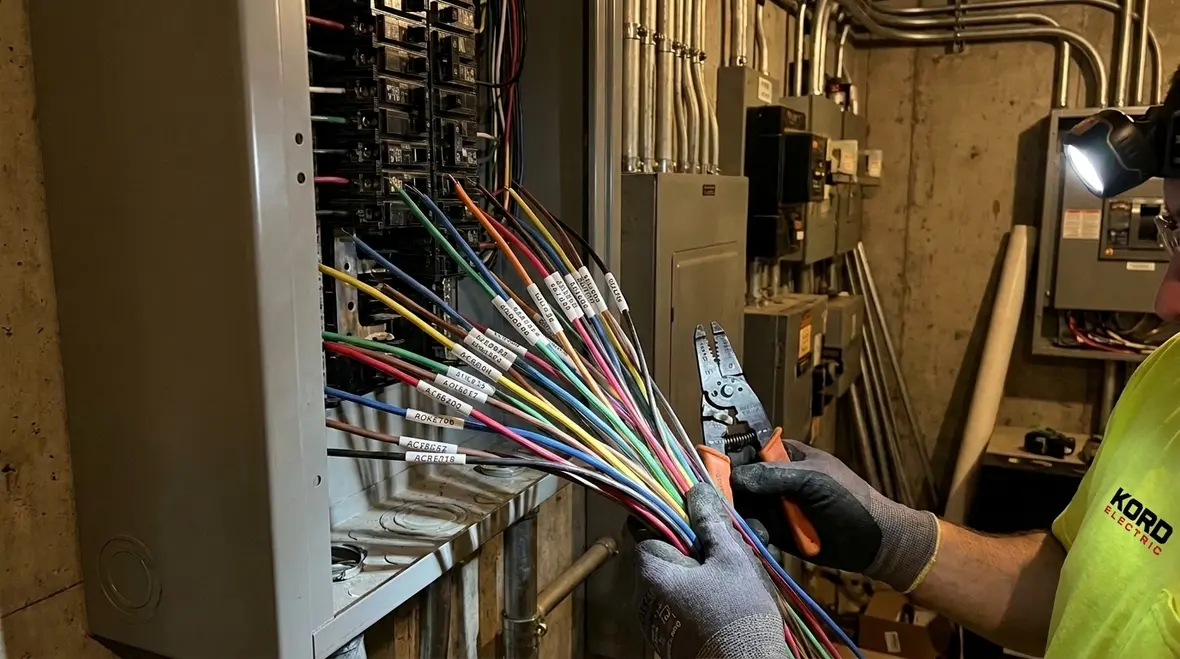
NEC Branch Conductor Identification Using NFPA 70 265.5
In commercial and industrial facilities, we do not get to treat wiring like a mystery novel. We follow strict rules, and when it comes to NEC branch conductor identification, we take it seriously from day one. In our Kord Electric work, our technicians and expert service staff apply NFPA 70 Section 265.5 by making sure every branch circuit conductor gets clear, consistent identification. That means the right labeling on the right wire, before someone else has to guess later. And yes, we have seen what happens when identification turns into interpretive dance. When you want dependable power, you need rules you can trust, not vibes.
Why NEC branch conductor identification rules matter in the real world
Most people think conductor identification is just paperwork. In practice, it protects people, prevents costly downtime, and speeds up troubleshooting. NFPA 70 Section 265.5 focuses on branch circuit conductor identification, which means the code expects that conductors carry markings that help you trace circuits without confusion. Then, when a system needs repair, our team can verify the circuit path fast and safely.
Furthermore, commercial and industrial environments add pressure. You might have multiple tenants, frequent changes, and tight schedules. Therefore, when labeling is done correctly, our electricians can maintain equipment with less guesswork. In short, good identification reduces human error, and human error is the villain in nearly every “electrical mystery” story.
What Section 265.5 requires for branch circuit conductors
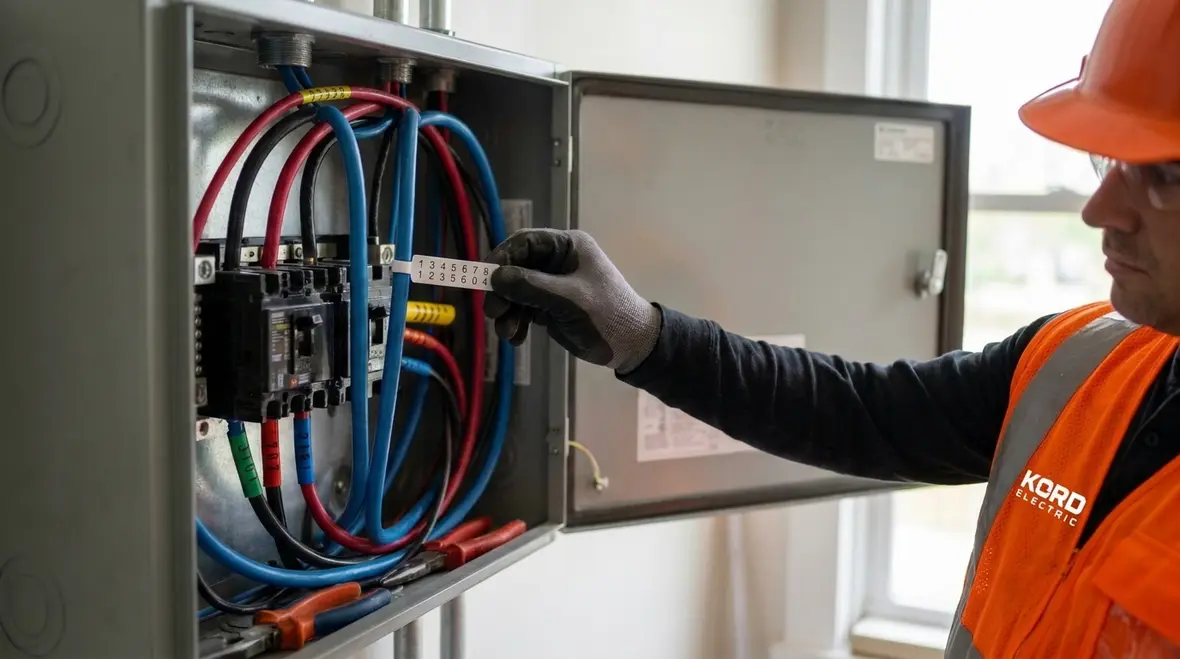
NFPA 70 Section 265.5 lays out expectations for how branch circuit conductors should be identified so that circuit function stays clear across the project. However, the value is not only in placing marks. The bigger win is consistent rules applied across panels, raceways, pull boxes, and device connections where conductors are terminated.
To explain it plainly, our technicians follow a process that treats identification like a map. First, we determine the circuit function. Next, we assign the correct labels in a way that matches the panel schedule and the wiring plan. Then, we verify continuity and termination points so the identification stays accurate, not just pretty.
Also, we know that projects move fast. So we build in checks at key steps. When our expert service staff walks a site, they confirm that identification aligns with the actual conductor layout. That helps ensure the system remains readable to the next person, even if that person does not work on your job every day.
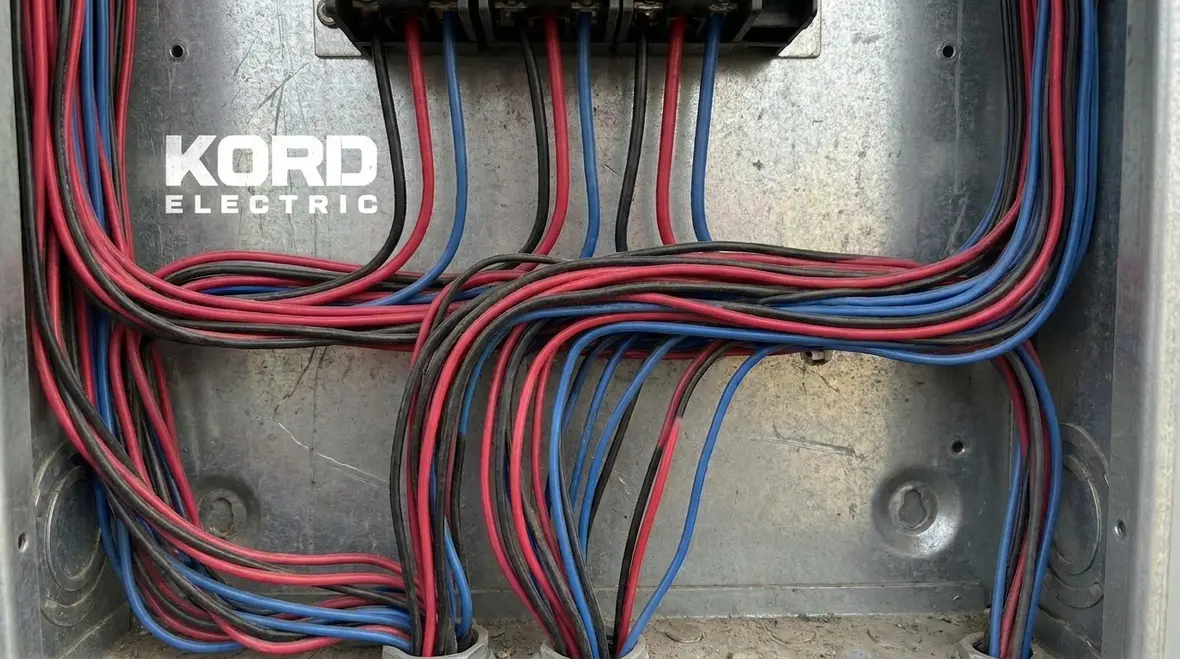
How we implement conductor identification on commercial electrical projects
At Kord Electric, we serve commercial and industrial facilities and major property buildings. That scope means our approach must work for real life: multiple feeders, shared electrical rooms, and changes during commissioning or tenant buildouts. Consequently, we implement identification in a way that stays stable as the building evolves.
We typically start with the panel schedule and circuit descriptions. Then we connect those descriptions to conductor markings and termination labeling. After that, we document the same information so maintenance teams can trust it during future work.
Here is how our team keeps it practical:
- We plan labeling early so panel schedules and wiring match before termination.
- We use consistent marking methods that remain readable and durable in the facility environment.
- We verify terminations so the label points to the correct conductor and correct terminal.
- We coordinate with electrical designers so identification rules stay aligned across drawings and the field.
And if that sounds strict, it is. But it is also calming. Because when you can trace circuits with confidence, the job stops feeling like guessing at a pop quiz.
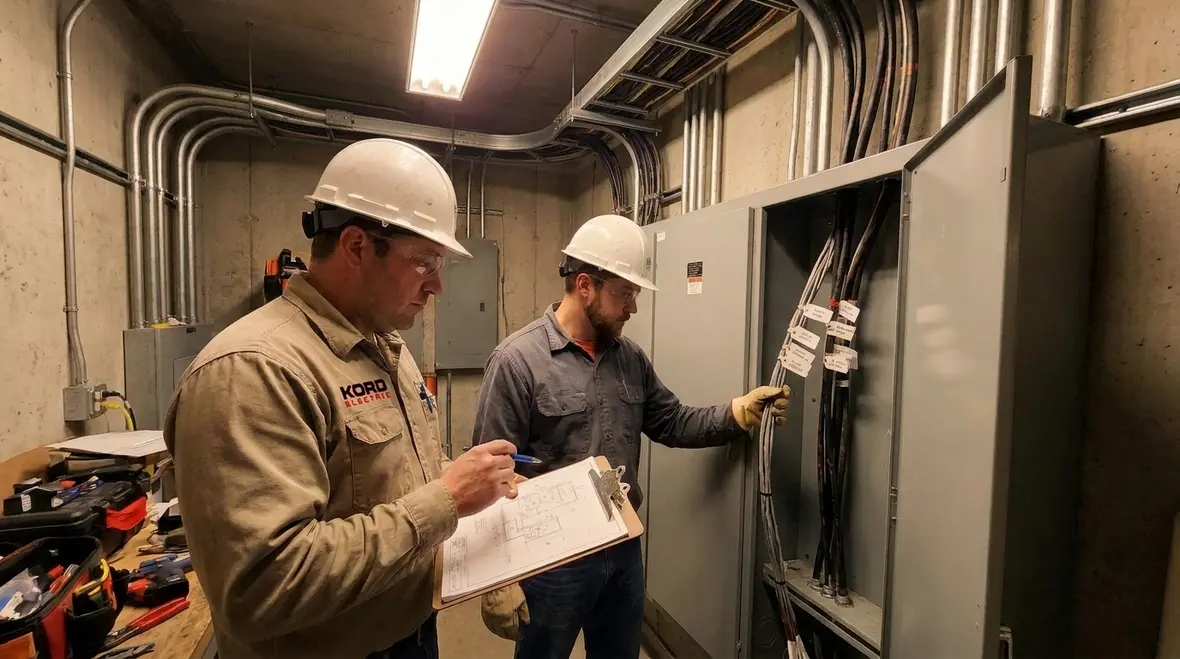
Common mistakes that lead to expensive downtime
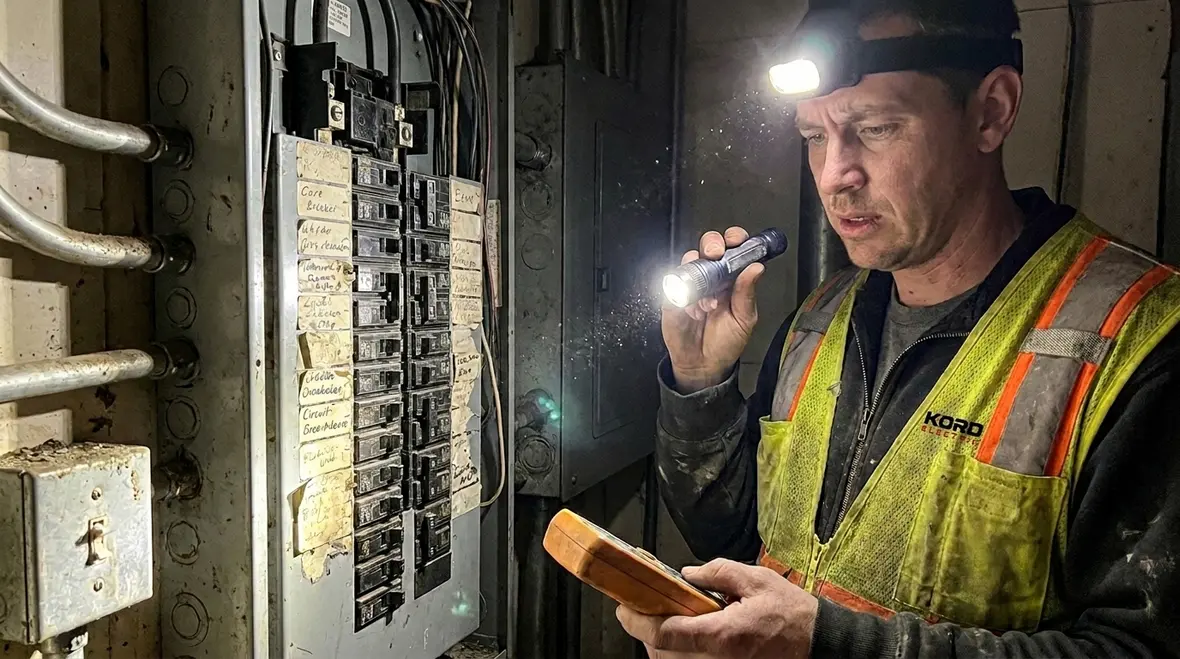
When identification fails, the issue rarely shows up as an instant catastrophe. It usually shows up later, when a system trips, a breaker needs service, or a technician tries to restore power under time pressure. Then the label does not match what is installed, and everyone suddenly becomes a detective with a flashlight and a caffeine problem.
In our experience, these mistakes show up often in large commercial and industrial buildings:
- Inconsistent conductor markings across panels or similar circuits.
- Labels that follow the drawing but not the final field changes.
- Terminal numbering that conflicts with the panel schedule.
- Identification that fades or gets covered during installation, painting, or equipment mounting.
- Missing identification on conductors at key connection points.
Therefore, we treat verification as non negotiable. Our technicians and expert service staff confirm identification after changes, not only at the beginning. This helps protect operations teams that need dependable electrical systems, especially in facilities where downtime costs real money.
NEC labeling and maintenance planning for long term safety
Conductor identification does not end with installation. In fact, the best labeling approach supports long term maintenance, future upgrades, and facility changes. So we plan for how the building will be used years from now, not just how it looks on turnover day.
In maintenance planning, we focus on three outcomes. First, technicians must quickly identify circuit purpose. Second, they must safely confirm that the right conductors connect to the right load. Third, they must be able to update the documentation without rewriting the whole building every time someone adds a device.
Additionally, in major property buildings, electrical rooms can become crowded with upgrades, retrofits, and tenant improvements. Because of that, identification must stay clear even when new circuits get added. Our approach helps keep labeling consistent through those changes.
Also, we keep the spirit of broader code guidance in mind. For more context on how the NEC supports safe building electrical systems, we often point clients to our explainers and resources. For a deeper code overview, you can review our Kord Electric blog resource Understanding NFPA 70: The National Electrical Code Explained for 2026, which connects code cycles to real world projects. You can also explore related guidance and code background through Kord Electric updates and the resources available on kordfire.com and kordfire.com.au.
Interaction with other NEC requirements you will run into on site
Even though this article stays focused on NFPA 70 Section 265.5, branch conductor identification connects to the broader NEC reality. You may see overlap with circuit design practices, panel scheduling, and labeling expectations at terminations. As a result, the best field work aligns identification with how the system is actually built and how it is meant to be inspected.
For example, when emergency systems or fire related loads connect to distribution panels, identification can become even more important. Those circuits require clear traceability so testing, maintenance, and inspection teams can verify operation quickly. If you want broader fire and life safety context, organizations like NFPA 70: All About The National Electrical Code (NEC) 2026 at kordfire.com often support that training mindset. Meanwhile, our service staff keeps our field checks aligned with the building’s operational needs.
So, the key point is simple. Conductor identification works best when it matches the whole project workflow: drawings, installation, termination, and future service.
Real world scenarios where NEC branch conductor identification saves time
In everyday work, NEC branch conductor identification either saves the day quietly or becomes the reason a shift runs long. When labeling is accurate, technicians can isolate, test, and restore power without turning the job into a guessing game. When it is wrong, every step slows down.
Imagine a large commercial facility that plans a weekend shutdown for upgrades. If branch conductors are labeled clearly at the panel, in raceways, and at devices, our technicians can confirm which loads are tied to which breakers before anyone touches a tool. If labeling is missing or inconsistent, they must trace circuits by hand, circuit by circuit, while the clock runs and the facility waits.
The same story shows up in industrial environments. Production lines often have shared controls, multiple disconnects, and specialized equipment. Correct conductor identification tied to NFPA 70 Section 265.5 and related labeling practices means maintenance teams can isolate a single load safely instead of shutting down entire sections of the plant. That is not just a technical benefit; it is a business advantage.
In major property buildings, such as multi tenant office towers, identification also matters for coordination with building management. When circuits are labeled to match panel schedules, riser diagrams, and tenant layouts, requests like “kill power to this suite only” become straightforward tasks instead of multi hour hunts.
Design coordination, documentation, and NEC branch conductor identification
Good labeling in the field starts with good planning on paper. Our team coordinates with designers and engineers so branch conductor identification lines up with the intent of the design and the reality of the installation. That coordination helps prevent the common situation where the drawings tell one story and the panel tells another.
During design, we pay attention to how branch circuits are grouped, how loads are described, and how that information will appear in panel schedules. We then translate that structure into practical labeling rules that our technicians can follow in the field. When design teams update drawings or adjust loads, we close the loop by revisiting the identification rules and confirming that everything still matches.
Documentation also matters after the project is complete. We provide records that reflect the as built reality, not just the original intent. That includes updating schedules, labeling legends, and maintenance notes so future technicians can rely on what they see. When documentation and identification move together, your facility has a stable reference point for years, even as tenants change and equipment evolves.
For facility leaders looking at larger planning questions around NFPA 70, resources like our article on What Is NFPA 70? Understanding the National Electrical Code help connect conductor identification to the wider code landscape, from grounding and bonding to overcurrent protection and equipment labeling.
FAQ
Scenario |
What we do |
Panel modifications during buildout |
We update conductor identification and verify terminations so labels match the field. |
Service call for tripping breakers |
We use the identification to trace the correct branch circuit quickly and safely. |
A clear path forward with Kord Electric
We believe electrical systems should feel dependable, not confusing. When we apply NFPA 70 Section 265.5 practices for NEC branch conductor identification, we help your teams trace circuits with confidence, reduce downtime, and keep maintenance safer. Our technicians and expert service staff bring field verified discipline to commercial and industrial electrical work.
If you are planning an upgrade, commissioning a new space, or cleaning up documentation chaos, reach out to Kord Electric today and let us map the circuits the right way. Your future technicians will thank you. For facilities across Southern California, our Los Angeles County electrical services overview shows how we support everything from design and code interpretation to field verification and long term maintenance planning.
To connect conductor identification with broader NEC planning for your facility, you can also review our in depth code explainer, Understanding NFPA 70: The National Electrical Code Explained for 2026, and related Kord Electric resources that tie design, labeling, and maintenance into one coherent plan.


