
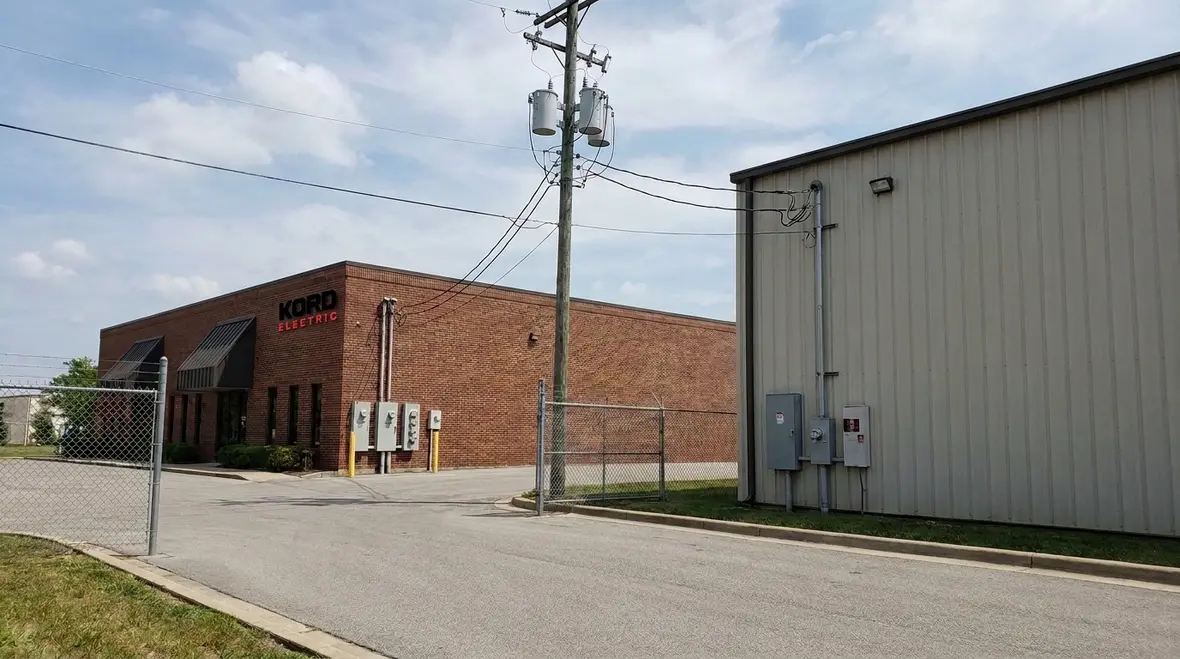
NEC Building Supplied Through Another NFPA 70 230.5
NEC building supplied through another: what NFPA 70 Section 230.5 really blocks
We often hear the same story in commercial and industrial facilities: someone wants to save time and money by sharing an electrical supply across neighboring space, or even by feeding one building from another. In plain terms, a NEC building supplied through another can sound convenient, like letting one apartment borrow your Wi Fi password. Unfortunately, NFPA 70 Section 230.5 steps in and says, no, not like that. And yes, it does it for reasons that protect people, assets, and service crews.
Kord Electric helps facility teams and property managers follow the National Electrical Code in a practical way. Our technicians and expert service staff explain the “why” first, then the “how,” because compliance should not feel like a scavenger hunt. In this guide, we walk through NFPA 70 Section 230.5 and why the code does not allow one building to be supplied through another.
NFPA 70 Section 230.5: the rule behind the boundary

NFPA 70, also called the NEC, uses Section 230 as the backbone for service rules. Section 230.5 specifically addresses the concept of supplying one building from another. It focuses on separating electrical services so each building has a clear, code compliant service setup. Therefore, the rule prevents designs where the first building becomes the “middleman” for the second building’s electrical supply.
Now, if you are picturing a single feed that runs from Building A to Building B, you are picturing the thing the rule targets. When one building’s service equipment carries the supply for another building, several risks can grow at the same time. For example, fault paths can become unclear, coordination becomes harder, and the shutdown or isolation strategy for one property can get messy. In other words, when trouble strikes, responders do not want to play detective. They need fast, safe control.
Kord Electric’s team explains this in meetings with owners and operators: the code wants separation for clarity, safety, and reliable operation, not shared responsibility. And shared responsibility, as pop culture has taught us, is how blame gets passed around faster than a playoff highlight. Unlike that highlight, this one can cause real harm.
If your team is just getting familiar with NEC structure, you can also pair this topic with broader resources like Understanding NFPA 70: The National Electrical Code Explained for 2026, which walks through how the rulebook fits together before you zoom in on individual sections.
Why one building should not become the switchboard for another

There are a few practical, real world reasons NFPA 70 Section 230.5 restricts one building supplied through another. First, each building needs its own defined service point and service equipment. That design improves protection and reduces ambiguity during emergencies. Second, electrical systems behave like systems, not like wishes. If Building A carries feeders for Building B, then events in one location can affect the other.
Consider fault conditions. If a short circuit occurs on the feeders leaving Building A, the system in Building A may see a larger fault current than expected, and protective devices may not behave the way the design assumed. Consequently, coordination studies become harder, and the safety margin can shrink.
Consider load management too. Building B often has different operating schedules, HVAC loads, lighting controls, and process equipment needs. If the supply strategy ties them together, then changes in one building can influence voltage regulation and performance across the shared path. Also, if Building B includes standby power systems, solar tie ins, or specialized machinery, the interaction with a shared supply route gets complicated fast.
For commercial and industrial facilities, we see this during upgrades: the plan started as “just a temporary feed” and then turned into a long term arrangement. However, code expects that electrical services reflect the actual operational boundaries of each property building, not the “temporary” path that became permanent.

Common scenarios that trigger the restriction
Facility teams typically ask about this when they inherit older layouts or when a property owner expands in phases. Therefore, the most common scenarios include these:
- Running feeder cables from one building panel or service equipment to feed another building’s distribution without a separate service setup
- Using one building’s service equipment to support the panelboards and disconnects of the second building
- Relying on shared conduit routes and assuming distance alone keeps the arrangement code compliant
- Trying to treat a second building like a sub facility while it still needs its own service separation and shutdown control
We also see confusion when people blend ideas from other standards or from residential habits. In the real world, a small home might share infrastructure and no one notices. In a facility with life safety systems, critical power needs, and heavy electrical loads, ignoring service separation is like skipping the fire drill and calling it “fine.” It might feel fine until it is not.
Kord Electric’s technicians review each scenario by tracing how power enters, how the disconnects work, and how the building’s distribution takes shape. Then we compare that to NEC service intent so teams can move forward with confidence.
Safety, coordination, and emergency response you can explain to others
When code language restricts a design, it does not do it in a vacuum. It does it so safety and reliability stay predictable. So we explain the operational impact clearly to owners, electrical managers, and property decision makers.
First, separate building services simplify shutdown. Fire responders and maintenance teams need the ability to de energize the right area quickly. When one building supplies another, the path of control becomes less direct. As a result, responders may face delays in locating the correct isolation point.
Second, protective device coordination works better when each service boundary stays clear. Engineers often design overcurrent protection and fault clearing based on expected fault levels and equipment ratings. When a feeder system extends into another building’s distribution without proper service separation, the fault clearing behavior may shift.
Third, the rule supports safe maintenance. Facility operations move fast. Replacement schedules, panel upgrades, and inspections do not always happen in perfect order. With separated services, shutting down one building’s equipment does not automatically create knock on effects for another building’s critical loads.
And yes, our technicians take time to walk others through these outcomes. That way, the explanation does not sound like a policy speech. It sounds like real field experience.
How Kord Electric approaches compliance for commercial and industrial projects
When a customer requests a plan that may conflict with NFPA 70 Section 230.5, we do not respond with panic. We respond with process. Our approach targets commercial and industrial facilities and major property buildings, because those projects require engineering discipline, coordination, and clean documentation.
We start by gathering information: building layout, utility metering details, service equipment locations, and how each building’s distribution system is laid out. Then we map the intended power path step by step. After that, we evaluate whether the design truly creates a “supplied through another” condition or whether a code compliant alternative exists.
Next, our service team helps teams plan the fix without derailing operations. In many facilities, work must happen during controlled windows. Therefore, we coordinate staging, lockout procedures, and inspection timing. If a correction requires new service equipment or revised feeder routes, we help the facility plan the transition so operations can keep running.
We also align the electrical code work with broader fire and electrical safety awareness. For teams that seek a deeper look at NEC concepts and how it supports fire safety thinking, Kord Fire resources often help, including Kord Fire’s coverage of the NEC background and safety perspective on their sites. In Australia and other markets, teams also look at similar safety principles through local resources like Kord Fire Australia, and some fire focused organizations such as firepumps.org provide useful context on how emergency readiness connects with electrical reliability.
For facilities in Southern California and surrounding regions, Kord Electric also connects this code guidance with on the ground support. When you are planning improvements beyond a single service riser or disconnect, you can review our broader Los Angeles County electrical services overview to see how design, permitting, and field work line up with NEC expectations.
Design choices that keep each building properly served
Once teams understand the intent of NFPA 70 Section 230.5, it becomes easier to choose alternatives that protect the project. Generally, the goal is to ensure that each building has a proper service arrangement that follows NEC expectations for service equipment and disconnecting means.
In practice, that often means establishing a separate service for the second building rather than feeding it through the first building’s service equipment. It also means designing the distribution so protective devices and wiring methods stay appropriate for the full path of energy. Consequently, the facility avoids the “shared service boundary” problem.
However, every property has constraints. Utilities may have specific requirements. Trench routing and right of way can affect feasibility. Therefore, Kord Electric reviews the engineering reality on site and supports a compliant design route that fits the facility’s needs.
We keep it simple in our conversations: if one building relies on another for its service supply, the design needs strong justification and correct structure, otherwise it risks violating NFPA 70 rules. And while the idea may look clever on a drawing, code cares about reality on the ground, and the ground always wins.
FAQ about NFPA 70 Section 230.5 and building service separation
Request a code review before the next expansion
If your team plans an expansion, a new building addition, or a service upgrade, do not gamble with service separation. NFPA 70 Section 230.5 exists to protect people, equipment, and emergency response, and we help you design the right boundary from the start. Kord Electric serves commercial and industrial facilities and major property buildings with clear explanations, careful field review, and practical planning. Contact us to schedule a compliance focused electrical review and get a plan your operators can trust.
For projects that touch multiple structures, NEC building supplied through another questions should never be an afterthought. The earlier you surface them in design, the easier it is to align with NFPA 70, coordinate with inspectors, and keep construction moving. When you are ready to apply this guidance alongside broader NEC planning, you can also connect it with resources such as Understanding NFPA 70: The National Electrical Code Explained for 2026 and related Kord Electric guides that keep complex code language grounded in real sites and real schedules.


