
NEC Cable Trays for Services: Kord Electric Guide
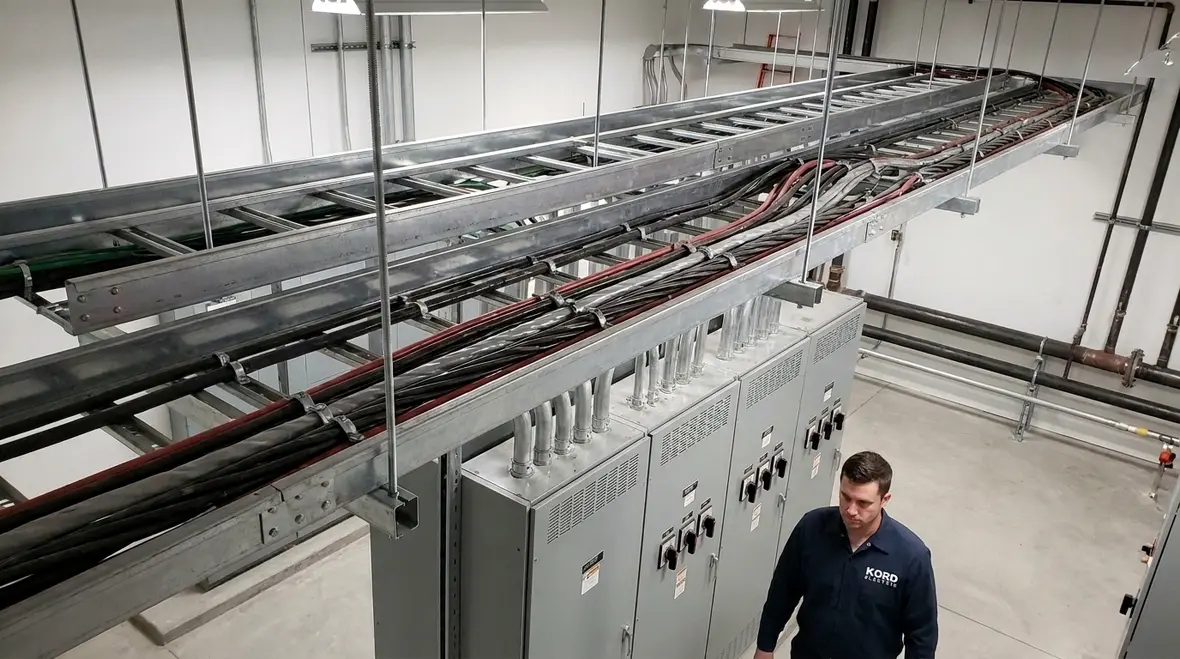
At Kord Electric, we plan and install electrical systems with the kind of care you would want on your own building, because we treat commercial and industrial facilities like they matter. That includes how we handle the path for NEC cable trays for services when our expert service staff designs the route for service conductors. In practical terms, we use cable tray systems to keep service wiring organized, protected, and accessible, so maintenance teams can work without turning a panel room into a maze. And yes, we have seen conduits piled up like a bad taco truck line, so we prefer order.
What NFPA 70 Section 230.44 requires for service conductor routing
NFPA 70, also called the NEC, sets rules for safe electrical installations. Under NEC cable trays for services, Section 230.44 focuses on how to use cable trays for service conductors. The goal stays simple: protect conductors and make sure the system stays reliable from day one through years of load growth, expansions, and occasional “why is this tripping now” moments. Therefore, when our technicians build a tray layout, they do more than meet the minimum. They follow the NEC approach and apply it to real jobsite conditions, including supports, clearances, and how the trays get installed in the building structure.
In addition, Section 230.44 links tray use to safe installation practices. That includes making sure the tray and its components support the conductors properly, and ensuring the installation does not create damage points like sharp edges, loose hardware, or improper transitions.
Why cable trays matter for commercial and industrial service entrances
Commercial and industrial facilities usually demand systems that can handle change. A tenant buildout shifts loads. A plant adds equipment. A property manager upgrades communications and metering. Consequently, service conductor routes benefit from a layout that stays organized and serviceable.
Cable trays provide that structure. They support groups of conductors along the facility with predictable spacing, routing, and access. Meanwhile, a tray system can reduce the need for scattered conduit runs that wander across ceilings and then mysteriously end in a corner. Our team, including our expert service staff, often explains this tradeoff to owners and facility managers: with trays, you gain a consistent path, and with consistency you reduce maintenance time and improve troubleshooting speed.
Also, cable trays can support future upgrades. Therefore, companies often select tray systems for facilities where service work and feeder work must coordinate over the life of the property.
How to select tray type, supports, and conductor fit
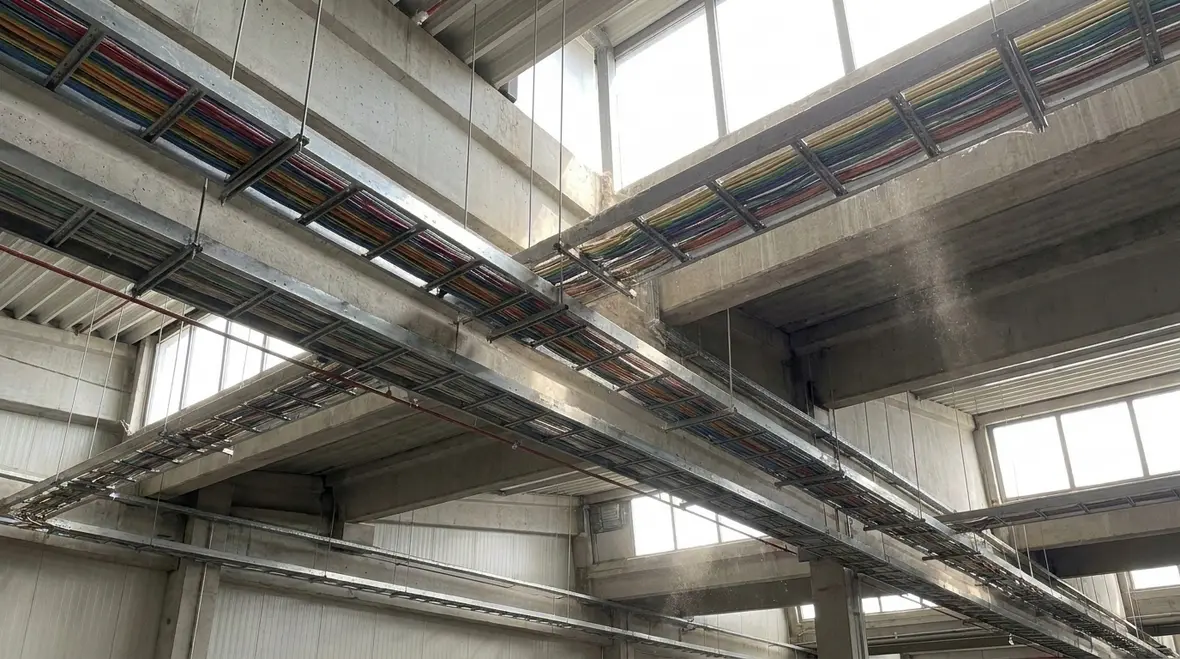
Meeting Section 230.44 starts with the physical setup. Our technicians plan three things early: tray type, support design, and conductor fit. First, they confirm the tray construction and whether it suits the environment. Then they verify supports and spacing to prevent excessive sag or movement.
Next, they consider conductor fill and how the conductors sit in the tray. A conductor that gets crushed, pinched, or bent too sharply can create trouble later. So we design to avoid that risk. Furthermore, we coordinate tray width, depth, and installation angles so the conductors maintain the intended routing without stress.
Finally, we ensure accessories and terminations align with the system. That includes proper covers when required, correct hardware, and safe transitions at bends, offsets, and entry points.
To put it plainly, a tray system should not feel like a “temporary forever” solution. Our crew treats it like permanent infrastructure, because in a major property building, temporary electrical choices turn into expensive stories.
Coordination and clearances that keep the service system safe
When service conductors travel in trays, coordination becomes the difference between a smooth project and a costly rework. Therefore we plan the tray route with structural elements, mechanical equipment, and other trades in mind. Even when the electrical design meets code requirements, conflicts can still happen if the installation ignores field reality.
Our expert service staff commonly reviews clearances for working space, access routes, and separation from other systems. Additionally, they verify that tray placement does not block access to equipment rooms, disconnects, and metering equipment. That matters because service equipment in commercial and industrial buildings needs reliable access for inspection, replacement, and fault recovery.
We also coordinate tray bends and transitions. Sharp turns can drive bending stress into conductors, while poor transitions can force installers to improvise. And installers do not want to improvise. In our world, improvisation is what you do with snacks, not service conductor routes.
Installation practices that make the code requirement real
Paper compliance does not protect anyone. Jobsite workmanship does. So we focus on installation details that support safe operation and long term reliability.
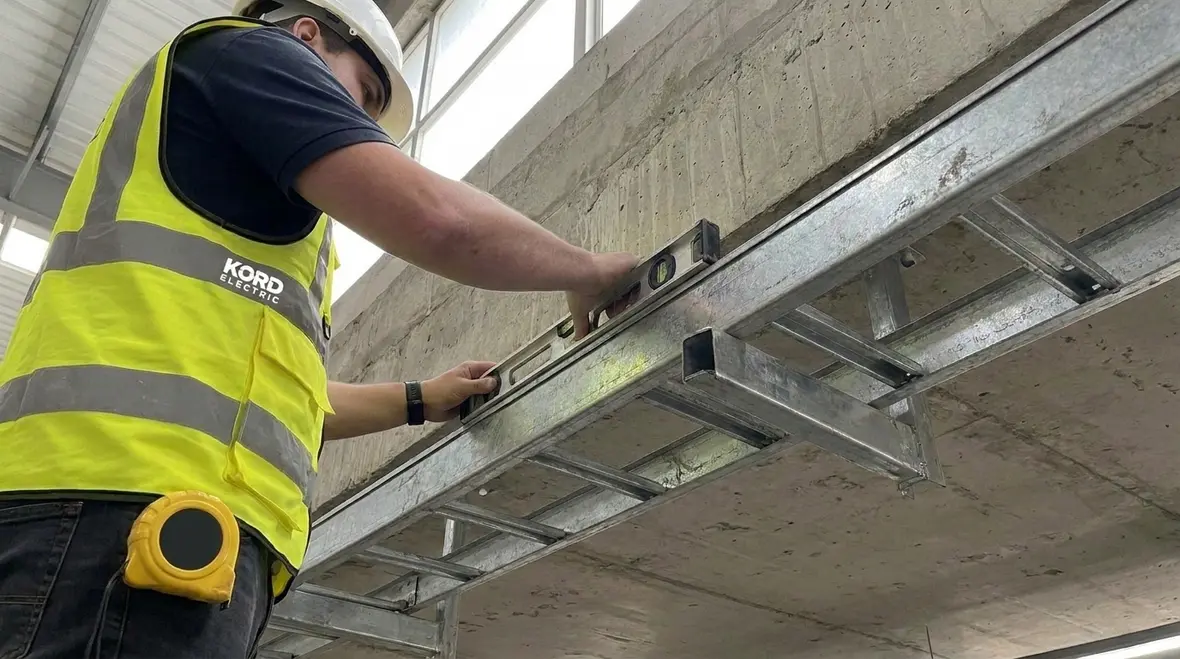
For tray installations tied to service conductor needs, our technicians emphasize careful support spacing, correct torque on hardware, and solid bonding paths where required by design. They also confirm that trays align properly across sections and that field cuts do not leave rough edges. Rough edges create insulation wear points, and nobody wants conductor insulation rubbing against metal like it is trying to start a new hobby.
In addition, we inspect labeling and conductor identification practices. Service work benefits from clear identification because troubleshooting gets faster when crews can follow the system without guessing.
Finally, we verify that the trays and conductors are installed in a way that supports future inspection. When a facility team can see and access conductors, they can reduce downtime during maintenance windows.
Common issues we prevent during tray based service conductor work
Through experience on major property buildings, we have seen patterns that cause failures or delays. However, when a facility team partners with Kord Electric early, we prevent these problems before the project becomes a scramble.
One common issue involves improper tray sizing for the number of conductors. Sometimes trays get chosen late, and then installers squeeze conductors into a space that was not designed for them. Another issue involves mismatched tray sections or poor alignment at transitions, which can cause conductor abrasion or unstable mounting.
Next, we see support and spacing problems when the tray route moves around other trades. If supports do not follow the design intent, trays can sag, and conductor stress increases. Likewise, we address routing decisions that place trays too close to other equipment. Even if the electrical design passes review, field placement can create heat exposure or mechanical risk.
To keep projects steady, our technicians document key layout decisions. Then, our expert service staff explains what we chose and why. That way, owners and facility managers understand the system and can communicate clearly with future maintenance teams.
NEC cable trays for services in service and expansion planning
For commercial and industrial facilities, the electrical system often grows over time. Therefore tray based service conductor routing supports both initial needs and future expansion strategies when planned correctly.
We design the tray system with likely future additions in mind, but we do not treat it like a limitless shelf. Instead, we account for capacity, load growth, and the physical space needed to add conductors safely. Additionally, we plan how new feeders and communications lines might route in the same tray zone or in coordinated nearby runs. That coordination matters because crowded pathways increase installation risk and complicate troubleshooting.
At the same time, tray routing improves operational continuity. When something fails, electricians can reach the conductor path faster. Consequently, outage time can shrink, and that protects production schedules, tenant operations, and revenue.
If your facility team wants a broader foundation in how tray-based design fits into the wider rulebook, you can also review related resources such as Understanding NFPA 70: The National Electrical Code Explained for 2026, which connects NEC concepts to real-world commercial and industrial projects.
FAQ: NEC tray rules and service conductor basics
Get it right the first time with Kord Electric
When you build a service system, you should not gamble on shortcuts. Kord Electric designs and installs tray based solutions for commercial and industrial facilities, aligning with NEC expectations and real jobsite conditions. Our technicians and expert service staff walk through the plan, explain the choices, and confirm the details that protect your conductors and reduce future downtime. If you are planning a service entrance, expansion, or upgrade in a major property building, contact us to schedule an assessment and get a reliable path forward.
For facilities in Southern California that want a code-minded partner from design through inspection, you can explore how our team supports regional clients through our Los Angeles County electrical services, where NEC cable trays for services, service conductors, and distribution upgrades all get planned as part of a coordinated strategy.
If your project also involves broader code planning, resources like our NFPA 70 code guides on the Kord Electric blog can help your team align NEC tray routing decisions with the same standards that shape branch circuits, service equipment, and inspection workflows.
Whether you are coordinating new service equipment, planning NEC cable trays for services through tight mechanical spaces, or aligning upgrades with the latest NEC cycle, our goal stays simple: build a system that feels organized from day one and still makes sense years later when someone opens the door during a busy shift and needs answers, not guesswork.


