
NEC Conductor Identification Colors Customers Notice Day One
NEC conductor identification colors customers see on day one
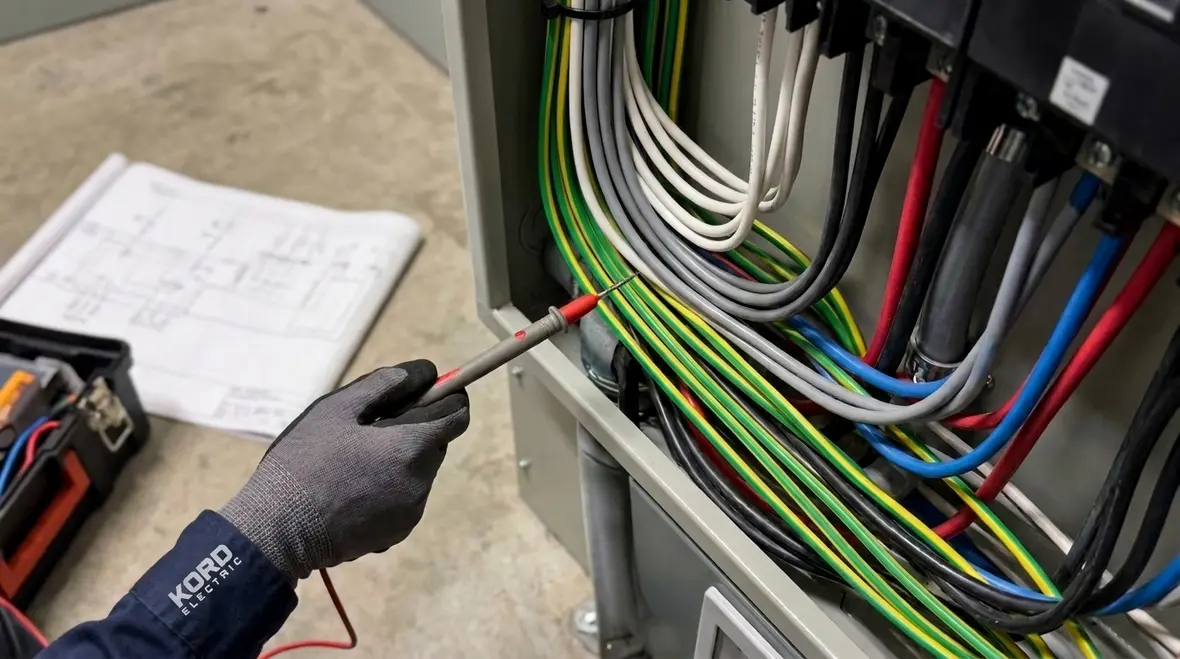
When our commercial and industrial customers walk through a facility, they should be able to trace power safely, fast, and without guesswork. In the first moments of a panel or feeder walkthrough, we already rely on NEC conductor identification color coding ideas that match the expectations in NFPA 70 Section 310.6. For example, our teams expect consistent white for grounded conductors, gray for the grounded part in some contexts, green for equipment grounding conductors, and green with yellow stripes for equipment ground when allowed by the wiring method and system rules. In practice, these colors become a calm map for electricians, facility managers, and our Kord Electric technicians who explain what they see.
Now, some people treat conductor color as if it is optional, like skipping the credits at the end of a movie. We do not. We take it seriously, because the wrong identification can create confusion, rework, and in the worst cases, unsafe conditions.
What NFPA 70 Section 310.6 demands in plain terms
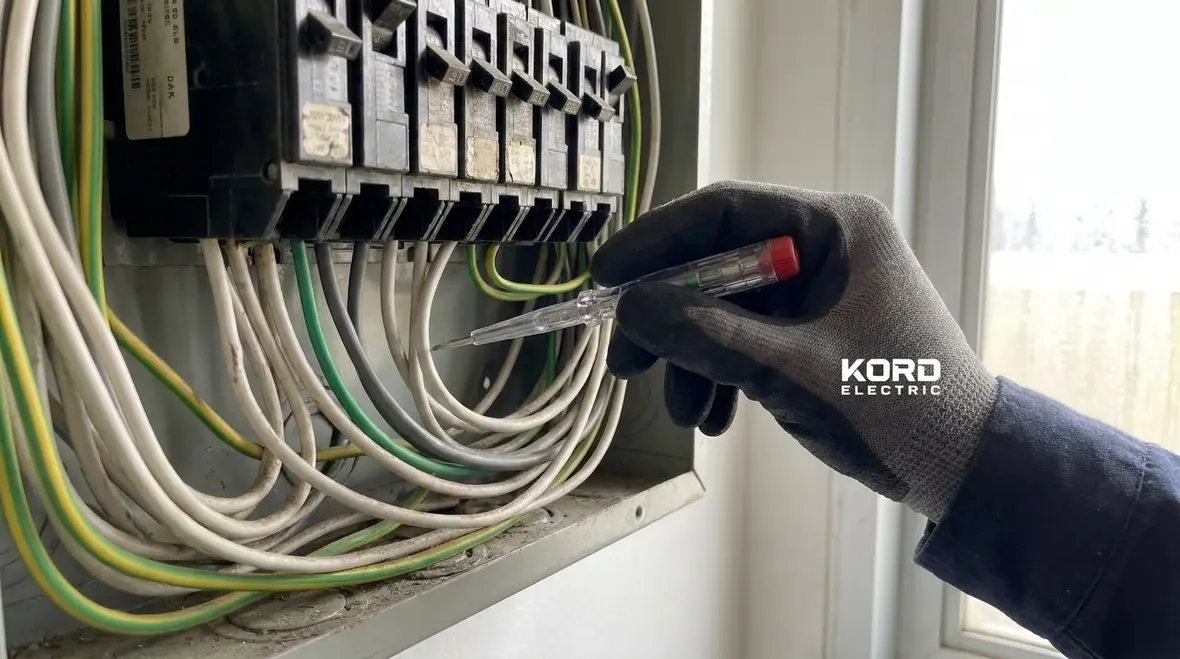
NFPA 70 Section 310.6 focuses on conductor identification using color coding. It tells us that conductors must stand out by their role in the circuit. First, it supports the idea that a properly installed system allows trained people to understand wiring without pulling every terminal apart. Then, it reduces the risk of mislabeling during additions, repairs, and upgrades.
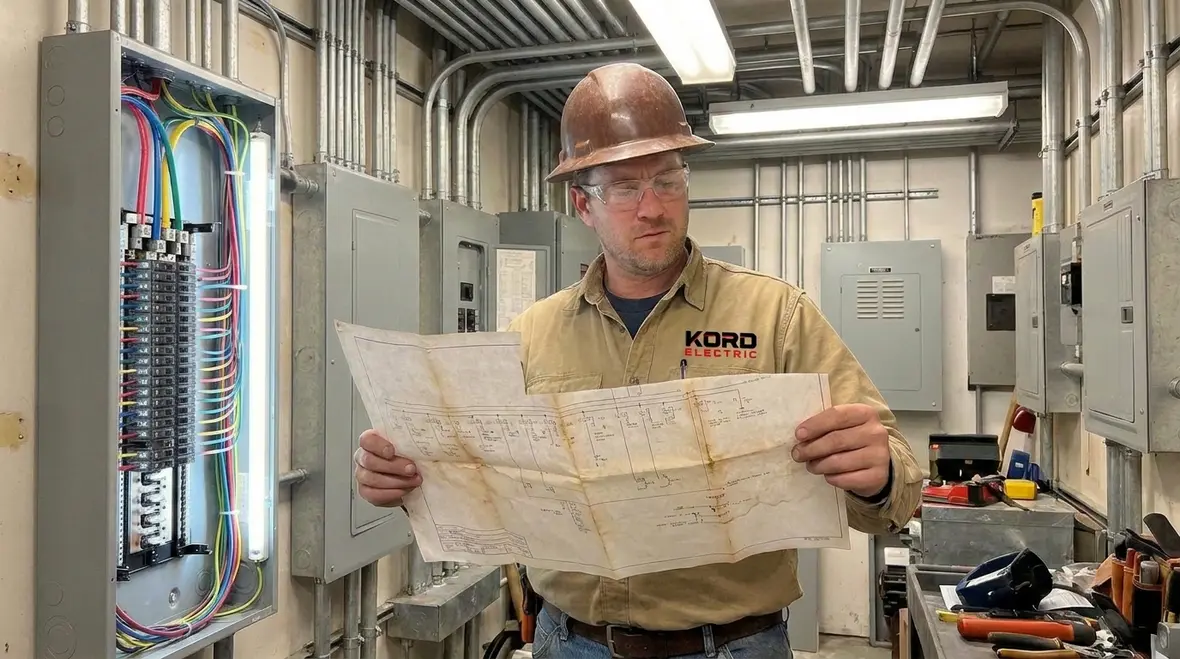
When we service a major property building, our approach follows a simple pattern. We examine conductor function, verify the wiring method and system type, and then confirm the identification scheme aligns with the code. If a project uses different conventions than expected, we still document and correct them, because “it used to work” is not a maintenance plan.
Also, our expert service staff do not just point at colors. They explain the reason behind the rules so facility teams can make better decisions during tenant improvements, electrical room work, and phased construction. That clarity saves time, and it prevents the kind of “who wired this” moment that turns into a long, expensive comedy routine.
How conductor color coding prevents expensive mistakes
Conductor identification does more than look neat. It protects the entire lifecycle of a building. Over time, electrical systems get touched by many hands. One tenant renovates. Another vendor adds lighting. A contractor replaces a pump control module. If identification is unclear, the next team wastes hours chasing the right conductor, and the building owner pays for it.
To make this practical, we often see issues that show up long after installation. For example, if grounded and equipment grounding conductors get mixed in identification, a later troubleshooting step can mislead the technician. Then, test results look “kind of right,” and the team chases symptoms instead of causes. Next, that can lead to repeated isolations, shutdowns, and schedule delays.
Furthermore, color coding improves safety during energized work boundaries and switching events. Our technicians use the identification scheme to confirm they are moving the right conductors and devices, especially in commercial and industrial spaces where downtime costs real money. When identification follows NFPA 70 expectations, the entire room runs smoother.
Equipment grounding, grounded, and phase conductors: the roles that matter
Section 310.6 does not treat every wire the same. It connects color to conductor function. So, when we review a panel or a feeder in a major building, we look at conductor roles first, and colors second.
Typically, our teams expect equipment grounding conductors to follow the recognized conventions like green or green with yellow stripes. Then, grounded conductors commonly follow the conventions like white or gray depending on the system and wiring practice. Phase conductors usually follow other identification expectations that support multi phase systems, where the facility team benefits from consistent, readable color patterns.
Now here is where things get real. During renovations, contractors sometimes reuse existing conductors or splice into older runs. If the old run uses non matching colors, we still verify the conductor function by electrical and physical evidence. After that, we decide how to correct identification so the system aligns with the NEC style that our teams and others can follow.
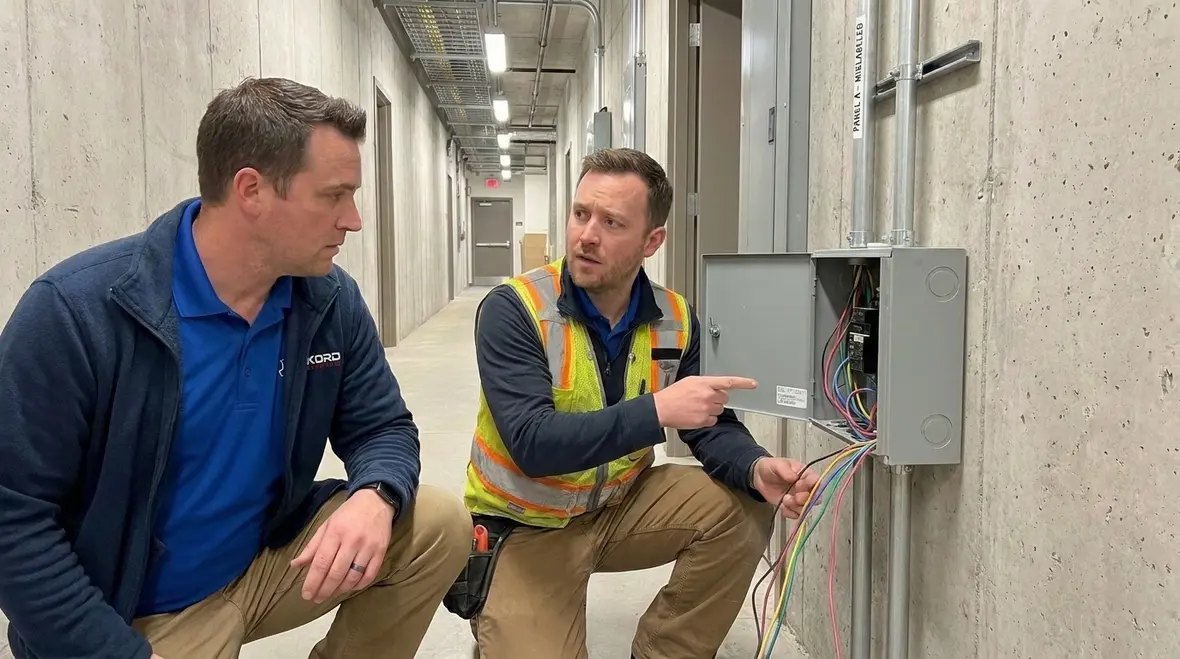
Our Kord Electric technicians explain each step as they go, because our customers maintain complex environments. They need a system that stays understandable, even when the project evolves.
What our technicians check during audits and corrective work
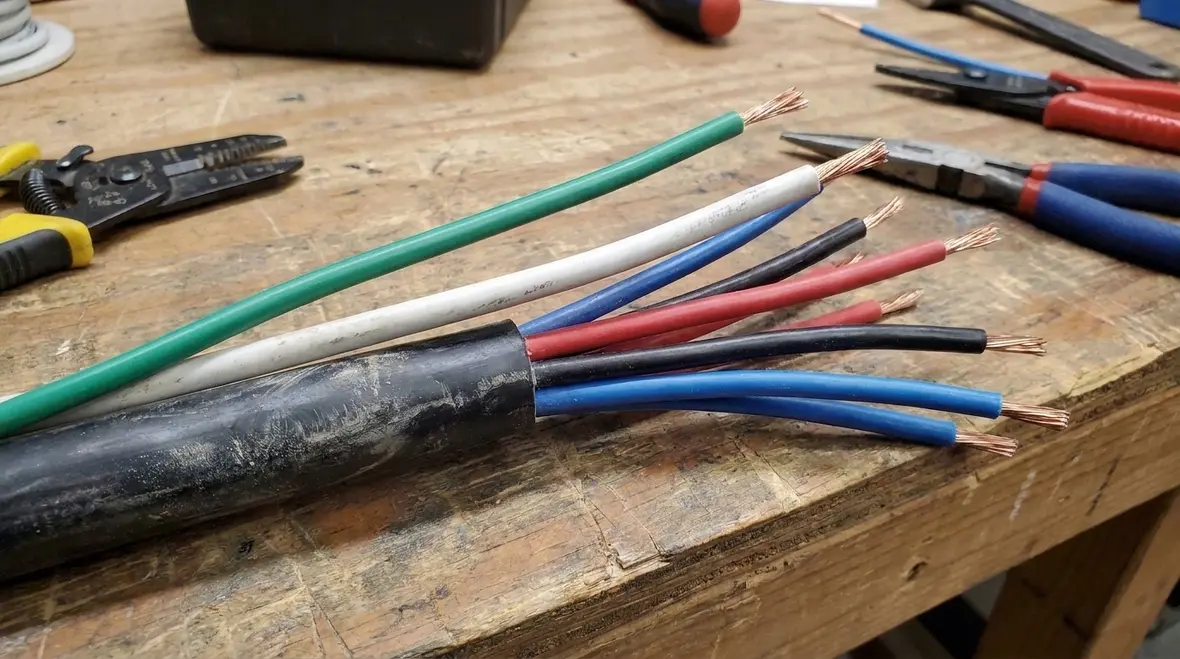
When we support commercial and industrial facilities, we treat conductor identification like a safety control, not a cosmetic detail. During audits, our expert service staff typically review the following items, then document what they find.
- Panel identification and conductor mapping: we confirm labels match conductor identification so no one guesses during maintenance
- Splices and terminations: we verify the identification method stays consistent through the entire run
- Grounding paths: we confirm equipment grounding follows expected identification, and we check for mismatches that invite future trouble
- Renovation interfaces: we look at areas where new work meets older cable so color coding remains readable
- Documentation handoff: we provide clear notes so future contractors do not have to rely on memory
And yes, we sometimes meet the “it is probably fine” argument. That line shows up like a rerun episode, and our staff responds calmly. We explain that color coding supports traceability. When traceability fails, troubleshooting costs rise. When troubleshooting costs rise, the whole schedule suffers. Nobody wins that game, not even the director.
When customers ask us, we also connect these practices to broader NEC expectations. Our team references resources we support in our own knowledge base and guides, including how the National Electrical Code framework applies to modern commercial and industrial installations. For facility teams who want a wider context, we often point to companion explainers like Understanding NFPA 70: The National Electrical Code Explained for 2026, which ties code language back to everyday field decisions.
Color coding across building upgrades, tenant work, and system expansions
Commercial and industrial facilities rarely stay frozen. So, we plan for change. A conductor identification system should remain usable when new feeders, branch circuits, or control wiring gets added. Therefore, we encourage building teams to treat NEC identification rules as part of the expansion design, not a final check done when the walls already close.
During major property upgrades, we coordinate with electrical contractors and facility managers. First, we review existing conductor identification. Next, we confirm the new work uses the same identification conventions. Then, we ensure any interfaces with older wiring remain traceable.
Our technicians also help teams standardize labeling practices around NEC expectations. While NFPA 70 Section 310.6 focuses on conductor identification, we know that identification only works when it matches the labels, the drawings, and the real physical installation. In other words, color coding without a readable system can still cause confusion. We aim to align all three.
We also keep an eye on the broader code landscape that impacts commercial electrical safety. Our team stays consistent with the guidance that Kord Electric and our related Kord resources provide for NEC based compliance and modern updates, including how the code affects planning, installation, and maintenance. That includes cross-referencing fire and life safety perspectives from partners like KordFire, where NFPA 70: All About The National Electrical Code (NEC) 2026 is discussed alongside other safety topics.
How this fits into modern safety and electrical compliance
Conductor identification supports safe electrical operations. When workers can quickly and confidently identify conductor roles, they reduce error probability during switching, inspection, and repairs. That matters in commercial and industrial environments where systems often support life safety functions, production needs, and critical building services.
Moreover, clear identification helps during coordination with other safety systems. Even though conductor color coding targets electrical wiring, it supports the broader compliance mindset that building teams should follow. When electrical work stays consistent and traceable, fire alarm installers, standby power teams, and maintenance staff benefit from a cleaner electrical interface.
Some customers ask how we connect this to fire safety resources. In our world, electrical compliance and fire safety both depend on reliable documentation and clear installation practices. For teams who reference external guidance like fire-focused organizations such as FirePumps.org, the common thread remains: better labeling, better identification, and better maintenance lead to safer outcomes.
And for a quick laugh, we sometimes tell our customers that conductor color coding is like a well written instruction manual. It is not flashy. It is just the thing that keeps everyone from pressing the wrong button. Think of it as the difference between a smooth day and the kind of chaos that makes people start Googling “how to fix a blown breaker” at midnight.
FAQ for NFPA 70 Section 310.6 conductor identification
| Common conductor role | Typical color identification approach |
| Equipment grounding conductor | Green or green with yellow stripes, where permitted by the installation method |
| Grounded conductor | White or gray in many wiring practices |
| Phase conductors | Conductor identification follows NEC expectations for the system and wiring method, coordinated with any NEC conductor identification colors used in the facility standard |
Call Kord Electric for conductor identification support
If your facility runs on tight schedules, you deserve electrical standards that stay clear over time. Kord Electric supports commercial and industrial buildings with audits, corrective work, and documentation that keeps conductor identification aligned with NFPA 70 expectations. Our technicians explain what we find and why it matters, so your maintenance team can act with confidence. Ready to reduce troubleshooting delays and improve safety traceability? Contact us today, and we will plan the next steps like professionals, not like amateurs guessing in the dark.
For teams planning broader upgrades, it also helps to coordinate color coding with larger service and distribution work. Many facilities in the region rely on our Los Angeles County electrical services team to align conductor identification, panel upgrades, and NEC-driven improvements into one coherent project plan instead of scattered fixes.
If you want to deepen your understanding of how conductor identification sits inside the larger NEC framework, you can pair this article with resources from both Kord Electric and KordFire. Together, they connect NFPA 70 rules, NEC conductor identification colors, and real-world maintenance practices into a single, field-tested playbook for safer facilities.


