

NEC Conductor Insulation Requirements for Section 267.4
When commercial and industrial facilities plan a new power run, the right starting point matters. In the NEC, NFPA 70 Section 267.4 focuses on conductor insulation requirements for circuits, and it sets the baseline for what insulation a conductor must have based on the use and the environment it serves. In other words, we do not guess. We match the conductor design to the circuit purpose, the system voltage, and the installation conditions, so the wiring does not fail quietly while the building loudly keeps running. At Kord Electric, our technicians and expert service staff take this seriously because we have seen what happens when insulation choices get treated like a “close enough” option. Spoiler: electricity does not care about vibes.
What NFPA 70 Section 267.4 actually sets in place
First, we frame Section 267.4 as a rule for the insulation level of conductors used for specific circuit applications. Then we connect it to the real world: conduit runs, cable trays, wet or damp locations, exposed routes, and the way heat and mechanical stress travel through a building. As a result, the NEC ties insulation requirements to the circuit type and conditions, not to the contractor’s memory or a generic parts list.
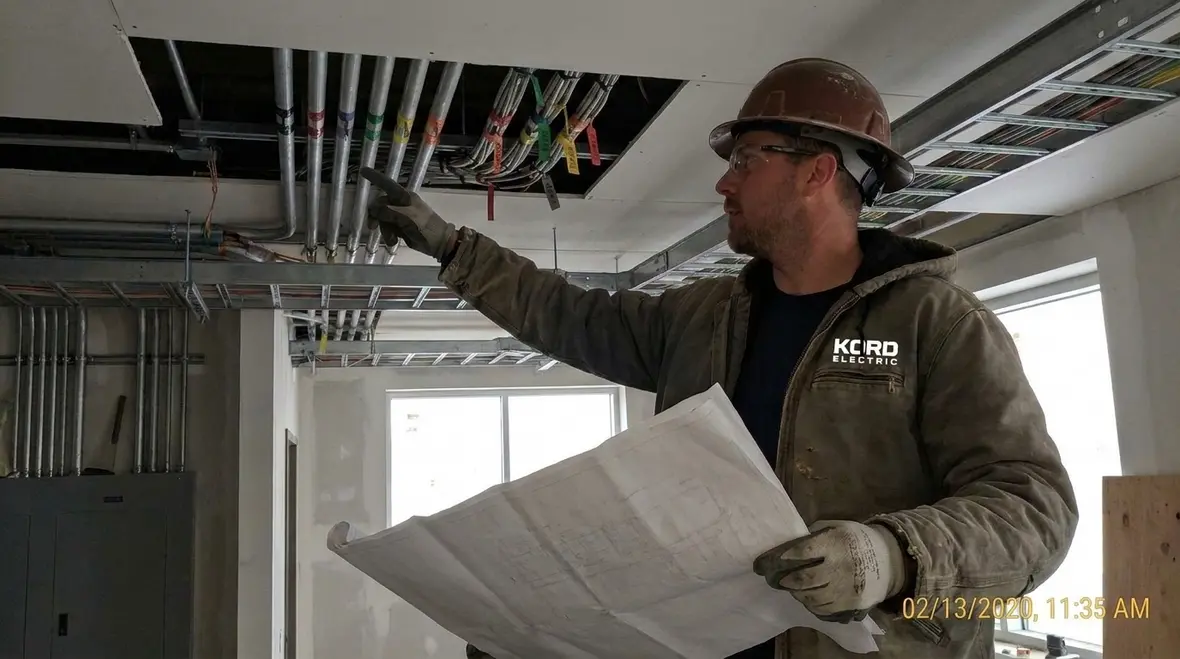
In the field, our experts explain it like this. Conductor insulation is the conductor’s protective jacket and barrier. It protects workers and equipment, and it reduces the risk of faults, short circuits, and insulation breakdown. Moreover, insulation that does not match the conditions can degrade faster than expected, especially when temperature rises or moisture creeps in. Therefore, the correct NEC conductor insulation requirements prevent failures before they become downtime events, which is the kind of surprise business owners rarely enjoy.
And yes, insulation is a boring topic in the same way that fire extinguishers are boring. Yet everyone remembers them once something goes wrong. We would rather be the people who talk about prevention before the alarm lights up.
How we match insulation to circuit use and installation conditions
Next, we connect the code to decisions the project team makes every day. A commercial switchboard room differs from a rooftop mechanical area. Additionally, a cable path that experiences heat and vibration differs from one that stays sheltered. So, our process starts with the circuit’s role and ends with the insulation selection that can handle that role without early wear.
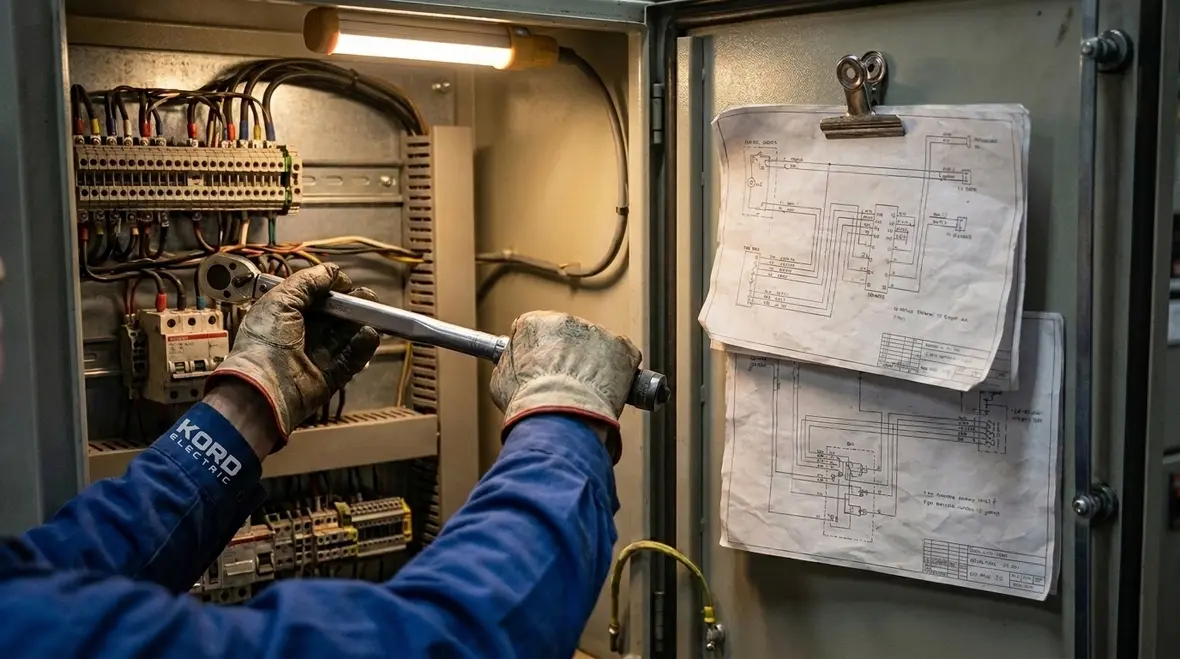
Our technicians do this in a structured way. First, we review the drawings and the one line diagrams. Then we verify circuit voltage and protective device coordination. After that, we assess the installation location details: wet, damp, exposed, or subject to sunlight, oil, or other conditions. Finally, we confirm the conductor insulation rating fits the NEC expectations for that setting.
This matters because conductor insulation must resist the environment long enough for the building’s life. In practice, that means the insulation needs to tolerate temperature rise and mechanical forces expected in the route. If the installation includes physical stress, the wiring system can face abrasion or pulling strain. Consequently, a mismatch can show up later as cracking, discoloration, or higher resistance joints, which can create heat hotspots. Heat hotspots are not a marketing plan. They are a problem.
At Kord Electric, our expert service staff then explains what they see. They tell facility managers the practical reason behind the paperwork, so the facility can plan maintenance based on risk instead of hope.
Why temperature, moisture, and physical stress drive the insulation choice
Temperature and moisture work like slow acting villains. They do not show up at once, so people ignore them, until they cannot. However, insulation ratings exist for a reason. When a conductor runs in a warm space or carries current near its design limits, insulation experiences thermal aging. Over time, that aging can lower the insulation’s ability to resist electrical breakdown.
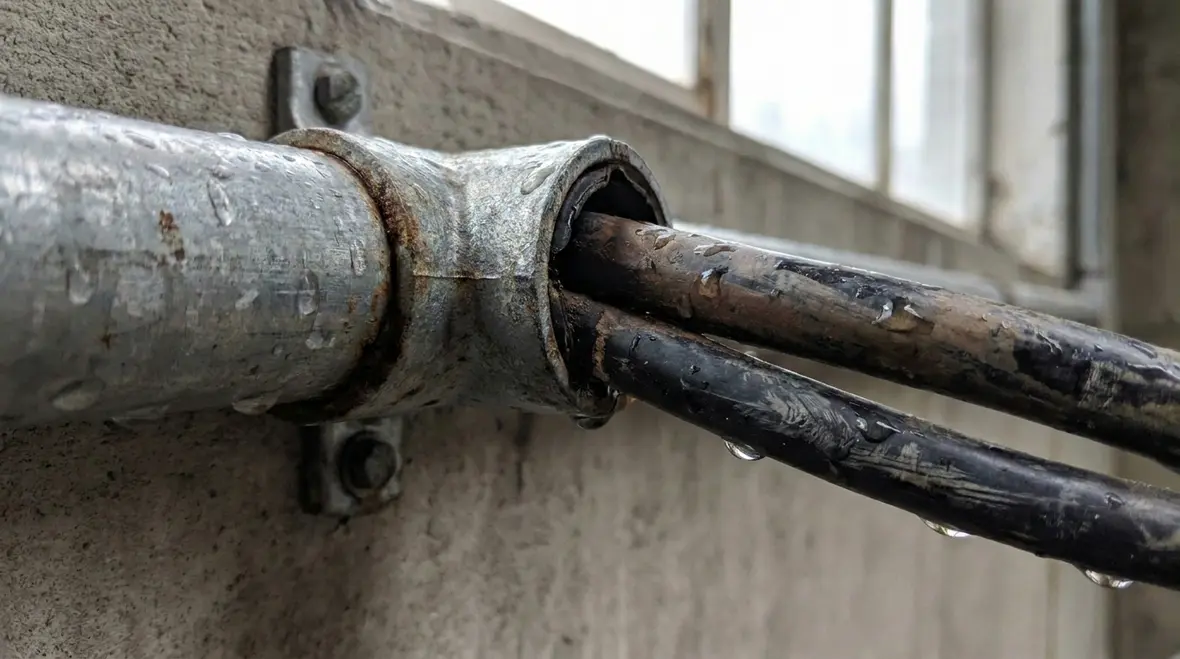
Moisture adds a second threat. Water can creep into conduits, cables, or terminations. Even when the building looks clean, condensation and humidity can create a path for corrosion. Therefore, insulation and the overall wiring method must handle dampness and, where needed, wet location conditions.
Physical stress adds a third. During installation, a cable can get bent too tightly, pulled too hard, or exposed to vibration. Later, equipment movement or building settling can shift the stress points. As a result, our field team pays attention to routing and installation practices, because correct insulation works best when the installation matches the conductor’s expectations.
At Kord Electric, our expert service staff then explains what they see. They tell facility managers the practical reason behind the paperwork, so the facility can plan maintenance based on risk instead of hope.
Tracing the insulation path from design docs to the conduit and terminations
To keep projects smooth, we do not treat conductor selection as a one time decision. Instead, we trace the insulation requirements through the whole system: conductor type, conductor rating, insulation rating, wiring method, and termination quality. This reduces the chance that the conductor meets the code on paper but fails at the terminations in the panel or equipment.
In many commercial and industrial facilities, the “weak link” becomes a connection point. If the insulation around that connection gets damaged, exposed, or compressed beyond its design, the insulation barrier can weaken. Therefore, we inspect terminations and verify torque and connector compatibility. We also confirm that installation practices do not nick the insulation during pulling or stripping.
Additionally, we coordinate with project teams to ensure substitutions never become shortcuts. If a different conductor comes in due to availability, our process checks that the replacement still meets the NEC conductor insulation requirements for circuits and the installation conditions. We keep the chain of compliance intact, because electrical systems do not forgive creative changes.
And if someone says, “It will be fine,” our technicians usually respond with a calm smile. Then they verify the details, because “fine” is not a rating on a conductor datasheet.
Common mistakes we see in commercial builds and how we prevent them
Even the best teams can make mistakes when timelines squeeze. That is why we focus on a few failure points that show up often in commercial and industrial work.
- Using a conductor with lower insulation rating for the location or duty. We correct this during submittal review and during rough in checks.
- Ignoring wet or damp conditions on the route. We confirm the actual environment, not the best guess.
- Overheating at terminations due to poor connection quality. We verify tightening methods and conductor preparation.
- Allowing substitutions without code and design checks. We require documentation for any change.
- Damaging insulation during pulling and bending. We support proper pulling techniques and handling.
Next, we add a practical step our expert service staff often recommends. After installation, we support commissioning activities that confirm the system behaves as expected. Therefore, the facility avoids hidden problems that surface later under load. For major property buildings, this approach protects uptime, safety, and the asset’s long term value.
Where Kord Electric fits in for large facilities and major property buildings
Kord Electric focuses on commercial and industrial facilities and major property buildings. That focus shapes how we plan, how we schedule, and how we communicate. We know these projects need tight coordination, so our teams align with facility standards and building timelines. Moreover, we respect that downtime costs real money, so we plan work to reduce disruption.
When clients ask us about code requirements, we do not just cite rules. We explain the “why” in plain terms. Then we show how we apply it through product selection, installation details, and inspection habits. Our technicians and expert service staff walk the job site with the same mindset: the code sets the minimum, but good execution makes it reliable.
And because knowledge should travel, our team stays aligned with trusted NEC explainers and related industry resources. We reference the wider NEC context discussed by Kord Electric in our blog and Kord Fire resources, because insulation does not live alone. It connects to the system design, the wiring method, and the overall safety picture. If you want more background reading from those resources, you can explore additional content through our NEC explained post and the NEC overview on Kord Fire.
Quick comparisons that help facilities make faster insulation decisions
When decision makers need clarity, we present insulation planning in a side by side view. Below, we summarize how crews think about circuit conditions versus insulation expectations. This is not a substitute for engineering review, but it helps teams move with confidence during procurement and install.
| Facility condition | What our team checks |
|---|---|
| Indoor dry areas | Insulation rating matched to circuit duty and allowable environments |
| Damp or wet areas | Insulation and wiring method compatibility with moisture exposure |
| Exposed routes | Resistance to physical damage and environmental stress on the route |
| Heat producing equipment proximity | Thermal expectations so insulation ages at the intended rate |
FAQ: NEC conductor insulation requirements and Section 267.4
Final thoughts and next steps with Kord Electric
If your facility team is planning new circuits, upgrades, or major property work, we can help you apply the NEC conductor insulation requirements with clarity and confidence. Our technicians and expert service staff review design details, confirm installation conditions, and focus on workmanship at the points that actually fail in the real world. Then we document the decisions so your team can move forward without guesswork.
For organizations managing multiple properties or complex systems across the region, Kord Electric also supports broader reliability and expansion work through our dedicated Los Angeles County electrical services. That way, the same disciplined approach to conductor insulation and NFPA 70 compliance carries through from individual circuits to full building and portfolio level planning.
Reach out to Kord Electric to talk through your project and keep your electrical system built to last, not just built to pass.


