

NEC Feeder Conductor Identification Under NFPA 70 266.12
Kord Electric stands with commercial and industrial facilities, and we see a steady pattern: when crews cannot quickly identify a feeder, downtime grows, troubleshooting slows, and mistakes become expensive. That is why we follow NFPA 70 Section 266.12 and focus on NEC feeder conductor identification right from the start. In this article, our expert service staff explains the key rules in plain terms. Then we connect those rules to real field work, job closeouts, labeling habits, and the kinds of problems that show up in audits and inspections. Yes, it can feel like paperwork. But once you have a panel full of wires that all look the same, you will appreciate the difference between “hope” and proper conductor identification.
NFPA 70 Section 266.12 in plain language
NFPA 70, also called the National Electrical Code, sets safety and organization standards that help people work on electrical systems without guessing. Section 266.12 focuses on how a facility should handle feeder conductor identification rules. In practical terms, we treat identification as a work method, not a decoration. When our technicians label conductors, they create a shared language across electricians, inspectors, electricians-in-training, and the next contractor who shows up after a future remodel.
To do that well, we start before the wires leave the reel. Then we coordinate with the single-line diagram, circuit schedules, and panel schedules. After that, we apply the same naming logic across the entire project. This keeps documentation and field labeling aligned. Consequently, when a maintenance tech opens a panel at 2 a.m., the label does not lie.
Some people joke that “all breakers look the same.” True. And so do a lot of cables. That is why NEC feeder conductor identification matters when it counts.

What counts as a feeder in commercial and industrial work
In commercial and industrial facilities, a feeder typically carries power from a service or a distribution source to another distribution point, such as a panelboard, switchboard, or a feeder tap location. Because feeders supply large loads and multiple downstream circuits, they become the backbone of system power flow. Therefore, when the feeder conductors lose their identity, you lose your map.
Our approach at Kord Electric follows a simple idea. First, we confirm how the electrical design treats each segment of conductors. Next, we align each label and marking to that design. Then we check the labeling at both ends when the scope requires it. Finally, we verify that the identification matches what the facility staff will see later.
We also account for how the building will operate. For example, a data center has a different operational rhythm than a warehouse. Even so, the need stays the same: electricians and facility teams need fast, accurate feeder identification without playing detective.
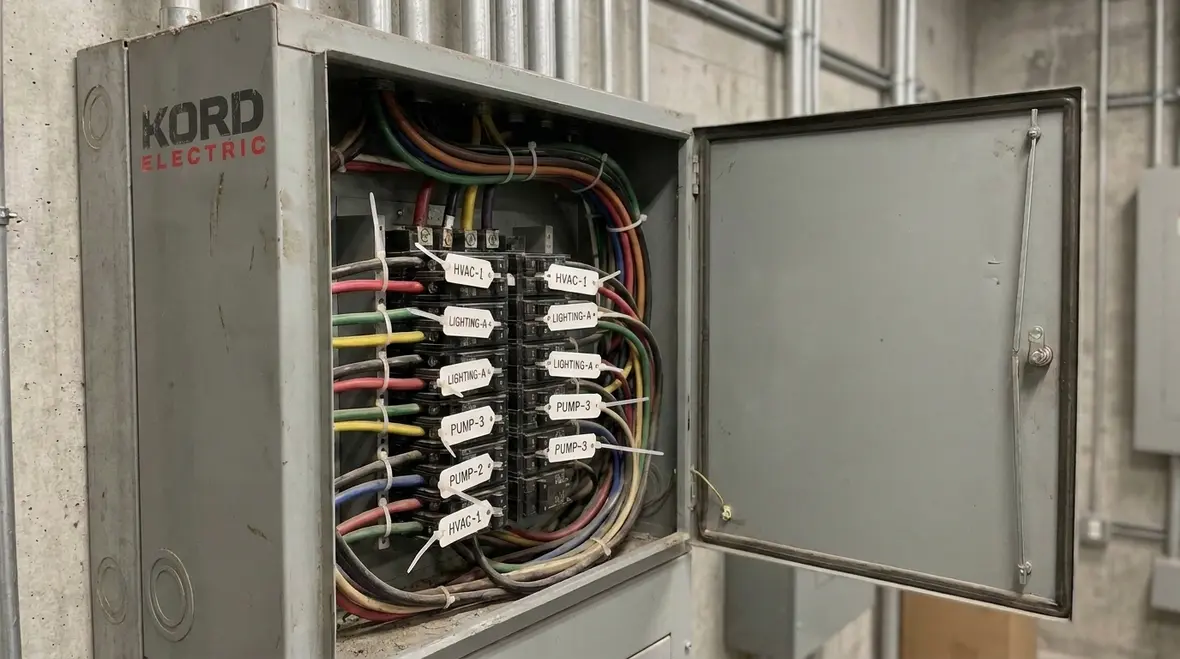
How we apply feeder conductor marking in the field
NFPA 70 Section 266.12 does not just ask for labels. It expects rules that lead to consistent, durable identification. That means a label should hold up over time and should relate directly to the circuit purpose. In addition, it must remain clear after routine work like panel cover removal and wiring changes.
Our technicians use a careful sequence. We confirm the circuit number or feeder designation in the drawings. Then we label the conductor in a way that is readable and reliable. After that, we verify the marker does not conflict with existing tags on the same enclosure or raceway. If we find a mismatch, we correct it immediately, before the next crew closes the wall.
To keep things smooth, we also train our expert service staff to treat identification like a quality step, not a last-minute chore. So, when a facility asks for revisions during construction, we update labels in sync with the change order. That way, we avoid the “I think it’s that one” method. Nobody wants that, unless they are binge watching a mystery series and calling it training.
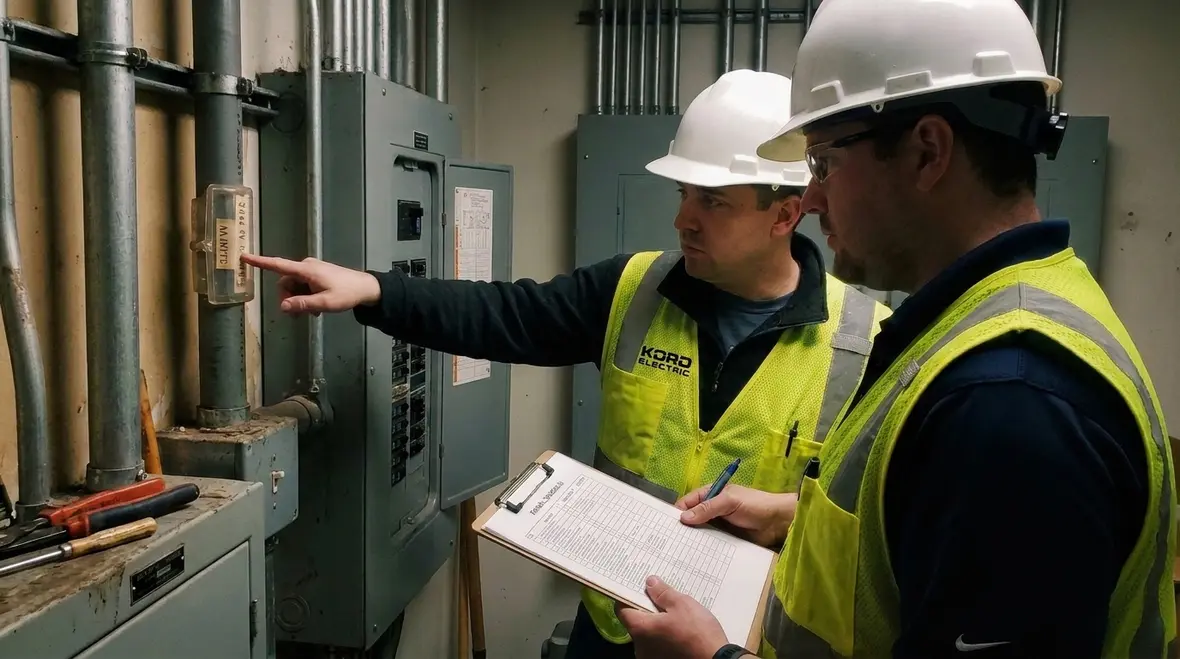
Documentation that matches the label, not just the drawing
Many projects fail the real test at turnover. The paperwork looks neat, but the field labels do not match what someone finds in the panel. We avoid that problem by connecting the drawings to the physical installation.
We do this by keeping three items in step. First, the one-line diagram and circuit directory. Second, the panel schedules and equipment markings. Third, the conductor and cable identification used on site. When these items match, maintenance teams can isolate sections safely and quickly.
Furthermore, for large commercial and industrial facilities, electrical documentation often guides future work. A tenant buildout, a new production line, or a pump upgrade will rely on those identifiers. If feeder conductor identification changes during construction but the documents do not, the facility pays twice: once for the work and again for the troubleshooting.
So we verify the labeling before we walk away. Then we support the facility with clear, readable schedules and markings that align with the NEC feeder conductor identification method used in the installation. For teams that want a deeper code-level background, our Kord resources such as Understanding NFPA 70, the National Electrical Code Explained for 2026 and Kord Fire’s NEC overview help connect the rules to practical project planning.
Common identification issues we prevent before they become costly
In the field, we regularly see the same trouble points. We fix them early, because once a building is occupied, correcting labels can turn into a logistics problem.
- Swapped feeder tags: A label points to the wrong panel section, often due to misread circuit numbers.
- Inconsistent naming: The drawing uses one term, while the field uses another. Maintenance teams notice first, not last.
- Missing marking at access points: A feeder identifies inside the panel but not where crews need it in the raceway or at junction access.
- Marks that fade: Low-quality labels fail in dusty or high-heat areas, which is common in industrial sites.
- Labeling without revision control: Change orders update conductors, but tags stay the same.
As we correct those issues, our team also considers fire and emergency needs in major property buildings. When power routing links to life safety loads and system response, clear identification helps responders and electricians work without delay. That mindset aligns with how industry groups approach NEC compliance across the building lifecycle. In the same spirit, Kord Fire resources like NFPA 70: All About The National Electrical Code (NEC) help teams connect code rules to real system safety outcomes.
And yes, sometimes a label gets removed during maintenance. That is why our service plan emphasizes recheck points and practical verification, not just initial installation.
Coordination with fire protection and emergency systems
Commercial and industrial facilities often combine power distribution with critical fire protection needs. That means the electrical system does more than power office devices or production equipment. It also supports pumps, controls, and life safety loads, which demand reliable routing and clear identification.
While NFPA 70 Section 266.12 concentrates on conductor identification rules for feeders, the real benefit shows up when the electrical and fire protection teams coordinate. When each feeder is identified consistently, emergency operation becomes easier to troubleshoot. Consequently, electricians can trace supply paths and verify that the right circuits feed the right system components.
That is why we support major property buildings with a coordinated mindset. We align electrical schedules with equipment requirements, and we communicate clearly with facility managers and related trade partners. Then, our technicians document the final identification so future service does not restart the same confusion.
Think of it like film sets. If every prop has a name, actors find it fast. If props are “that thing over there,” someone trips, and nobody wants that on a live shift. Our identification work reduces the odds of that outcome.
For facilities that rely heavily on emergency power, our guides on backup design and testing help connect the dots between NEC feeder conductor identification, power reliability, and life safety performance. Coordinated planning makes it easier to keep emergency systems ready instead of just installed.
Featured checklist for NEC feeder conductor identification
When a facility wants a quick, practical way to confirm readiness, we use a simple checklist our technicians follow. This list supports commercial and industrial projects and helps our expert service staff deliver cleaner turnover.
- Confirm feeder designations from the one-line diagram and panel schedules before labeling starts.
- Use consistent conductor and circuit naming across panels, raceways, and access points.
- Apply durable marking that stays legible in the environment where the building operates.
- Verify label placement so field crews can read identifiers without removing unnecessary parts.
- Update labels and documents together when change orders alter routing, numbering, or equipment connections.
- Recheck after closeup work so the final installation matches the final documentation.
This approach supports compliance and also supports speed. Because in the real world, the best code result is the one that helps someone find the right circuit the first time. For facility leaders planning broader upgrades, pairing this checklist with resources like our National Electrical Code overview and power distribution planning guides helps connect NEC feeder conductor identification to system-wide reliability.
FAQ: NEC feeder conductor identification and Section 266.12
Conclusion and call to action
Kord Electric serves commercial and industrial facilities, and we treat NEC feeder conductor identification as a safety and performance tool, not a last-minute label task. Our technicians and expert service staff apply NFPA 70 Section 266.12 practices with clear documentation, consistent naming, and durable markings that hold up through real operations. If your project needs clean turnover, fewer troubleshooting delays, and faster maintenance work, contact us. We will review your feeder schedules and identification plan, then build a practical path to compliance you can trust.
For facility teams across the region, our Los Angeles County commercial and industrial electrical services support everything from NEC-compliant feeder work to panel upgrades, emergency power coordination, and system documentation. When you are ready to align your labeling strategy with your long-term operations plan, our team is ready to help.


