
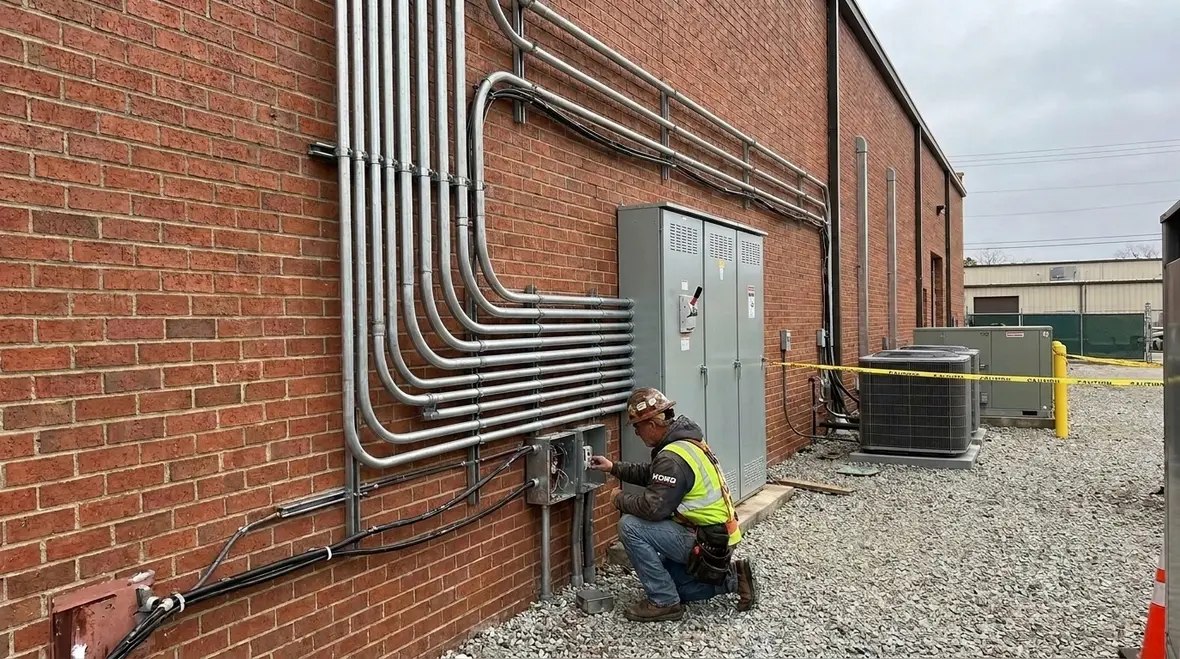
NEC Conductors Outside the Building and NFPA 70 230.6
NEC conductors outside the building, and why NFPA 70 Section 230.6 matters early
When a commercial or industrial site runs power to the next structure, across a yard, or up to a rooftop unit, it is not “just cable.” In our experience at Kord Electric, the real risk shows up when crews assume all conductors outside the building are treated the same. They usually are not. That is why we follow NFPA 70 Section 230.6 and how it defines which NEC conductors outside the building count for protection and rules. Even so, we explain it plainly to our clients, because no one wants to play “guess the compliance” like it is a pop quiz from a movie. If it sounds dramatic, good. Electricity is dramatic when it is unhappy.
As you read on, you will see how our expert service staff breaks down what “counts,” what gets treated differently, and how to plan safe routes and terminations for major property buildings.
What Section 230.6 actually covers for commercial power runs
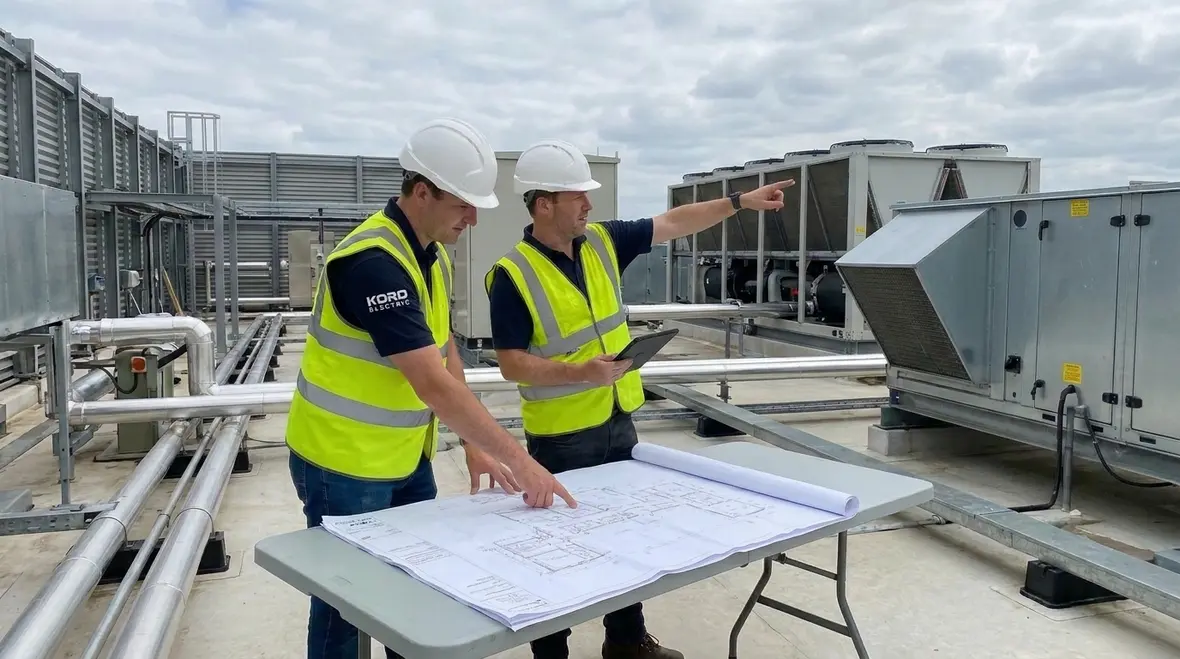
NFPA 70 Section 230.6 focuses on conductors that run beyond the service equipment’s main “inside” territory. However, the section does not mean every wire leaves the building and suddenly becomes a separate universe. Instead, it draws boundaries for what the NEC treats as outside the building for specific requirements. Therefore, the big takeaway is this: NFPA 70 Section 230.6 helps set the rules for conductors that extend from the service point to the outside parts that feed the load.
Meanwhile, many facilities managers hear “outside” and think only about buried cable. Yet, we routinely see outside conductors in three common scenarios.
- Service conductors that extend to outdoor disconnecting means or equipment
- Supply conductors feeding outdoor units such as air handlers, motors, or transformers
- Runs that leave the building and cross areas of the site, including canopies and yards
And because our technicians work on commercial and industrial facilities, they keep one eye on the code language and one eye on real site conditions, like access, heat, moisture, and mechanical damage risk. In other words, we do not just interpret the rule. We build around it.
Which conductors count as outside the building in real terms
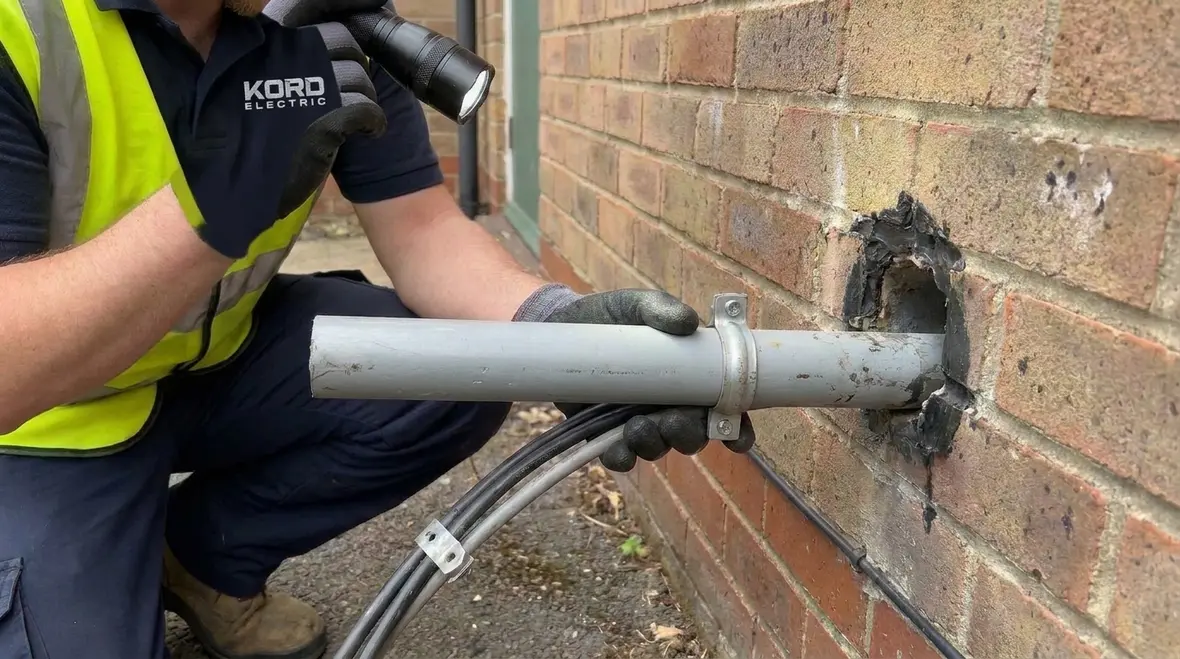
To apply NFPA 70 Section 230.6, we translate the intent into practical field rules. First, we identify the “service boundary” and the physical location where the conductors are run beyond that boundary. Then we look at what the system does, not only where the wire happens to sit.
In most major property buildings, conductors count as outside the building when they extend to equipment or routing locations that are not within the interior space. That includes outdoor wiring that connects to outdoor equipment, equipment located in separate structures, or wiring routes that pass through areas that the NEC does not treat as indoor enclosures.
Also, we see confusion when people confuse raceways, cables, and enclosures with location requirements. However, location drives many conductor rules. For example, if the conductor is outside, it often must meet requirements for exposure conditions and installation methods that differ from indoor requirements.
Our expert service staff typically explains it like this. The code is not punishing anyone. It is classifying risk. When the conductor sits where weather and damage can reach it, the NEC demands protections that match that reality.
Additionally, some conductors run through building openings or pass near exterior surfaces. In those cases, we confirm the installation method and whether the circuit path stays in a scope the NEC considers outside. Then we document what the inspection team expects. That reduces change orders later, and it keeps your schedule intact.
Common installation details that trigger compliance problems
Even when the project team knows the basics, details often cause inspection issues. So we train our technicians to look for the small items that lead to big corrections. And yes, the inspector always finds them, like a detective who never takes coffee breaks.
Here are areas that frequently affect whether conductors meet the intent for outside installation:
- Routing through exterior wall penetrations and outdoors before proper protection starts
- Improper cable type for exposure conditions and damp locations
- Conductor support and securing that does not match outdoor exposure and weight
- Missing or incorrect sealing and protection at entrances and raceway transitions
- Equipment terminations and disconnects that do not follow outdoor location rules
Next, we connect those details to how facilities actually operate. For instance, commercial and industrial sites often have expansion, new tenants, or seasonal HVAC loads. Therefore, the safest approach uses clear plans for how circuits route from service equipment to outdoor devices, with room for future additions. When we coordinate that up front, we reduce the chance that a later upgrade will “inherit” an installation that never matched the outside requirement in the first place.
How we apply the rules during design, upgrades, and inspections
At Kord Electric, we treat NFPA 70 compliance as a system, not a single checklist item. That means we review the whole path of conductors from origin to termination. We also make sure the design aligns with the project’s actual construction method, since conduit runs, cable jackets, and enclosures must work together.
So what does that look like on a major property project?
- Site walkthroughs to map where conductors leave the interior space and how they travel outdoors
- Conductor and method verification to match exposure needs and installation conditions
- Coordination with equipment locations so outdoor disconnects and devices match the intended circuit path
- Documentation for inspectors so the logic behind the installation is easy to follow
Our approach also helps with communication. Because it is easy for stakeholders to talk past each other, we explain requirements in plain language. Our goal is simple: others should understand what we are doing and why, without needing a law degree or a hidden decoder ring.
Additionally, we stay current by reviewing trusted NEC and NFPA guidance, and we use resources published by industry experts, including content hosted on related Kord Electric and Kord Fire pages such as our guide Understanding NFPA 70: The National Electrical Code Explained For 2026. That supports our field decisions with a consistent standard and helps teams see how NEC conductors outside the building fit into the larger code picture.
We also connect this work to broader NEC topics like application scope, load calculations, and workmanship. For example, our internal training points technicians to resources such as the 2026 NEC application requirements guide and NFPA 70 scope, wiring integrity workmanship standards, and calculated load determination rules, so outside conductor planning does not exist in a silo. Instead, it ties into how conductors are sized, protected, and installed across the entire facility.
When projects involve fire protection infrastructure or specialized systems, we coordinate with content and guidance from our Kord Fire resources and related industry material. That way, NEC conductors outside the building line up with fire protection design expectations, emergency power behavior, and life safety priorities, rather than working against them.
Risk, safety, and power reliability at scale
When outside conditions hit a conductor, reliability becomes a safety issue fast. If installation fails to protect against moisture, heat, impact, or abrasion, insulation can degrade. Then, faults can surface when the facility is busy, under load, and already dealing with operational stress. In short, a code miss can turn into downtime. And downtime in a commercial setting is expensive in ways that do not show up in the electrical estimate.
We also take the broader view. Major property buildings often share infrastructure across floors, wings, and outdoor zones. Therefore, a conductor route decision affects not only that one circuit but how maintenance crews troubleshoot issues and how emergency response teams isolate power.
That is why we focus on safe separation, correct support, secure transitions, and proper termination practices. And while this is technical work, our technicians explain each step to clients. We do not just install. We teach. That way, the facility team can maintain the system with confidence.
Lastly, we keep in mind fire protection and related safety planning. While your electrical system does not replace fire code needs, it works alongside them. For example, when conductors route near life safety areas, the installation needs to behave predictably under stress. Our field practice respects that reality, and we coordinate with relevant fire systems planning when projects call for it.
FAQ for NFPA 70 Section 230.6 and outside building conductor rules
Because NEC conductors outside the building touch so many parts of a facility, our clients often ask similar questions as they plan new work, upgrades, or inspections. Clear answers keep projects moving and reduce surprise corrections during review.
Partner with Kord Electric for dependable NEC-aligned service
If you manage a commercial or industrial facility, do not gamble on outside conductor rules. We at Kord Electric help you plan, upgrade, and verify electrical runs so the installation matches NFPA 70 expectations for outside conditions. Our technicians and expert service staff explain the “why” in plain terms, so your team understands what we do and what to maintain next. From early design through inspection, we connect details like NEC conductors outside the building to the bigger story of uptime, safety, and fire protection performance.
For multi-building campuses, mixed-use properties, and large commercial sites, we can also align your projects with broader NEC guidance on scope, load calculations, and wiring integrity. When your plans involve renovations or new construction in Southern California, our Los Angeles County electrical services team helps you coordinate permits, inspections, and phasing so code compliance supports your schedule instead of disrupting it.
Whether you are routing new feeders across a yard, feeding rooftop equipment, or cleaning up inherited conductors that clearly live “outside,” Kord Electric is ready to help you align NEC requirements with real-world operations. The earlier we join your project, the more options you have—and the fewer surprises show up on inspection day.
If you are ready to review your facility, identify risk points, and put NEC conductors outside the building on a more reliable footing, our team is one conversation away.


