
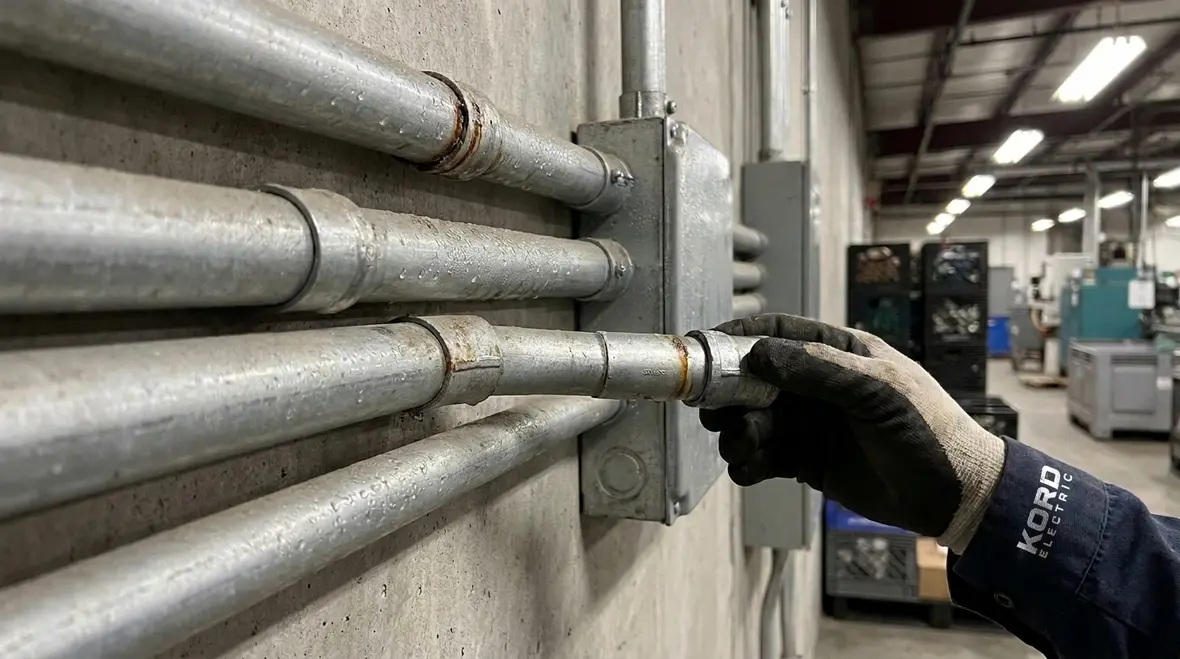
NEC Corrosion Protection Wiring Methods NFPA 70 300.8
At Kord Electric, we build and maintain power systems with a simple goal: keep conductors and equipment reliable even when the environment turns unfriendly. That means we follow NEC corrosion protection wiring methods based on NFPA 70 Section 300.8, focusing on where moisture, salts, chemicals, and physical wear can damage wiring. Our technicians and expert service staff explain each decision on site, so facility managers understand what we do and why we do it, not just that we “did a thing.” And yes, corrosion is a real villain, just not the one from your last action movie. It moves slowly, quietly, and then suddenly everything underperforms.
NFPA 70 Section 300.8 and why corrosion protection matters in real buildings
In commercial and industrial facilities, wiring often lives a double life. During normal operations, it looks fine. However, in the background, moisture, airborne chemicals, and stray contaminants can steadily attack insulation and metal parts. NFPA 70 Section 300.8 exists for that exact reason. It tells us that where corrosion or physical deterioration is likely, electrical wiring must use methods and materials that resist that damage.
In other words, the code does not assume your site is perfect. Instead, it treats your environment like a variable that can change. Coastal air brings salt. Processing plants add chemicals. Loading docks collect splash and grime. Even well-run buildings still face condensation and temperature swings. Therefore, corrosion protection is not an optional upgrade, it is part of the design discipline.
To keep things clear, our teams review the location conditions first. Then they match wiring methods and equipment choices to those conditions. After that, we document the decisions so others do not undo the protection later. Because nothing breaks a system faster than a “quick fix” performed by someone who never read the room.
Where NEC corrosion protection wiring methods get applied most often
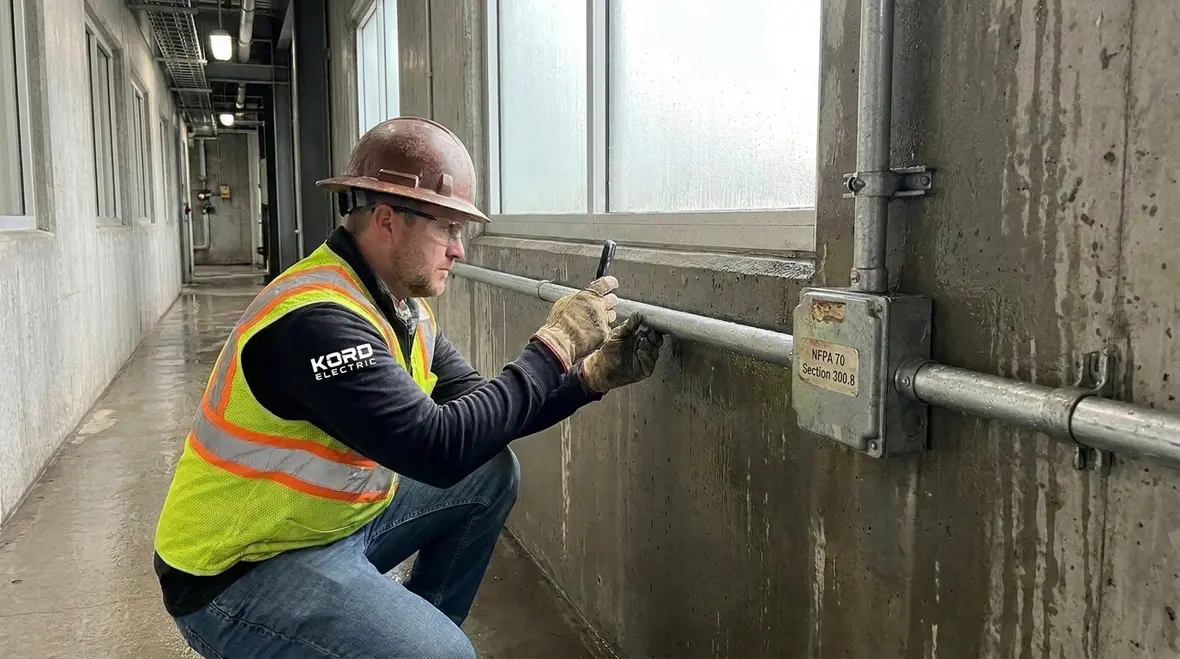
We see corrosion threats in predictable places across large properties. For example, the lower sections of conduits and enclosures can sit in damp air or splash zones. In addition, exposed runs near chemical storage, wash areas, or vents face higher risk. We also watch for areas where condensation forms, especially when hot and cold air meet.
Common risk areas include:
- Outdoor branch circuits feeding equipment in service yards, parking structures, and loading zones
- Indoor wet locations such as washdown rooms and food or beverage processing areas
- Breweries, wastewater facilities, and other sites where chemicals and humidity mix
- Substations and transformer rooms where condensation can appear during temperature cycling
- Locations near vents, drains, or places where liquids can migrate to enclosures
Once we identify where corrosion could start, we adjust how we run the conductors and how we seal and protect the system. Furthermore, we plan for future maintenance, because corrosion protection is not a one-time event. It stays relevant for the life of the installation.
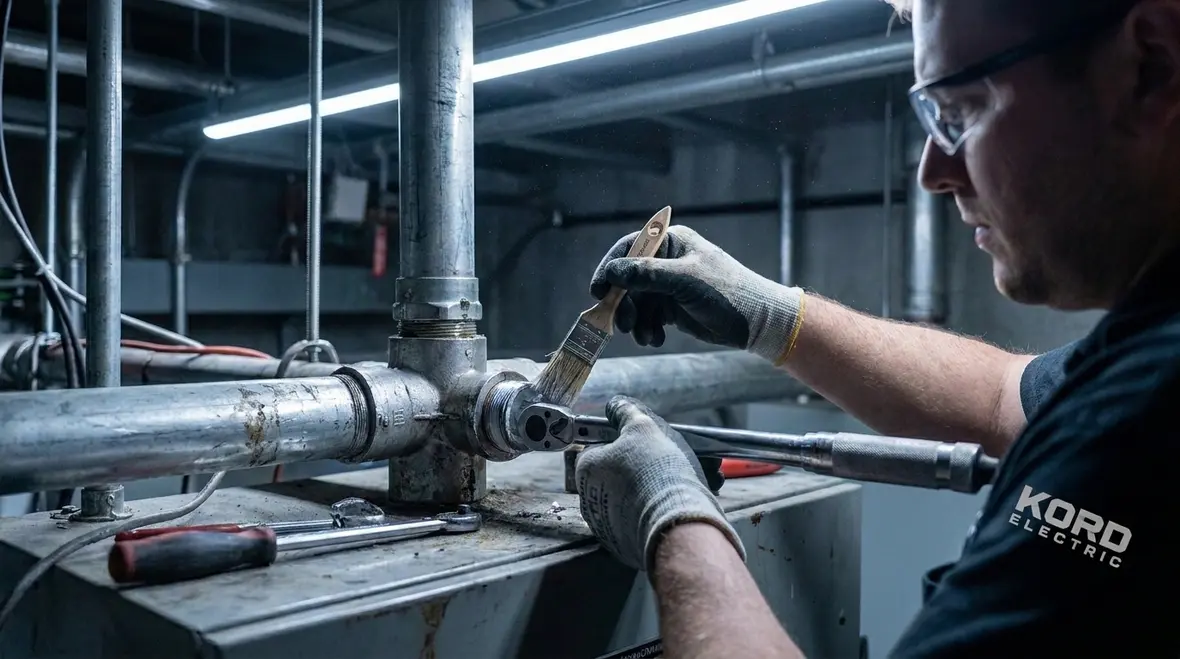
How Kord Electric designs protection against deterioration
When we talk about protection, we mean more than “cover it up.” We apply a system approach. First, our technicians evaluate the site and the wiring path. Then we select wiring methods that reduce exposure. After that, we install connectors, fittings, and terminations in a way that maintains the protection the code intends.
Here is how our process usually unfolds on commercial and industrial projects:
- Condition assessment: We identify exposure to moisture, salts, chemicals, and physical impact. We also check how the area behaves during different weather and operating modes.
- Material and method selection: We choose the right wiring method and compatible components so the protection does not fail at a connection point.
- Installation discipline: We keep joints and fittings sealed where required and we avoid practices that trap moisture inside.
- Protection at transitions: We pay extra attention where wiring enters buildings, passes through barriers, or changes routes. That is where leaks often begin.
- Verification and explanation: Our expert service staff walks facility stakeholders through the protection strategy. That way, the team understands what to maintain and what to avoid.
To put it plainly, we treat every junction like it matters, because it does. Corrosion loves weak points. And weak points love to become maintenance problems. We do not want your electrical system starring in the “will it fail next?” series.
Understanding corrosion exposure in wiring paths and enclosures
Corrosion does not behave like a switch you flip. Instead, it progresses from early damage to measurable performance issues. Therefore, our crews focus on how exposure moves through the electrical system. For example, moisture can enter enclosures, then sit at low points. Over time, that moisture can attack metal surfaces and degrade components. Meanwhile, contaminants can settle inside conduit or affect terminations.
Because of that, we plan wiring runs with drainage and enclosure integrity in mind. We also consider mechanical stress. A conduit can look protected and still suffer harm if it gets hit by forklift traffic or if the support spacing is wrong. As a result, corrosion protection and physical durability work together.
When our technicians explain this to clients, we use language that matches how facility teams operate. We translate code concepts into practical observations: where water collects, where splashing occurs, and where maintenance access helps or hurts. That is how we keep electrical protection aligned with how people actually use the space.
NEC compliance for industrial facilities and major property buildings
Large sites require more than a checklist. They need a compliance approach that fits the building’s operating reality. That includes coordination with architects, mechanical teams, and maintenance staff. It also includes planning for inspections, documentation, and long term upkeep.
In practice, NFPA 70 compliance supports reliability goals. When wiring and equipment are installed with corrosion and deterioration risk in mind, the system tends to perform with fewer interruptions. It also tends to reduce the “surprise maintenance” that steals time from operations.
We also keep our focus aligned with commercial and industrial facilities and major property buildings. Kord Electric does not treat this as a generic job. We treat it as site specific electrical engineering support delivered by experienced people. And when we reference our broader code education work, including resources like Understanding NFPA 70: The National Electrical Code Explained for 2026, we emphasize that code rules connect to real outcomes, not just paperwork.
For teams that want a bigger picture, we point them to our code-focused resources and explain how national standards connect to field installation decisions. Meanwhile, we keep the conversation calm and practical, because nobody needs high stress during an electrical upgrade. Not even the cables.
Maintenance, inspections, and how we keep protection from fading
Even the best installation can face new exposure over time. Renovations happen. Equipment gets relocated. A new cleaning process gets introduced. Weather conditions change. Therefore, corrosion protection requires ongoing attention.
Our expert service staff helps facility managers build an inspection rhythm that supports long term integrity. We recommend looking at the areas that tend to collect moisture, especially after washdown cycles, seasonal shifts, or changes in chemical handling. We also encourage teams to watch for early warning signs such as discoloration, enclosure damage, water intrusion, and deterioration at terminations.
In addition, we support documentation updates. When your electrical system changes, the protection plan should stay current. When it does not, the protection can become outdated faster than a pop quiz you forgot to study for. We would rather save everyone from that.
Because NEC corrosion protection wiring methods interact with many other parts of a facility’s electrical system, we often combine inspection planning with broader code and reliability reviews, from working space clearances to grounding and bonding practices. This keeps corrosion control connected to the overall safety story instead of treating it like a side quest.
For facilities planning major changes, pairing corrosion protection reviews with Los Angeles County electrical services support helps align field work, documentation, and AHJ expectations so your next upgrade does not stall at the inspection phase.
FAQ about corrosion and deterioration protection
Conclusion and call to action
Corrosion and deterioration do not wait for the next shutdown, so we plan for them now. Kord Electric helps commercial and industrial facilities apply NFPA 70 Section 300.8 requirements with disciplined installation, correct component selection, and ongoing service support. Our technicians and expert service staff explain every step in plain language so your team can maintain the protection long term. If you manage a major property building and want a practical plan to reduce electrical degradation risk, contact Kord Electric today for a site focused assessment.
To go deeper on how NEC rules shape real-world projects, you can also explore resources such as our National Electrical Code explainer for 2026 and related planning guides. Together with a field-tested corrosion protection strategy, these tools help your facility move from “hoping things hold up” to knowing that your wiring methods, enclosures, and components were selected to resist the conditions they face every day.
And if your facility is in an environment where moisture, chemicals, and heavy traffic all share the same zip code, now is the time to verify whether your NEC corrosion protection wiring methods match today’s realities, not yesterday’s assumptions.


