
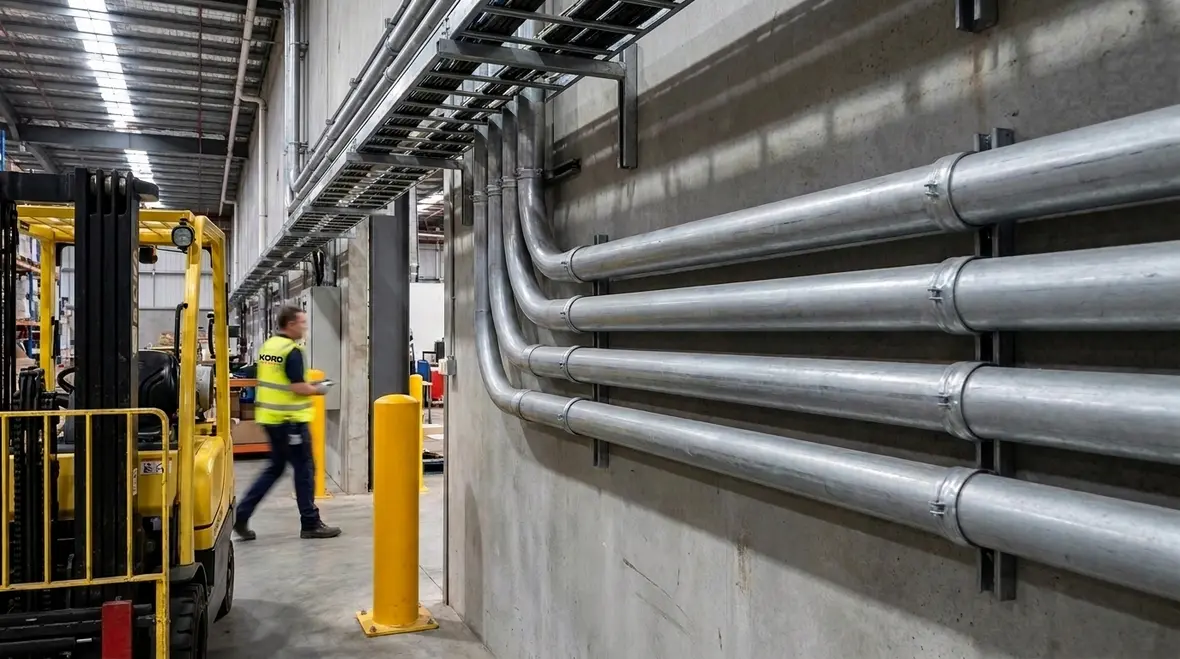
NEC Physical Damage Protection Wiring Under NFPA 70 300.6
At Kord Electric, we take NEC physical damage protection wiring seriously because commercial and industrial buildings do not tolerate guesswork. The moment wiring gets struck by equipment, kicked by maintenance traffic, or worn down by vibration, the risk stops being theoretical and starts showing up as nuisance faults, downtime, and expensive repairs. That is why we point our teams to NFPA 70 Section 300.6 and the related rules that guide how we protect wiring in the real world. In this guide, we explain what the code expects, how our technicians apply it on job sites, and how we help facility managers understand the why behind every bend, guard, and route. And yes, we will keep it clear, because nobody wants their electrical system to behave like a soap opera plot twist.
What NFPA 70 Section 300.6 requires for guarding wiring
NFPA 70, also known as the National Electrical Code, sets practical rules for safety, and Section 300.6 focuses on protecting wiring from physical damage. In plain terms, the code expects conductors and cables to be arranged and protected so they do not get crushed, scraped, or pulled apart by ongoing activity in a building. To do that, we look at the installation environment and then we choose a method that fits the hazard.
First, we identify where impact or abrasion commonly happens. Next, we verify whether the cable or conductor will be exposed to likely contact, including forklift routes, service platforms, overhead doors, or areas where stored items can rub against the insulation. Then, we decide on a protection approach, which may include suitable raceways, enclosures, wiring methods that resist damage, and proper mounting. Our experienced service staff explains the logic step by step, so your team does not have to “translate” a code book like it is an ancient scroll.
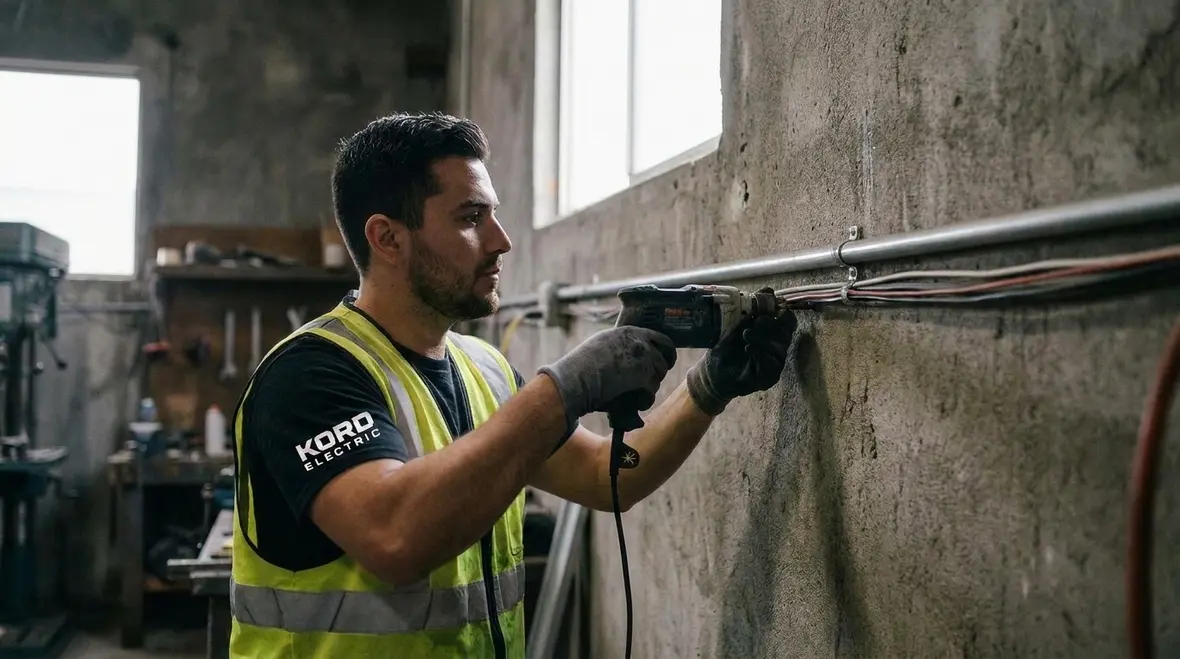
Where physical damage happens in commercial and industrial facilities
In offices, warehouses, and major property buildings, wiring rarely lives a calm life. Instead, it meets traffic, tools, vibrations, and occasional human forgetfulness. That is why we build protection planning into every project from the first walk-through. Moreover, we treat “possible damage” as a real job factor, not a hypothetical.
Here are the situations we commonly review with our technicians and facility partners. Then we match the protection method to the risk level.
- Areas with moving carts, pallet jacks, and forklift paths where conduits or cable trays can take hits
- Zones near ladders, maintenance access points, and mechanical rooms where tools and hoses swing
- High traffic corridors inside service buildings where impact happens at predictable heights
- Locations subject to abrasion, such as where cables run close to structural edges or equipment frames
- Regions exposed to vibration from motors or pumps where strain can build over time
- Spaces where storage routines change seasonally, and wiring can end up closer to inventory
When we find these conditions, we also consider how the installation will age. Even if a cable looks protected today, later changes in equipment layout can shift the hazard. Therefore, we guide building teams to keep protection aligned with how the space actually operates.
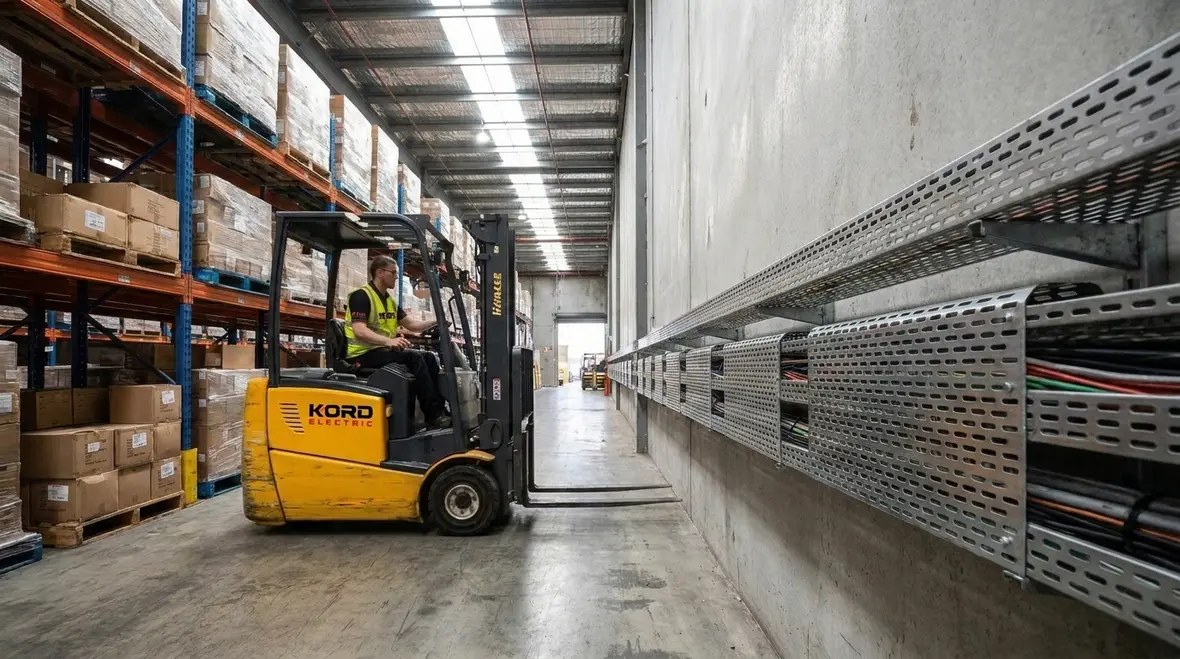
How we apply protection methods under the NEC physical damage protection wiring rule
Once we understand the environment, we apply the code expectations in a way that performs on site, not just on paper. As we work, our technicians use NFPA 70 as a baseline and then make sure the installation method addresses the specific risks we observe. This is where NEC physical damage protection wiring turns from a phrase into a set of decisions that hold up under everyday wear.
Depending on the setting, we may use raceways and enclosures that resist impacts and abrasion. We also verify that components are installed in a way that keeps them secure and properly supported. In addition, we pay attention to routing and separation from hazards so the wiring does not become the easiest target.
Our process usually follows a simple rhythm. First, we locate conductors and cable runs that could face physical contact. Next, we confirm that the selected wiring method or equipment provides the required protection. Then, we check installation details, such as fastening, support spacing, and transitions where damage can concentrate. Finally, we document what we did and why, so others can maintain the system without “inventing” new risks.
And if that sounds like a lot of steps, that is because it is. Electrical work is not the place to wing it like a character who says, “How hard can it be?” right before smoke starts doing impressions.
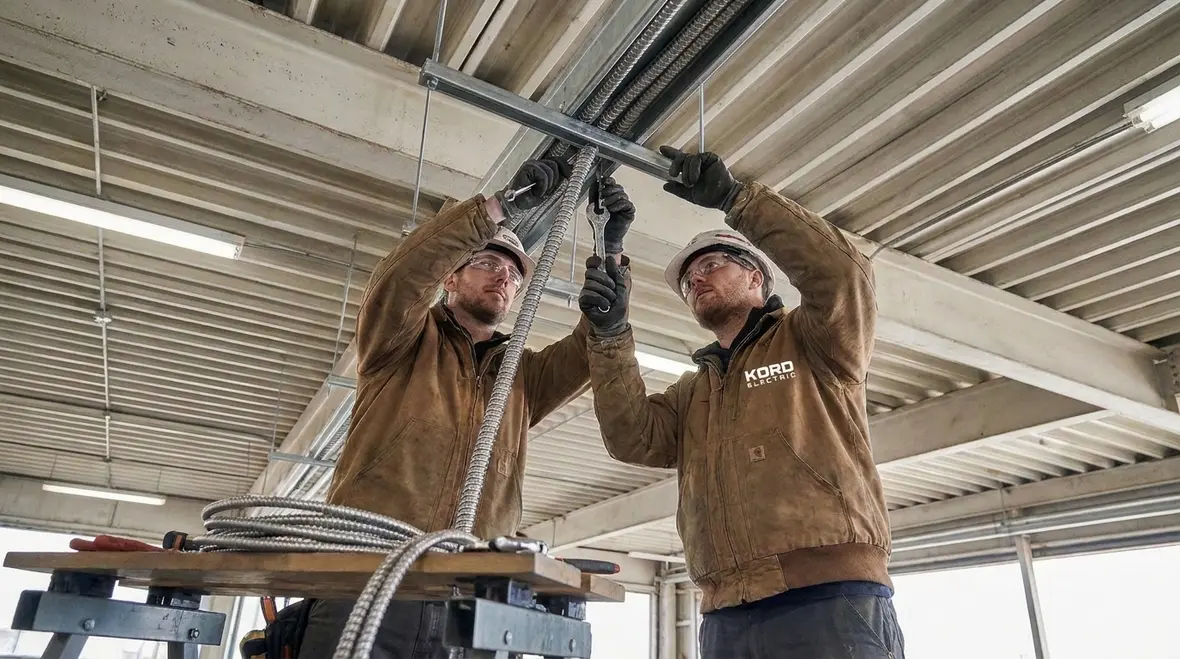
Raceways, enclosures, and routing choices that reduce risk
Protection is not only about what you install. It is also about where it goes and how it gets there. For that reason, we focus on routing and termination practices that prevent stress and exposure. Furthermore, we coordinate with mechanical and construction teams so conduit and cable runs stay clear of moving parts and equipment access areas.
When we design and install for commercial and industrial buildings, we often consider these practical items:
- Conduit and raceway placement so wiring sits away from likely impact points
- Barrier and guard use where routing alone cannot fully remove the hazard
- Proper support and securing so vibration and handling do not loosen components
- Protected transitions where wiring changes method, direction, or elevation
- Clearances around doors, access hatches, and equipment to avoid accidental contact
Our expert service staff also helps facility managers understand how daily operations affect the electrical system. For instance, if a maintenance routine requires moving tools through a specific area, then routing and protection should reflect that reality. In other words, we do not treat the building like a static museum exhibit. We treat it like what it is: a working environment with people, equipment, and busy days.
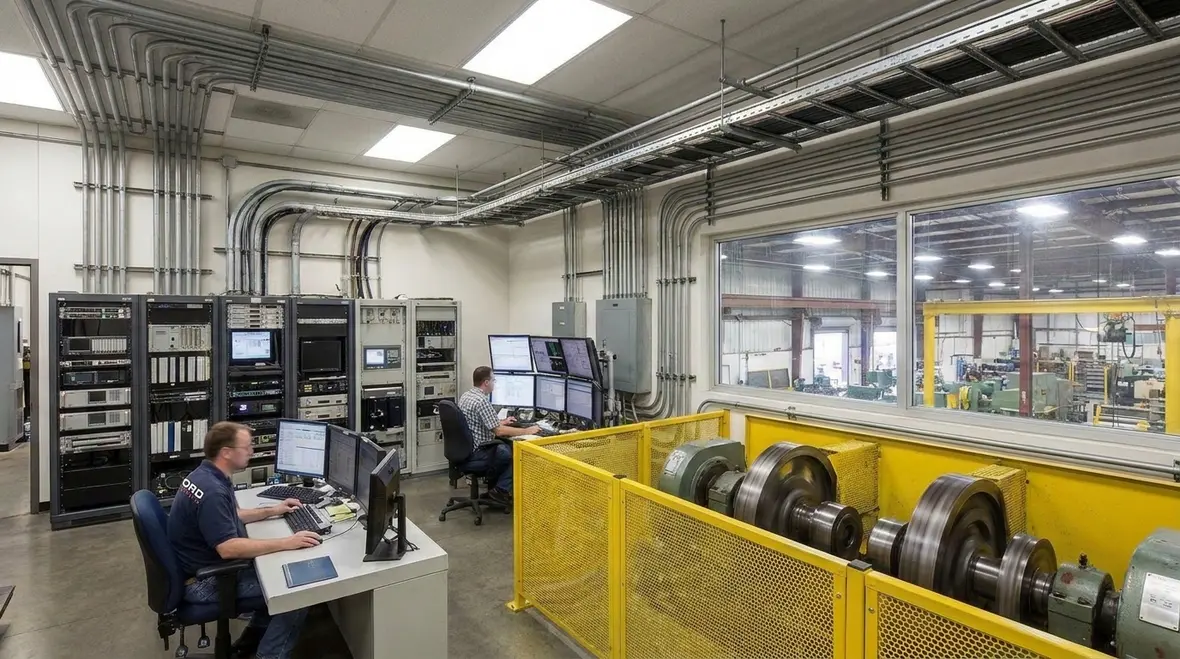
Inspection readiness and documentation for facilities teams
Commercial and industrial owners want less uncertainty, especially when inspections and audits approach. Therefore, we support our installations with clear documentation and focused readiness. Instead of leaving teams to search for answers during a walkthrough, we help them understand the installation choices ahead of time.
For example, we track the locations where wiring needs physical protection based on the site conditions we see. Then we confirm that the selected wiring methods match those conditions. Also, we ensure that installation details align with the rules for secure support and proper assembly. Finally, we provide guidance on what building staff should watch for during routine maintenance.
This approach reduces downtime and helps others troubleshoot safely. And yes, it also helps you avoid the dreaded moment when someone asks, “Who decided this route?” and everyone slowly turns toward the nearest wall.
Common mistakes we prevent during NEC physical damage protection wiring planning
Even well staffed teams can miss details, especially when timelines run tight. So, our technicians focus on the failure points we see most often in the field. Moreover, we emphasize how small errors can cause big problems when they hit later.
Here are the mistakes we work to prevent in commercial and industrial facilities:
- Routing wiring where impact happens at predictable heights, then assuming paint or placement alone “counts” as protection
- Skipping protection at transitions, such as entry points and direction changes where damage concentrates
- Choosing a wiring method that resists moisture or heat, but not physical contact
- Using supports that do not hold up under vibration, which can lead to abrasion over time
- Failing to plan for future equipment changes, like new storage patterns or updated maintenance routes
- Leaving areas exposed during construction, then forgetting that the same risks remain after occupancy
Because we serve major property buildings and industrial sites, we plan for how work actually happens. In addition, we coordinate with your team so the protection stays correct when the building changes.
For facility teams who want more context on how physical protection fits into the bigger NEC picture, our partners often review educational resources that walk through key code concepts, such as the Kord Electric guide Understanding NFPA 70, the National Electrical Code Explained for 2026 alongside Kord Fire’s broader coverage of NFPA codes and fire protection principles.
FAQ about NFPA 70 Section 300.6 and physical protection
Conclusion: protect uptime with Kord Electric
When we apply NFPA 70 Section 300.6, we help commercial and industrial facilities prevent wiring damage before it turns into downtime. Kord Electric sends technicians who evaluate the site, match the protection method to real hazards, and document the work so your team can maintain confidence during inspections. If you want wiring protection that holds up in a working building, contact us. We will review your current layout, explain the upgrades in plain language, and help you move forward calmly, like a pro who already survived the hard part.
For property owners and facility managers across Southern California, these projects often tie into broader reliability upgrades, from overcurrent protection and grounding improvements to equipment relocation and new panel work. If you need comprehensive commercial and industrial support in the region, our Los Angeles County electrical services team can coordinate NEC physical damage protection wiring with other critical electrical improvements, so you get one integrated, code-focused plan instead of a patchwork of fixes.


