
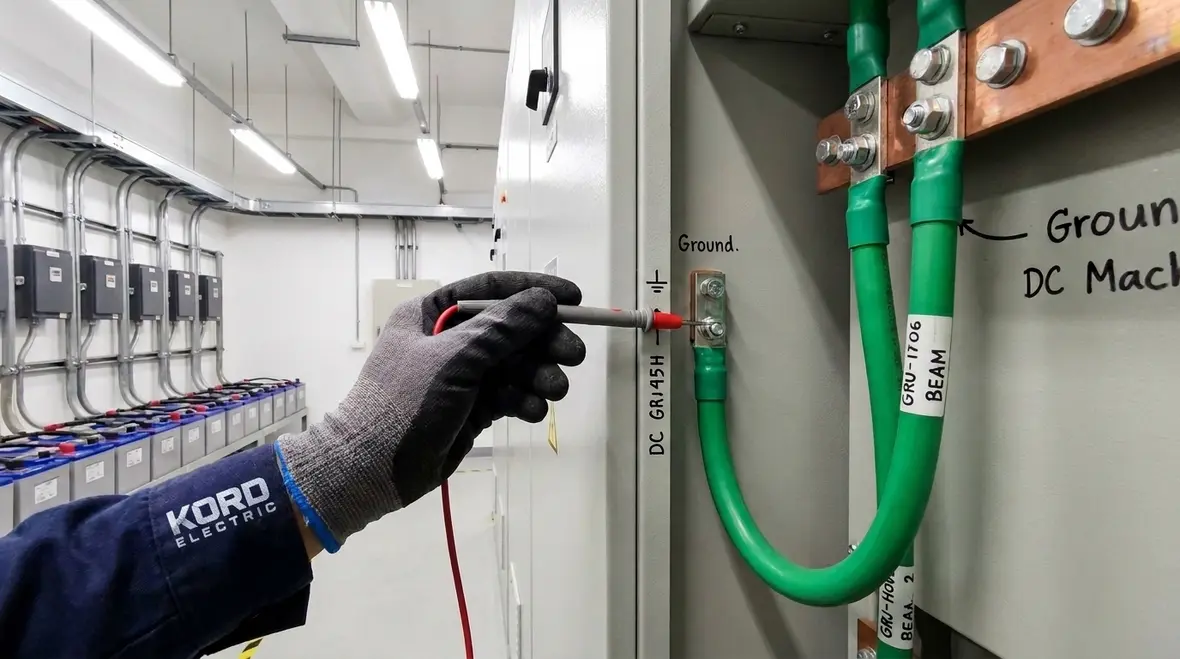
NEC DC Grounding Connection Point Guide for NFPA 70 250.164
At Kord Electric, we help commercial and industrial facilities stay safe, compliant, and dependable. That starts with good grounding practices, and specifically the NEC DC grounding connection point topic from NFPA 70 Section 250.164. In plain terms, it is where the electrical system gets tied to ground for direct current circuits, so faults clear the right way and the equipment stays within safe limits. However, the real value shows up only when teams install, label, and verify these points correctly. And yes, we know nobody wakes up excited to read about grounding connection points. Yet when a facility operator wants fewer surprises, our technicians explain the rules and turn them into practical steps you can trust.
NFPA 70 250.164: Why DC grounding connection points matter in the real world
NFPA 70 Section 250.164 addresses how DC systems create and maintain a solid grounding path at defined connection points. Many facilities use DC power in places people forget to think about, like PV solar tie-ins, battery backup systems, control circuits, and telecom related equipment. When a DC system lacks proper grounding at the right location, the risk does not vanish. Instead, it can shift into unpredictable behavior, higher touch voltage risks, and delayed fault clearing.
Moreover, DC behaves differently than AC, so the “we always did it that way” approach can backfire. DC arcs can hold longer, and current paths can develop in ways that confuse maintenance teams during troubleshooting. Therefore, grounding connection points become more than a code checkbox. They become a map for safe fault management.
Our expert service staff often tells clients that grounding is like a good seatbelt. Most people ignore it until the moment they really need it. And if you have ever watched a detective scene on TV, you know the truth still shows up, even if nobody wants to hear about it. Grounding rules are the same way. They make the system legible when problems arise.
Where NEC DC grounding connection points fit into the DC system layout
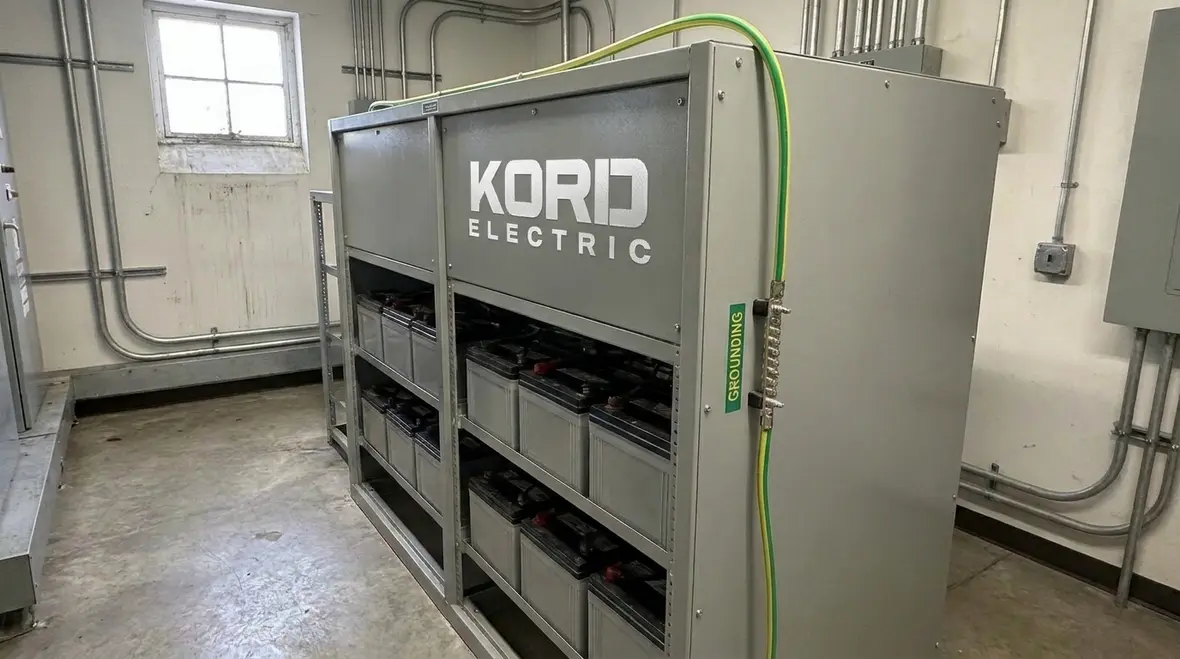
To answer how these rules play out in a building, we start with system architecture. In a commercial or industrial facility, DC circuits may connect to inverters, charge controllers, battery cabinets, and distribution panels. Each of these components carries part of the story. Then the NEC DC grounding connection point concept shows up as the defined location where grounding connections tie in so that protective devices and bonding paths work as intended.
Next, we help our clients understand what “connection point” means in practice. It usually refers to a specific point in the DC circuit where the grounding conductor connects or where the grounded system element connects to ground through the proper method. That matters because loose or wrong location connections can create floating potentials. Also, a wrong connection point can disrupt the protective scheme, such as how overcurrent devices or protective relays respond during faults.
Our technicians follow a simple, disciplined flow. First, we identify the DC source and how it distributes. Then we locate the required connection point. After that, we confirm conductor routing, bonding continuity, and any required markings. Finally, we test and document. In other words, we do not just install. We verify, and we explain the “why” so your team can maintain it confidently.
For facility leaders who want a broader NEC roadmap beyond DC systems, we also recommend pairing this discussion with higher level code guides such as Understanding NFPA 70: The National Electrical Code Explained for 2026, so your grounding plan fits into the bigger safety picture.
How bonding and grounding work together for fault clearing
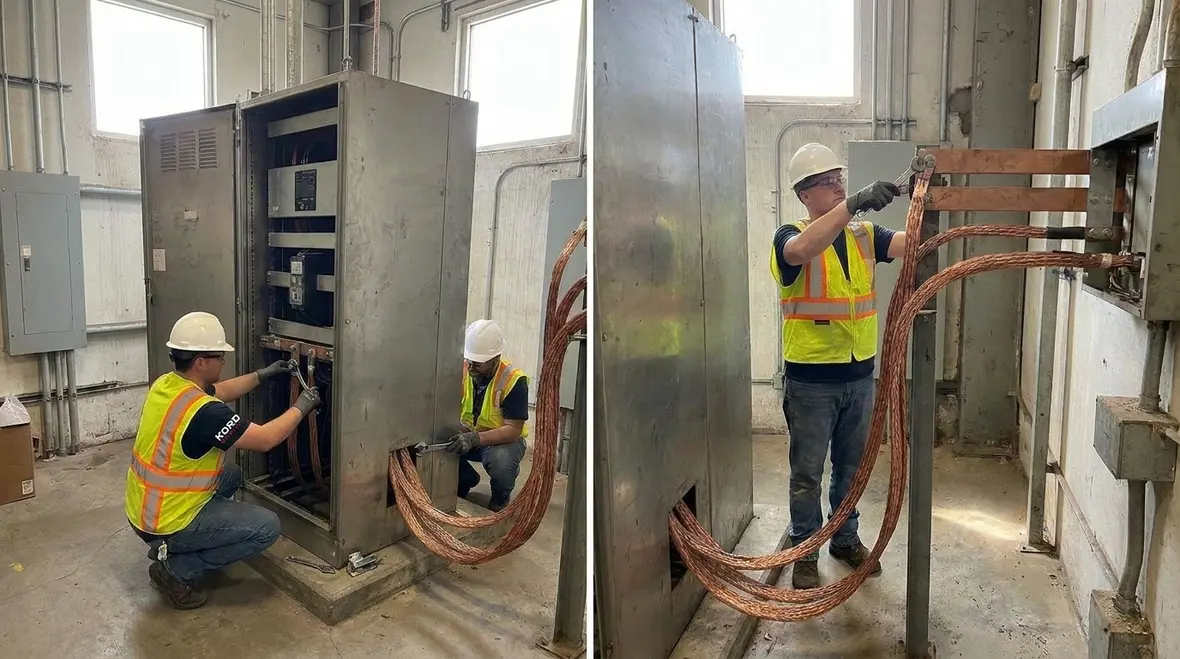
Bonding and grounding do not compete. They collaborate. Grounding provides a path to earth or an effective grounded conductor arrangement. Bonding connects conductive parts so they stay at the same electrical potential. For DC systems, this coordination helps limit voltage differences and supports the protective response during a fault.
When the NEC DC grounding connection point is handled correctly, a fault has a predictable path. That allows protective devices to detect trouble and clear it. On the flip side, when it is handled loosely, the system can develop abnormal voltages. Then technicians may see unexpected readings during inspections, and sometimes they may also see equipment behaving strangely. That is when troubleshooting turns into an expensive scavenger hunt.
In our experience with major properties and industrial sites, the biggest issues often show up during modifications. For example, a facility adds a battery bank, extends a cable run, or changes a control cabinet. If the grounding connection point rules get treated like “just reuse the existing conductor,” compliance and safety can drift. So we encourage facility owners to plan grounding updates alongside any DC changes, not after. Also, we train the local maintenance team on what to look for during routine checks.
For teams already working through broader electrical projects, it can help to connect DC fault management to bigger upgrades like commercial system modernizations and hazard prevention strategies highlighted in resources such as Kord Electric’s commercial electrical system and hazard prevention guides. That way, your NEC DC grounding connection point work does not live in a vacuum; it becomes part of a coordinated reliability plan.
Inspection, labeling, and verification for compliant DC grounding
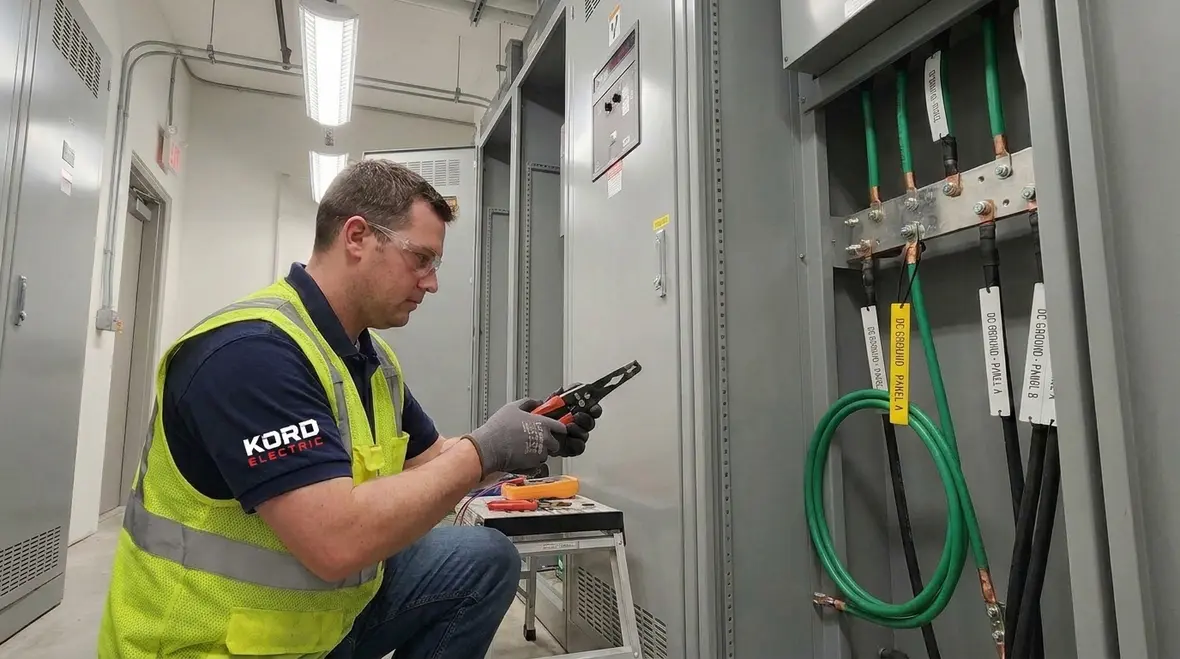
Code language matters, but the field matters more. For DC systems, compliant installation depends on the details: correct conductor type, secure terminations, appropriate bonding, and clear identification. Therefore, our technicians emphasize documentation as much as hardware. We label grounded elements and grounding conductors, so future staff can recognize the system intent without guessing.
We also verify connections with methods that match the facility’s environment. That includes checking continuity where it applies, checking termination tightness and condition, and confirming the grounding path meets the design intent. Additionally, we review cable support and routing, since damaged insulation can create unintended contact with conductive surfaces.
To keep the process calm and predictable, we explain each verification step before we do it. That way, the facility manager is not left wondering if we are “just poking wires.” We are, but in a professional way. Think of it like a mechanic explaining why a brake line matters, not like a sitcom where someone tries to fix the car with duct tape. We use clear notes and leave the site cleaner than we found it.
When DC grounding touches fire pump controllers, emergency power equipment, or life safety circuits, we also coordinate with specialists familiar with NFPA-driven systems, including allied resources from organizations like Kord Fire’s NFPA 70 overviews so that your documentation and inspection plan stay aligned with the broader fire and life safety strategy for the building.
Common mistakes we see on commercial and industrial DC systems
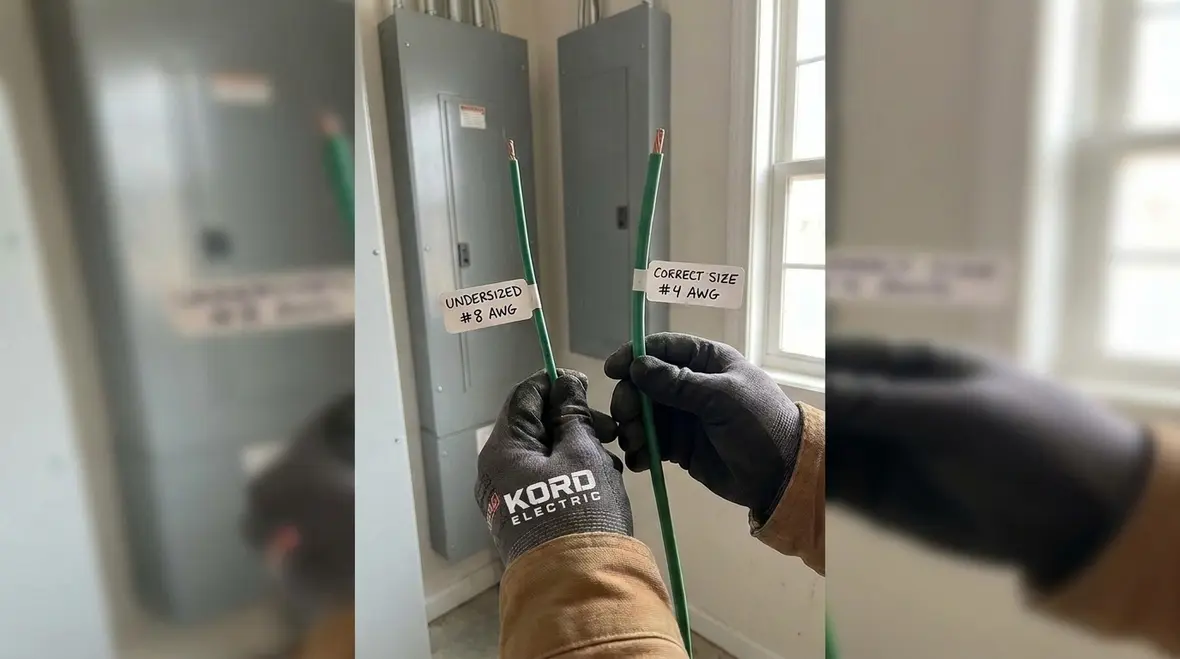
Even careful teams can miss details when schedules get tight. And yes, we have seen more than one grounding plan that looked great on paper and then fell apart in the field. Here are the recurring mistakes our expert service staff finds during assessments.
- Grounding connections placed at locations that do not match the design and the required connection point intent
- Missing or unclear labeling for grounded conductors and associated equipment
- Loose terminations, corrosion at terminations, or conductive contamination that creates weak joints
- Bonding that stops at the wrong boundary, leaving conductive parts at different potentials
- Changes made during renovations without updating grounding documentation and drawings
- Inconsistent maintenance habits, where inspections happen for some cabinets but not others
However, the fix usually does not require a total rebuild. More often, it requires targeted corrections, updated labeling, and improved verification. Once we correct the grounding connection point practices and confirm the bonding path, systems behave more predictably. In many cases, that also reduces nuisance alarms and speeds up troubleshooting.
If your facility planning also includes larger electrical redesigns or efficiency work, it can be smart to fold these corrections into projects like commercial energy audits or building electrical system design upgrades. That way, your NEC DC grounding connection point improvements ride alongside other modernization efforts instead of becoming a separate disruption.
How Kord Electric supports facility owners with NEC based grounding guidance
Kord Electric focuses on commercial and industrial facilities and major property buildings, because those environments need reliability more than shortcuts. We support owners, electrical contractors, and facility teams by translating NFPA 70 requirements into practical installation steps, and we train the people who must maintain those systems later.
Our staff explains the requirements and helps align the electrical design with real site constraints. We also coordinate with your existing systems, such as switchgear layouts, battery rooms, and equipment rooms. If your site involves fire pump systems, emergency power systems, or related electrical infrastructure, the grounding and bonding approach still matters, because it affects how protective measures respond and how safely systems share faults.
For teams seeking broader context on the NEC and how it applies to modern sites, we also point clients to our related guides, including the NEC explanation resources published by Kord Electric and Kord Fire. You can explore those resources through Kord Fire and additional reference material on DC grounding principles, so everyone involved speaks the same language.
When facilities in Los Angeles County and across Southern California want those principles applied in the field, we connect NEC DC grounding connection point work with larger service offerings like our dedicated Los Angeles County electrical services, so inspections, corrections, and future upgrades share the same disciplined playbook.
FAQ about NFPA 70 Section 250.164 and DC grounding
Conclusion: Get DC grounding done right with Kord Electric
If your commercial or industrial facility uses DC power, you deserve grounding that matches NFPA 70 Section 250.164 and works in the real world, not just on a checklist. Kord Electric sends expert technicians to inspect, correct, label, and verify DC grounding practices so your team can operate with confidence. When schedules move fast, we keep the work methodical and the explanations clear. Contact us today to review your DC system and strengthen safety and compliance before the next inspection season arrives.
Whether you are tuning a single NEC DC grounding connection point or rethinking an entire DC distribution layout, pairing code-based guidance with field experience lets you avoid surprises. Our crews bring that combination to every visit, so your equipment, documentation, and inspection results point in the same direction: safer, more predictable operation for the long term.


