NEC Exterior Multiconductor Cable Rules for 225.21
At Kord Electric, we advise facility teams to follow the NEC exterior multiconductor cable rules early, not after a contractor has finished trenching and everyone is already busy with the next fire drill. In the first step, we look at NFPA 70 Section 225.21 for the requirements that apply when multiconductor cables run on the outside of buildings. Then we confirm the cable type, the installation method, and how the wiring stays protected from sunlight, moisture, and physical damage.
And yes, we say “rules” a lot, because the alternative is usually a short meeting with a stressed maintenance manager and a longer bill for emergency fixes. In this guide, our technicians explain what matters, how 225.21 fits the larger NEC picture, and how commercial and industrial facilities can build a safer, cleaner exterior wiring system.
NFPA 70 225.21 basics for exterior multiconductor cables
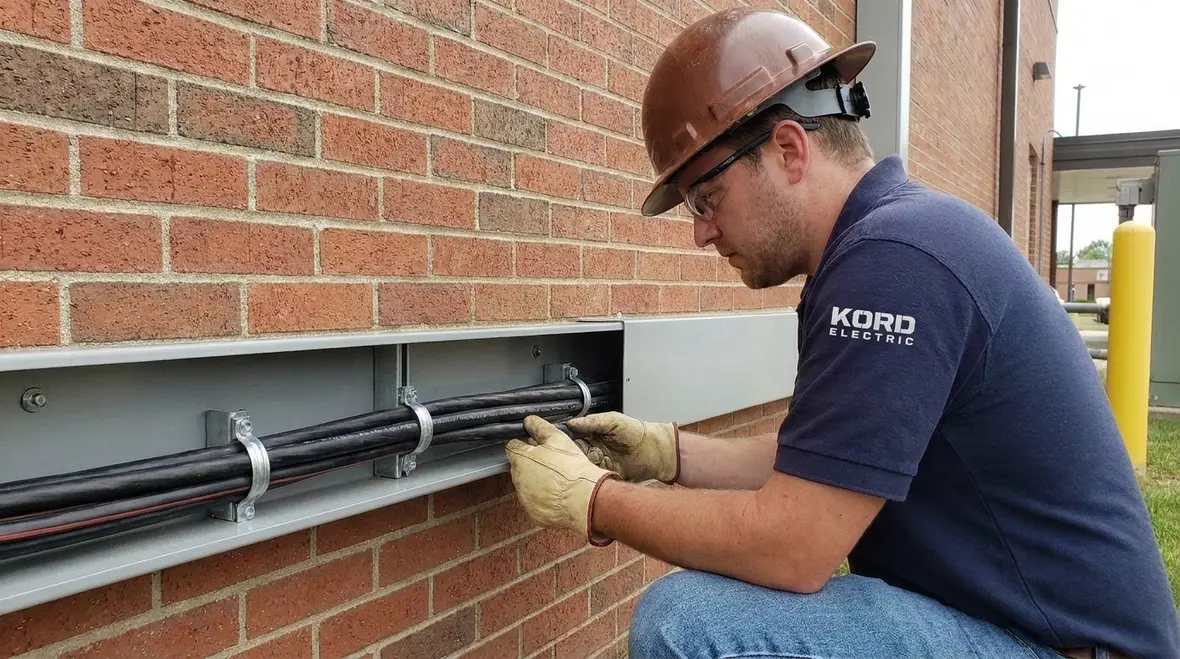
NFPA 70 Section 225.21 focuses on multiconductor cables that are installed on the exterior of buildings. Basically, it sets expectations for how those cables must be built and where they can go, so the system holds up under real-world exposure. Consequently, facility owners and electrical managers should not treat exterior cable routing as a cosmetic choice.
In practice, our expert service staff begins with the question of environment. Then we compare that to what the NEC expects the cable to tolerate. For example, exposure to moisture, sun, heat, and impact can degrade insulation and jacket materials. Therefore, the cable must meet the right listing and installation conditions, and it must use the proper raceway, support, and protection strategy.
When teams skip these steps, problems tend to show up later, often during peak demand seasons, because heat and humidity do not care about deadlines. Like a sitcom character who keeps pressing the wrong button, the installation keeps “working” right up until it suddenly does not.
For facility teams that want a broader NEC roadmap beyond 225.21, we often point them to our deeper guide on the 2026 edition of the code. Articles like Understanding NFPA 70: The National Electrical Code Explained for 2026 give owners and managers the bigger picture while this article zooms in on exterior multiconductor cable behavior.
Why exterior cable exposure drives the design in commercial buildings
Commercial and industrial facilities face tougher loading than typical residential sites. After all, a warehouse yard does not behave like a quiet driveway, and a manufacturing building does not stay dry just because someone hopes it will.
First, the outside of a building experiences wide temperature swings. Next, UV exposure can harden and crack certain jacket materials over time. Then moisture finds its way through gaps, conduit ends, and cable penetrations. As conditions worsen, electrical insulation ages faster, and that raises the risk of faults, nuisance trips, and, in worst cases, fire hazards.
Our team at Kord Electric works with property managers and electrical contractors to plan routes that reduce risk. Specifically, we help them choose cable types designed for exterior use and support them with correct fastening, bend limits, and protection where needed. Also, we coordinate with fire and life safety expectations so that exterior power or control wiring does not become the weak link in the overall building safety plan.

How installers should apply NEC exterior multiconductor cable rules
When our technicians explain the NEC approach, we keep it practical. They verify that the system meets the code requirements for exterior locations, and that the installed method stays within what the cable and component listings allow. In addition, we confirm the installation details that often cause field failures even when the cable itself looks correct.
Common issues we see on commercial sites include loose cable support that increases movement, improper sealing at penetrations, and routing that allows physical contact with doors, edges, or stored materials. Therefore, we treat 225.21 as both a technical and quality control checkpoint. We make sure the cable stays protected and secured from day one.
To make this clear for project teams, we typically review these items during planning and during walkdowns:
- Correct cable selection for exterior exposure, including jacket suitability and listing
- Adequate support spacing and secure mounting to reduce stress and sag
- Proper protection where the cable can be hit, crushed, or rubbed
- Correct handling of bends and transitions, so conductors stay within safe limits
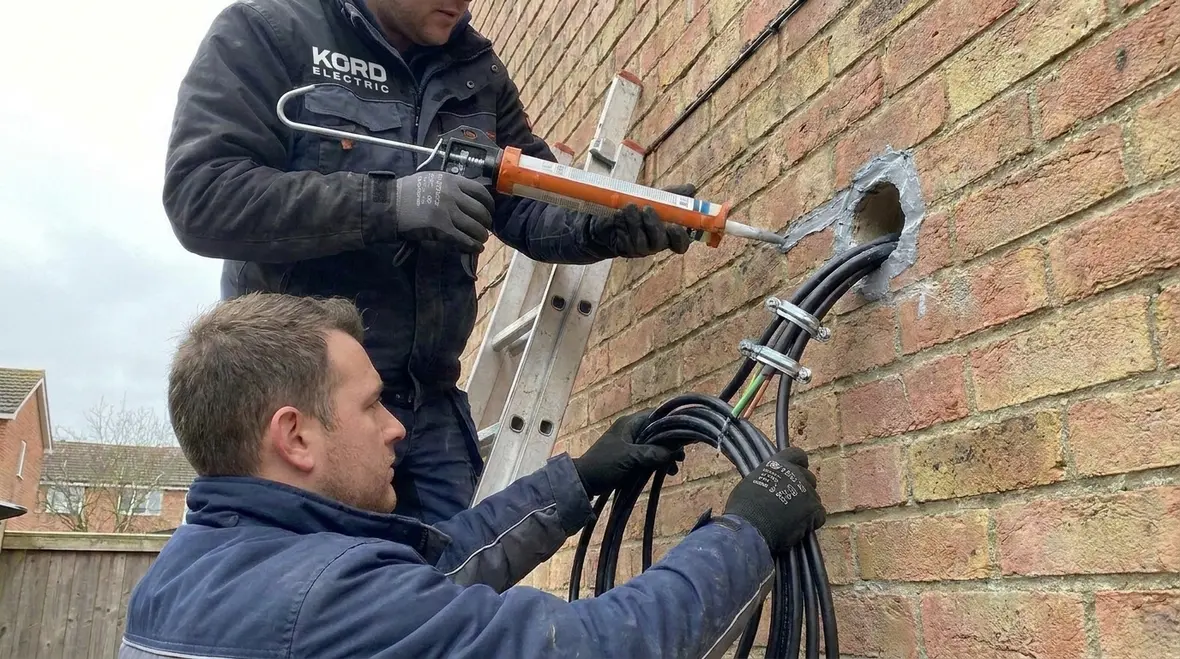
- Sealing and finishing at points where the cable enters or passes through openings
And for the record, we have seen cable pulled too tight like it is trying to win an arm wrestling match. That is not a win for anyone. So we guide crews toward proper pull tension and a neat installation that matches inspection expectations.
Route planning, support, and protection: where projects often fail
Even when the cable is approved for exterior use, a poor installation can defeat the purpose. First, route planning matters because it decides how often the cable crosses hazards like loading zones, equipment carts, or maintenance access paths. Then support decisions determine whether the cable experiences repeated strain from wind or vibration.
Our expert service staff often recommends designs that keep cables in protected areas or within raceways where exposure is more severe. Moreover, we look for long spans without support, sharp transitions, and spots where the cable might be exposed to impacts during routine operations. In industrial settings, “routine operations” can include forklift traffic, falling debris, and seasonal cleanups that move equipment around.
Additionally, termination quality affects long-term performance. If a jacket gets damaged during stripping or if moisture enters at a connector interface, the system can degrade faster than expected. So we do not just check what is on the drawing. We verify the actual build, because the field version usually tells the real story.

Coordination with safety teams and system owners
In commercial and industrial facilities, electrical work rarely lives alone. Therefore, coordination helps everyone avoid rework. For example, fire alarm, fire pump systems, emergency power circuits, and critical controls often run in the same exterior spaces or nearby pathways. When teams coordinate early, they reduce conflicts and keep installation details aligned with life safety expectations.
We also encourage clear communication with facility managers and safety officers. Our approach is simple. We explain what we are doing and why, and we document installation choices so owners understand the code basis and the practical reason behind it. That way, if an inspection question comes up later, the team has a clean answer instead of a “we think it is fine” response.
For facility teams that want broader NEC context and guidance on code updates, Kord Electric commonly references major training and interpretation resources, including those hosted by Kord Electric’s blog and related code content at Kordfire. Then, for fire system perspective and industry context, teams also review materials connected to industry groups focused on fire pumps and emergency water supplies, because exterior wiring work often overlaps with emergency and life safety planning.
Practical checklist for compliance on exterior cable runs
This checklist supports commercial and industrial projects, and it fits the way our technicians work in the field. It also helps owners and contractors spot problems before they reach inspection.
Design and selection
- Confirm the multiconductor cable is rated and listed for exterior use
- Plan routes to reduce exposure to impact and abrasion
- Choose methods that keep cables within allowable installation practices
- Review drawings for penetration points and sealing requirements
Installation and quality checks
- Verify cable support and spacing matches project requirements
- Check termination handling and jacket integrity
- Inspect protection at vulnerable locations
- Walk the route and confirm a clean, consistent installation
Meanwhile, we remind teams that compliance is not just paperwork. It is how the cable behaves in the real environment, day after day, season after season. When NEC exterior multiconductor cable rules are built into design reviews, field supervision, and final inspections, the system stops feeling like a risk and starts behaving like a reliable utility.
For facilities planning significant upgrades or expansions, this is also the stage where it often makes sense to bring in a partner who understands regional expectations such as Los Angeles County electrical services requirements and similar local interpretations of the NEC. The rules in NFPA 70 Section 225.21 may be national, but the way they are enforced and documented often feels very local.
FAQ
Conclusion and call to action
Exterior wiring deserves more than hope and good intentions. At Kord Electric, we help commercial and industrial facilities apply NFPA 70 Section 225.21 with clear cable selection, sound routing, and field-verified installation practices. Our technicians explain the requirements in plain business language, and our service staff backs it up with inspection ready documentation. If your facility plans new exterior wiring, or you need to evaluate an existing run, reach out to Kord Electric. We will help you do it right the first time.
When you are ready to turn NEC exterior multiconductor cable rules into a real, buildable design, and you want a partner who understands both the code book and the way local AHJs apply it, our commercial electrical services team is prepared to help—from early route planning through final inspection and long-term maintenance.