
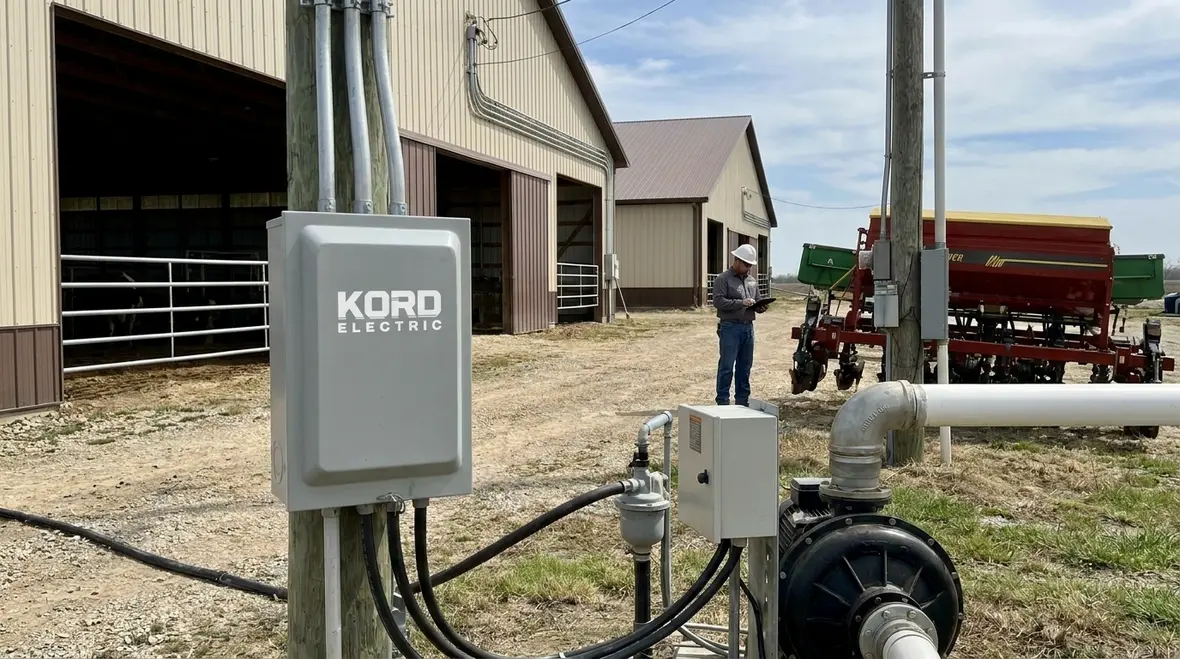
NEC Farm Total Load Calculation with NFPA 70 120.103
Kord Electric approaches the NEC farm total load calculation with the seriousness it deserves, because electrical planning should never feel like guessing. In this article, we focus on NFPA 70 Section 120.103, the rule that governs how farm loads get totaled for sizing conductors, overcurrent protection, and equipment. Then, we show how our technicians and expert service staff explain the “math that keeps the lights on” in a way that actually makes sense. After all, a good electrical design protects people, equipment, and budgets, and nobody wants to be the person who finds out their calculation was wrong when the barn lights up like a dramatic finale.
Where NFPA 70 Section 120.103 fits in real projects
NFPA 70 organizes electrical rules so designers and installers can build systems that behave safely in normal operation and during faults. Within that structure, NFPA 70 Section 120.103 addresses farm loads: total calculation. However, in commercial and industrial settings, the “farm” portion of the code often shows up when a property includes agricultural equipment, pump systems, irrigation controls, or remote load centers that behave like farm load circuits.
So, in practice, we do not treat this section as a curiosity. Instead, we treat it as a dependable method to total loads correctly and avoid oversizing that wastes money or undersizing that creates risk. And yes, we hear it all the time from others in the field: “We sized it like the last job.” Unfortunately, the last job never had your exact pump curve, your motor starting profile, or your feeder length. Different site, different reality, different results.
How the NEC farm total load calculation actually works
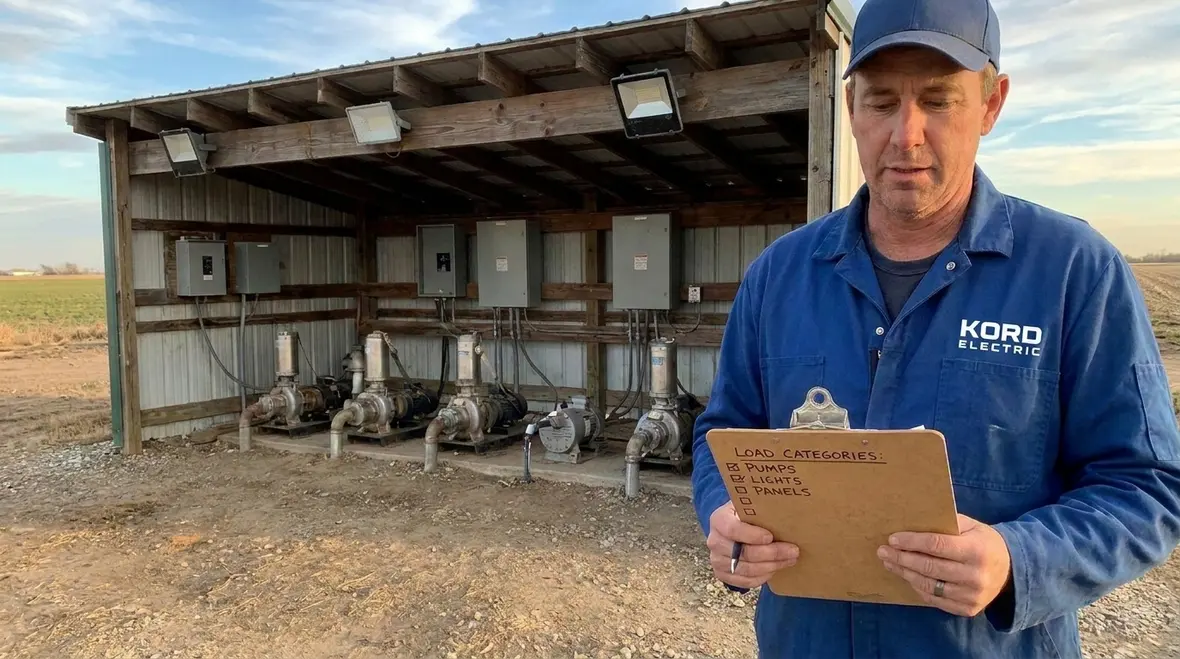
To follow the intent of Section 120.103, we start by identifying which loads qualify for the farm portion and which loads belong to other parts of the installation. Next, we gather rated values that match what is actually installed, including motors, pumping units, heating loads, and control power where applicable.
Then, we total the loads using the method required by the code section. This matters because the code expects a specific way of counting connected load and applying demand factors or adjustments, depending on the load type. As a result, you get a total that reflects how the system will behave, not just what is “nameplate on paper.”
Our technicians walk through the process step by step. They explain what each value represents, why certain loads get treated differently, and how the total feeds into the next design decisions. In other words, we do not drop a spreadsheet on your desk and walk away. We explain the spreadsheet, and we stand behind it.

Totals are only helpful if you classify loads correctly
Many electrical problems start earlier than people think. They start at the naming stage. If a project mixes commercial spaces with equipment that behaves like farm systems, classification becomes the hinge point for the entire NEC farm total load calculation.
For example, a property might include:
- Motor driven pumps for irrigation or process water
- Water treatment equipment with multiple motor loads
- Outdoor lighting circuits and specialty receptacles used for field work
- Heating or dehumidifying loads for non office spaces
- Controls and panels that energize specific equipment sequences
So, we confirm what each load does, when it runs, and whether it is part of the farm load grouping intended by the code section. After that, we determine how the totals carry forward into conductor sizing and protection.
Here is the calming part: when the classification is correct, the rest of the design becomes smoother. And when it is not, you get surprises. Surprise costs more than coffee, and coffee is already expensive enough.
Why motor and pump loads change the math
Motors and pumps do not behave like simple resistive loads. Therefore, their starting current, acceleration behavior, and operating profiles influence how engineers should think about total load. Even if the code section focuses on total calculation, the outcome still impacts the selection of disconnects, overload protection, feeder ampacity, and voltage drop planning.
For a major property build, Kord Electric also considers how the electrical system supports motor starting without causing unacceptable dips or nuisance trips. We coordinate design decisions so equipment life stays healthy and operations stay consistent.
Our expert service staff often tells clients this in plain language: the pump does not care what your billing spreadsheet says. It cares about starting torque, inertia, voltage availability, and protection settings. Additionally, it cares about whether the wiring and breakers can handle the realities of starting and running.
Common mistakes that lead to oversizing or undersizing
Even experienced teams can stumble. However, most errors fall into a few predictable categories. First, people miss a load that looks “small” until it shows up in startup sequences. Second, teams treat a motor like a simple load and forget how the system behaves under operating conditions. Third, people misread the code intent and apply the wrong method for the farm load total calculation stage.
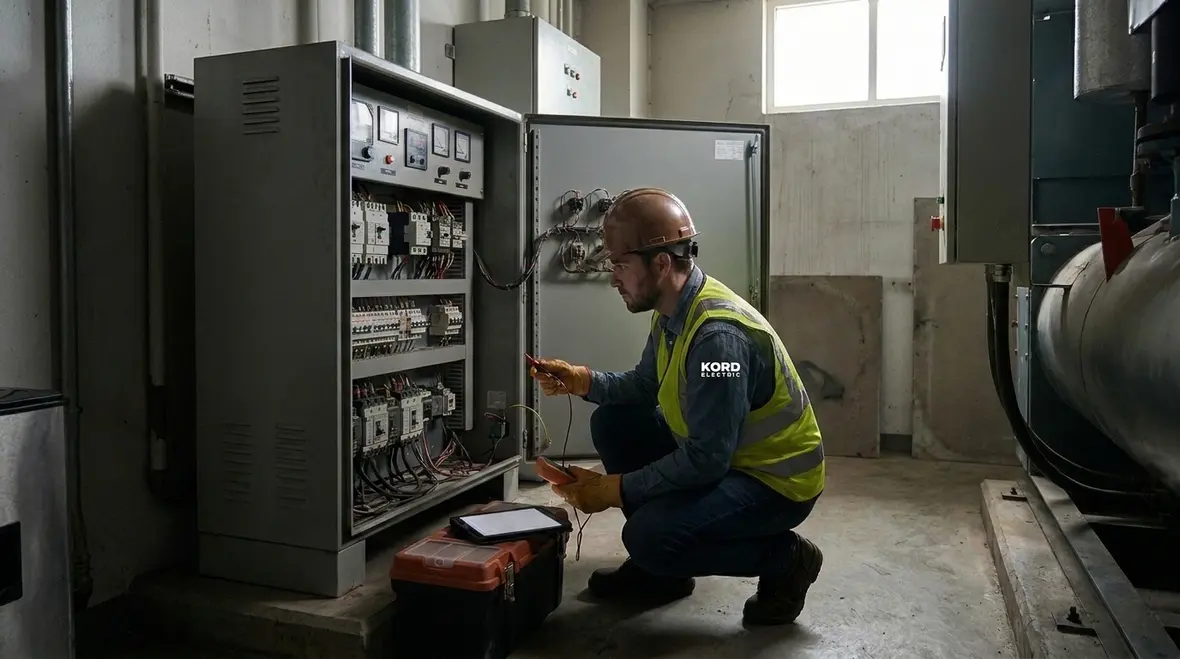
At Kord Electric, we reduce those risks by using a structured review. We document assumptions. We confirm equipment data. Then, we check how the totals align with feeder ratings, panel schedules, and protection device selections.
Finally, we make sure the design supports real operations. After all, a property is not a lab. Equipment schedules shift. Pumps cycle. Weather changes. Controls update. And if the electrical design ignores that, it will eventually pay the price.
Coordination across the rest of the NEC
Although Section 120.103 sets the farm total calculation foundation, designers rarely stop there. They must coordinate that total with other NEC requirements that govern how the installation gets built and protected. As a result, the electrical plan links into conductor requirements, overcurrent protection, and installation details.
In addition, our approach stays practical for commercial and industrial facilities and major property buildings. We focus on how the design supports maintenance workflows, operational continuity, and compliance expectations.
To keep the process clear, our technicians explain how the total calculation connects to the overall system. They show where the numbers land, why the protection strategy works, and how the installation avoids code conflicts. So, while the total calculation drives the sizing, the coordination ensures the system stays safe and predictable.
Connecting NEC farm total load calculation to broader NFPA 70 guidance
Farm load calculations do not live in isolation. They sit inside a much larger NEC and NFPA framework that shapes how commercial and industrial buildings get powered and protected. When we review a site that mixes major property buildings with agricultural-style loads, we often point facility teams toward resources that clarify the bigger picture.
For example, our team uses the insights from Kord Electric’s article Understanding NFPA 70: The National Electrical Code Explained For 2026 to frame how Section 120.103 fits into the overall rulebook. That broader guide explains why the National Electrical Code evolves, how it affects commercial and industrial projects, and what it means when you combine specialized loads with everyday building systems.
Similarly, when a facility wants to understand how their farm-style equipment interacts with other NEC requirements, our technicians connect the dots using related Kord Electric resources on code upgrade consulting, electrical infrastructure planning, and panel maintenance. The goal is simple: make sure your NEC farm total load calculation lines up with the same disciplined thinking that protects your feeders, overcurrent protection, and long term maintenance plans.
That is also where our collaboration with Kord Fire becomes useful for complex properties. Their NFPA 70 overview content explains how electrical rules coordinate with fire protection expectations, so your farm loads, building services, and safety systems do not pull in different directions. When the electrical math and the fire protection strategy agree, inspections go smoother and surprises stay rare.
NEC farm total load calculation, inspections, and real-world operations
Once the NEC farm total load calculation is complete, the question becomes simple: does the finished design behave the way the numbers predicted? Inspectors, operations teams, and maintenance staff all care about that answer, especially on large sites where farm-style loads share service capacity with offices, tenant spaces, or industrial equipment.
From an inspection standpoint, a solid total load calculation shows that the feeder, service, and protection choices all match the connected and demand-adjusted loads. It demonstrates that motors, pumps, heating loads, and control circuits were counted correctly, and that their contribution to inrush, steady-state current, and voltage performance was taken seriously. When that groundwork is clear, the rest of the NEC coordination around wiring methods, grounding, bonding, and equipment labeling becomes easier to verify.
From an operations standpoint, the same math supports confidence during peak conditions. When irrigation pumps start together, when heating kicks on during a cold snap, or when a process line ramps up at the same time that field equipment energizes, you want the system to respond without drama. A careful NEC farm total load calculation under NFPA 70 120.103 helps keep that drama on the movie screen instead of in your electrical room.
And from a maintenance standpoint, accurate totals give your team a reliable baseline when they plan future changes. When someone asks whether they can add another pump, a new sequence of controls, or an upgraded motor, you can compare the proposal to a documented NEC farm total load calculation instead of guessing. That is how you keep incremental changes from quietly erasing your original safety margin.
For facilities in regions with detailed enforcement, such as those relying on Los Angeles County electrical services, this level of documentation becomes even more valuable. It helps align your farm load decisions with local expectations, permitting realities, and the broader NEC framework that inspectors reference every day.
FAQ: NEC farm total load calculation and NFPA 70 Section 120.103
CTA: Get a compliant design review with Kord Electric
If you are planning a major property build and you want the electrical design to stay compliant and practical, Kord Electric can help. Our technicians and expert service staff review load data, confirm correct classification, and connect the NFPA 70 Section 120.103 requirements to real system decisions. Reach out to us before equipment ordering starts, and you will avoid the kind of “surprise expense” that no one enjoys. We keep the process clear, calm, and code-ready. Then your electrical system can do what it should: work.
For teams who want to deepen their understanding of how NEC rules shape these choices beyond farm loads, pairing this article with Kord Electric’s broader NFPA 70 resources and their commercial service guides can turn a single project review into a long term roadmap for safer, more reliable electrical infrastructure.


