
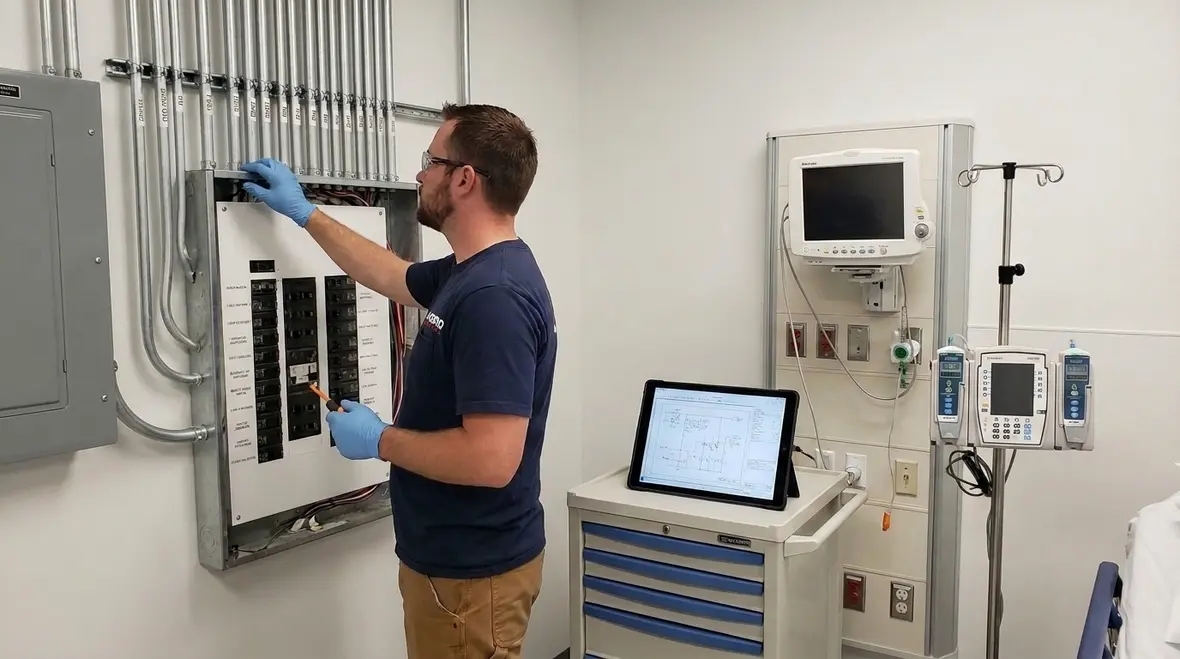
NFPA 70 Section 120.111 NEC Patient Care Equipment Loads
NFPA 70 Section 120.111 lays down clear rules for NEC patient care equipment loads, especially when a building includes patient care areas. In the first place, we treat these loads with care because power reliability can matter in ways that normal office wiring never will. Therefore, our approach at Kord Electric focuses on how these NEC patient care equipment loads get calculated, arranged, and protected inside commercial and industrial facilities, and in major property buildings where safety systems must work on demand. As we explain it to facility teams, we do it slowly and plainly, because nobody wants an electrical code lesson that feels like a pop quiz with no warning.
Why Section 120.111 changes how we design patient area electrical systems
When electricians hear “patient care equipment,” they often picture a single device. However, Section 120.111 thinks bigger. It forces the design to treat the patient area like a mission critical zone, not like a break room with better lighting. In practice, we and our expert service staff look at the actual equipment profile in the care space and then apply the rules for sizing and demand. This process helps reduce the chance that a system gets undersized, or worse, gets built using assumptions that do not match how the loads behave during real operation.
Even so, the code does not ask us to guess wildly. Instead, it asks us to follow patient care equipment load rules tied to the way the equipment connects and runs. That means we plan the feeder and branch circuits with proper attention to both the equipment and the expected use conditions. And yes, we sometimes get the same reaction from maintenance teams: “Do we really have to do it this way?” Our answer is calm and direct: if you want reliable power in patient care spaces, the answer is yes.

What counts as NEC patient care equipment loads in the real world
To apply Section 120.111 correctly, we first define what equipment the rules cover. In day to day planning, this includes devices that support patient care functions, such as life support related loads, clinical monitoring, infusion systems, and other equipment intended for use in patient care areas. Then we determine how the building’s electrical system will serve those loads, including feeders, distribution, and branch circuit requirements.
Still, the phrase “patient care equipment” can get misunderstood if someone only thinks about the biggest machines. Therefore, we work with facility managers and medical stakeholders to map the actual equipment lineup. At the same time, our technicians document nameplate details, typical operating modes, and any changes that happen over time. After that, we align the design and testing plans with the NEC patient care equipment load rules so the system stays correct even as the facility evolves.
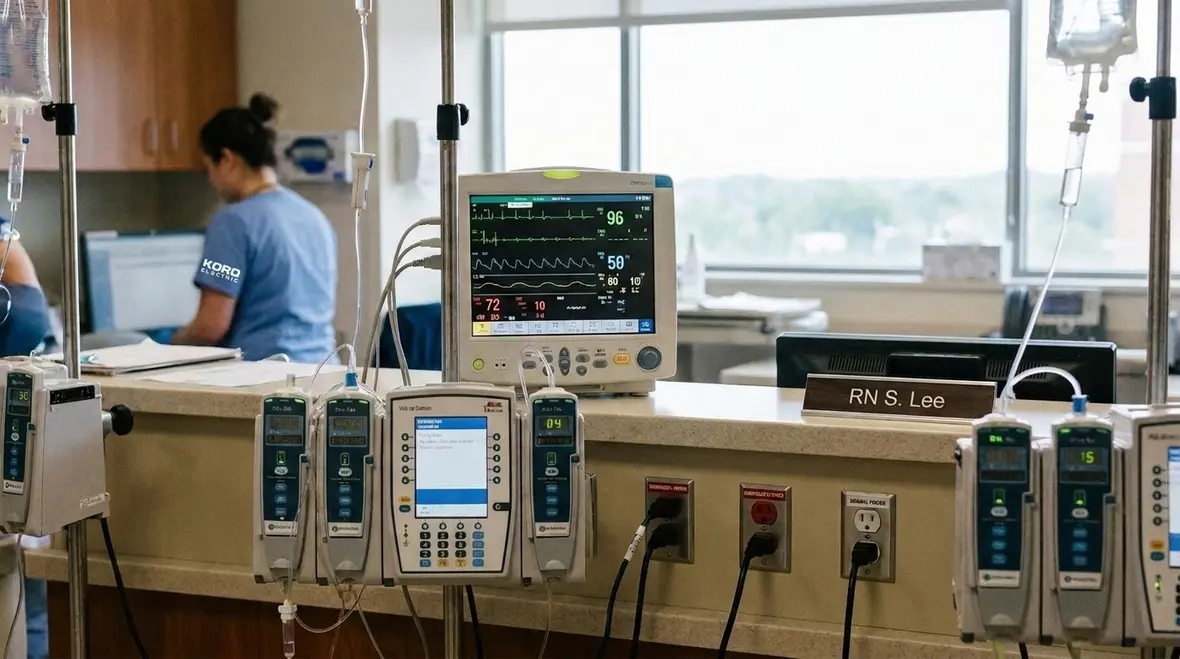
Demand, planning, and reliability: how load rules affect system size
Load rules do not exist for decoration. They affect how much current we calculate, how we size conductors, and how we select switchgear and overcurrent devices. Under Section 120.111, we apply the patient care equipment load framework to support stable operation during normal use and critical events. As a result, the electrical system can deliver power where it matters without relying on unrealistic diversity assumptions.
We also consider the layout of the distribution scheme. For example, we often recommend designs that reduce single points of failure in the patient area. Then, we review coordination settings and protective device behavior so a fault does not create unnecessary shutdown of essential equipment. If you have ever watched a movie where the hero pulls one lever and everything magically works, that is not how power systems behave. Real systems require correct calculations, correct protection, and correct commissioning.
Finally, our expert service staff explains the “why” to building owners and facility teams. They do not just hand over a report. They walk through how each rule leads to a design decision, and how that decision helps reliability. That way, the team understands what they paid for, and why it helps during the next equipment upgrade or renovation.

How we apply NFPA 70 patient care equipment load rules during projects
At Kord Electric, we only target commercial and industrial facilities and major property buildings, so our process fits large building realities. Typically, we start with a clear electrical scope, then we review existing infrastructure, equipment schedules, and design constraints. Next, we build a load calculation that follows the requirements tied to Section 120.111. After that, we prepare a distribution plan that supports both normal operation and safe fault handling.
During installation, we verify labeling, routing, and terminations. Then we test and inspect. And yes, testing can feel repetitive, but it is the difference between a system that looks correct on paper and one that performs correctly under stress. Our technicians take this part seriously, because they have seen what happens when a “small” wiring mistake meets a critical load.
When the project wraps up, we help teams understand how to keep the system healthy. That includes routine checks and documented maintenance actions, so the building does not slowly drift away from the design basis. In the end, good service prevents the electrical system from becoming that classic “mystery box” nobody wants to troubleshoot.
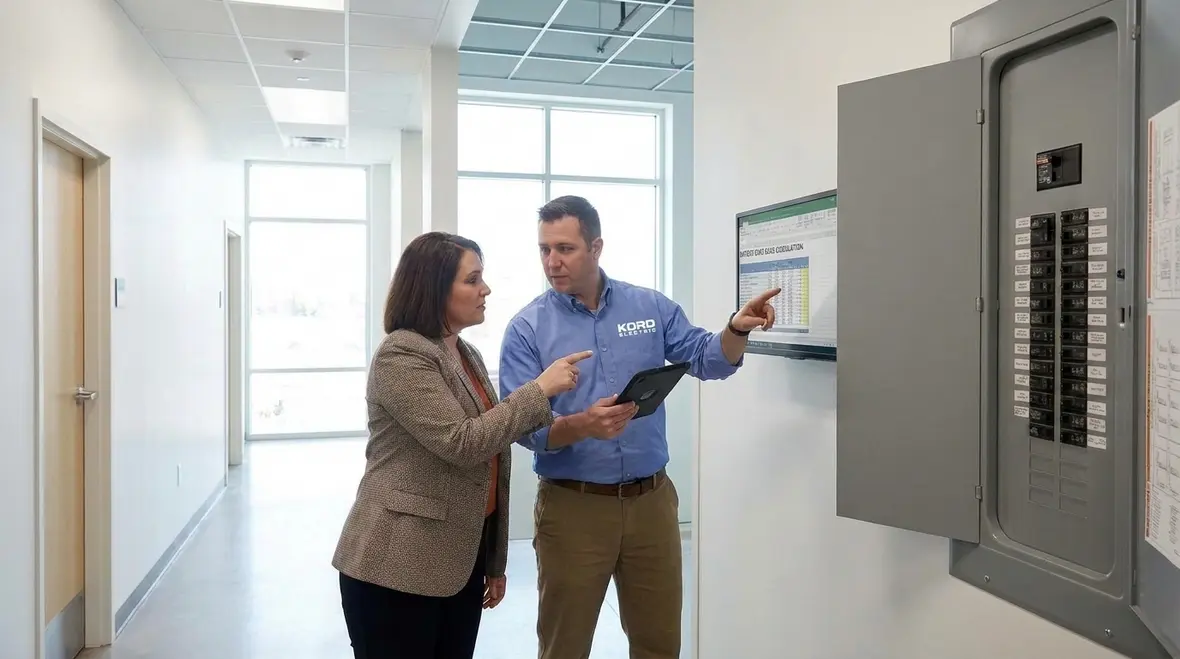
Common mistakes we see in NEC patient care equipment load planning
Based on what we see across large projects, several errors show up more than they should. First, some teams apply demand factors that do not reflect how the equipment actually operates in patient care settings. Then, other teams miss scope boundaries, like excluding equipment that still qualifies under patient care needs. Another frequent issue involves documentation, where the drawings and the field-installed equipment do not match. That mismatch creates calculation drift, and drift creates surprises later.
We also see mistakes in distribution design, such as not accounting for how protective devices and feeders interact during fault conditions. In addition, teams sometimes treat emergency power and critical circuits like a checklist item instead of a coordinated system. Therefore, we insist on a system mindset: sizing, protection, and performance must all line up.
To help avoid these pitfalls, we lean on the expertise of our technicians and our service staff. They explain the logic in a way that facility teams can trust. One of our staff members likes to say: “Electrical code is not a suggestion. It is a recipe. You do not improvise with patient care power.” It gets a small laugh, and then everyone nods.
Coordinate with the broader NEC and code guidance
Section 120.111 does not stand alone. We treat it as part of the larger NEC picture described in code education resources. For example, Kord Electric’s resource Understanding NFPA 70: The National Electrical Code Explained for 2026 helps teams understand how the electrical rules connect and why they matter before a project ever reaches the field. Kord Electric aligns its project methods with this larger NEC framework so the patient care equipment load rules work within the full design.
Additionally, for facilities that involve fire and life safety systems, coordination matters. Guidance from industry resources and fire protection organizations helps teams think about how electrical power and fire related systems connect. Then, we make sure our electrical design supports the facility’s life safety intent, rather than competing with it.
Because we serve commercial and industrial buildings and major property buildings, we also keep an eye on how owners plan for expansions. A major property project rarely stays the same. Equipment gets upgraded. Rooms get repurposed. Therefore, we design for change while still meeting the patient care equipment load rules that apply at the time of installation.
How Kord Electric and our technicians support compliance and performance
Our team brings both engineering focus and field reality. We start with code based planning, and we finish with quality checks that catch issues before they become operational problems. Meanwhile, our technicians stay involved through installation verification and commissioning activities. In many cases, they also help facility staff understand the correct operation and maintenance of the system.
To make this more concrete, here is how our service approach typically unfolds in the field.
| Project Step | What Our Team Does |
Load review and calculations |
We build the electrical model using the required rules for NEC patient care equipment loads, then we validate assumptions with the equipment schedule and room intent. |
Distribution and protection planning |
We select feeder paths and protective devices so essential circuits remain stable during normal operation and controlled during faults. |
Field installation verification |
Our technicians confirm terminations, labeling, routing, and equipment match the design intent and the load basis. |
Testing and handoff |
We test, document, and explain outcomes. Then we help the facility team maintain the system so it stays aligned over time. |
FAQ about NFPA 70 Section 120.111 and patient care equipment loads
Call Kord Electric for patient care electrical planning that holds up
When your facility includes patient care spaces, we do not treat electrical design like a generic upgrade. We build it with NFPA 70 Section 120.111 in mind, and we apply the required rules for NEC patient care equipment loads so critical systems perform as intended. Our technicians and expert service staff explain decisions in plain language and verify the work in the field.
For teams planning wider NEC upgrades or trying to understand how patient care loads fit into the larger code picture, it can help to review resources like What Is NFPA 70? Understanding the National Electrical Code alongside patient care specific work. Together, they frame how Section 120.111 connects to the rest of your electrical system design.
If your project also includes broader commercial or industrial improvements, our team can integrate patient care requirements with strategies from our data-driven design and reliability work so you are not managing two separate power stories in the same building.
For facilities in Southern California, our Los Angeles County electrical services team supports everything from new patient care build-outs to retrofits in existing commercial buildings. We handle load studies, distribution planning, emergency power coordination, and field verification so your project is grounded in both NEC direction and real-world performance.
If you need code aligned planning or a reliable retrofit for a commercial or industrial project, contact Kord Electric today so we can help you turn patient care electrical requirements into equipment that works when it matters most.


