
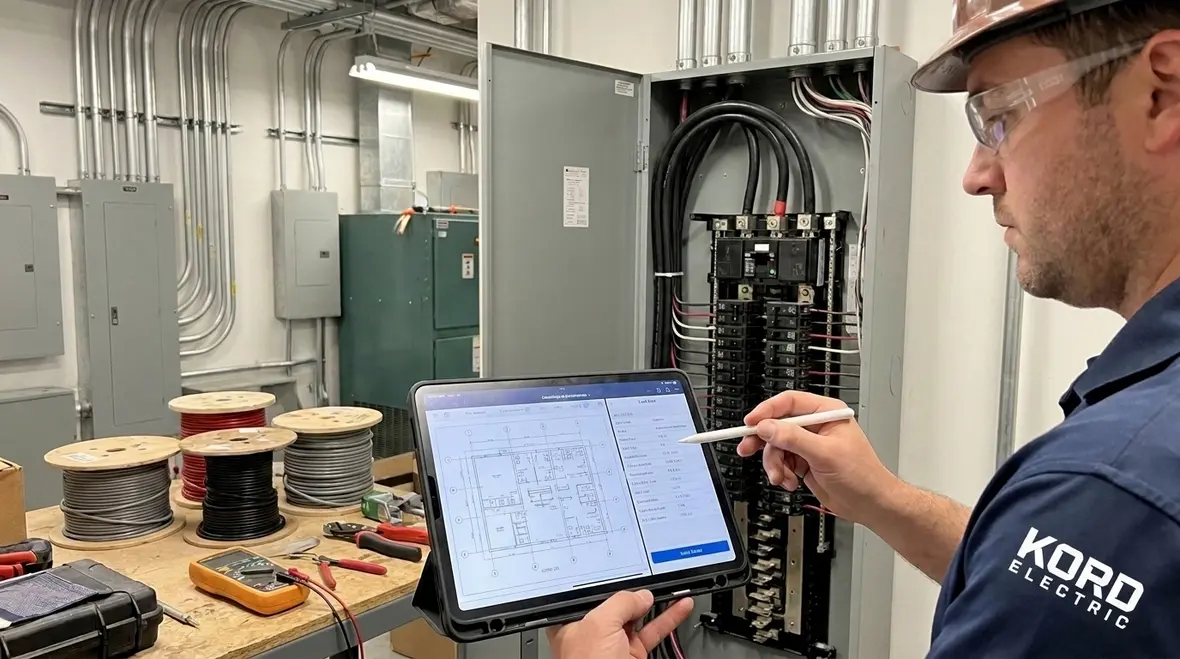
NFPA 70 Section 120.130 NEC Calculated Load Determination Rules
NFPA 70 Section 120.130 sets the framework for how the NEC calculated load determination rules should be handled, and we treat them like a road map, not a suggestion. In our work at Kord Electric, our technicians and expert service staff use these calculated load determination rules to size feeders, branch circuits, and demand loads with consistency. Then we verify the results with the right steps, so electrical design stays safe and clear. After that, we help facility teams avoid the kind of guesswork that makes budgets cry in the break room. And yes, we have heard the classic line: “We will just upsize it later.” Later always costs more, like replacing a tire after the rim already bent.
Where Section 120.130 Fits in Real Projects
In commercial and industrial facilities, electrical loads rarely behave like they do in textbooks. Equipment runs in cycles, some loads vary with occupancy, and the building itself changes over time. Therefore, we start by grounding our work in the NEC calculated load determination rules found in NFPA 70 Section 120.130. This section explains how to calculate loads in a way that supports safe design and predictable performance.
Most importantly, we do not treat the rules as a checklist item. Instead, our technicians apply the steps based on the type of facility, the nature of the equipment, and the way the electrical system serves the building. Then we document the approach so the design, installation, and future revisions stay aligned.
In other words, we aim for a design that an inspector can understand and a facility manager can trust during peak demand. That is the difference between “electrical art” and electrical engineering that works on the day the system needs to. Like Batman, the system must operate when the villains show up. Usually the villains are heat, demand charges, and last minute equipment changes.

For facility teams that want to see how this connects to the broader National Electrical Code, our article on understanding NFPA 70 for 2026 walks through why these rules exist and how they influence real-world projects, from planning through inspection.

NEC Load Determination Rules: The Core Logic
When people hear “calculated load determination,” they sometimes think it means picking numbers at random and hoping for the best. We do not do that. We use the NEC load determination rules to estimate how much electrical demand a system must handle. However, the goal is not only to get an answer. The goal is to get the right answer for that facility and that operating pattern.
So, how do we make it practical in the field? First, our team identifies the building loads by category. Then we apply the applicable demand logic and calculation steps. Next, we carry those results through to determine conductor sizing, equipment ratings, and protective devices.
Meanwhile, our expert service staff also checks the “what happens next” angle. If the facility plans future expansions, we account for that. If there is known irregular loading, we account for that too. And if the building uses specialty equipment, we do not bluff. We compute based on the correct data and clarify assumptions in writing.

For teams that want a deeper look at how those calculations tie into larger building planning, Kord Electric’s guide on building electrical system design and planning power for commercial facilities shows how load determination rules sit at the foundation of every major decision.
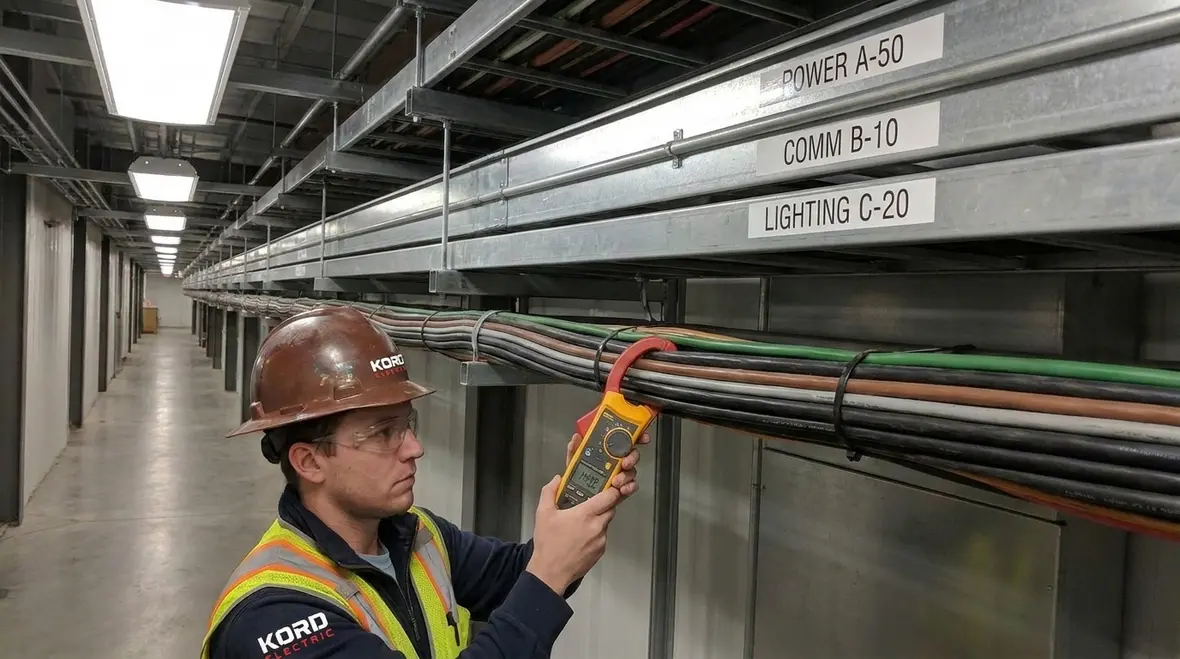
How We Handle Diversity and Timing in Commercial Buildings
Commercial and industrial sites rarely operate at full load, all at once. For that reason, load diversity and timing matter. Yet we avoid sloppy shortcuts, because a wrong assumption can lead to undersized components or overspending on equipment that never needed to be that large.
To stay accurate, our process goes like this. We gather equipment information and operating schedules. Then we map those loads to the proper categories under the NEC framework. After that, we apply the NEC calculated load determination rules using the correct demand factors where allowed.
At the same time, we consider the reality of occupancy and work cycles. A facility might run production equipment at one time, but the lighting and HVAC patterns can shift. Thus, our designs reflect how the systems actually operate, not how they operate in a calm, imaginary spreadsheet world.
And yes, spreadsheets can be calm. Real plants are not. Real facilities have forklifts, lunch breaks, and equipment that always seems to run “just a little longer.”
Aligning NEC Calculations With Real Operating Patterns
When we apply NEC calculated load determination rules, we do not assume perfect behavior. Instead, we look at how shift changes overlap, when HVAC ramps up, and how production modes toggle between normal, peak, and maintenance states. That timing work helps us avoid both underdesign and overdesign.
For facility leaders who like seeing how this fits into a broader planning lens, our article on data-driven electrical design for commercial and industrial facilities shows how real operating data can sharpen calculated load assumptions and keep NEC work honest.
Conductor Sizing and Protection: Where the Math Becomes Metal
Once we establish the calculated load results, the work moves from theory to hardware. In practice, the NEC calculated load determination rules influence how we size conductors and choose protective devices. Therefore, we must convert electrical calculations into design decisions that stand up under heat, current, and fault conditions.
Our technicians verify that conductor ampacity and protective device ratings align with the load analysis. They also check voltage drop impacts for runs that can affect equipment performance, especially in larger industrial facilities. Then we confirm that system coordination supports safe fault clearing, which matters for continuity of operations.
Additionally, our team focuses on install reality. Raceway routing, ambient temperature, and how conductors are installed all affect performance. So, we do not just calculate and walk away. Instead, we validate the installation constraints early, so the final design reflects both code requirements and jobsite conditions.
If the electrical design is a blueprint, this phase is the bridge from blueprint to reliability. It is where the building stops being a drawing and starts being a system that works.
From NEC Calculations to Inspectable Installations
Because inspectors, facility managers, and maintenance teams all rely on the same system, we also connect our conductor sizing and protection choices to clear documentation. When the NEC calculated load determination rules are traceable from the panel schedule to the field installation, everyone sleeps better the night before energization.
On complex projects or renovations, that clarity pairs well with the approach in our electrical code upgrade consulting for renovations guide, where we show how to keep existing systems, new loads, and NEC compliance aligned instead of colliding.
Putting It All Together for Major Property Buildings
Major property buildings often combine multiple tenants, varied equipment types, and different operational schedules. In those cases, the electrical system must coordinate loads across feeders and distribution. Moreover, it must do so while keeping documentation clear for long term maintenance.
Our approach for these projects is methodical. First, we group loads in a way that supports the full distribution plan. Then we perform load calculations for each relevant section and aggregate the results for supply and feeder design. After that, we review the outcomes for consistency and practicality.
Then comes the part many teams rush: documentation. We build calculation sheets and design notes that facility owners and future technicians can use. This matters because electrical systems evolve, and changes do not politely wait for the next scheduled shutdown.
Additionally, our work supports ongoing service by making future decisions easier. Our expert service staff can review the load basis, understand the original assumptions, and adjust calculations when a tenant adds equipment. That keeps upgrades aligned with the NEC load determination rules and helps prevent “mystery changes” that create risk later.
Major Property Load Planning and NEC Coordination
In major property buildings, NEC calculated load determination rules become a shared language between owners, tenants, engineers, and inspectors. When we document how each tenant’s loads roll up into feeders and services, future projects can tie into the same logic instead of starting from scratch or guessing at spare capacity.
For owners planning multi-year upgrades, the electrical infrastructure upgrade planning guide on the Kord Electric blog shows how to turn these calculations into a roadmap instead of a one-time exercise.
Tips to Avoid Costly Mistakes Before the Permit Stage
Permits and inspections can go smoothly when the load basis is clear. Therefore, we encourage commercial and industrial teams to address these items before the design is locked in.
Use accurate equipment data so the NEC calculated load determination rules rest on real values, not vendor marketing guesses.
Document assumptions for schedules, operating modes, and future expansion so the design can be reviewed without drama.
Coordinate early with mechanical and controls teams, because HVAC and process equipment can swing loads more than people expect.
Review distribution strategy early so feeder sizing matches the load plan and not just the “best guess” from later.
Plan for serviceability so the design stays maintainable after installation, not just code compliant on day one.
Now, we will be honest. Some mistakes come from optimism. Others come from teams trying to “save time” by skipping steps. But in our experience, code compliant electrical design that avoids rework saves both time and money. It also avoids the kind of meeting where everyone has the same expression, like they just watched a sports replay where the winning goal was clearly offsides.
Front-Loading NEC Work to Protect Budgets
Because NEC calculated load determination rules drive feeder sizing, panel choices, and equipment ratings, we treat them as an early design deliverable, not an afterthought. When that work happens before the permit drawings go out, change orders shrink and inspection conversations stay calm.
If your team is facing a renovation or capacity increase, pairing these tips with our modern electrical systems for commercial buildings overview can help align new technology choices with the NEC load rules behind the scenes.
NEC Resources We Reference During Design
Our team stays aligned with current NEC and NFPA guidance. For additional context and explanations, we point our clients to resources that help teams understand how the National Electrical Code is applied in modern building work. You can find helpful articles and guidance on our sites, including deep coverage related to NEC interpretation and code understanding.
For example, we often reference the discussions on NFPA 70 and the NEC at Kord Electric’s blog, and we also review NEC overviews on Kord Fire. For company and service context, you can visit kordfire.com.au and kordelectric.com. Where fire pump systems and related requirements may intersect with electrical design scope, we also review helpful materials at firepumps.org.
Alongside those resources, Kord Electric’s main blog index at the Kord Electric blog collects code-focused articles, planning guides, and case-based explanations that help facility teams connect NEC language to the decisions they face in the field.
FAQ for NEC Calculated Load Determination Rules
Below are answers to some of the most common questions facility teams ask when they start working with NEC calculated load determination rules and NFPA 70 Section 120.130 on real projects.
Final Word from Kord Electric
Kord Electric helps commercial and industrial facilities apply the NFPA 70 and NEC framework with real world accuracy. We use our NEC calculated load determination rules to produce clear design outputs for feeders, conductors, and protective devices, and we document assumptions so future upgrades stay safe and consistent. If you are planning a new build, major tenant fit out, or a system upgrade, contact us. Our technicians and expert service staff will walk your team through the load logic, then engineer the solution with confidence. No mystery math, no last minute surprises.
For facilities across the region that want a partner from early planning through commissioning, Kord Electric’s dedicated Los Angeles County electrical services bring together code-conscious design, NEC-compliant installation, and responsive support so projects stay aligned with both calculations and field reality.


