
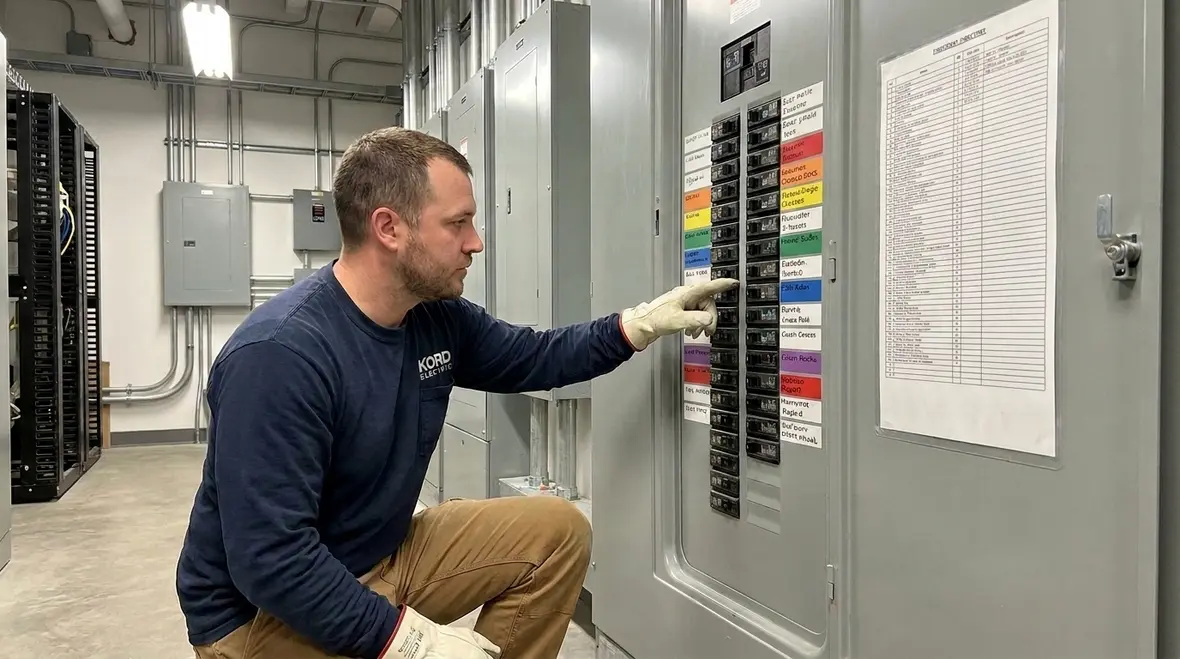
NEC Feeder Identification Requirements Under NFPA 70 215.12
Kord Electric helps commercial and industrial facilities follow the NEC feeder identification requirements that keep power systems clear, safe, and serviceable. In NFPA 70 Section 215.12, the code focuses on feeder identification, so when electricians, inspectors, and our team arrive on site, they can trace circuits without guesswork. Early in the work, we also confirm how labels, numbering, and directory details match what’s built in the field. That matters because a panel full of wires is like a movie with the sound turned off, technically possible, but nobody enjoys it. And yes, we have seen “mystery feeders” before. We fix that problem before it turns into a late night call.
Why NFPA 70 Section 215.12 matters to real sites
When a facility runs pumps, lighting loads, HVAC systems, process equipment, or emergency power, the electrical backbone has to stay legible. NFPA 70 Section 215.12 exists for a practical reason: feeders should be identified so anyone performing work can locate the correct circuit fast and safely. Therefore, we treat feeder labeling as a system feature, not a finishing touch.
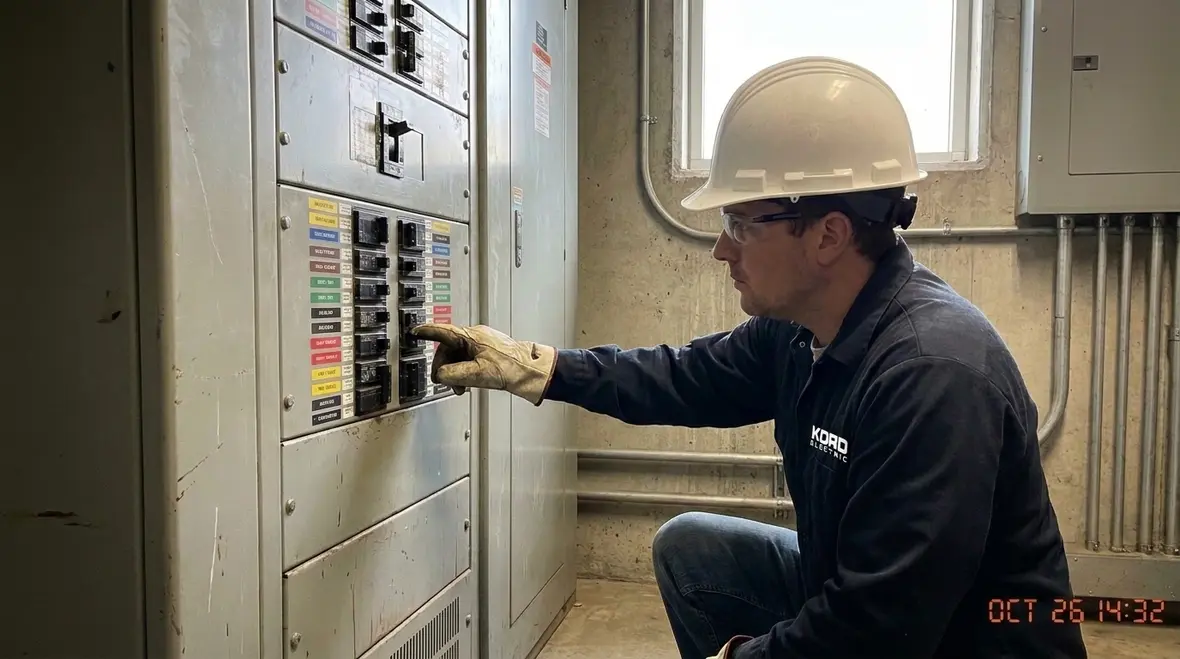
Even if a building looks “clean” on day one, time behaves like a chaos gremlin. Contractors come and go, equipment gets replaced, and drawings get outdated. However, proper identification keeps the electrical distribution dependable through changes. Our technicians and expert service staff explain this clearly during walkdowns, because we would rather teach the “why” than simply install another label and hope for the best.
In short, Section 215.12 helps protect people, reduces downtime, and supports inspection readiness. And if you have ever tried to trace a feeder by tone or vibes, you already understand why the code asks for more than hope.
What feeder identification usually includes in practice
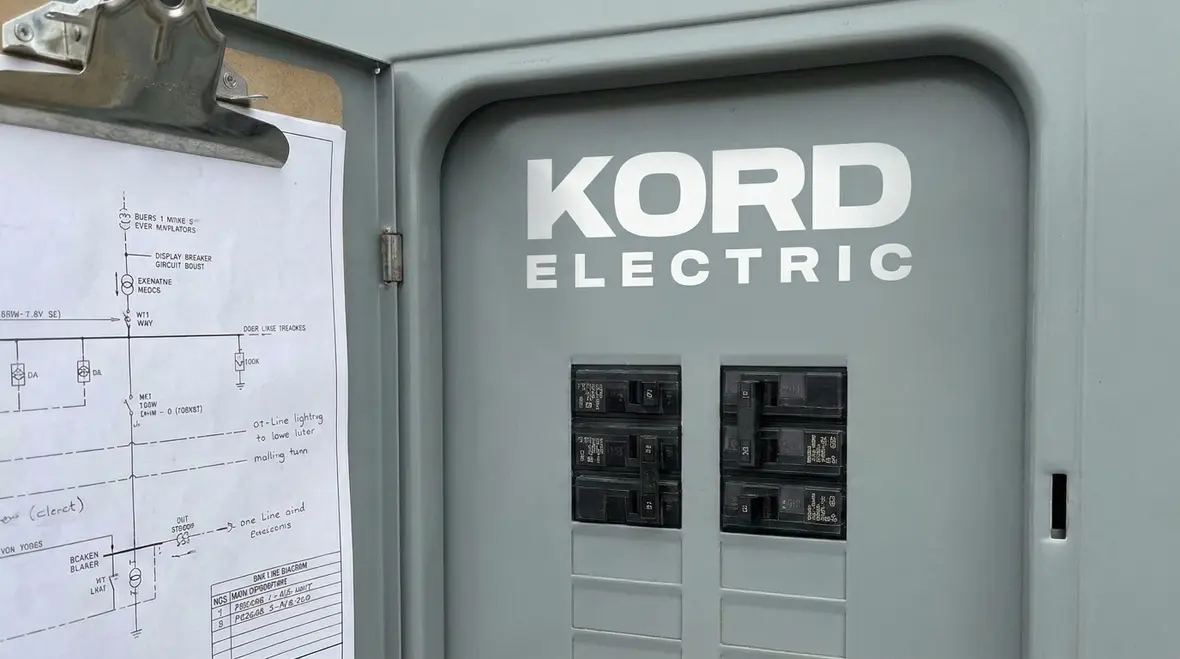
On commercial and industrial projects, we typically see feeder identification handled through a mix of labeling and matching records. As the work progresses, we verify that the field labeling aligns with the panel schedules, one line diagram, and labeling scheme. Then we document what we installed, so the next service event starts with facts, not guesses.
Common elements we check include the circuit designation, the feeder number, and the directory entry that ties the panel or switchboard to the correct feeder. In addition, we look at where identification appears so it works for the people actually opening equipment doors. If labels sit behind covers or vanish when covers move, the system may comply on paper but fail during real maintenance.
We also coordinate identification across the distribution path. So, the feeder at the source equipment should remain consistent with what appears at downstream disconnects or panels. That consistency improves troubleshooting and reduces the risk of energizing the wrong section. Our technicians explain these details in plain language, because the goal is confident decisions, not a label lecture.

How our technicians verify NEC feeder identification requirements on site
At Kord Electric, we do more than place a label and walk away. First, our expert service staff reviews the distribution layout and the intended feeder naming method. Next, we verify the physical labeling locations and confirm legibility after installation. Then we compare what’s installed to what’s shown in the project documentation.
During commissioning and service visits, we look for the typical “almost right” issues. For example, a directory might list a feeder label that doesn’t match the conductor designation in the equipment. Or the label might exist, but the numbering scheme might drift after field changes. Also, sometimes the labeling gets applied, but the wrong feeder gets marked because the panel schedule used during installation differs from the updated schedule used during closeout.
To keep the process calm and controlled, we use a methodical check. We trace each feeder designation from upstream to where it ends. After that, we confirm the directory and label match. And if the building has multiple trades or repeated modifications over time, we also recommend a simple refresh plan. That way, the next team that opens the door does not inherit someone else’s mystery.
And yes, we make jokes when it helps people remember. Electrical work can be serious, but people learn faster when you do not treat every label like it is a sacred relic.

Spot common failure points that trigger inspections and troubleshooting issues
Commercial and industrial facilities often grow in phases. So, identification errors tend to show up when equipment gets added, circuits get rerouted, or a switchboard expands. Below are failure points we frequently correct during service work, and each one connects back to the intent behind NFPA 70 Section 215.12.
Duplicate feeder numbers on the same board or in the same distribution run, which creates confusion during outages and fault events
Directory entries that lag behind field changes, so the name on the schedule does not match the marked feeder in the enclosure
Unreadable or poorly located labels, including labels that fade, peel, or sit where covers block sight lines
Inconsistent naming between drawings and panels, especially when contractors use different labeling conventions for the same feeders
Missing identification at transfer or switching points, which can cause delays when equipment swaps modes or sources
Even though the code speaks directly to identification, the real-world result is clarity. Therefore, when we find a weak point, we don’t just fix the label. We also align the labeling system so it supports safe work. Our team explains the root cause, too, because a quick patch without correction only invites the same issue to return later, like a rerun you cannot skip.
Balancing label accuracy with clean building operations
Some people think feeder labeling slows projects down. We disagree, because accurate identification reduces rework and speeds up service. Moreover, it supports building operations teams who have to manage outages, maintenance schedules, and emergency response.
When we help facilities plan updates, we focus on usability. For instance, we recommend a naming method that matches how the building staff talks about systems. If the plant uses internal area names or equipment tags, we align the electrical directory to those references. That way, electricians and operators do not fight terminology during stress.
We also coordinate with the facility’s maintenance approach. If the site uses preventive maintenance, identification helps you pull the correct job list. If the site relies on fast fault isolation, identification helps you isolate quickly and restore service without unnecessary shutoffs.
Additionally, where projects span multiple locations or long distribution runs, we recommend a consistent scheme across the entire system. That consistent scheme lowers confusion and helps new staff onboard faster. And yes, it keeps “Who fed this?” from becoming the unofficial slogan of your electrical room.
NEC compliance and coordinated support across electrical and fire life safety
Commercial and industrial facilities often connect electrical distribution with life safety systems, including emergency power and fire related equipment. Therefore, electrical identification supports broader reliability. When teams can accurately trace feeders, they also improve how they support other system checks and service routines.
Kord Electric works with the reality that many buildings require coordinated documentation and disciplined maintenance. If you manage emergency systems, you want the electrical path to be predictable and verifiable. Likewise, if the facility has fire pumps or related equipment, the electrical supply path and its identification affect how you perform inspections and service work.
Our approach stays practical. We focus on the field experience: labels that remain legible, directories that reflect reality, and documentation that helps people act quickly. And when customers need broader code background, we point them to trusted resources, including Kord Electric’s code explainer on the NEC for 2026 updates in Understanding NFPA 70: The National Electrical Code Explained for 2026 and Kord Fire’s guidance on the National Electrical Code at NFPA 70: All About the National Electrical Code (NEC). For more context on related fire system considerations, visitors often also explore resources at Kord Fire’s regional pages, including kordfire.com.au, along with specialized references such as firepumps.org.
We keep the conversation business friendly, too. If someone wants to know, we explain. If someone wants to move forward, we deliver. That is the balance we aim for on every commercial and industrial site.
How NEC feeder identification requirements support wider facility upgrades
Many facility leaders first encounter NEC feeder identification requirements when planning upgrades, expansions, or corrective work after an issue. Clear labeling becomes even more important when you are adding new equipment, revising panel schedules, or changing how emergency power ties into the rest of the building.
In those moments, Section 215.12 does not sit alone. It interacts with broader NEC expectations for branch circuits, overcurrent protection, and system coordination. That is why our team often pairs feeder labeling work with a review of how branch circuit identification and voltage limitations are handled in other sections. When we help commercial and industrial properties across Southern California align their systems, we want the entire path from service equipment to feeder to branch circuit to make sense at a glance.
For major property buildings, especially those that rely on complex power distribution, we also connect the labeling plan to outage management and inspection workflows. A well documented system means fewer surprises when you schedule shutdowns, fewer delays when the AHJ arrives, and fewer headaches when someone has to respond during off hours. Our technicians take that broader view so every label you see in the field supports the way your building actually operates.
If your facility wants to dig deeper into how NEC rules drive these decisions, articles like Kord Electric’s broader NEC explainers and application guides provide useful context before you step into a specific section. That way, when we talk through feeders, you already know how they fit into your overall NEC compliance strategy.
Connecting NEC feeder identification requirements to local service support
Once NEC feeder identification requirements are understood, the next question is who will help you apply them in real buildings. For many commercial and industrial facilities in Southern California, that support arrives through dedicated regional services that know the local inspection climate, the common building types, and the practical realities of working in occupied spaces.
When Kord Electric assists facilities with code driven improvements, we design the work so it fits within larger electrical planning, not as an isolated task. That often includes pairing labeling corrections with distribution upgrades, panel reorganizations, or remediation of older installation issues that surfaced during troubleshooting. By addressing those details together, your system emerges cleaner, safer, and easier to maintain.
For owners and managers who want to see how that looks in practice, the company’s regional overview for Los Angeles County electrical services shows how feeder identification, branch circuit clarity, and broader NEC alignment all support a stable, long term power strategy rather than a series of one off fixes. That same mindset guides how we approach labeling work driven by Section 215.12, whether the site is a warehouse, campus, plant, or large mixed use property.
FAQ
Call Kord Electric for feeder identification that stays correct
If your commercial or industrial facility has older labeling, mismatched directories, or equipment that changed over time, we can help. Our technicians and expert service staff review your distribution, verify identification accuracy, and align labels with how the electrical system really operates. Then we help you keep it that way, so maintenance teams work with clarity instead of guessing. Reach out to Kord Electric to schedule an on site assessment and bring your feeder identification up to a standard you can trust.


