
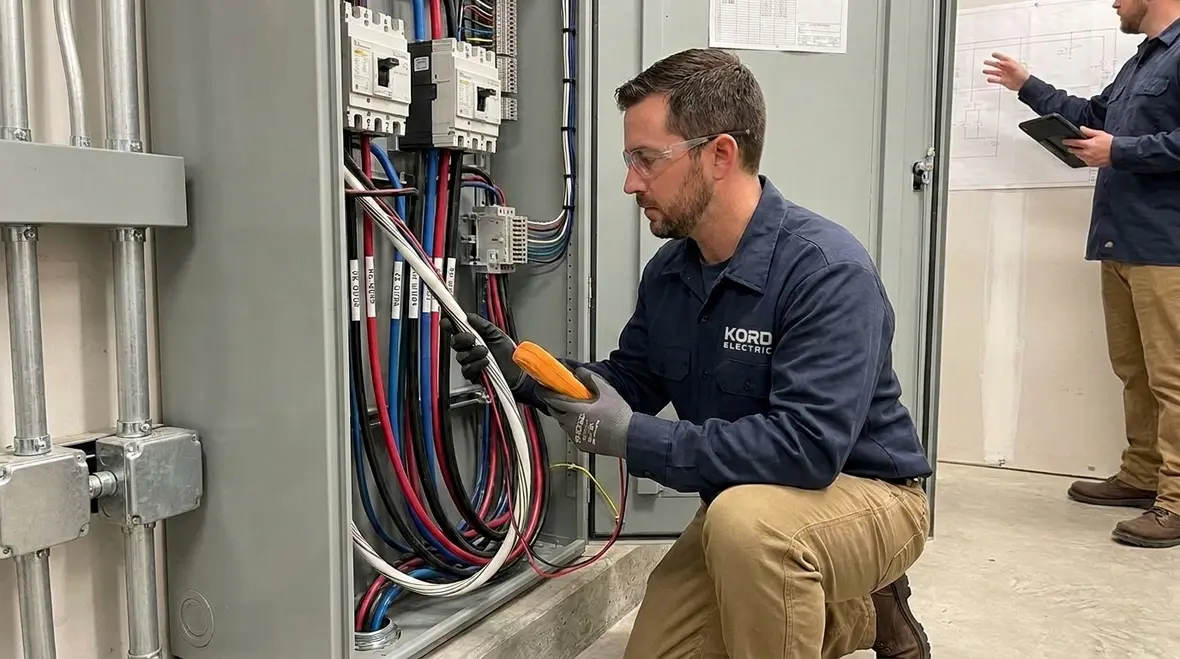
NEC Common Neutral Feeder Rules and NFPA 70 Section 215.14
When a commercial or industrial facility needs feeders with a common neutral, we start by applying the core NEC common neutral feeder rules that keep the system safe and predictable. In practice, we verify that the conductors and the connected loads meet the requirements for sharing a neutral, and we also confirm the neutral is sized and installed correctly so voltage does not behave like a surprise party. In other words, others may think “common neutral” just means “save some copper.” We treat it like a controlled design choice that must pass code and real-world testing. Our technicians and expert service staff explain these points step by step, because an electrical system cannot rely on hope, vibes, or pop quizzes. And no, it is not like ordering off a menu where the kitchen can guess what you meant.
NFPA 70 Section 215.14 in plain business terms
NFPA 70, also called the NEC, sets the electrical safety rules that designers, electrical contractors, and facility teams rely on. Within that code, Section 215.14 addresses feeders with a common neutral. The goal is simple: when conductors share a neutral, the neutral must still carry only what it is allowed to carry, without overheating, exceeding limits, or creating unsafe voltage conditions on equipment.
At Kord Electric, we focus on commercial and industrial facilities and major property buildings. That means we design and field-check systems where loads change over time, maintenance happens on a schedule, and occupants expect dependable power. Consequently, we do not treat Section 215.14 like a footnote. We treat it like a map, because the map matters when the building has multiple tenants, multiple branch circuits, and multiple ways for things to go wrong. For facility teams who want broader context on how the code shapes design beyond Section 215.14, Kord Electric’s guide Understanding NFPA 70: The National Electrical Code Explained For 2026 walks through how NEC direction affects planning for upcoming projects.
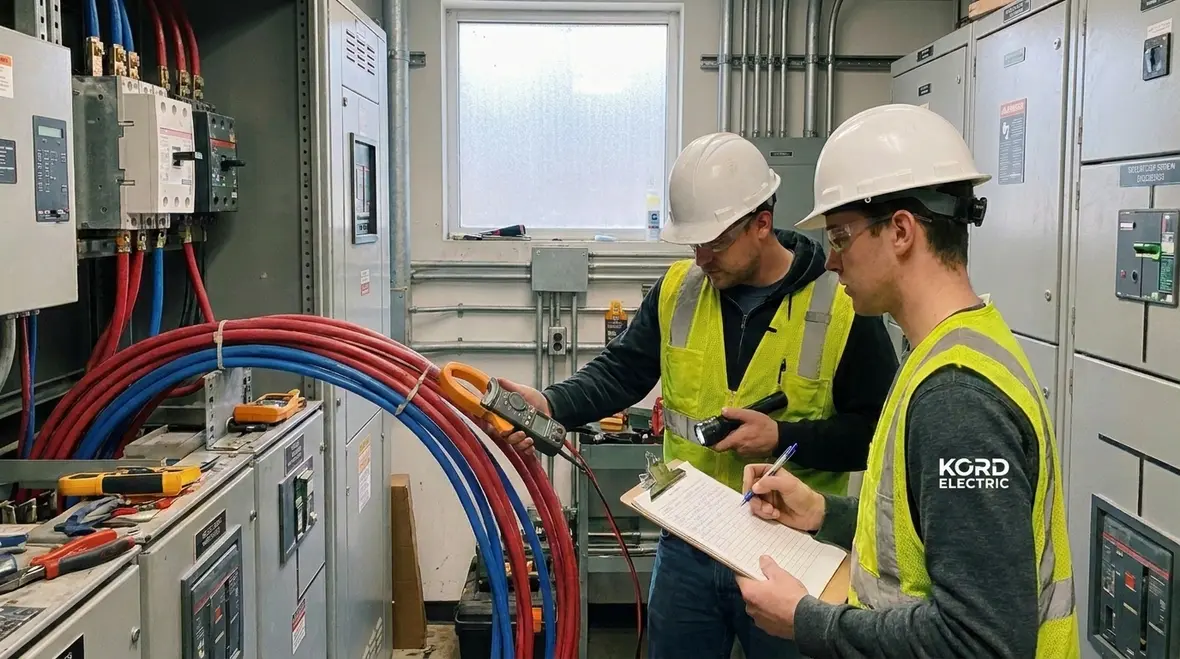
In many major property buildings, NFPA 70 also connects to fire and life safety systems that depend on reliable power. That is why Kord Electric coordinates with sister insights from Kord Fire on broader NFPA topics, such as the overview in NFPA 70: All About The National Electrical Code (NEC), so teams see how feeder decisions support the building’s overall safety story.
What “common neutral” really changes in a feeder design
In a typical setup, each circuit gets its own neutral conductor. With a common neutral, multiple ungrounded conductors can share one neutral for a feeder arrangement. This changes how current returns to the source. As loads on the phases rise and fall, the neutral current reflects the imbalance between those phase currents.
Therefore, the neutral is not just a passive wire. It becomes a conductor that carries specific current patterns. If the building’s loads stay balanced, the neutral current may stay low. However, if the loads become unbalanced, the neutral can carry higher current. And when the neutral current rises, we must ensure that the neutral conductor and termination points remain within safe temperature and ampacity limits.
Our expert service staff often explains it this way: the neutral is like the elevator in a tower. If everyone uses it lightly, it barely matters. If everyone uses it at once, it has to handle the load. Code recognizes that reality, and we help clients implement it the right way.
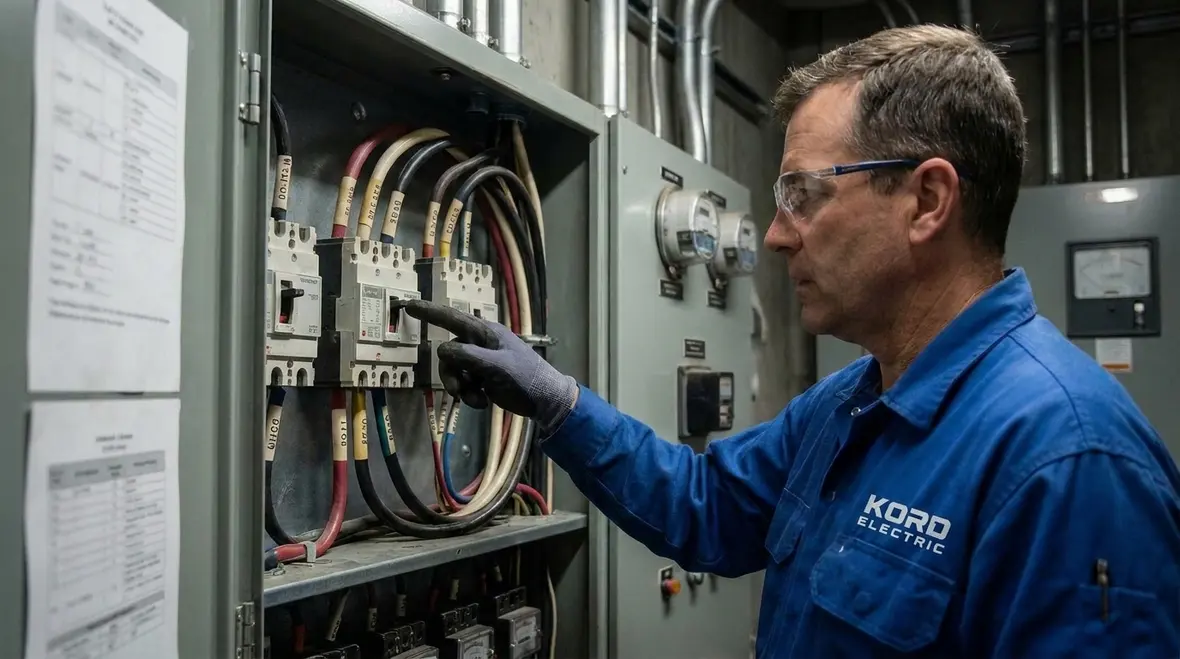
Because common neutral designs often appear in complex distribution layouts, they frequently interact with other NEC topics, from calculated load determination to workmanship expectations. Articles like Kord Electric’s breakdown of NEC calculated load determination rules and their coverage of NEC wiring integrity workmanship standards help teams connect the dots between paper calculations, installation quality, and the way a shared neutral behaves over time.
NEC common neutral feeder rules: what must be checked first
Before any installation or modification, we verify several conditions that tie directly to NEC common neutral feeder rules. First, we confirm the feeder arrangement and how the phases and neutral conductors connect to the overcurrent protective devices. Next, we look at conductor sizing, especially whether the neutral conductor can safely carry the expected current. Then, we check terminations and wiring methods so the neutral does not become the weak link.
In addition, we review the connected loads, because the code limits what kinds of sharing are allowed. We also verify the identification of conductors so that maintenance personnel do not guess later. That is not just a nice-to-have. A shared neutral without clear labeling becomes a troubleshooting headache, and troubleshooting time is not free in the real world.
To keep projects smooth, our technicians follow a disciplined checklist and explain the “why” behind each check. In the end, our goal is to reduce surprises during commissioning and reduce repeat visits after turnover.
These early checks also frame later planning decisions. For example, in renovations or tenant improvements, Kord Electric often pairs common neutral evaluations with electrical code upgrade consulting for renovations so that feeder strategies, panel upgrades, and code-driven scope changes move together instead of fighting each other.
Neutral sizing and ampacity: the part nobody wants to guess
Neutral conductor sizing and ampacity determine whether the common neutral arrangement performs safely. When phase currents are not equal, the neutral current equals the difference between the phase currents. As a result, neutral current can increase beyond what a casual observer might expect.
So we do the math and we do it early. We confirm that the neutral conductor size matches the code method for the specific feeder and load conditions. Then we confirm that installation conditions, temperature rating, insulation type, and derating factors do not quietly cut the neutral’s safe margin.
Finally, we inspect terminations and bus connections. Even when the conductor itself is properly sized, a loose lug or an incorrect connection method can create heat and failure. We have seen cases where the wire looked fine, but the connection was the real problem. That is like a perfectly tuned engine with a bad battery terminal. Sure, it runs. Then it does not, at the worst time, during peak hours, when the client calls and sounds like they have just watched their favorite show end on a cliffhanger.
Because neutral behavior links directly to system performance, it naturally overlaps with broader topics like modern distribution architecture and equipment choices. Resources such as Kord Electric’s insights on modern electrical systems for commercial buildings and their comparison of NFPA 70A vs NEC for commercial electrical compliance help decision-makers see how common neutral feeders fit into the bigger picture of code-driven system design.
Overcurrent protection and coordination for feeders with shared neutrals
Another key area is overcurrent protection. Feeders include protective devices that stop faults, prevent overheating, and keep the system within safe limits. When multiple circuits share a neutral, we must confirm that the protective scheme matches the code requirements for the configuration.
In the field, we also consider coordination. Overcurrent devices must clear the fault fast enough to protect conductors and equipment, while still allowing normal operation to continue. If coordination fails, a fault on one circuit can trip more than it should, and that turns power outages into an operational pattern rather than a rare event.
Because we serve commercial and industrial facilities, we work with facility managers and electrical contractors who care about uptime. Therefore, our team explains protection decisions clearly so everyone understands what will happen during a fault and what will happen during normal overload conditions.
These coordination decisions often surface during inspections by Authorities Having Jurisdiction. For teams that want a clearer picture of how AHJs interpret NEC enforcement in complex facilities, Kord Electric’s article on NFPA 70 Section 90.4 AHJ NEC enforcement explains how enforcement priorities line up with real-world protection and neutral performance.
Labeling, identification, and maintenance realities in major buildings
In a major property building, maintenance staff and electricians come and go. Tenants change. Equipment gets swapped. And eventually someone will open a panel and ask a question that starts with “Wait, why is that neutral shared?”
That is why we emphasize conductor identification and panel labeling. We make sure the wiring matches the design intent, and we ensure labels reflect the actual installation. When the labeling matches the code logic, troubleshooting becomes faster and safer. When labeling is unclear, the building acts like a mystery novel, and the “who did it” question often leads to downtime.
Our technicians and expert service staff go a step further. They train facility teams on what to look for during inspection and what changes require engineering review. As a result, the common neutral design remains correct over the life of the building, not just on the day of commissioning.
Labeling and identification work closely with other NEC topics such as branch circuit identification and ongoing panel maintenance. Kord Electric covers those related areas in resources like their piece on NEC branch circuit identification for safer commercial systems and their guidance on NFPA 70B electrical panels and switchgear maintenance, giving facility teams a fuller toolkit for keeping shared neutral feeders healthy throughout the building’s life.
Common pitfalls we help clients avoid
Even strong teams can run into problems when feeders with common neutral arrangements get treated like routine. We commonly see issues in the areas below, and we address them before they become expensive.
- Neutral confusion: conductors tied together without proper verification of the allowed feeder arrangement.
- Oversized expectations: some teams assume the neutral can handle anything as long as it “looks big.” Code needs specific sizing logic.
- Termination shortcuts: using improper lugs, reusing worn connections, or forcing conductors that do not fit cleanly.
- Load changes after turnover: tenants add equipment, and the original balance changes. We help clients plan inspection intervals and review triggers.
- Documentation gaps: drawings do not match field wiring. When that happens, maintenance turns into guesswork.
We also remind clients that code compliance is not only about passing an inspection. It is about performance over time. That is why we combine design verification with practical field service, and we keep the conversation focused on commercial and industrial needs. For smaller tenants inside larger properties, Kord Electric’s overview of electrical safety compliance for small businesses shows how even modest load changes can ripple into feeder behavior and neutral loading when nobody is watching.
FAQ about NFPA 70 Section 215.14 and common neutral feeders
Conclusion: let Kord Electric keep your feeders code-ready
When a project involves shared neutrals, we treat NFPA 70 Section 215.14 as a design and inspection discipline, not a checkbox. Our technicians and expert service staff verify conductor behavior, neutral sizing, protection details, and labeling so your commercial or industrial facility stays dependable. If you are planning a new build, a panel upgrade, or a major tenant change, contact Kord Electric for a practical review. We help you avoid the “it worked yesterday” moment, and we do it with calm, clear answers.
For property owners and managers in Southern California who want help applying NEC common neutral feeder rules across multiple buildings and tenant spaces, Kord Electric’s Los Angeles County electrical services team supports everything from design reviews and upgrades to long-term maintenance planning, so feeders, panels, and life safety systems stay aligned with NFPA 70 as your facility grows.


