
NEC Feeder Scope Explained 2026 NFPA 70 Section 215.1
At Kord Electric, we often hear the same question from facility managers and electrical decision makers: what exactly does the NEC feeder scope mean and where does it start. That is why we built our approach around the NEC feeder scope explained 2026, especially under NFPA 70 Section 215.1. In the first part of this guide, others may call it “just another code section.” We call it the difference between safe, organized design and an electrical system that behaves like a surprise pop quiz. After all, no one wants to fail an inspection because the scope was misunderstood.
Third person writing aside, our technicians still explain it the same way in the field: slow, clear, and with real examples from commercial and industrial projects. And yes, we keep it calming. Electricity does enough drama on its own.
NFPA 70 Section 215.1 sets the feeder boundaries
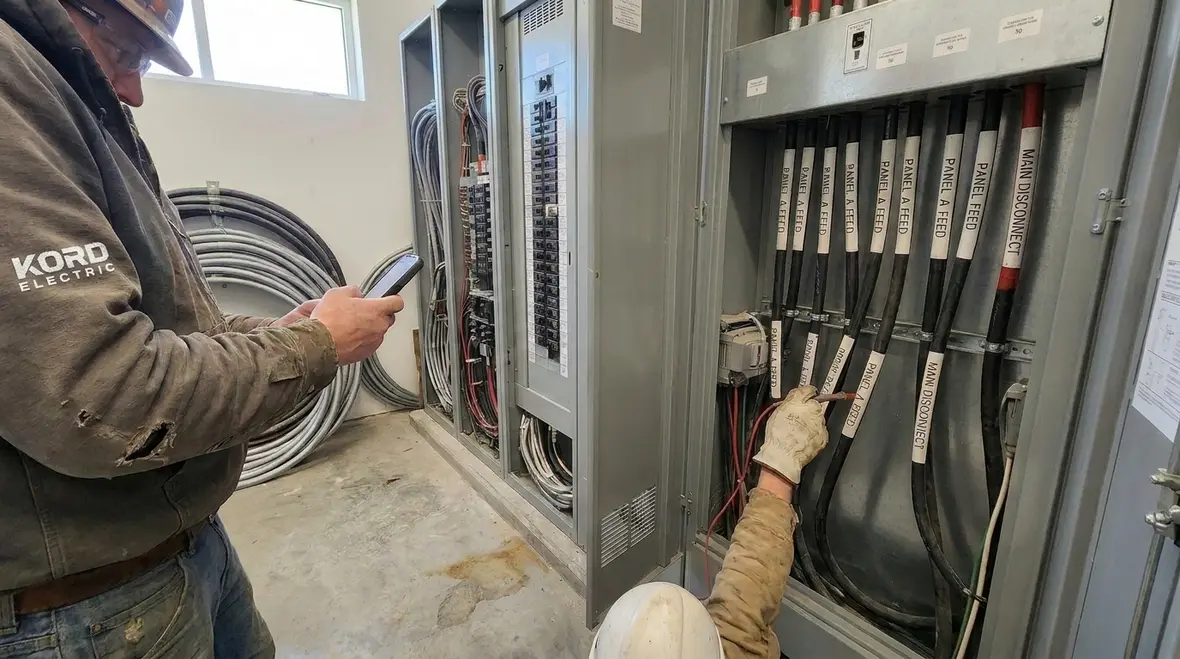
NFPA 70 Section 215.1 addresses the scope of feeders. In plain terms, it tells designers and electricians what circuits fall into the “feeder” category, and it helps define what that category must cover. As a result, the electrical system gains structure: a clear line between branch circuits and feeders, and a clear path for protection, rating, and layout.
Now, before anyone rushes ahead, it matters that “feeders” do not mean “any wire that runs from a panel.” Instead, in commercial and industrial facilities, feeders represent the conductors that supply distribution equipment, and they often connect service equipment or switchboards to other parts of the power system. Therefore, when NEC feeder scope explained 2026 gets applied correctly, teams reduce confusion and avoid oversights that lead to rework.
Our expert service staff often sees the same failure mode: someone assumes a conductor set is a feeder when it is treated like a branch circuit, or they treat a branch circuit like it is a feeder. However, the code does not run on assumptions. It runs on definitions.
If your team wants to connect this scope discussion to the broader rulebook, you can also review Kord Electric’s companion resource Understanding NFPA 70: The National Electrical Code Explained for 2026, which walks through how the NEC shapes everyday design and inspection decisions.
How to distinguish feeders from branch circuits in real projects
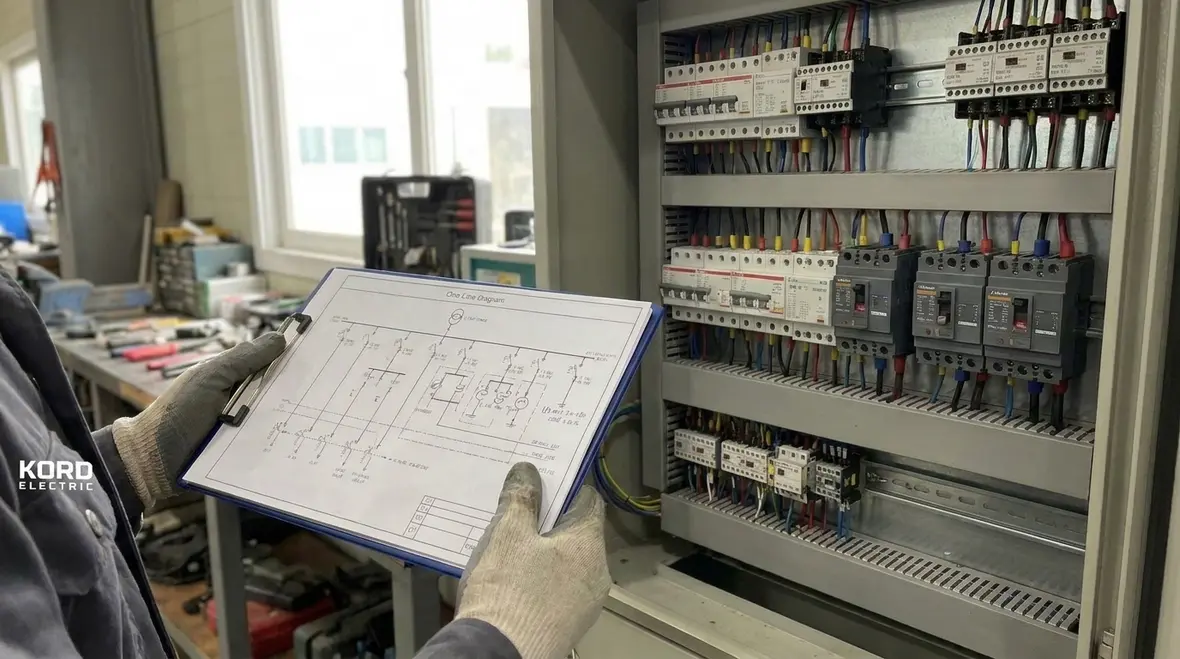
When we talk about NEC feeder scope explained 2026 for major property buildings, we focus on how teams decide what they are designing. Typically, branch circuits serve loads directly, while feeders supply other distribution equipment or panelboards that then feed branch circuits.
To make that usable, we break it down the way our technicians explain it on-site. For example, consider a common commercial setup: utility service enters the service equipment, then power flows to a switchboard or large panel that distributes power to multiple panelboards. Those larger conductors usually act as feeders. Then, from each downstream panelboard, branch circuits feed lighting, receptacles, and equipment.
However, the boundary can look fuzzy in buildings with unusual layouts. Therefore, field teams must review the one line diagram, equipment schedule, and actual installation plan. In other words, they should not guess based on what “feels” like a feeder. They should map what feeds what.
- Feeder behavior: supply to distribution equipment, switchboards, panelboards, and related downstream distribution
- Branch behavior: supply directly to utilization equipment like lights and receptacles
- Design behavior: proper labeling and protection pathways follow the defined scope
And if anyone thinks this is just paperwork, remember: the right classification supports correct breaker sizing, conductor sizing, and compliance during inspection. Electricity loves clarity. Inspections love proof.
Why scope definitions affect sizing, protection, and planning
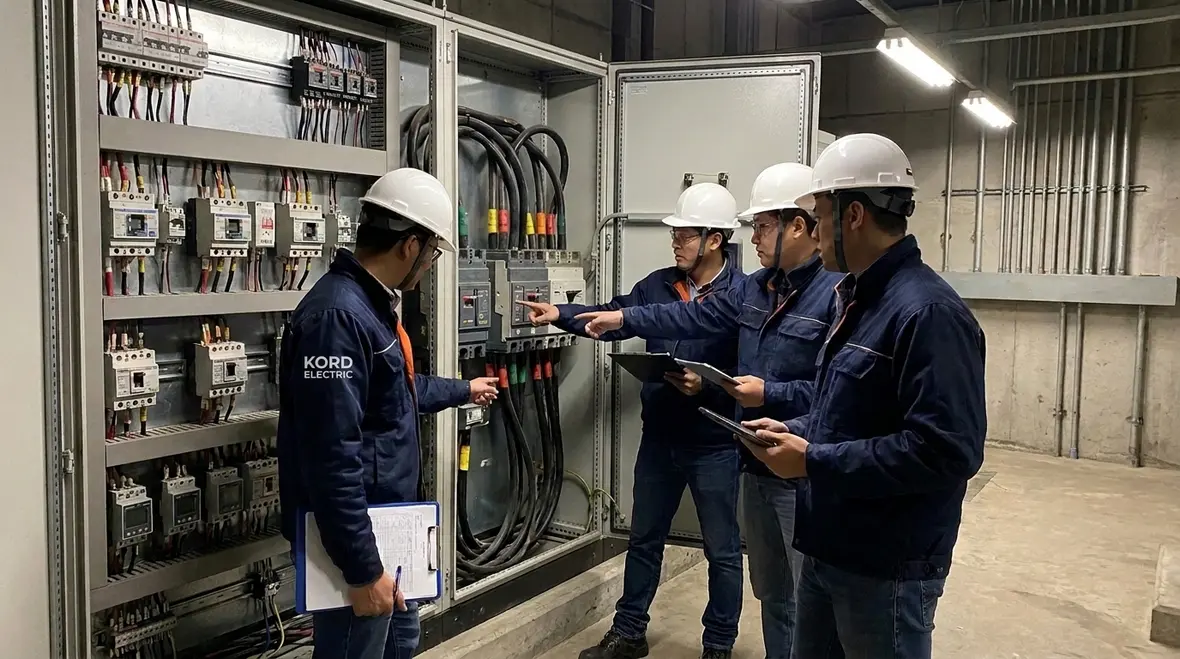
Once the feeder scope is understood, the knock on effect reaches everything. First, it changes how teams plan conductor sizing because feeder conductors often carry multiple downstream loads. Next, it affects overcurrent protection coordination because feeders and downstream branches follow different rules and risk profiles.
In commercial and industrial facilities, the stakes are higher because loads grow complex. HVAC systems, pumps, process equipment, and power distribution components can create demand diversity, harmonics, and starting current needs. As a result, the electrical design must treat feeder conductors as the backbone, not as a casual detour.
Our technicians also highlight that feeder scope influences how commissioning and troubleshooting happen. When the distribution system uses the correct feeder framework, crews trace faults faster, documentation aligns with reality, and maintenance runs smoother. Conversely, if the scope was misread, the system becomes a puzzle that no one asked for.
In fact, our expert service staff often says the same thing with a small smile. “If you want fewer surprises, define the basics correctly.” It sounds obvious, but most problems begin with an overlooked definition, not a dramatic equipment failure.
For facility teams tying feeder planning back to their broader code picture, resources like Kord Electric’s NEC overview articles and the Kord Fire guide NFPA 70: All About The National Electrical Code (NEC) 2026 reinforce how good scope decisions support safer systems, fewer change orders, and smoother inspections.
What Kord Electric emphasizes for NEC compliance in 2026
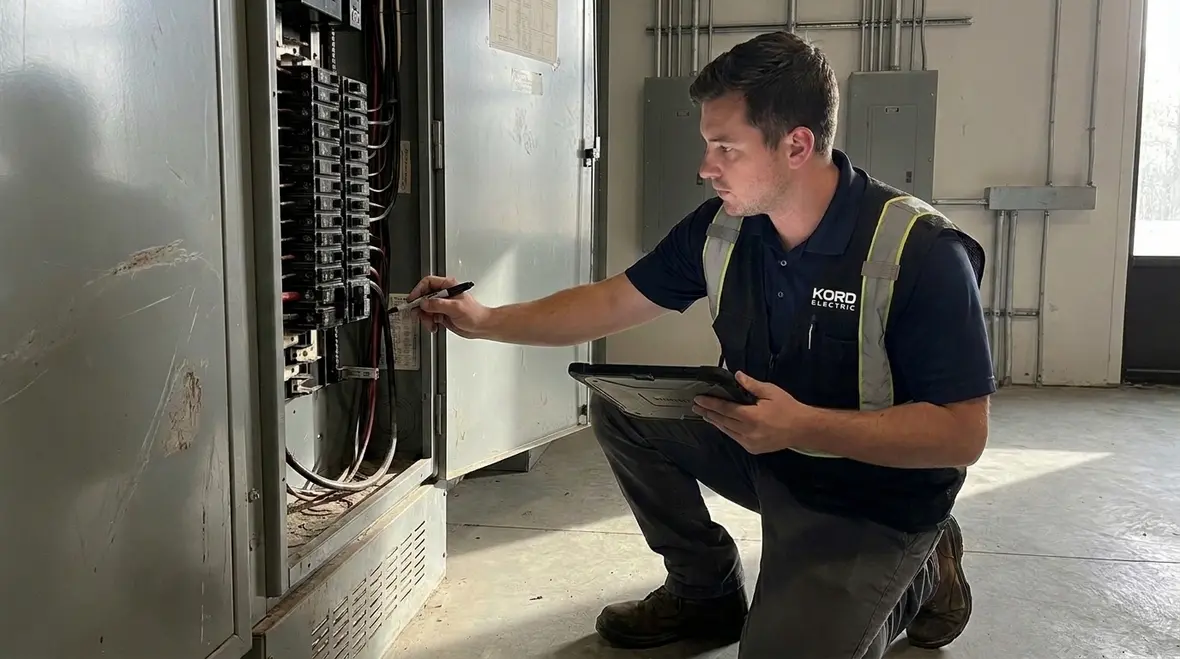
Kord Electric supports compliance by treating code sections like work instructions, not suggestions. When our engineers and field technicians review projects, they use the feeder scope as a decision tool for the entire distribution approach. That means they check how service equipment connects to switchboards, how feeders route to panelboards, and how conductors land at equipment designed to receive feeder inputs.
We also coordinate with the rest of the electrical system so nothing contradicts the feeder story. For example, grounding and bonding practices must match the distribution scheme. Load calculations must align with the actual equipment fed by those conductors. And labeling must clearly communicate which conductors act as feeders.
Because this guide aligns with updated thinking around the NEC feeder scope explained 2026 approach, we emphasize practical outcomes for commercial and industrial facilities and major property buildings. That includes reducing change orders, improving inspection readiness, and supporting safer, more maintainable power distribution.
For reference, Kord Electric also maintains code-focused resources through Kordfire and its related educational pages, and those perspectives help our teams connect theory to field application. We share the same goal with other safety groups and industry resources such as firepumps.org, which reminds us that electrical safety and system reliability never operate in isolation.
Common feeder scope mistakes we see during plan review
Even with experienced contractors, feeder scope errors show up. First, teams sometimes misclassify conductors that feed multiple downstream panelboards. Then, they may treat a set as feeders during design but label it like branch circuit wiring in the field. After that, they discover the conflict during inspection and spend hours trying to reconcile drawings, wire markers, and breaker schedules.
Another recurring issue involves equipment types. Some buildings use nonstandard distribution assemblies, and teams sometimes assume that because a panelboard looks like “just another panel,” the upstream wiring must be a branch. However, in real commercial and industrial systems, distribution equipment often changes the conductor role.
Finally, we see a timing problem. Teams sometimes interpret feeder scope late, during rough-in, after routes and conductor sizes are already selected. Therefore, a better approach is to confirm feeder classification early, then coordinate the rest of the design around it.
- Misclassifying downstream distribution feeders as branch circuits
- Inconsistent labeling that does not match the one line diagram
- Late scope decisions that force conductor and protection changes
- Skipping cross checks between panel schedules and upstream protection
And yes, sometimes the mistake feels like the electrical version of ordering the wrong drink at a coffee shop. You still get caffeine, sure. But you also get the wrong size, the wrong lid, and a little regret that lasts until the receipt is fixed.
How to apply NEC feeder scope explained 2026 during installation
At Kord Electric, our technicians apply feeder scope thinking in the sequence that prevents chaos. They start with documentation, then verify equipment interfaces, then confirm conductor routings, and finally check protection alignment.
In practice, that looks like this. Teams confirm which conductors leave service equipment or switchboards as feeder conductors. Next, they verify where those conductors terminate, including the correct lugs and terminations rated for feeder use. Then, they confirm breaker sizes and overcurrent protection align with feeder expectations rather than downstream assumptions.
As installation progresses, our expert service staff performs methodical checks. They compare the installed wiring to the approved schedules. They verify markings so that future maintenance and troubleshooting stay efficient. And they document any exceptions so the facility team can plan around reality, not around a perfect diagram.
For commercial and industrial facilities and major property buildings, this approach matters because downtime has cost. When the feeder scope is applied correctly, maintenance crews understand the system faster, and troubleshooting becomes less like detective work and more like planned service.
How NEC feeder scope thinking supports wider code strategy
Feeder scope is one section of the NEC, but it does not live alone. When you classify conductors properly under NFPA 70 Section 215.1, you also set up better decisions around branch circuits, service equipment, and maintenance expectations.
For example, Kord Electric’s broader code education content connects these dots. Articles such as “What Is NFPA 70? Understanding the National Electrical Code” and “How to Read NFPA 70 National Electrical Code” show how scope, definitions, and enforcement all interact when you plan upgrades, renovations, or new builds for major property facilities.
When you combine that high-level understanding with NEC feeder scope explained 2026 in your actual drawings and panel schedules, your system design stops feeling like a stack of disconnected requirements and starts behaving like a single, coordinated plan.
Featured FAQ for feeder scope and Section 215.1
CTA: Get feeder scope clarity for your facility
If your commercial or industrial facility depends on steady power, do not leave feeder classification to guesswork. Kord Electric reviews your one line diagrams, equipment interfaces, and installation details so your NEC feeder scope explained 2026 approach stays consistent from design through commissioning. Our technicians and expert service staff explain what we see and what we recommend in plain language, so your team gets answers, not surprises.
If you are planning larger modernization or facing complex inspection requirements in Southern California, you can also explore Kord Electric’s broader Los Angeles County electrical services, which support distribution upgrades, code-driven renovations, and targeted troubleshooting for major property buildings.
Contact Kord Electric today to schedule a compliance review and lock in a safer distribution path that treats feeders, branches, and service equipment as parts of one organized system, not a series of separate pop quizzes.


