
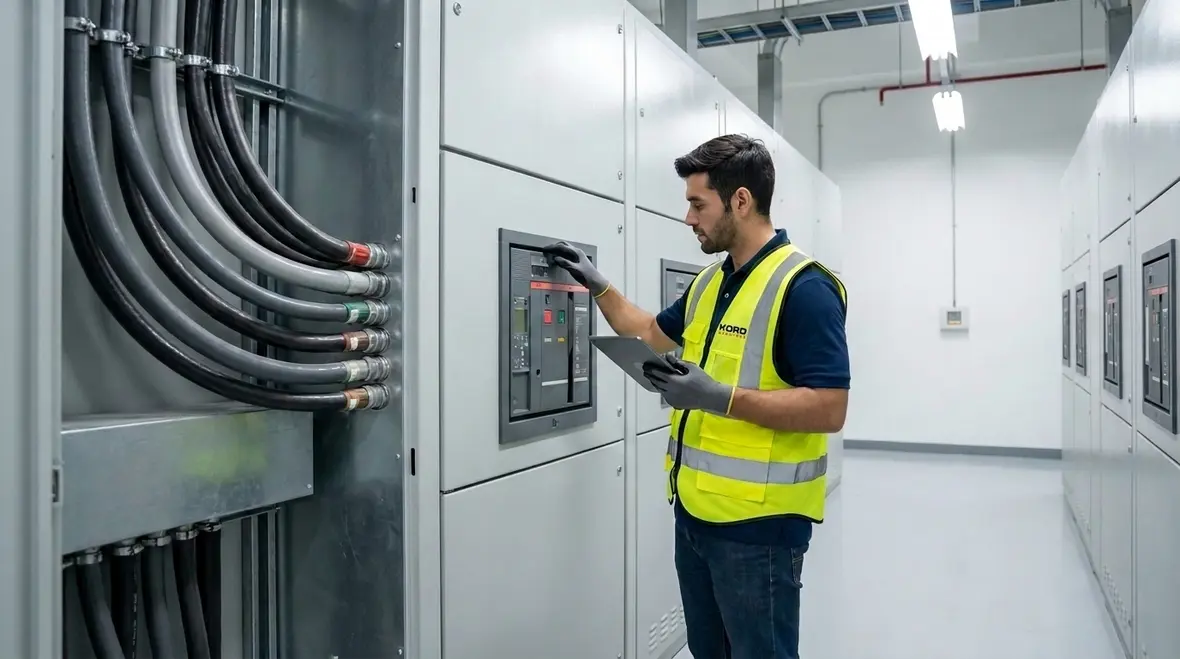
NFPA 70 Section 215.5 Feeder Overcurrent Protection Code
Commercial and industrial electrical systems run on one simple idea: when something goes wrong, the right device stops the problem before it becomes an emergency. That is why the NEC feeder overcurrent protection code matters. In this guide, we explain NFPA 70 Section 215.5 in a clear, jobsite friendly way, and we tie it to what our team sees every day in major property buildings. Our technicians and expert service staff walk clients through the logic step by step, so the numbers and rules feel less like a riddle and more like a reliable plan.
Now, we also know that code talk can feel like watching paint dry. However, once you understand what Section 215.5 requires, you get a safer system, smoother inspections, and fewer surprises that show up after hours. And yes, we promise: no magic smoke, no dramatic music, and no “oops, we’ll fix it later.”
NFPA 70 215.5 basics for commercial feeder protection
NFPA 70 Section 215.5 addresses the feeder overcurrent protection code for feeders. In plain terms, it requires that feeders receive overcurrent protection that fits the conductors and the system design. That means you do not just pick a breaker because it looks close enough. Instead, you match protection to the ampacity of the feeder conductors and to how the equipment is intended to operate.
To keep this practical, our expert service staff explains it like this: a feeder is a main artery. If the artery runs with a wrong size valve, the body still works, but only until it does not. Section 215.5 aims to ensure the “valve” opens when it should, and it trips when it must.
Additionally, the code ties feeder protection to proper conductor sizing and coordination. As a result, engineers, electricians, and facility teams can build a system that behaves predictably during overloads and faults. For facility leaders who want a wider code overview along with this section, it pairs well with Kord Electric’s resource on understanding NFPA 70 and the National Electrical Code for 2026, which sets the larger rulebook context.

Why Section 215.5 targets feeder ampacity and fault risk
When a feeder feeds many loads across a commercial or industrial site, faults can grow fast. Therefore, the NEC feeder overcurrent protection code becomes a control point. Section 215.5 drives the need for overcurrent protection that will interrupt current safely, within the limits the wiring can handle.
Here is the deeper part most teams do not talk about enough. Overcurrent events do not all look the same. A sustained overload draws too much current for too long, which can heat conductors. A short circuit creates a sharp fault current that can damage components and create hazards in nearby areas. Even when your system “survives” a fault, the damage may not be visible until later.
That is why we focus on correct conductor ampacity, correct protective device rating, and correct interrupting performance. Then, we also confirm that the protective device fits the job. Our technicians use field experience to catch mismatch issues early, such as conductors sized one way in drawings and sized differently in real conduit runs.
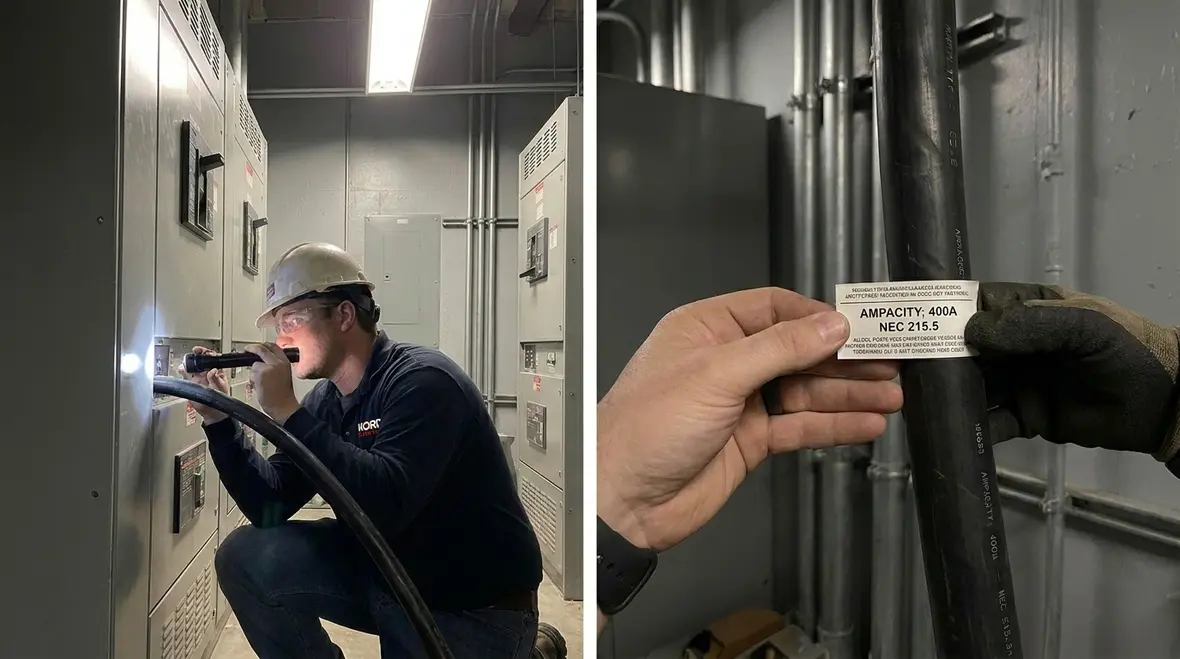
How to apply the feeder overcurrent rules step by step
We break the process into steps for major property buildings, because large facilities rarely allow guesswork. First, we confirm the conductor ampacity based on the installation conditions. Next, we select protective devices that meet the requirements of NFPA 70 for the feeder. Then, we document the coordination method so future maintenance staff can understand the reasoning.
- Confirm conductor details: material, temperature rating, number of current carrying conductors, and adjustment factors based on the environment.
- Match the protective device: the trip range and rating must align with the conductor and the system design.
- Check interrupting rating: the device must safely clear the available fault current.
- Coordinate upstream and downstream: this reduces unnecessary outages and helps keep the faulted circuit from taking down unrelated areas.
After that, our service staff verifies the design intent against what is actually installed. So, if a project includes switchboards, panelboards, switchgear, or long feeder runs, we review those parts together. We do not treat this as separate trivia. We treat it as one system.
In many commercial projects, this step by step approach also ties into larger code planning and documentation. Teams who already invest in data driven design, coordination studies, and broader NEC review work find that Section 215.5 folds naturally into their workflow instead of showing up as a last minute correction.
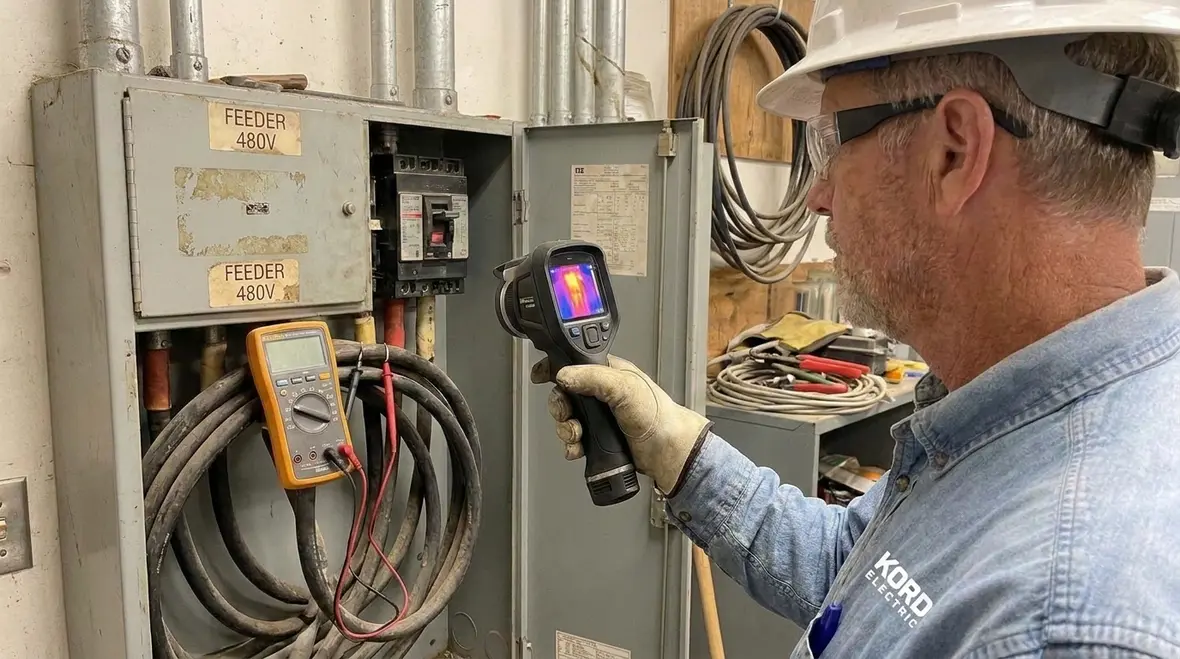
Coordination and selectivity in commercial electrical systems
In large facilities, selectivity matters. When a fault happens, you want the device closest to the fault to clear it, while other parts of the electrical system stay online. This is not just about comfort. It protects uptime, keeps critical operations running, and reduces costly downtime.
Section 215.5 supports this goal by requiring feeder protection that makes sense for the conductors and system. However, the real-world outcome depends on coordination. That means the breaker settings and ratings need to work together like well trained actors in a sitcom. When the timing is wrong, someone always gets blamed, and the entire production stops.
Our technicians and expert service team often see the same pattern in commercial and industrial buildings. Someone installs equipment, passes the first inspection, and then later adds loads. Eventually the load profile changes, coordination weakens, and the system begins to behave in unexpected ways. As demand rises, the NEC feeder overcurrent protection code becomes a foundation, not a footnote.
Good coordination work also talks to the rest of the electrical code. Studies that look at feeder overcurrent behavior should align with broader NEC expectations around equipment protection, fault current limits, and emergency system performance, so that no single change breaks the logic somewhere else in the building.
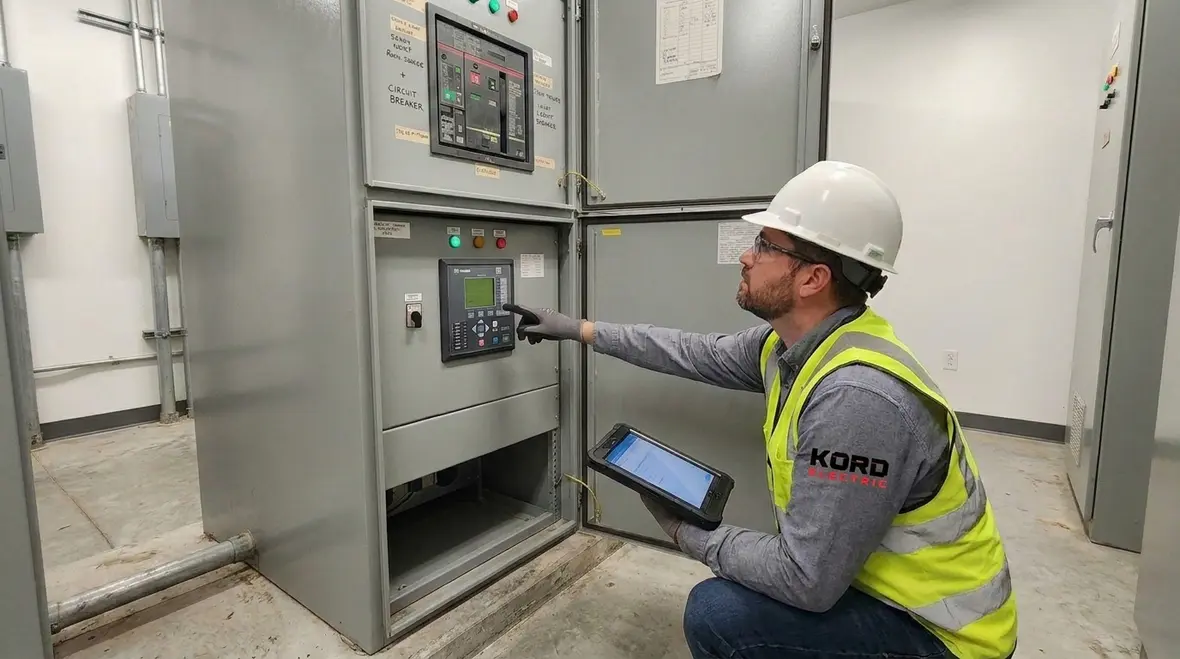
Common mistakes we see during plan review and site verification
We have worked with many major property buildings, and we know where failures begin. Typically, problems come from assumptions made early in the design or from changes during construction. Therefore, we focus on the “small” errors that become big issues under inspection.
Here are common issues our technicians catch during review and service visits:
- Using a breaker size that does not match conductor ampacity after adjustments for installation conditions.
- Ignoring available fault current and selecting a device with insufficient interrupting rating.
- Skipping coordination studies and assuming every upstream device will clear “eventually.” That assumption loves to disappear the moment someone turns on heavy equipment.
- Mixing design intent and field modifications without updating protective device settings or documentation.
- Not accounting for long feeder runs and thermal behavior that affects how the system performs under steady load.
To be clear, these mistakes do not come from bad intentions. They usually come from timelines, incomplete information, or changes that happen fast on site. Still, our job at Kord Electric is to make sure the system meets NFPA 70 expectations and that it stays reliable as the building grows.
During plan review, we often align feeder protection choices with broader upgrade paths. That may include future panel changes, surge protection, or more advanced monitoring. When the NEC feeder overcurrent protection code is handled carefully at the feeder level, it becomes easier to integrate those upgrades without breaking existing protections.
How Kord Electric supports facilities with expert electrical service
Kord Electric serves commercial and industrial facilities and major property buildings. We work with teams who need safe power, predictable performance, and documentation that stands up to real audits. Our approach stays practical: we explain the requirements, then we apply them.
During projects, our technicians help interpret code intent and translate it into equipment selection and system coordination. Meanwhile, our expert service staff guides facility managers through maintenance planning so protective devices stay properly set and properly understood. In addition, we align our work with the broader safety information that guides how we think about the NEC and fire and life safety electrical practices.
When clients also use related resources from KordFire and fire pump communities like Fire Pumps, they often gain a wider view of how electrical design fits emergency planning. Then they come back to us with one good question: “How does this apply to my feeders and my equipment?” That is where we step in with real answers for real buildings.
For facilities across Los Angeles County and surrounding areas, our work on NFPA 70 Section 215.5 often connects directly to broader projects like panel upgrades, power quality improvements, and safety focused retrofits. When a building needs both day to day reliability and long term upgrades, we help tie the NEC feeder overcurrent protection code into a complete strategy rather than a one time checklist.
So yes, we can talk code. But we also make sure the code turns into a stable system that keeps production running and keeps risk low. That is the point.
Frequently asked questions about NFPA 70 215.5
Conclusion and call to action
If your commercial or industrial facility relies on feeders that serve multiple areas, we can help you apply NFPA 70 Section 215.5 with confidence. At Kord Electric, our technicians and expert service staff explain what the rules mean, then we verify protection choices, coordination, and documentation so your system stays safe and dependable. Contact us for a feeder protection review and next steps. We will keep the process clear, the pacing calm, and the results built for real inspections and real uptime.
For facilities planning more extensive upgrades or looking at broader electrical reliability, our team also supports comprehensive commercial work across the region, including services described on our Los Angeles County electrical services page. Whether you are addressing a single feeder or a campus wide distribution system, the NEC feeder overcurrent protection code becomes a key part of how we design, verify, and maintain safe power.


