
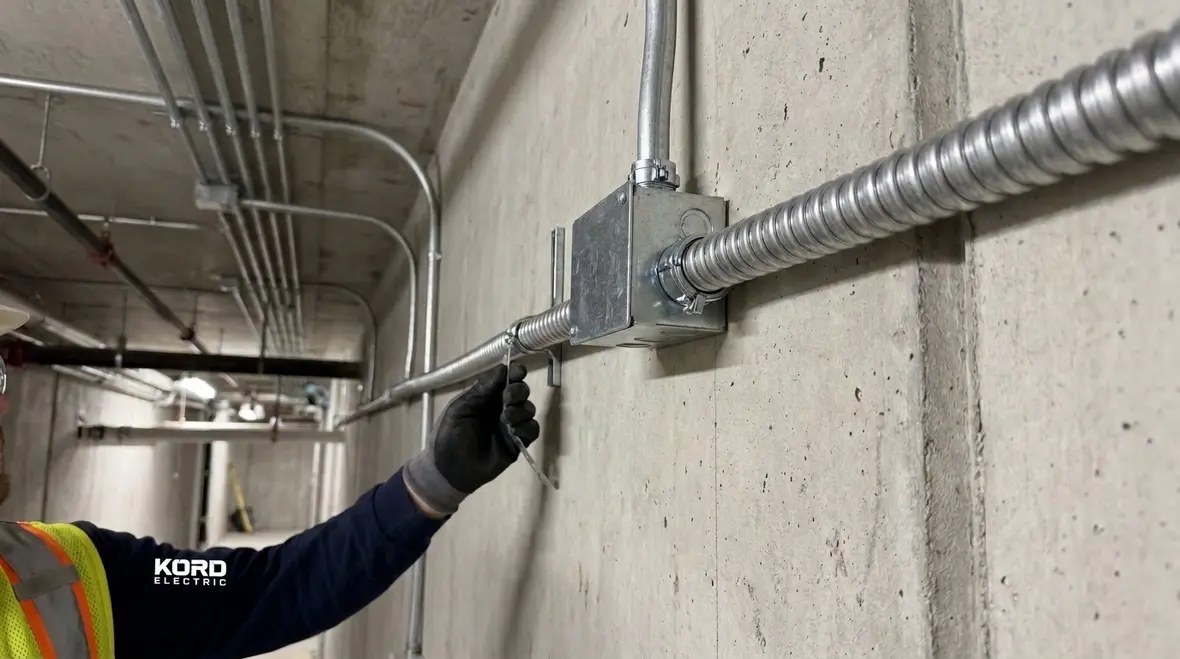
NEC Flexible Metal Conduit Limitations: Section 305.12
NEC flexible metal conduit limitations start here: why Section 305.12 matters
In commercial and industrial buildings, we often see contractors reach for NEC flexible metal conduit limitations without fully mapping the job to the rules. That is a quick way to end up with a call we did not schedule, a correction we do not want, and a punch list that grows like a late night gremlin. So in the first 100 to 150 words, we set the stage: NFPA 70 Section 305.12 limits how FMC can be used, and those limits affect how we plan routes, support methods, and protection.
At Kord Electric, our electricians and expert service staff explain it in plain language, then they back it up in the field. Others may treat Section 305.12 like a footnote. We treat it like a safety rail.
What NFPA 70 Section 305.12 actually limits for FMC
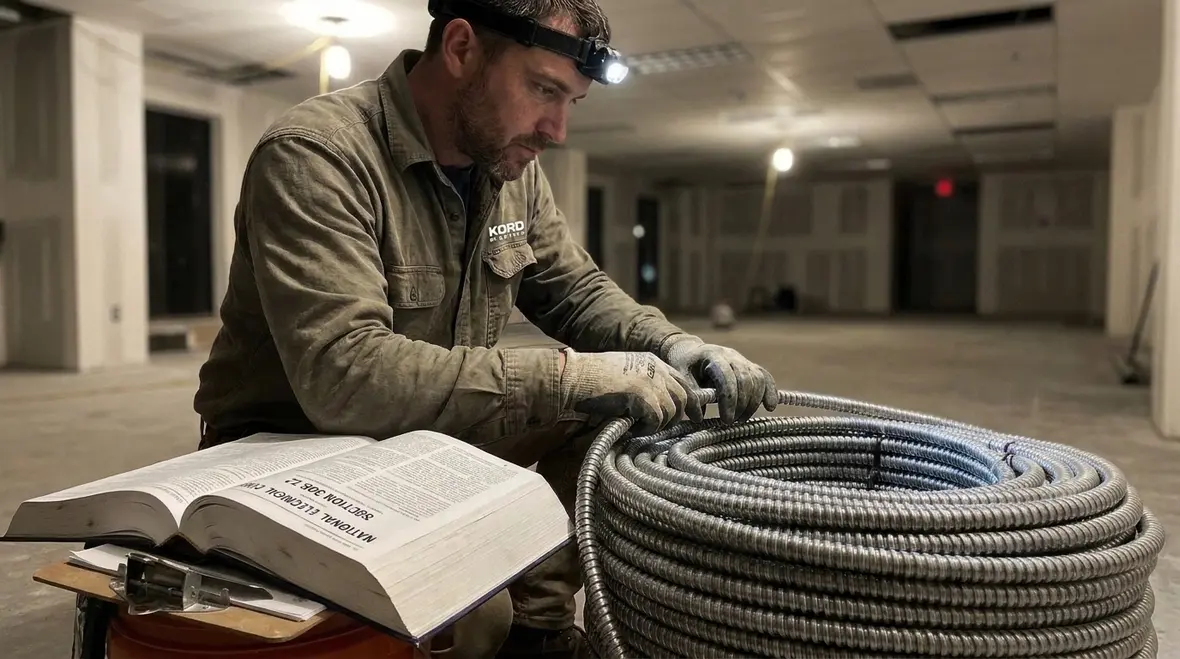
NFPA 70 Section 305.12 focuses on FMC, also called flexible metal conduit. It does not simply say “use it carefully.” Instead, it sets boundaries on where and how FMC can be installed, including limits tied to the environment and the physical conditions at the job site.
In practice, Section 305.12 often comes up when a project team wants FMC in places where conditions are harsher than expected. For example, a path that runs near equipment vibration, outdoor exposure, or locations where impact is likely can exceed what FMC is meant to handle. Therefore, the installer must choose a method that matches both the code intent and the actual conditions.
Now, to keep it real, some people think FMC is the “flexible version” of everything else. That is like thinking a stapler can replace a drill. It can do a job, but not that job, not safely, and not for the long run.
If you want a deeper dive on how NFPA 70 shapes modern projects beyond Section 305.12, you can also review our NEC overview guide in Understanding NFPA 70: The National Electrical Code Explained for 2026, which connects code language to everyday decisions in commercial and industrial facilities.
Where the code tension shows up in real commercial projects
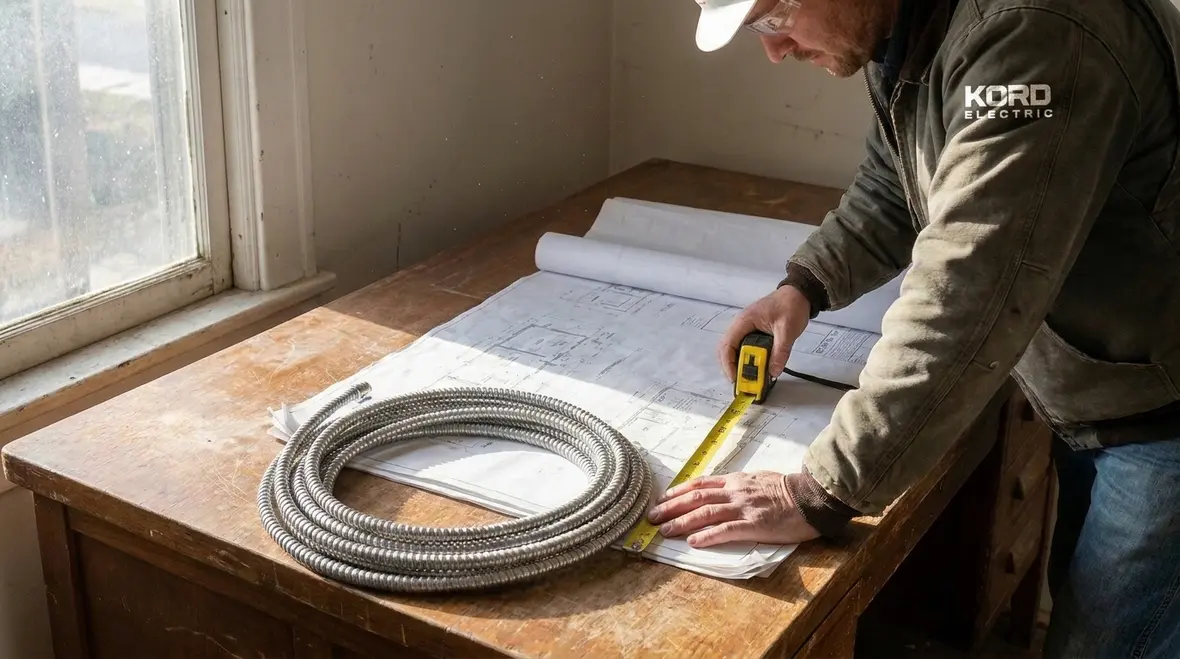
In major property buildings, we see a pattern. Plans get drawn. Then someone asks for a field change. After that, the electrician wants flexibility, and flexible metal conduit looks like an easy answer. However, once the installation crosses into what Section 305.12 limits, the design intent breaks.
Our expert service staff often explains it this way. First, the purpose of the conduit is protection. Next, the conduit type must fit the exposure. Then, if the conduit cannot handle the environment, the system becomes fragile. And fragile systems fail, often at the worst time, like during the building’s busiest hours.
So we help teams connect code text to site realities. We look at access, routing, mechanical damage risk, and how the building’s layout changes the conduit pathway. If the pathway creates conditions that exceed the FMC limitations, we recommend alternatives early so the job stays on schedule.
How to plan FMC routing while staying within the limits
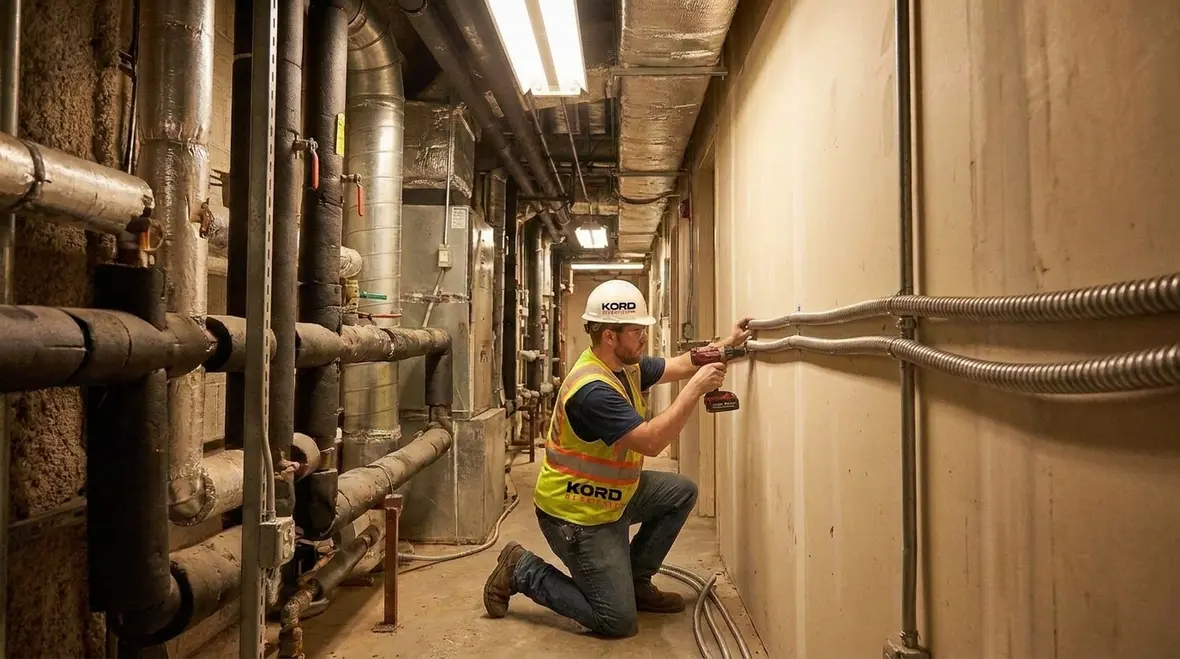
When we plan FMC routing, we do it with sequence and restraint. First, we identify the electrical function and the expected movement in the route. Then, we confirm the route location relative to the limitations in Section 305.12. After that, we coordinate with the trades that control ceiling space, equipment placement, and access panels.
We also consider how support and protection choices affect the conduit’s ability to perform. For example, if the installation needs frequent bends, tight transitions, or routes that sit where impact can occur, we slow down and re-evaluate. That is not a delay strategy. It is a “prevent the comeback call” strategy.
Additionally, we verify that the conduit method aligns with the facility type. Kord Electric focuses on commercial and industrial facilities and major property buildings. Those sites tend to have higher loads, heavier equipment, and more frequent traffic in service corridors. Therefore, we treat the installation environment as part of the design, not an afterthought.
Common mistakes we help facilities avoid
In the field, we see a few mistakes repeat. First, some teams use FMC in locations that effectively act like higher risk zones, without adding protection that brings the installation back into compliance. Second, others treat FMC like it can handle bending and handling like a temporary cable route. Third, some skip careful checks during coordination, then they discover conflicts only after the conduit is already installed.
To make this easy to digest, our technicians explain three “stop points.” We stop when the route location conflicts with the limits in Section 305.12. We stop when the installation needs extra protection that the plan did not include. We stop when the support layout does not match the expected mechanical conditions.
And yes, sometimes someone jokes that the conduit will “just be fine.” In our experience, code does not laugh. The inspection might. The system rarely does.
Installation details that keep FMC reliable over time
Once a facility team stays within the permitted use boundaries, installation quality still matters. We focus on details that reduce long term stress on the electrical system. We pay close attention to bend control, securing points, and the way the conduit transitions toward boxes and equipment.
We also coordinate with the grounding and bonding plan, because the conduit system and the overall electrical system must work together. When bonding is done correctly, the installation supports safe fault current pathways and improves system stability. Additionally, we ensure that conduit ends and connections use proper components so the conductors remain protected and the installation does not create sharp stress points.
Moreover, we confirm that the conduit system matches the environment for the full lifecycle of the building. A commercial or industrial facility changes over time. Equipment gets added. Walls get moved. Access routes shift. Therefore, when we install within the FMC limits defined by Section 305.12, we also help the team think about future service access.
How Kord Electric supports compliance for major properties
Kord Electric brings a practical approach for commercial and industrial facilities and major property buildings. We do not just read the code and walk away. Our process starts with understanding the project needs, then it moves into site review, and it ends with installation and documentation that teams can trust.
Our technicians and expert service staff explain the reasoning behind each decision. For example, when we recommend an alternative to FMC, we do so because the route conditions and the NFPA 70 Section 305.12 limits point in that direction. When we keep FMC, we confirm the installation stays inside the safe boundary so it can perform as intended.
So if a facility team wants fewer surprises, faster approvals, and a system that stands up after the first busy season, we help them plan early. That is the kind of calm that lets you focus on business, not repairs. If you want more background on the NEC and related requirements, you can explore our NEC resources on the Kord Electric blog and visit our partner site content at kordfire.com and kordfire.com.au.
For facilities in Southern California that need a partner to translate Section 305.12 and other NEC requirements into field-ready work, our Los Angeles County electrical services team supports design, installation, and proactive maintenance for complex commercial projects.
FAQ
Conclusion
FMC can be a smart choice, and we use it when it fits the installation conditions. However, NFPA 70 Section 305.12 sets clear FMC boundaries, and we help facility teams respect those limits before the conduit goes in. Our technicians and expert service staff bring calm, clear explanations, then they support compliant installation across major property buildings and commercial and industrial facilities. If you want fewer revisions, smoother inspections, and a system that lasts, contact Kord Electric and let us review your plan today.


