
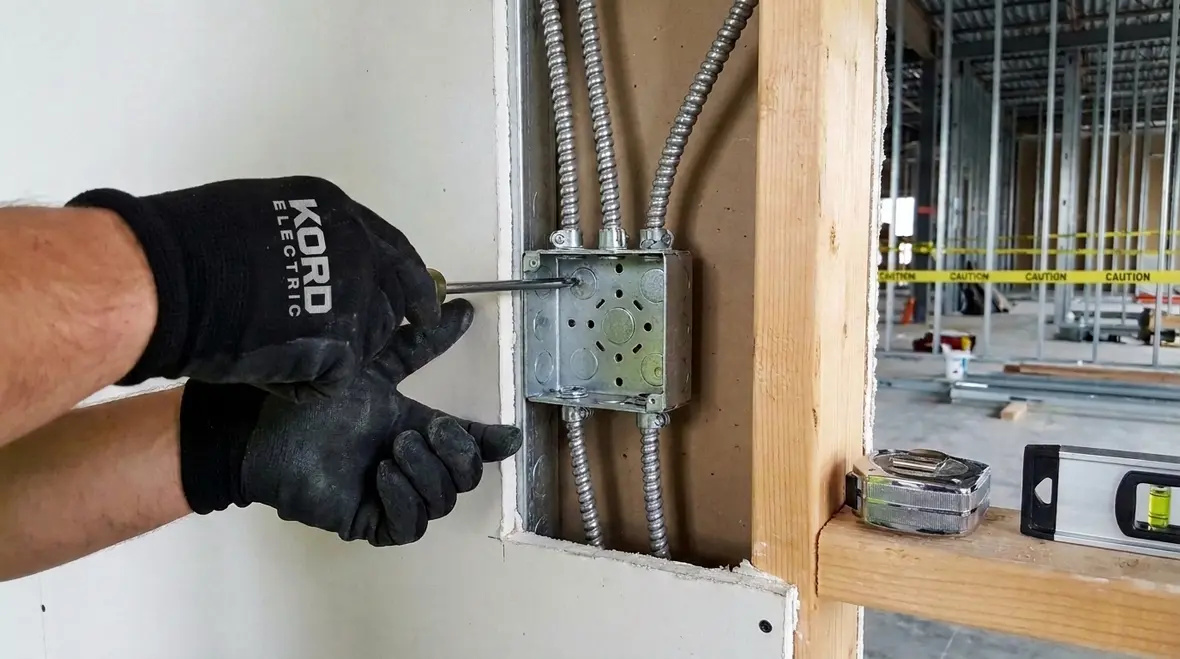
NEC Flush Mounted Installations: NFPA 70 314.20 Guide
NEC flush mounted installations, and how NFPA 70 Section 314.20 keeps boxes straight
At Kord Electric, we manage NEC flush mounted installations for commercial and industrial facilities, along with major property buildings where uptime matters and inspections matter more. In the first hundred words, we will say this plainly: if your flush mounted electrical boxes are wrong, you do not get a small problem. You get a rework, delays, and a conversation with the authority having jurisdiction that nobody enjoys. So, we lean on NFPA 70 Section 314.20 as our guide for flush mounted box installations. And yes, we also remind clients that electricity does not care about deadlines. It cares about code.
In this article, our experts explain how to handle the details that actually show up on job sites: mounting rules, device alignment, covering practices, and the parts of the electrical code that reduce risk. Then we translate the legal language into real steps your team can follow, without turning the job into a never ending mystery novel.
What NFPA 70 Section 314.20 demands for flush mounting
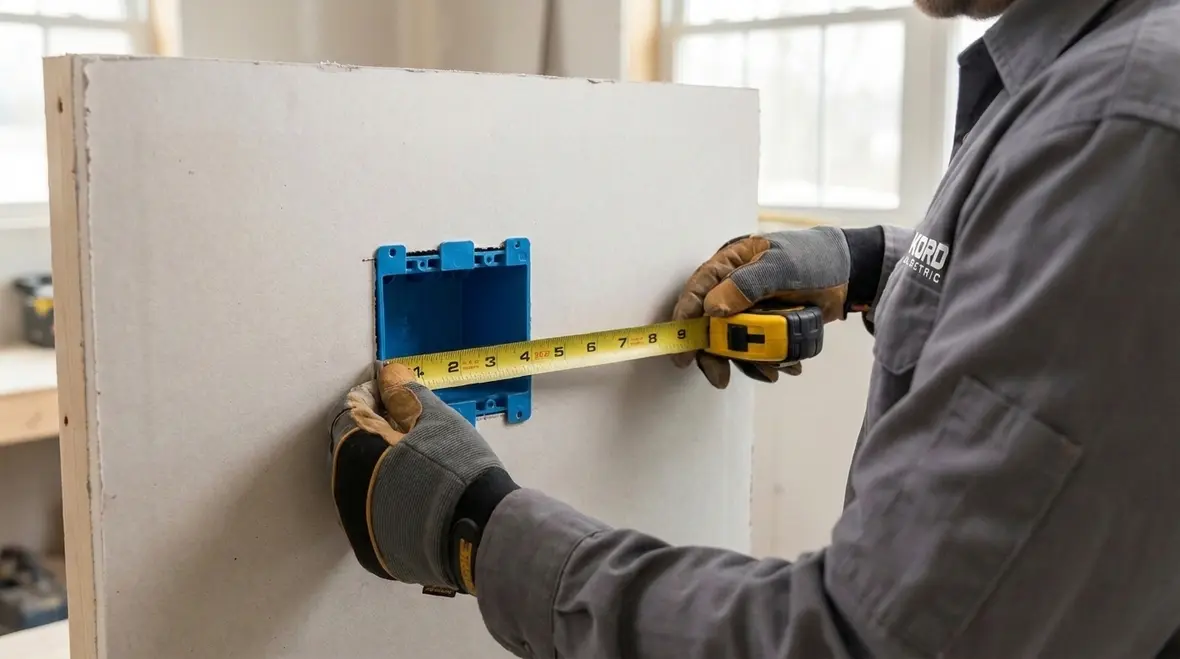
NFPA 70 Section 314.20 focuses on how cabinets, boxes, and similar enclosures should be installed when they must sit flush with the finished surface. To begin, the rule targets the fit and the finish. However, it also protects the system behind the wall by controlling where the box goes, how it is secured, and how it supports the wiring and devices inside.
In practice, we see problems when someone treats “flush” like a vibe instead of a requirement. Yet we also see good work when a qualified installer checks depth, fastening, and alignment before the wall closes. Next, our technicians confirm that the box face matches the finished material plan, so cover plates and devices sit correctly. Because when covers do not fit, gaps show up, moisture finds its way, and devices get stressed. That is when a minor install becomes a future service call.
Also, the code does not ask for guesswork. It expects the box to be installed with proper construction and support. In commercial and industrial settings, we treat that as a standard of care, not a suggestion. After all, the building cannot “rebuild itself” when the inspection fails. The team has to.
How we plan flush mounted box depth for finished walls
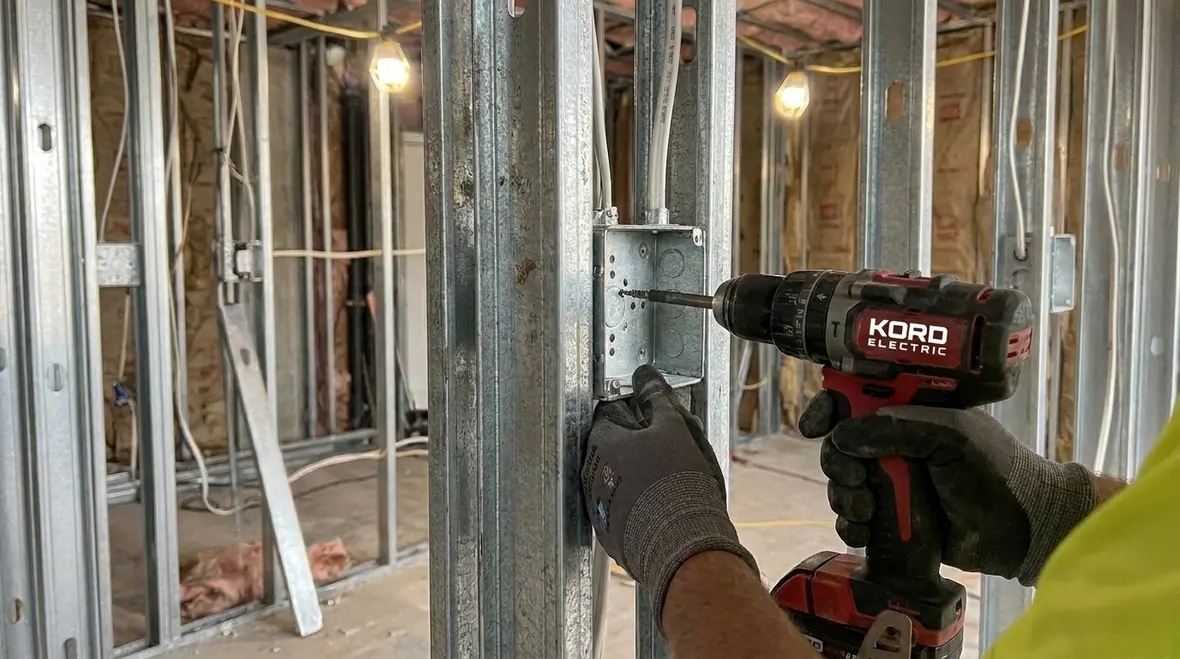
When a project moves fast, the wall framing often leads the schedule. Therefore, Kord Electric coordinates early so electrical boxes match the final wall build, not just the rough opening. First, we review the wall type and finish plan for the facility. Then, we confirm how the box will sit once the finished surface is installed.
To do this, our expert service staff uses a simple approach: we measure twice, we mock up the depth when needed, and we verify device clearance before drywall or other finishes go in. As a result, NEC flush mounted installations stay aligned with trim and cover plates, and devices mount without forcing. And yes, forcing a device is like trying to fit a puzzle piece after someone already painted over it. It looks fine for a moment, then it fails later.
We also pay attention to the raceway and cable routing into the box, because depth changes how conductors and fittings land. If a box sits too deep or too shallow, fittings can bind, cable bends can exceed safe limits, and terminations can get ugly. Consequently, we set the box so cables enter the enclosure with the right bend radius and strain relief.
Mounting and support: keeping boxes secure for the life of the building
Secure mounting does not end at the first inspection. It must last through vibration, maintenance, and the everyday movement of people, carts, and equipment. In commercial and industrial facilities, walls take hits. Therefore, Kord Electric installs boxes with the required support so they remain stable when devices are operated and replaced.
Our technicians focus on two things. First, they ensure the box is firmly attached to the building structure or framing system, consistent with the installation conditions. Second, they verify that any mounting method supports the box face at the correct plane for the finished surface. If the box wobbles, devices will loosen, cover plates will misalign, and you will hear the kind of squeak that makes facilities managers throw their hands up.
Additionally, we coordinate with other trades. When a box gets buried behind insulation without proper adjustments, it can end up too recessed. When it ends up too proud of the wall, it creates gaps and device problems. So, we keep communication tight. Next, we document what we found and what we corrected, because a clean paper trail helps future maintenance crews too.
Device alignment and cover practices that pass real inspections
Even when the box is mounted correctly, devices and cover plates can still ruin the day. That is why we treat the final assembly as part of the installation, not an afterthought. After the box is positioned, our expert service staff checks that devices sit level and flush within the cover plan.
Then we verify that cover plates align with the box opening and finished wall. In real life, the cover is what inspectors see. So, we make sure the plate sits properly without forcing. We also confirm that gaskets and sealing components are used when the facility requires them, such as areas with damp conditions or specific environmental requirements.
Also, we watch for common missteps. One is using the wrong device box cover for the wall finish. Another is placing devices before the finished surface plan is finalized. Since commercial projects often include schedule pressure, we slow down at the right moments. That is how we avoid “quick fixes” that later turn into costly change orders.
And if you are thinking, “We can just fix it later,” we will calmly disagree. Later is where the cost multiplies, and later becomes a different vendor, with a different invoice, and a different tone of voice during meetings. Our team prefers fewer surprises.
Common compliance issues we catch before the wall closes
To keep projects smooth, Kord Electric identifies the risks early. Then we address them before the wall closes, so the crew does not discover problems when it is too late to correct them cleanly. First, we check box placement relative to the finished wall plane. Then we verify that the box is supported and mounted correctly.
Next, we confirm that fittings and raceways connect properly. When someone squeezes a fitting into the wrong angle, it can damage the box entry point or create strain on the conductor. That may not trip a red tag immediately, but it can create failure points that show up later during service. So, we correct these issues immediately.
We also look for inconsistent device layouts. In many major property buildings, there are repeating patterns: consistent mounting heights, consistent cover spacing, and consistent device alignment. When flush boxes are installed with inconsistent depth, devices look crooked. Inspectors notice. Occupants notice. Facilities teams definitely notice when they replace a device and the cover no longer fits.
Finally, we ensure coordination with the broader requirements covered under the NEC and related NFPA guidance. For code context and updates, our teams reference resources like Kord Electric’s NEC explanation for 2026 and the broader NEC overview articles on Kordfire. That helps us keep installation practices aligned with current expectations.
How Kord Electric handles NFPA 70 and the NEC on major sites
Code compliance in commercial and industrial facilities requires more than reading rules. It requires field execution, coordination, and trained people who know what an inspector expects to see. At Kord Electric, we send technicians and experienced service staff who explain the “why” behind the “what.” So, clients do not just receive an install. They receive clarity, and they understand the tradeoffs that keep risk down.
We also plan for the building’s real operating needs. For example, flush mounted electrical components often support power distribution, controls, and life safety systems depending on the project design. Therefore, we treat installation quality as part of the facility’s performance, not as a standalone electrical task.
In addition, we collaborate with teams that support fire and water systems when a project includes integrated infrastructure. For related code perspectives, our network may reference industry resources such as Kordfire’s NFPA 70 overview and regional guidance through Kordfire channels. While each project has its own design scope, the common goal stays the same: keep life safety systems reliable and keep inspections smooth.
And yes, we also aim for jobs where the client does not feel like they are starring in a “surprise inspection” reality show. Our process reduces that risk by building quality into the schedule from day one.
For facilities teams planning broader upgrades, our electricians connect NEC flush mounted installations with larger safety and reliability initiatives, such as those covered in Kord Electric’s guides on data center power, surge protection, and new building safety checklists. That way, box alignment and depth are not treated like isolated details. They become part of a complete electrical risk reduction plan.
When projects extend across Los Angeles County and beyond, our field crews also coordinate NEC flush mounted installations with local plan reviewers and inspectors. That includes confirming jurisdictional preferences, documenting how boxes are mounted and supported, and tying each phase into the larger service scope offered through our dedicated Los Angeles County electrical services team. For owners, that combination of code knowledge and local experience keeps projects moving even when schedules are tight.
FAQ: quick answers for flush mounted box installations
Final thoughts: make the right install the first time
When a commercial or industrial building needs reliable electrical work, NFPA 70 Section 314.20 and NEC expectations cannot be treated like “background noise.” Kord Electric sets flush mounted boxes with correct depth, secure support, and clean device alignment so inspections stay calm and maintenance stays easy. Our technicians explain what we do and why it matters, so your team can plan with confidence. If you want a project that passes the first check and stays solid after, contact Kord Electric today.


