
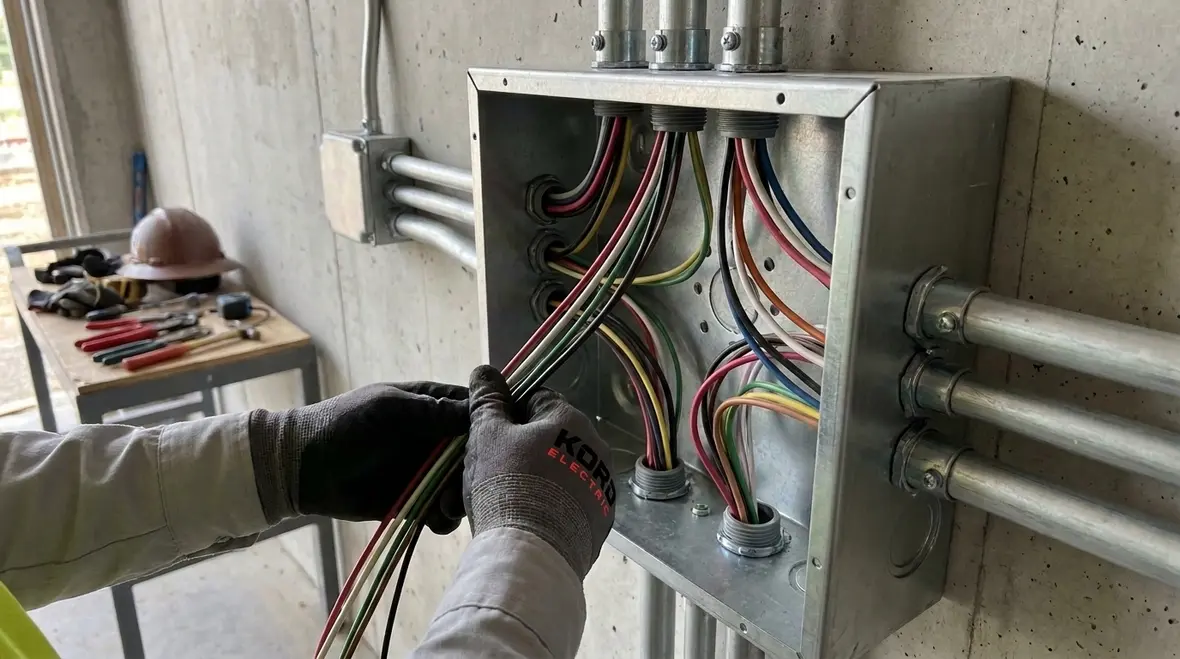
NEC NFPA 70 Section 314.17 Conductors Entering Boxes
When NEC conductors entering boxes, we at Kord Electric treat it like a foundation detail, not a paperwork detail. In this guide, our expert service staff walks readers through how NFPA 70 Section 314.17 shapes safe, code driven wiring for commercial and industrial facilities. We explain what happens at the exact moment a wire leaves a raceway and enters a box, because that is where damage, loose terminations, and future failures often start. And yes, we also know people joke that electrical code reads like a legal thriller. Still, once you see the intent behind the rules, it becomes calmer, clearer, and frankly less terrifying than it sounds.
Section 314.17 does not live on an island. It sits inside the broader National Electrical Code framework, which we explore in depth in our resource Understanding NFPA 70: The National Electrical Code Explained for 2026. When you connect those big-picture concepts to the details of how conductors enter boxes, the rulebook turns into a practical, repeatable playbook for real projects instead of a stack of dense chapters.
What Section 314.17 protects and why it matters
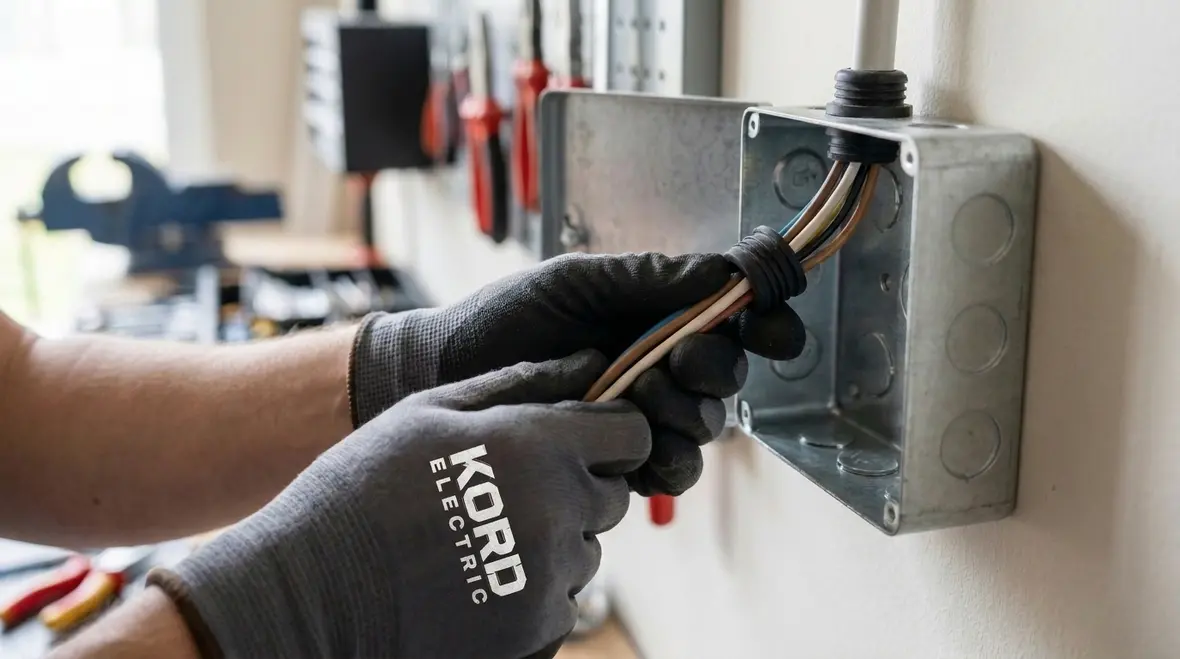
Section 314.17 focuses on NFPA 70 requirements for conductors as they enter boxes. It aims to prevent abrasion, pull stress, and compromised insulation. In practice, we see issues when installers route conductors in a way that rubs the edge of a box, fails to protect jacketed cables, or lets strain land directly on terminations. Then, over time, vibration, temperature swings, and minor movement turn a small shortcut into a big outage.
Additionally, commercial and industrial environments add extra stress. Equipment runs longer hours, mechanical systems produce more vibration, and maintenance cycles can involve frequent access. Because of that, our technicians do not treat 314.17 as a “check later” item. They verify how conductors are handled during installation, and they document what they find, so the facility team can trust the work.
This focus also lines up with other workmanship-driven requirements in the code, such as the expectations described in NFPA 70 Section 110.7, which we cover in our guide to NEC wiring integrity workmanship standards. Together, they paint a clear picture: if you protect conductors at the point they enter boxes and maintain quality work habits, you protect the entire downstream system from avoidable failures.
How conductors should enter boxes in real builds
When conductors enter boxes, the goal stays steady: protect insulation and keep the conductor in a condition that supports reliable terminations. We build the explanation around what your field team must do, not just what the code says.
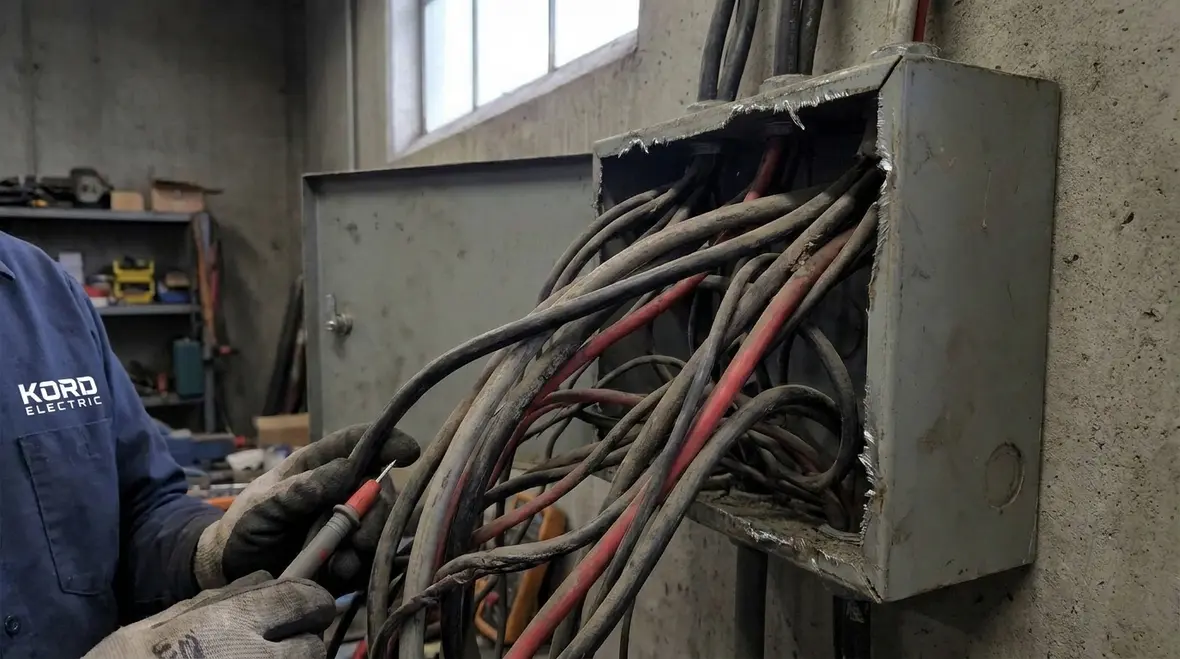
First, we look at how the raceway, cable, or cable assembly connects to the box. A proper connection keeps the conductor aligned and reduces the chance that the installer will “force” wiring into place. Then, we confirm that the box entry protects the conductor. If a metal edge can contact a cable jacket or conductor insulation, we recommend using the correct fitting, bushing, or guard method for that raceway and box type.
Next, we check for the physical transition inside the box. We want conductors to have enough slack for safe landing and future service. At the same time, we want the routing to avoid sharp bends that stress insulation. In other words, we aim for smooth paths. This is not about being neat just for looks. It is about reducing wear points that can lead to overheating.
- We avoid letting cable jacket edges scrape against box openings.
- We confirm the box connection keeps strain away from termination points.
- We verify conductor routing supports safe terminations and future access.
Finally, we test the installation as part of a full commissioning plan when the project scope supports it. That is how we keep the code intent from becoming a guess. For many clients, this also ties into broader consulting efforts, like the ones we describe in our article on electrical code upgrade consulting for renovations, where box entries are one of several checkpoints that prevent surprises during final inspection.
Common jobsite mistakes we see during upgrades
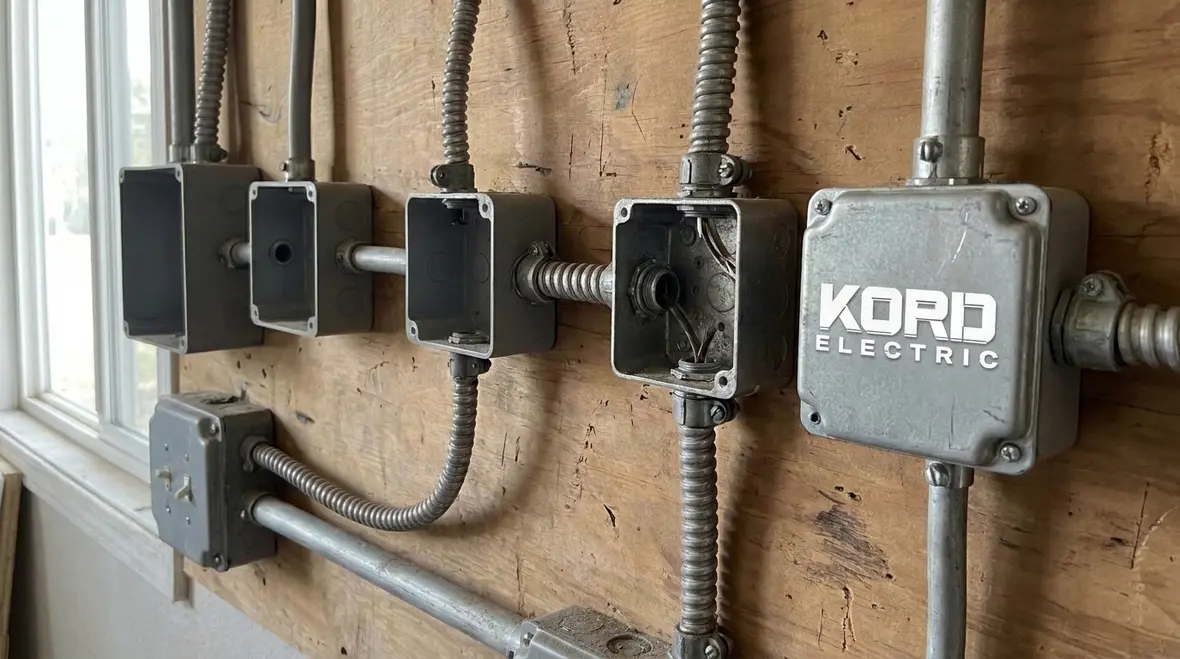
Over the years, our teams have spotted patterns in commercial retrofits. People mean well, but jobsite pressure can turn good intentions into avoidable defects. And since those defects rarely announce themselves right away, the facility crew usually discovers them when the system is already under demand.
One frequent mistake involves skipped edge protection. When conductors enter a box without proper protection, insulation can nick. Even a minor nick can reduce long term reliability, especially in locations with heat or moisture exposure. Another issue involves over stuffing the box. When someone packs too many conductors, it becomes harder to land terminals correctly and harder to maintain safe bending radii.
We also see inconsistent handling of cable types. Some cables require specific fittings. Others demand careful stripping and re-routing so that only the conductor ends enter the terminal area. If the wrong cable handling method gets used, it can cause stress where it should not exist.
Here is the soothing part, though. When our technicians work on a site, they explain what they see and why it matters. We do not talk down to engineers, electricians, or facility managers. We simply connect each field condition to the practical outcome: fewer failures, safer service work, and a cleaner path for inspections.
During major upgrades or renovations, these small details sit alongside bigger questions about feeder sizing, overcurrent protection, and AHJ expectations. If your project team is already reviewing those topics, our resources on 2026 NEC application requirements and NFPA 70 scope and on AHJ enforcement under NFPA 70 Section 90.4 can help frame the conversation so everyone knows how box entry rules fit into the larger compliance story.
NEC conductors entering boxes and mechanical protection choices
Facility teams often ask what “protection” means in the real world, because the word sounds vague until you see the details. In most commercial and industrial systems, protection means controlling the conductor’s contact points and limiting stress during installation and later service.
We treat protection as a set of decisions that must match the physical environment. For example, we consider the raceway type, whether the box is metal or nonmetal, the cable design, and the routing path. Then we select the correct fittings and methods so conductors stay safe as they enter boxes.
Also, protection choices support maintenance. When the box entry is done right, a tech can pull and reconnect conductors without fighting sharp edges, twisted cabling, or damaged jackets. That reduces downtime and helps teams keep schedules, even when the building is running like it is always running, because it is.
- We match fittings to the raceway and box type to prevent abrasion.
- We verify conductor entry points keep insulation intact.
- We maintain routing that supports future troubleshooting and safe rewiring.
And if you think this sounds like “common sense,” you are right. Code is often common sense written with a serious voice, like a mentor who tells you, gently, not to touch the hot stove. When we pair that common sense with structured guidance from resources like How to Read NFPA 70: A Practical Guide to the National Electrical Code, your team gets both the big picture and the fine-grain detail behind each conductor entering a box.
Inspection readiness for commercial and industrial projects
Commercial and industrial facilities need installations that pass inspection and stay dependable. Therefore, we help teams plan the path from design intent to field execution. That planning includes how conductors enter boxes, how terminations get managed, and how documentation gets prepared for closeout.
Our expert service staff supports readiness in a practical way. We review installation methods, confirm that conductor protection is in place, and ensure the box entries align with the wiring layout. Then we help the site team understand what to look for during walkdowns.
In addition, we align our field practices with the broader NEC approach described across the NFPA 70 content. When readers study the NEC as a whole, they see how rules connect. For instance, safe conductor entry supports the next steps: proper termination, heat management, and continued reliability. In this way, Section 314.17 becomes one piece of a larger reliability plan, not an isolated rule.
For teams interested in context, we also share educational materials on understanding the NEC and how it applies to field work, including resources connected to Kordfire’s NEC coverage and Kord Electric’s training style. Articles like our overview on What Is NFPA 70? Understanding the National Electrical Code help facility leaders see why these “small” details at box entries play a big role in long term system behavior.
FAQ: NEC conductors and box entry rules
Why Kord Electric handles this with calm discipline
At Kord Electric, we work with commercial and industrial facilities that cannot afford guesswork. Therefore, we verify conductor protection and routing at the moment wires enter boxes, because that step strongly affects long term safety and serviceability. Our technicians and expert service staff do more than install. They explain the “why,” they keep the process clear, and they help the facility team understand what is code driven and what is field reality.
We know projects move fast, and sometimes everyone wants to hurry past the details. Still, we take our time on the parts that prevent problems later. That includes everything from NEC conductors entering boxes, to feeder sizing under Section 215.4, to the way wiring integrity is preserved under workmanship standards. If you want a field team that treats NEC requirements with both professionalism and a steady voice, Kord Electric is ready to help you plan, execute, and document the work.
For facilities across the region, including complex sites that rely on Los Angeles County electrical services from our team, box entry details are part of a consistent, repeatable approach to NFPA 70 compliance. When we align conductor protection with broader NEC guidance, you get fewer surprises, calmer inspections, and a clearer path to long term reliability.
If you would like to go deeper into how Section 314.17 fits into the NEC story as a whole, pairing this article with our guide Understanding NFPA 70: The National Electrical Code Explained for 2026 will give your team that bigger framework. Then, when you stand in front of a box on a real job, the code language will feel less like a thriller and more like a clear, calm checklist you already know how to follow.
At Kord Electric, we are here to keep that checklist practical. Whether you are planning a new installation, upgrading older equipment, or double-checking how NEC conductors entering boxes are handled in a busy facility, our technicians and expert service staff can walk the site, explain the options, and help you land on a solution that satisfies both the rulebook and the real world.


