
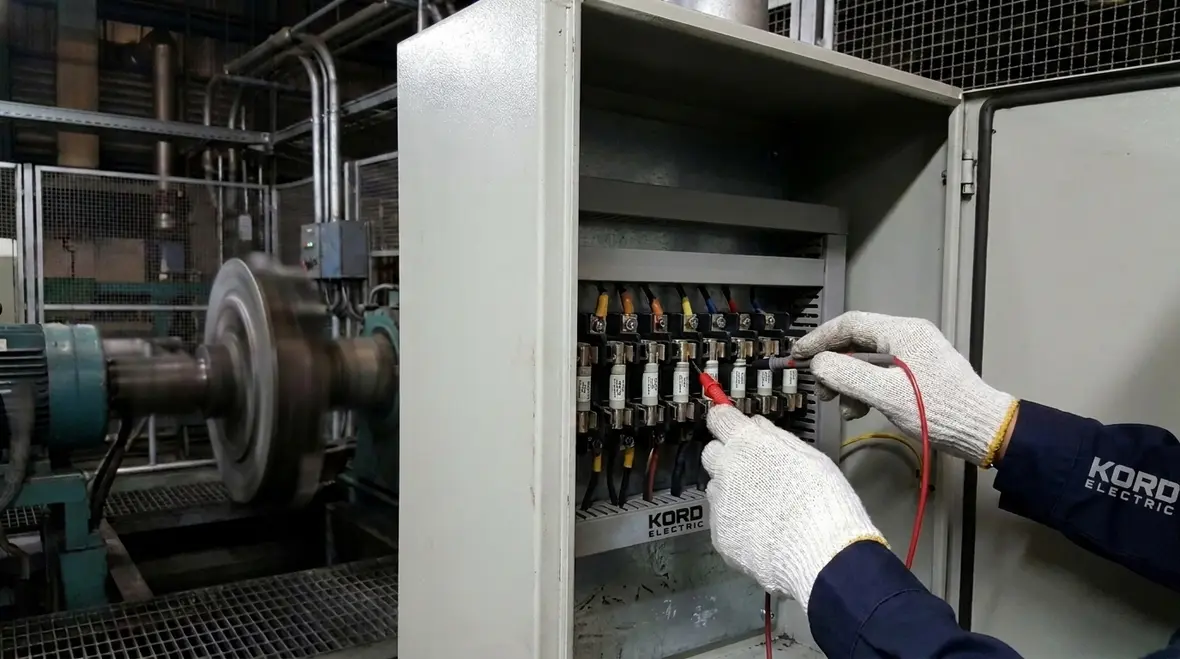
NEC Fuses Near Moving Parts Safety Under 240.41 NFPA 70
Kord Electric has one job that we do with steady hands and clean documentation: keep commercial and industrial power systems safe and dependable. So when people ask about how we handle NEC fuses near moving parts, our answer starts right in the field. We follow NFPA 70 Section 240.41, because fuses placed too close to parts that arc, shift, or move can create trouble that no one wants to meet at 2 a.m. That is not fear mongering, it is practical engineering. And yes, we have heard the joke that electricity never sleeps. It does not, which is why our expert service staff explains the rule in plain language, and why our technicians treat placement like it matters, because it does.
Why NFPA 70 Section 240.41 matters on real job sites
NFPA 70 is the National Electrical Code, and Section 240.41 focuses on a simple idea: if a fuse sits near arcing or near moving parts, the fuse and its connections can fail in ways that increase risk. In a commercial and industrial setting, that risk can travel fast. A fuse is meant to protect the circuit during fault conditions. However, if it is installed near vibration, moving guards, rotating equipment, or zones where arcs can occur, then damage can happen even without a full fault event.
In other words, we treat fuse placement as part of the whole safety chain, not as an afterthought. When our technicians inspect electrical rooms, switchboards, and industrial panels, they look at how equipment behaves over time, not just what the drawing shows. After all, metal moves when it is under load. And sometimes, so do people who are carrying tools, trying to do a quick “just tighten it” job. We would rather prevent the problem than explain it later.
What “arcing or moving parts” means in practice
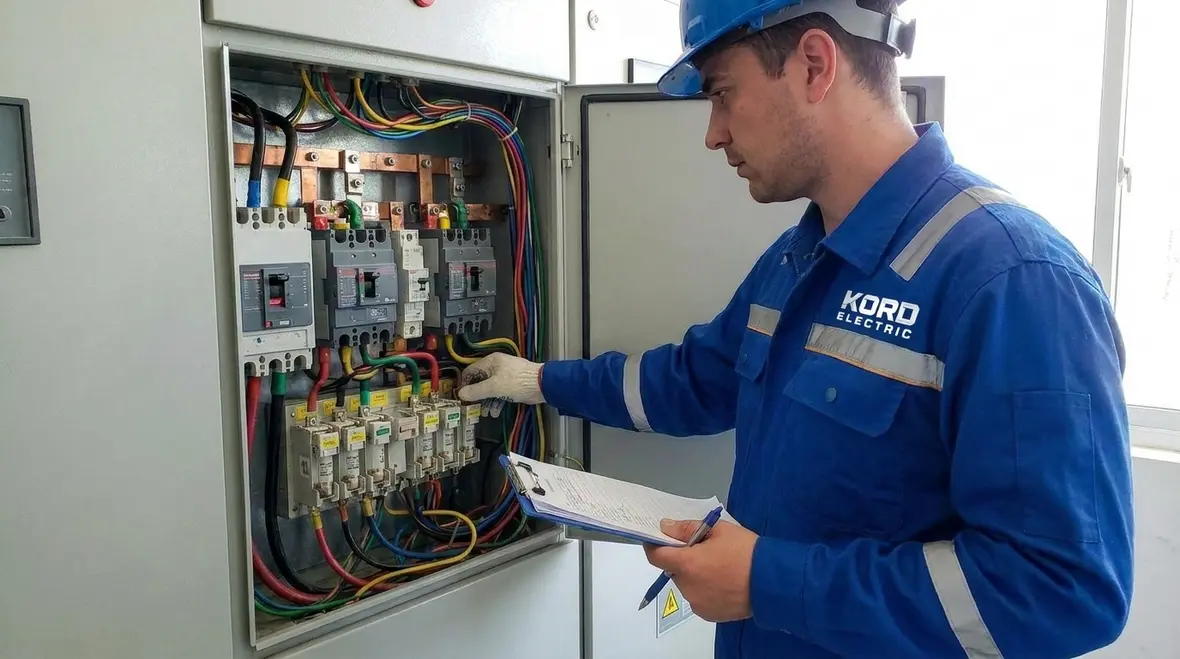
On paper, the phrase looks straightforward. On site, it demands judgment. Arcing can come from components that operate nearby, switching devices, damaged insulation, or older equipment that has developed hot spots. Moving parts can include rotating shafts, belts, conveyors, dampers, machinery housings, and even doors or covers that swing or shift during normal use. If a fuse is located where heat, gases, or mechanical impacts can reach it, then the rule applies in spirit and in compliance.
Additionally, we do not treat “near” as a distance number that fits every installation. We evaluate the layout, the airflow, the routing of conductors, the presence of guards, and the likelihood of vibration. Then we document our findings so facility managers and safety officers can verify that the design and install match NEC intent.
Our expert service staff also points out a common misconception. Some teams think that as long as the fuse rating matches the circuit, the job is done. Yet placement affects survivability. A fuse can be correctly sized, but still be harmed by the environment around it. That is like having a great seatbelt but placing the buckle where it can get jammed during a crash. The protection loses its purpose.
How our technicians apply the safety rule when installing or upgrading
At Kord Electric, we serve commercial and industrial facilities and major property buildings. That means we often work around complex systems and tight service schedules. Therefore, our process focuses on placement, clearances, and protection from damage routes that show up over months and years.
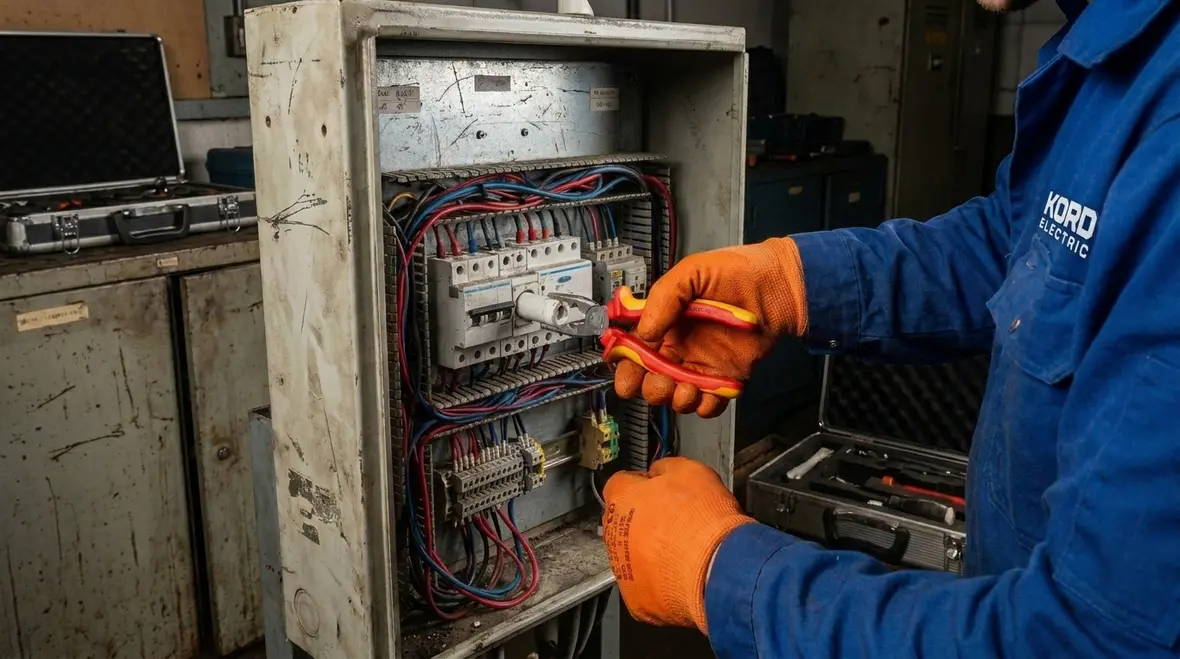
When we plan an installation or upgrade, we start by mapping the equipment in and around the fuse location. Then we confirm where arcing sources might occur during normal operation or faults. After that, we check mechanical motion paths, including vibration, movement from adjacent machinery, and any area where covers, doors, or access panels could contact the fuse compartment.
Next, we verify that the fuse arrangement uses appropriate enclosures and supports that keep the fuse stable. We also confirm conductor routing, termination quality, and the integrity of any barriers. If the system uses switchgear or distribution gear, we coordinate with the gear design so the fuse placement matches the equipment layout and does not place hot or fragile parts where they can be impacted.
And because people often ask, we explain the “why” as we work. Our technicians show what could happen during arcing events, and how movement can stress terminations. Finally, we finish with testing and a written record. That way, others do not have to guess later. In a facility, guesswork is expensive. It is also unnecessary.
Design and retrofit checks for commercial and industrial panels
Retrofitting is where safety standards meet reality. Older installations may have fuses positioned for convenience, not long term protection. When our team finds that NEC fuses near moving parts could be exposed to mechanical motion or potential arcing zones, we adjust the arrangement. Sometimes the fix is straightforward, like repositioning the fuse holder within an approved assembly. Other times, we add barriers, relocate equipment, or update enclosures to maintain safe separation.
We also check these practical items during commercial and industrial upgrades:
- Enclosure integrity: We ensure covers stay in place and do not interfere with moving devices or access panels.
- Clearances and access: We confirm workers can access the device without reaching into an arcing or impact zone.
- Vibration and mechanical impact: We look for mounting stability and nearby equipment that could shake loose terminations over time.
- Conductor routing: We confirm cables are supported and protected where heat or movement can stress insulation.
- Coordination with safety devices: We align protective devices and verify that fault response remains reliable.
Then we explain these changes in business casual terms that teams can repeat at meetings. If a maintenance manager asks what changed, we answer with specifics. If an electrician asks what standard we used, we cite NFPA 70 Section 240.41 and connect it to the observed site conditions.
Common failures we prevent with proper placement
Even well maintained systems can drift out of compliance if equipment gets replaced, relocated, or upgraded over time. That is why our inspections do more than “scan and move on.” We look for the patterns that cause failure.
Here are issues we often stop before they escalate:
- Damaged fuse holders: Heat and vibration can loosen components and degrade contact points.
- Compromised terminations: Moving parts can stress wiring and create intermittent faults.
- Increased chance of arcing in the wrong location: If a fuse sits too close to an arcing zone, failure can spread to nearby components.
- Maintenance interference: Workers may place tools or reach into areas that should remain clear, especially in tight industrial rooms.
- Hidden exposure: Some risks show up only when equipment cycles, like dampers, lifts, or gear doors.
And because teams like proof, we keep our documentation clear. Our expert service staff helps facility leaders understand what we found, what we changed, and how the system will perform under fault conditions. That calm, step by step approach reduces confusion. It also prevents the classic “it passed last year” problem.
Where code guidance fits, and how we keep it easy to follow
People often search for NEC details and end up in a maze of general summaries. We respect that reality, but we also make sure our guidance connects directly to the real installation. Code knowledge matters, yet application matters more. For context, we reference widely used NEC and fire safety explanations from resources like Kord Electric’s own NEC overview for the 2026 cycle, and the Kord Fire materials that explain how the National Electrical Code and related safety themes connect. We also align our thinking with safety organizations that focus on fire prevention and electrical safety, including fire focused education groups such as firepumps.org.
Still, we do not treat these links as the finish line. We use them to support our team’s internal checklists, and we translate the rules into site actions. Then we communicate clearly with the building team, because commercial and industrial facilities cannot pause for confusion.
If you manage a major property building, you need answers you can hand to leadership and safety teams. That is why we keep our approach direct, and why our technicians explain the rule like it is meant to be explained. Slow, calm, and with the confidence of someone who has seen the problem before.
How NEC fuses near moving parts tie into broader facility planning
Fuse placement does not live in a vacuum. When we plan upgrades or troubleshoot issues, we connect the NEC fuses near moving parts decisions to larger power themes like surge protection, branch circuit layout, grounding, and service disconnect grouping. A facility that only fixes one issue at a time ends up playing whack-a-mole with risk. A facility that looks at the whole picture makes fewer emergency calls and has fewer surprises during inspections.
For example, if we adjust fuse locations near rotating equipment, we also review how those circuits are protected from surges and how branch circuits serving that area comply with voltage limitations and overcurrent rules. That way, when a piece of equipment starts hard more often, the protective devices still respond the way NFPA 70 intended. We prefer that kind of quiet, reliable behavior over dramatic failures that show up in the middle of a critical run.
This is also where training and documentation matter. When onsite teams understand why we kept NEC fuses near moving parts away from arcing zones, they are less likely to “temporarily” modify something later in a way that pushes the installation back toward risk. We leave behind diagrams, notes, and clear labels instead of leaving people to guess.
NEC fuses near moving parts and long term inspection readiness
Inspections are not just about passing once. They are about proving that your system can keep passing, even as loads change and equipment ages. When inspectors review NEC fuses near moving parts, they look at more than just labels and device ratings. They look at access, enclosure condition, conductor protection, and whether anything nearby could strike, heat, or otherwise damage the fuse assembly.
Our team keeps inspection reality in mind from day one. We think about how someone will open that equipment five years from now, what they will see first, and how easy it will be to verify compliance. We also coordinate with facility staff so they understand what must stay clear and what should never be stored near fuse locations. A few minutes of conversation now prevents stacks of boxes, tools, or temporary fixtures from creeping into spaces that were originally designed with safe clearances.
When you combine smart placement, clear documentation, and informed staff, you reduce the chance that an inspector finds something that used to be compliant but is no longer safe. That is the kind of quiet success story you do not see in headlines, because nothing went wrong.
FAQ for fuse placement safety
Schedule a placement review with Kord Electric
If your facility runs equipment that moves, cycles, or sits near switchgear, we recommend a placement review for protective devices and fuse arrangements. Kord Electric serves commercial and industrial sites and major property buildings, and we bring expert technicians who explain findings clearly while we handle the work with care. Reach out to us for an on site assessment, documentation, and practical upgrades that support safe operation and long term reliability. Let us be the calm voice before the system becomes the loud problem.
For larger projects or renovation work, our team can also coordinate NEC placement reviews with broader electrical code upgrade consulting so your distribution changes, overcurrent protection, and Los Angeles County electrical services support stay aligned. That way, NEC fuses near moving parts, panel layouts, and inspection expectations all move in the same safe direction instead of pulling your project in different ways.
When you are ready to connect fuse placement with overall code strategy, you can pair this discussion with resources like the Kord Electric guide on Understanding NFPA 70, the National Electrical Code Explained for 2026, and related NFPA 70 articles that walk through scope, branch circuits, and general safety requirements. Together, they give leadership, safety teams, and maintenance staff a shared language for how power should behave, even when equipment is busy and the schedule is tight.
If your next step is to verify that NEC fuses near moving parts are protected, documented, and ready for the next inspection cycle, our technicians are ready to walk the site, trace the risks, and leave you with a system that feels calm, not chaotic, when the lights are on and the equipment is running hard.
Reach out, schedule a review, and let us put steady hands, clear documentation, and practical NEC experience to work on your fuse placement before the system decides to write its own story.


