
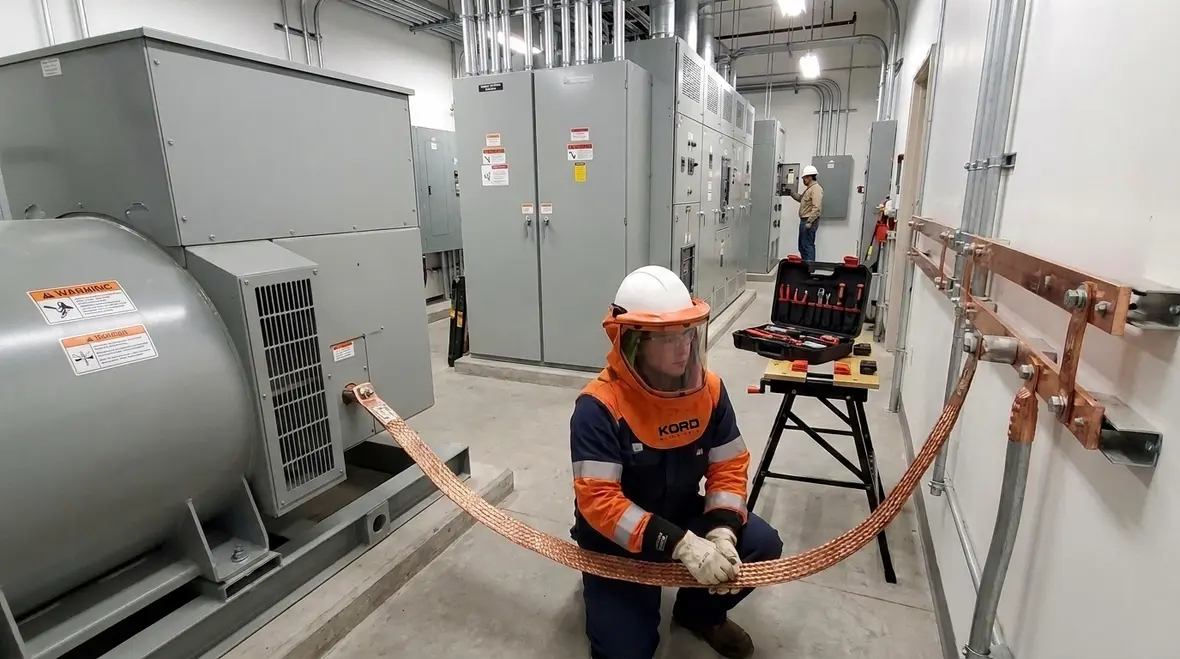
NEC Generator Grounding 2 kV Under NFPA 70 270.35
Kord Electric helps commercial and industrial teams meet the rules that keep people safe and equipment alive, especially where power systems can’t afford surprises. When we talk about NEC generator grounding 2 kV, we focus on a key requirement tied to NFPA 70 Section 270.35, which covers how to ground certain permanently installed generators operating above 2 kV. In plain terms, we make sure the grounding design supports fault protection and reliable operation, not guesswork. And yes, we know grounding can sound as exciting as watching paint dry, but when the lights stay on during a fault, everyone suddenly loves the boring parts.
NEC generator grounding 2 kV: What NFPA 70 Section 270.35 actually requires
NFPA 70 Section 270.35 sets expectations for grounding permanently installed generator systems where the generator operates at voltages above 2 kV. In practice, this section pushes the design team to provide a grounding path that matches the system’s fault energy and insulation characteristics. Instead of letting the system “figure it out,” the code requires grounded schemes that support prompt fault clearing and reduce dangerous touch voltages.
Our expert service staff explains it this way: when a fault happens, current must have a controlled route to reach protective devices. Therefore, the grounding arrangement must coordinate with the generator, transformers, switchgear, and protective relays. Kord Electric technicians don’t treat this as a checklist item either. They treat it as a system behavior problem, because the grounding design you choose will shape how the electrical system behaves when something goes wrong.
So, while people may hear “grounding” and think it is just a wire to a bar, we see it as a safety strategy. And strategy, unlike pop quizzes, usually pays off.
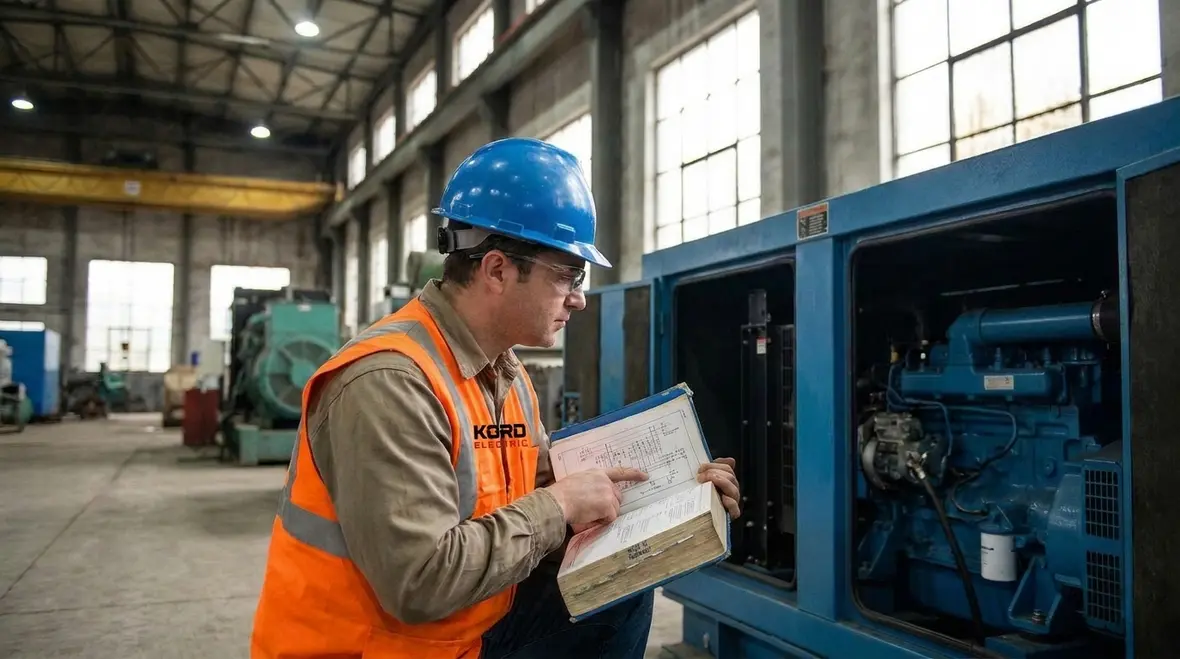
Grounding design basics for generator systems above 2 kV
In commercial and industrial facilities, generator sets above 2 kV often tie into medium voltage switchgear and then distribute power downstream. Accordingly, grounding must consider the generator’s generator neutral, the system grounding conductor, bonding points, and how the grounding system interacts with protective devices. If the grounding is wrong, protective coordination can drift, and trip behavior can become unpredictable.
Our Kord Electric team looks at the whole electrical chain. First, we confirm the generator voltage class and operating mode. Next, we review how the generator connects to the rest of the power system, including any step-up transformers. After that, we validate the grounding method against the system fault design. Transitioning from concept to installation matters too, because a grounded point that exists on paper can still fail in the field if the bonding is incomplete or connections are loose.
And we have seen loose connections behave like chaos gremlins. They do not break your system dramatically at once. They break it slowly, until a fault finally forces the truth out.
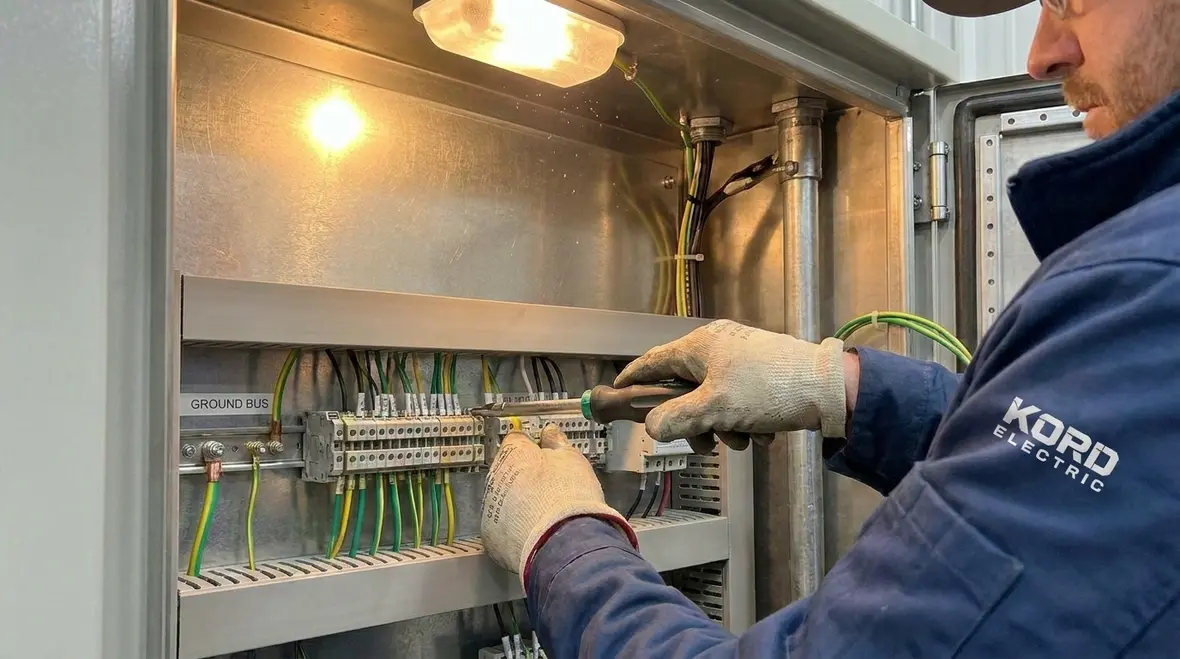
How faults move through grounded systems and why that matters
When a ground fault occurs, the current must travel through a path designed to limit risk. With generators operating above 2 kV, the fault current and voltage stress can be significant. Therefore, grounding affects both protective device operation and safety conditions around equipment.
For example, if the grounding system does not provide a clear path, the system can develop higher voltages relative to earth at exposed conductive parts. That can raise the risk of shock to personnel and can also stress insulation. On the other hand, when the grounding supports proper fault current flow, protective devices can detect the fault and clear it faster. Transition words help here, because this is not one step. It is a chain: proper bonding leads to controlled current flow, controlled current flow leads to predictable protective response, and predictable protective response leads to safer and more stable operations.
Our technicians explain this during reviews with facility teams. They map fault scenarios to real switchgear behavior and then explain how the grounding arrangement supports those outcomes. Kord Electric does not just say “it meets code.” We show how it performs.
Practical install details: bonding, conductors, and inspection points
Even when the grounding concept is correct, real results depend on installation quality. Kord Electric focuses on practical details that often get missed in rushed projects. For instance, bonding must connect the correct conductive parts, and conductor routing must avoid loose terminations, missing connections, and damage from installation activities.
Furthermore, conductor sizing must match the design intent for fault performance. Terminations must be properly torqued and verified. Where the system uses multiple grounding points, the design must ensure those points do not fight each other electrically.
That is why we build inspection steps into our work. First, we verify material and connection cleanliness. Next, we check bonding continuity and look for incomplete field labor. Then we review label and documentation accuracy so future maintenance teams can understand the grounding scheme without decoding electrical hieroglyphics. And finally, we coordinate with the commissioning plan so testing aligns with the intended behavior.
Coordination with switchgear, transformers, and protective devices
Section 270.35 does not exist in isolation, and neither does our service approach. In commercial and industrial facilities, grounding ties directly into medium voltage switchgear settings, relay schemes, and transformer grounding methods. If the generator grounding arrangement changes, protective relay coordination may need adjustment as well.
Our technicians work with existing one-line drawings and as-built documentation, because “close enough” fails when the stakes are high. Transitioning from design review to field validation, they confirm grounding points match the drawings and that relay settings align with how the system clears ground faults. If the facility has aging equipment or prior field modifications, we treat that like a clue. We verify what is there, not what the paperwork says is there.
In short, grounding above 2 kV impacts the whole protection story. Kord Electric helps facilities protect that story end to end, not just at the generator.
Questions facility teams ask before commissioning a generator grounding system
When commercial and industrial property owners plan to add or upgrade a generator system, they usually want confidence that it will perform during fault conditions, not just during routine operation. Kord Electric supports that with clear explanations from our expert service staff, because people deserve to understand what gets installed on their site.
Common points we address include how the grounding method interacts with medium voltage switchgear, how field bonding gets verified, and how documentation supports ongoing maintenance. Also, we explain what inspections matter most before the system energizes. Transitioning from “what is required” to “how we prove it,” our team helps the facility understand testing expectations and acceptance criteria.
And if someone jokes that grounding tests feel like a science project, we agree. But we add one detail: in real life, the grade is paid in uptime, safety, and reduced downtime costs. So yes, it matters, and yes, we make it as painless as possible.
Regulatory context and how Kord Electric supports compliance
Commercial and industrial teams often juggle codes, standards, and facility timelines. Kord Electric supports compliance with a steady, practical process. We reference the National Electrical Code requirements and align our work with how facilities actually operate, including how life safety systems and critical loads interact during emergency power events.
We also understand that commercial owners care about more than “passing inspection.” They care about repeatable service, clear labeling, and stable operation for years. Our approach mirrors the guidance found across industry resources, including NEC education materials from Kord Fire and the broader NEC context used by fire and electrical professionals. When needed, we coordinate with other site trades so generator systems and protection devices integrate correctly.
For readers who want to go deeper on the rulebook behind NEC generator grounding 2 kV decisions, Kord Electric also publishes resources like Understanding NFPA 70: The National Electrical Code Explained for 2026, which helps facility teams see how the code cycles shape design, upgrades, and long-term maintenance.
In our experience, the fastest path to success is not speed. It is quality control, field verification, and honest communication. And that is the kind of calm, deliberate work we deliver to major property buildings and large commercial sites.
Featured FAQ
Why Kord Electric for generator grounding above 2 kV
Kord Electric serves commercial and industrial facilities that cannot gamble with safety or reliability. Our technicians and expert service staff explain the requirements clearly, then they implement grounding designs with field checks that hold up during commissioning and real fault conditions. We focus on practical install quality, coordinated protection, and documentation your facility team can use later. If you are planning a generator upgrade or troubleshooting grounding performance, contact Kord Electric. We will review your system, outline the path to compliant NEC generator grounding 2 kV, and help keep your power steady when it matters most.
For facilities in Southern California, that support can include broader electrical upgrades that work alongside NEC generator grounding 2 kV improvements. When sites need design help, outage planning, or modernization support, Kord Electric’s commercial and industrial services extend from generator grounding and fault studies to infrastructure upgrades, maintenance plans, and safety protocols.
If your facility is located in or around Los Angeles County and you need a contractor who treats high voltage and generator work as a safety-critical discipline, explore our Los Angeles County electrical services for commercial and industrial facilities. The same disciplined approach we apply to NFPA 70 Section 270.35 grounding shows up in our broader project planning, outage coordination, and long-term support.
Whether you are adding a new generator, upgrading an existing system, or simply trying to confirm that your current grounding meets NEC expectations, Kord Electric helps you move from “we think it is fine” to “we know it is compliant, documented, and ready for the next fault event.”
If you are mapping a larger modernization effort around your generator project, pairing this work with planning resources such as Kord Electric’s NFPA 70 guides and infrastructure planning articles can help your team see how NEC generator grounding 2 kV fits into the bigger picture of power quality, resilience, and safety across your entire facility.


